

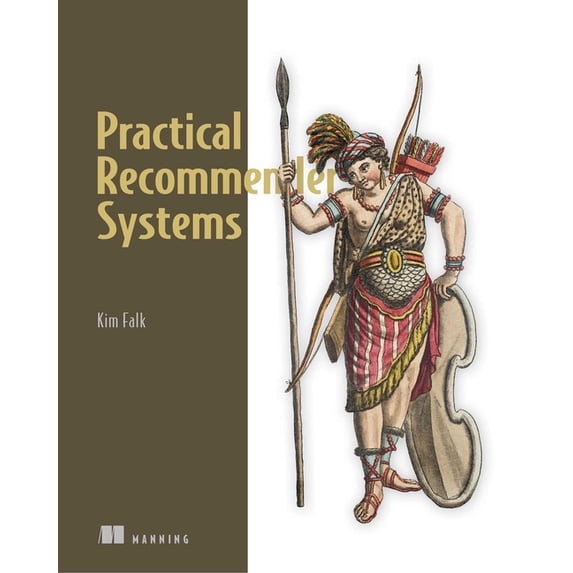
Practical Probabilistic Programming (Edition 1) (Paperback)
(No ratings yet)
Key item features
Summary
Practical Probabilistic Programming introduces the working programmer to probabilistic programming. In it, you'll learn how to use the PP paradigm to model application domains and then express those probabilistic models in code. Although PP can seem abstract, in this book you'll immediately work on practical examples, like using the Figaro language to build a spam filter and applying Bayesian and Markov networks, to diagnose computer system data problems and recover digital images.
Purchase of the print book includes a free eBook in PDF, Kindle, and ePub formats from Manning Publications.
About the Technology
The data you accumulate about your customers, products, and website users can help you not only to interpret your past, it can also help you predict your future! Probabilistic programming uses code to draw probabilistic inferences from data. By applying specialized algorithms, your programs assign degrees of probability to conclusions. This means you can forecast future events like sales trends, computer system failures, experimental outcomes, and many other critical concerns.
About the Book
Practical Probabilistic Programming introduces the working programmer to probabilistic programming. In this book, you’ll immediately work on practical examples like building a spam filter, diagnosing computer system data problems, and recovering digital images. You’ll discover probabilistic inference, where algorithms help make extended predictions about issues like social media usage. Along the way, you’ll learn to use functional-style programming for text analysis, object-oriented models to predict social phenomena like the spread of tweets, and open universe models to gauge real-life social media usage. The book also has chapters on how probabilistic models can help in decision making and modeling of dynamic systems.
What's Inside
About the Reader
This book assumes no prior exposure to probabilistic programming. Knowledge of Scala is helpful.
About the Author
Avi Pfeffer is the principal developer of the Figaro language for probabilistic programming.
Table of Contents
Practical Probabilistic Programming introduces the working programmer to probabilistic programming. In it, you'll learn how to use the PP paradigm to model application domains and then express those probabilistic models in code. Although PP can seem abstract, in this book you'll immediately work on practical examples, like using the Figaro language to build a spam filter and applying Bayesian and Markov networks, to diagnose computer system data problems and recover digital images.
Purchase of the print book includes a free eBook in PDF, Kindle, and ePub formats from Manning Publications.
About the Technology
The data you accumulate about your customers, products, and website users can help you not only to interpret your past, it can also help you predict your future! Probabilistic programming uses code to draw probabilistic inferences from data. By applying specialized algorithms, your programs assign degrees of probability to conclusions. This means you can forecast future events like sales trends, computer system failures, experimental outcomes, and many other critical concerns.
About the Book
Practical Probabilistic Programming introduces the working programmer to probabilistic programming. In this book, you’ll immediately work on practical examples like building a spam filter, diagnosing computer system data problems, and recovering digital images. You’ll discover probabilistic inference, where algorithms help make extended predictions about issues like social media usage. Along the way, you’ll learn to use functional-style programming for text analysis, object-oriented models to predict social phenomena like the spread of tweets, and open universe models to gauge real-life social media usage. The book also has chapters on how probabilistic models can help in decision making and modeling of dynamic systems.
What's Inside
- Introduction to probabilistic modeling
- Writing probabilistic programs in Figaro
- Building Bayesian networks
- Predicting product lifecycles
- Decision-making algorithms
About the Reader
This book assumes no prior exposure to probabilistic programming. Knowledge of Scala is helpful.
About the Author
Avi Pfeffer is the principal developer of the Figaro language for probabilistic programming.
Table of Contents
- Probabilistic programming in a nutshell
- A quick Figaro tutorial
- Creating a probabilistic programming application
- Probabilistic models and probabilistic programs
- Modeling dependencies with Bayesian and Markov networks
- Using Scala and Figaro collections to build up models
- Object-oriented probabilistic modeling
- Modeling dynamic systems
- The three rules of probabilistic inference
- Factored inference algorithms
- Sampling algorithms
- Solving other inference tasks
- Dynamic reasoning and parameter learning
PART 1 INTRODUCING PROBABILISTIC PROGRAMMING AND FIGARO
PART 2 WRITING PROBABILISTIC PROGRAMS
PART 3 INFERENCE
Specs
Publication date, April, 2016
Author, Avi Pfeffer
Book format, Paperback
Genre, Computing & Internet
Pages, 456
Age group, Adult
Publication date
April, 2016
Author, Avi Pfeffer
Author
Avi Pfeffer
Book format, Paperback
Book format
Paperback
Genre, Computing & Internet
Genre
Computing & Internet
Pages, 456
Pages
456
Age group, Adult
Age group
Adult
About this item
Product details
9781617292330. New condition. Trade paperback. Language: English. Pages: 456. Trade paperback (US). Glued binding. 456 p. DESCRIPTION Data accumulated about customers, products, and website users can not only help interpret the past, it can help predict the future! Probabilistic programming is a programming paradigm in which code models are used to draw probabilistic inferences from data. By applying specialized algorithms, programs assign degrees of probability to conclusions and make it possible to forecast future events like sales trends, computer system failures, experimental outcomes, and other critical concerns. Practical Probabilistic Programming explains how to use the PP paradigm to model application domains and express those probabilistic models in code. It shows how to use the Figaro language to build a spam filter and apply Bayesian and Markov networks to diagnose computer system data problems and recover digital images. Then it dives into the world of probabilistic inference, where algorithms help turn the extended prediction of social media usage into a science. The book covers functional-style programming for text analysis and using object-oriented models to predict social phenomena like the spread of tweets, and using open universe models to model real-life social media usage. It also teaches the principles of algorithms such as belief propagation and Markov chain Monte Carlo. The book closes out with modeling dynamic systems by using a product cycle as its main example and explains how probabilistic KEY SELLING POINTS Covers the basic rules of probabilistic inference Illustrated with useful practical examples Build a wide variety of probabilistic models AUDIENCE Code examples are written in Figaro. Some knowledge of Scala and a basic foundation in data science is helpful. No prior exposure to probabilistic programming is required. ABOUT THE TECHNOLOGY Probabilistic programming is a new discipline, and the tools and best practices are still emerging. Powerful new tools like the Figaro library built into Scala make probabilistic programming more practical in day-to-day work as a data scientist.
Summary
Practical Probabilistic Programming introduces the working programmer to probabilistic programming. In it, you'll learn how to use the PP paradigm to model application domains and then express those probabilistic models in code. Although PP can seem abstract, in this book you'll immediately work on practical examples, like using the Figaro language to build a spam filter and applying Bayesian and Markov networks, to diagnose computer system data problems and recover digital images.
Purchase of the print book includes a free eBook in PDF, Kindle, and ePub formats from Manning Publications.
About the Technology
The data you accumulate about your customers, products, and website users can help you not only to interpret your past, it can also help you predict your future! Probabilistic programming uses code to draw probabilistic inferences from data. By applying specialized algorithms, your programs assign degrees of probability to conclusions. This means you can forecast future events like sales trends, computer system failures, experimental outcomes, and many other critical concerns.
About the Book
Practical Probabilistic Programming introduces the working programmer to probabilistic programming. In this book, you’ll immediately work on practical examples like building a spam filter, diagnosing computer system data problems, and recovering digital images. You’ll discover probabilistic inference, where algorithms help make extended predictions about issues like social media usage. Along the way, you’ll learn to use functional-style programming for text analysis, object-oriented models to predict social phenomena like the spread of tweets, and open universe models to gauge real-life social media usage. The book also has chapters on how probabilistic models can help in decision making and modeling of dynamic systems.
What's Inside
About the Reader
This book assumes no prior exposure to probabilistic programming. Knowledge of Scala is helpful.
About the Author
Avi Pfeffer is the principal developer of the Figaro language for probabilistic programming.
Table of Contents
Practical Probabilistic Programming introduces the working programmer to probabilistic programming. In it, you'll learn how to use the PP paradigm to model application domains and then express those probabilistic models in code. Although PP can seem abstract, in this book you'll immediately work on practical examples, like using the Figaro language to build a spam filter and applying Bayesian and Markov networks, to diagnose computer system data problems and recover digital images.
Purchase of the print book includes a free eBook in PDF, Kindle, and ePub formats from Manning Publications.
About the Technology
The data you accumulate about your customers, products, and website users can help you not only to interpret your past, it can also help you predict your future! Probabilistic programming uses code to draw probabilistic inferences from data. By applying specialized algorithms, your programs assign degrees of probability to conclusions. This means you can forecast future events like sales trends, computer system failures, experimental outcomes, and many other critical concerns.
About the Book
Practical Probabilistic Programming introduces the working programmer to probabilistic programming. In this book, you’ll immediately work on practical examples like building a spam filter, diagnosing computer system data problems, and recovering digital images. You’ll discover probabilistic inference, where algorithms help make extended predictions about issues like social media usage. Along the way, you’ll learn to use functional-style programming for text analysis, object-oriented models to predict social phenomena like the spread of tweets, and open universe models to gauge real-life social media usage. The book also has chapters on how probabilistic models can help in decision making and modeling of dynamic systems.
What's Inside
- Introduction to probabilistic modeling
- Writing probabilistic programs in Figaro
- Building Bayesian networks
- Predicting product lifecycles
- Decision-making algorithms
About the Reader
This book assumes no prior exposure to probabilistic programming. Knowledge of Scala is helpful.
About the Author
Avi Pfeffer is the principal developer of the Figaro language for probabilistic programming.
Table of Contents
- Probabilistic programming in a nutshell
- A quick Figaro tutorial
- Creating a probabilistic programming application
- Probabilistic models and probabilistic programs
- Modeling dependencies with Bayesian and Markov networks
- Using Scala and Figaro collections to build up models
- Object-oriented probabilistic modeling
- Modeling dynamic systems
- The three rules of probabilistic inference
- Factored inference algorithms
- Sampling algorithms
- Solving other inference tasks
- Dynamic reasoning and parameter learning
PART 1 INTRODUCING PROBABILISTIC PROGRAMMING AND FIGARO
PART 2 WRITING PROBABILISTIC PROGRAMS
PART 3 INFERENCE
info:
We aim to show you accurate product information. Manufacturers, suppliers and others provide what you see here, and we have not verified it.
Specifications
Publication date
April, 2016
Author
Avi Pfeffer
Book format
Paperback
Genre
Computing & Internet
Warranty
Warranty information
Please be aware that the warranty terms on items offered for sale by third party Marketplace sellers may differ from those displayed in this section (if any). To confirm warranty terms on an item offered for sale by a third party Marketplace seller, please use the 'Contact seller' feature on the third party Marketplace seller's information page and request the item's warranty terms prior to purchase.
Similar items you might like
Based on what customers bought
Demografia spoleczna, (Paperback) $65.84
 $6584current price $65.84
Demografia spoleczna, (Paperback)
Aconitum balfourii, (Paperback) $64.00
 $6400current price $64.00
Aconitum balfourii, (Paperback)
The Open Source Conundrum, (Paperback) $11.50
 $1150current price $11.50
The Open Source Conundrum, (Paperback)
Aconitum balfourii, (Paperback) $64.00
 $6400current price $64.00
Aconitum balfourii, (Paperback)
Heuristic Models of Torsogyration, (Paperback) $65.00
 $6500current price $65.00
Heuristic Models of Torsogyration, (Paperback)
Competenze imprenditoriali umane, (Paperback) $52.00
 $5200current price $52.00
Competenze imprenditoriali umane, (Paperback)
Ãlectromagnétisme, (Paperback) $63.43
 $6343current price $63.43
Ãlectromagnétisme, (Paperback)
Aconitum balfourii, (Paperback) $64.00
 $6400current price $64.00
Aconitum balfourii, (Paperback)
Nanotechnologie en dentisterie, (Paperback) $67.15
 $6715current price $67.15
Nanotechnologie en dentisterie, (Paperback)
Exigences axées sur le domaine, (Paperback) $57.00
 $5700current price $57.00
Exigences axées sur le domaine, (Paperback)
R Programming Insights Textbook, (Paperback) $38.05
 $3805current price $38.05
R Programming Insights Textbook, (Paperback)
Elminti intestinali, (Paperback) $57.14
 $5714current price $57.14
Elminti intestinali, (Paperback)
The Researcher's Toolkit, (Paperback) $70.00
 $7000current price $70.00
The Researcher's Toolkit, (Paperback)
Helmintos intestinais, (Paperback) $57.51
 $5751current price $57.51
Helmintos intestinais, (Paperback)
Parameterized Algorithms, (Paperback) $60.84
 $6084current price $60.84
Parameterized Algorithms, (Paperback)
Adaptando o CAPS, (Paperback) $61.00
 $6100current price $61.00
Adaptando o CAPS, (Paperback)
Darmwürmer, (Paperback) $58.00
 $5800current price $58.00
Darmwürmer, (Paperback)
Unternehmerische Fähigkeiten, (Paperback) $52.00
 $5200current price $52.00
Unternehmerische Fähigkeiten, (Paperback)
Software-Engineering: Methodische Projektabwicklung, (Paperback) $65.61
 $6561current price $65.61
Software-Engineering: Methodische Projektabwicklung, (Paperback)
Revolução do Software: Novos Horizontes da Programação, (Paperback) $52.00
 $5200current price $52.00
Revolução do Software: Novos Horizontes da Programação, (Paperback)
Customer ratings & reviews
0 out of 5 stars
This item does not have any reviews yet

Current price is USD$64.46
Price when purchased online
- Free shipping
 Free Holiday returns until Jan 31
How do you want your item?
Ships to
Arrives between Dec 11 - Dec 18
|
Sold and shipped by newbookdeals
4.578042328042328 out of 5 stars

Extended holiday returns
Free Holiday returns until Jan 31Other sellers
$80.51
+Free shippingShipping, arrives by Thu, Dec 10 to Columbus, 43215
Sold and shipped by PAMS Ent
Extended holiday returns
Free Holiday returns until Jan 31Related pages
- Best Sellers In Books CSS Programming
- Computational Intelligence
- Functional Perspective
- Best Sellers In CSS Programming
- Procedures
- Best Sellers In Programming Languages
- LISP Programming Language Books
- Paralegals & Paralegalism Law Books
- ASP.NET Programming Language Books
- Comparative Law Books
- FORTRAN Programming Language Books
- Trial Practice Law Books