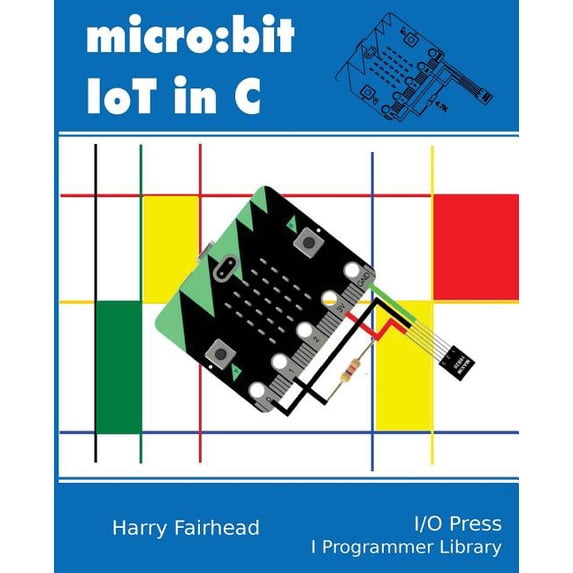
Micro: bit IoT In C (Paperback)

Micro: bit IoT In C (Paperback)

(No ratings yet)

Key item features

The BBC micro: bit is capable of taking on a variety of roles including that of a powerful IoT device. In order to gain full access to its features and to external devices, however, you need to use C which delivers the speed crucial to programs that communicate with the outside world.

Written for the electronics enthusiast, micro: bit IoT In C starts with a first "Hello Blinky" C program with the mbed online compiler, we move to the desktop to using an offline approach using the yotta development environment plus NetBeans to make things even easier. Now we are ready to discover how to control the micro: bit's I/O lines, exploring the basis of using the GPIO. For speed, however, we need to work directly with the raw hardware and also master memory mapping, pulse width modulation and other more sophisticated bus types.

From here we can start connecting sensors using first the I2C bus, then by implementing a custom protocol for a one-wire bus, and eventually adding eight channels of 12-bit AtoD with the SPI bus, which involves overcoming some subtle difficulties. We then look at serial connections, one of the oldest ways of connecting devices but still very useful. The micro: bit lacks WiFi connectivity but using a low-cost device we enable a connection to the Internet via its serial port which allows it to become a server.

To conclude we look at the micro: bit's LED display. This may only be 5x5, but it is very versatile, especially when you use pulse width modulation to vary the brightness level, something we demonstrate in a classic game, written of course in C.

Specs

Publication date, August, 2016Author, Harry FairheadBook format, PaperbackGenre, Computing & InternetPages, 196Age group, Adult

About this item

Product details

UPDATED AND EXTENDED SECOND EDITION, COVERING BOTH ORIGINAL AND V2 NOW AVAILABLE

The BBC micro: bit is capable of taking on a variety of roles including that of a powerful IoT device. In order to gain full access to its features and to external devices, however, you need to use C which delivers the speed crucial to programs that communicate with the outside world.

Written for the electronics enthusiast, micro: bit IoT In C starts with a first "Hello Blinky" C program with the mbed online compiler, we move to the desktop to using an offline approach using the yotta development environment plus NetBeans to make things even easier. Now we are ready to discover how to control the micro: bit's I/O lines, exploring the basis of using the GPIO. For speed, however, we need to work directly with the raw hardware and also master memory mapping, pulse width modulation and other more sophisticated bus types.

From here we can start connecting sensors using first the I2C bus, then by implementing a custom protocol for a one-wire bus, and eventually adding eight channels of 12-bit AtoD with the SPI bus, which involves overcoming some subtle difficulties. We then look at serial connections, one of the oldest ways of connecting devices but still very useful. The micro: bit lacks WiFi connectivity but using a low-cost device we enable a connection to the Internet via its serial port which allows it to become a server.

To conclude we look at the micro: bit's LED display. This may only be 5x5, but it is very versatile, especially when you use pulse width modulation to vary the brightness level, something we demonstrate in a classic game, written of course in C.

info:
We aim to show you accurate product information. Manufacturers, suppliers and others provide what you see here, and we have not verified it.  

Specifications

Publication date

August, 2016

Author

Harry Fairhead

Book format

Paperback

Genre

Computing & Internet

Warranty

Warranty information

Please be aware that the warranty terms on items offered for sale by third party Marketplace sellers may differ from those displayed in this section (if any). To confirm warranty terms on an item offered for sale by a third party Marketplace seller, please use the 'Contact seller' feature on the third party Marketplace seller's information page and request the item's warranty terms prior to purchase.

Customer ratings & reviews

0 out of 5 stars
0 ratings|0 reviews
This item does not have any reviews yet

Current price is $24.95
Price when purchased online
  • Free 90-day returns

How do you want your item?

Try 30 days for just $1! Choose a plan at checkout.
How do you want your item?
Ships to
Arrives by Fri, Dec 4
Sold and shipped by Walmart.com
Free 90-day returns
This item is gift eligible
Other sellers
$24.58
+Free shipping
Shipping, arrives by Sat, Dec 5 to Columbus, 43215
Sold and shipped by Alibris Books
Free Holiday returns until Jan 31
walmart plus

Try 30 days of Walmart+ for just $1!

T&C apply.