

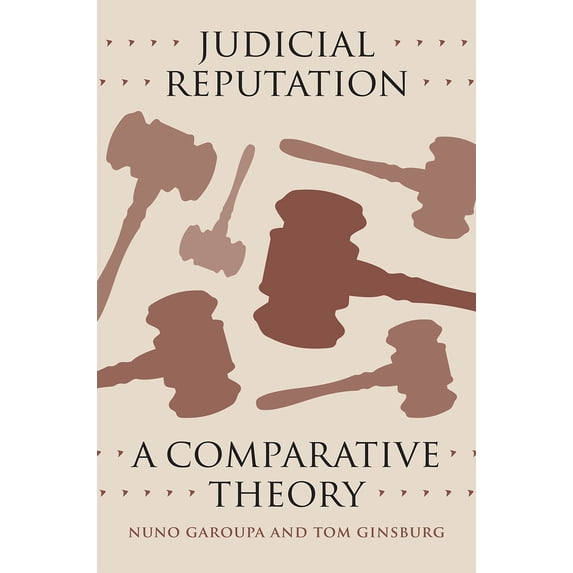
Hero image 0 of Judicial Reputation : A Comparative Theory (Paperback), 0 of 1
Judicial Reputation : A Comparative Theory (Paperback)
(No ratings yet)
Key item features
Judges are society’s elders and experts, our masters and mediators. We depend on them to dispense justice with integrity, deliberation, and efficiency. Yet judges, as Alexander Hamilton famously noted, lack the power of the purse or the sword. They must rely almost entirely on their reputations to secure compliance with their decisions, obtain resources, and maintain their political influence.
In Judicial Reputation, Nuno Garoupa and Tom Ginsburg explain how reputation is not only an essential quality of the judiciary as a whole, but also of individual judges. Perceptions of judicial systems around the world range from widespread admiration to utter contempt, and as judges participate within these institutions some earn respect, while others are scorned. Judicial Reputation explores how judges respond to the reputational incentives provided by the different audiences they interact with—lawyers, politicians, the media, and the public itself—and how institutional structures mediate these interactions. The judicial structure is best understood not through the lens of legal culture or tradition, but through the economics of information and reputation. Transcending those conventional lenses, Garoupa and Ginsburg employ their long-standing research on the latter to examine the fascinating effects that governmental interactions, multicourt systems, extrajudicial work, and the international rule-of-law movement have had on the reputations of judges in this era.
Specs
Manual & guide type, Instruction Manual
Book format, Paperback
Edition, 1
Pages, 285
Language, English
Brand, Nuno Garoupa
Manual & guide type
Instruction Manual
Book format, Paperback
Book format
Paperback
Edition, 1
Edition
1
Pages, 285
Pages
285
Language, English
Language
English
Brand, Nuno Garoupa
Brand
Nuno Garoupa
About this item
Product details
Judges are society's elders and experts, our masters and mediators. We depend on them to dispense justice with integrity, deliberation, and efficiency. Yet judges, as Alexander Hamilton famously noted, lack the power of the purse or the sword. They must rely almost entirely on their reputations to secure compliance with their decisions, obtain resources, and maintain their political influence. In Judicial Reputation, Nuno Garoupa and Tom Ginsburg explain how reputation is not only an essential quality of the judiciary as a whole, but also of individual judges. Perceptions of judicial systems around the world range from widespread admiration to utter contempt, and as judges participate within these institutions some earn respect, while others are scorned. Judicial Reputation explores how judges respond to the reputational incentives provided by the different audiences they interact with--lawyers, politicians, the media, and the public itself--and how institutional structures mediate these interactions. The judicial structure is best understood not through the lens of legal culture or tradition, but through the economics of information and reputation. Transcending those conventional lenses, Garoupa and Ginsburg employ their long-standing research on the latter to examine the fascinating effects that governmental interactions, multicourt systems, extrajudicial work, and the international rule-of-law movement have had on the reputations of judges in this era.
Judges are society’s elders and experts, our masters and mediators. We depend on them to dispense justice with integrity, deliberation, and efficiency. Yet judges, as Alexander Hamilton famously noted, lack the power of the purse or the sword. They must rely almost entirely on their reputations to secure compliance with their decisions, obtain resources, and maintain their political influence.
In Judicial Reputation, Nuno Garoupa and Tom Ginsburg explain how reputation is not only an essential quality of the judiciary as a whole, but also of individual judges. Perceptions of judicial systems around the world range from widespread admiration to utter contempt, and as judges participate within these institutions some earn respect, while others are scorned. Judicial Reputation explores how judges respond to the reputational incentives provided by the different audiences they interact with—lawyers, politicians, the media, and the public itself—and how institutional structures mediate these interactions. The judicial structure is best understood not through the lens of legal culture or tradition, but through the economics of information and reputation. Transcending those conventional lenses, Garoupa and Ginsburg employ their long-standing research on the latter to examine the fascinating effects that governmental interactions, multicourt systems, extrajudicial work, and the international rule-of-law movement have had on the reputations of judges in this era.
info:
We aim to show you accurate product information. Manufacturers, suppliers and others provide what you see here, and we have not verified it.
Specifications
Manual & guide type
Instruction Manual
Book format
Paperback
Edition
1
Pages
285
Warranty
Warranty information
Please be aware that the warranty terms on items offered for sale by third party Marketplace sellers may differ from those displayed in this section (if any). To confirm warranty terms on an item offered for sale by a third party Marketplace seller, please use the 'Contact seller' feature on the third party Marketplace seller's information page and request the item's warranty terms prior to purchase.
Similar items you might like
Based on what customers bought
Princeton Foundations of Contemporary Ph Philosophy of Law, Book 10, (Paperback) $19.25
 $1925current price $19.25
Princeton Foundations of Contemporary Ph Philosophy of Law, Book 10, (Paperback)
The Politics of the Rope (Paperback) $31.05
 $3105current price $31.05
The Politics of the Rope (Paperback)
Legal Theory Today Law as a Social Institution, Book 2, (Paperback) $37.95
 $3795current price $37.95
Legal Theory Today Law as a Social Institution, Book 2, (Paperback)
Analysis of Evidence, (Paperback) $50.80
 $5080current price $50.80
Analysis of Evidence, (Paperback)
The Rule of Law in the Real World, (Paperback) $34.08
 $3408current price $34.08
The Rule of Law in the Real World, (Paperback)
De l'origine du droit d'amortissement, (Paperback) $27.85
 $2785current price $27.85
De l'origine du droit d'amortissement, (Paperback)
Expressive Powers of Law: Theories and Limits, (Paperback) $40.99
 $4099current price $40.99
Expressive Powers of Law: Theories and Limits, (Paperback)
Norms and the Law, (Paperback) $46.00
 $4600current price $46.00
Norms and the Law, (Paperback)
Last Studies in Criminology. (Paperback) $28.75
 $2875current price $28.75
Last Studies in Criminology. (Paperback)
The master mariner's legal guide., (Paperback) $31.05
 $3105current price $31.05
The master mariner's legal guide., (Paperback)
A treatise on the law of easements., (Paperback) $32.00
 $3200current price $32.00
A treatise on the law of easements., (Paperback)
Institutes of American law. Volume 1 of 4, (Paperback) $31.95
 $3195current price $31.95
Institutes of American law. Volume 1 of 4, (Paperback)
Exploring Tort Law, (Paperback) $39.13
 $3913current price $39.13
Exploring Tort Law, (Paperback)
- $29.75
 $2975current price $29.75
-
General Historical Collections An introduction to the principles of morals and legislation /, (Paperback) $31.95
 $3195current price $31.95
General Historical Collections An introduction to the principles of morals and legislation /, (Paperback)
Punishment and Ethics: New Perspectives, (Hardcover) $56.14
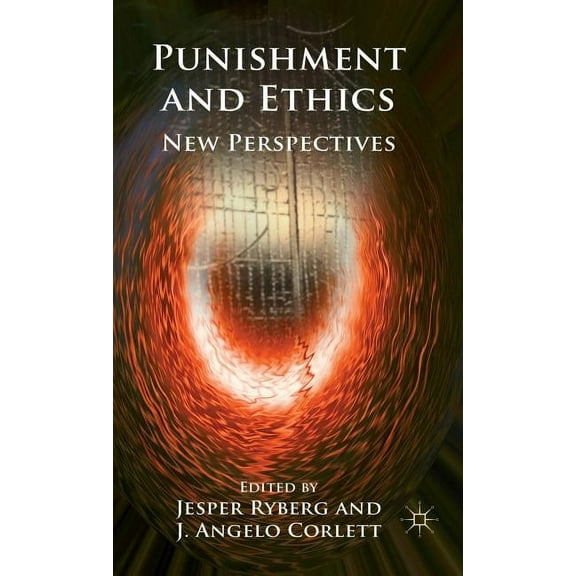 $5614current price $56.14
Punishment and Ethics: New Perspectives, (Hardcover)
The Law Relating to Bills of Lading. Paperback $26.75
 $2675current price $26.75
The Law Relating to Bills of Lading. Paperback
Abridgment of Blackstone's Commentaries., (Paperback) $28.21
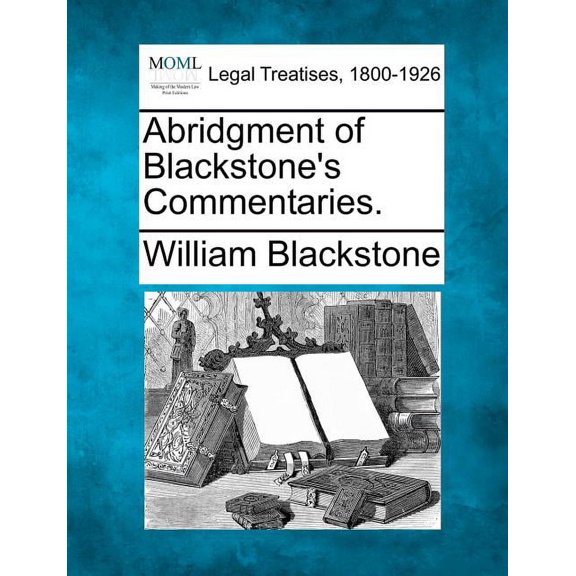 $2821current price $28.21
Abridgment of Blackstone's Commentaries., (Paperback)
Do Great Cases Make Bad Law?, (Paperback) $32.15
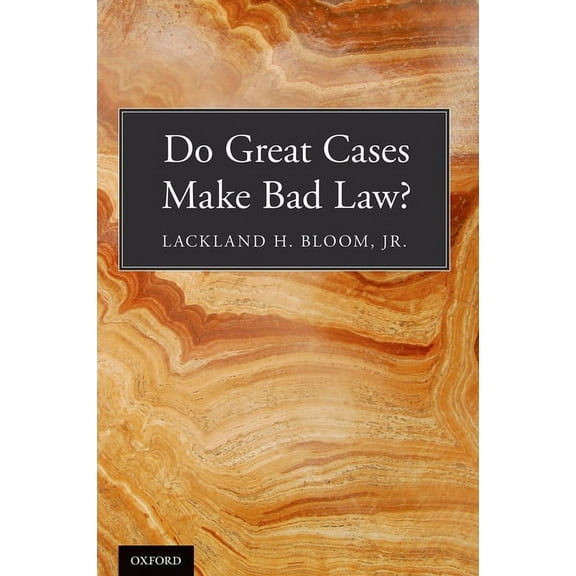 $3215current price $32.15
Do Great Cases Make Bad Law?, (Paperback)
Upgrading the Criminal Justice System : to Its Synergistic Form (Paperback) $5.38
 $538current price $5.38
Upgrading the Criminal Justice System : to Its Synergistic Form (Paperback)
Customer ratings & reviews
0 out of 5 stars
This item does not have any reviews yet

Current price is USD$32.00
Price when purchased online
 Free 90-day returns
How do you want your item?
Try 30 days for just $1! Choose a plan at checkout.
Ships to
Arrives by Thu, Dec 3
Sold and shipped by Walmart.com

Free 90-day returns

This item is gift eligible
Other sellers
$36.70
+Free shippingShipping, arrives by Tue, Dec 1 to Columbus, 43215
Sold and shipped by Alibris Books
Free Holiday returns until Jan 31

Try 30 days of Walmart+ for just $1!
T&C apply. Claim offer now
Related pages
- Governance Processes And Procedures
- Design Process Research
- Paralegals & Paralegalism Law Books
- Civil Procedure Act
- Consumer Law Books
- Jurisprudence Books
- Policy Evaluation In Public Administration
- Network Analysis Biology
- General Government Law Books
- Acquisition Strategies
- International Law Books
- Courts Books