

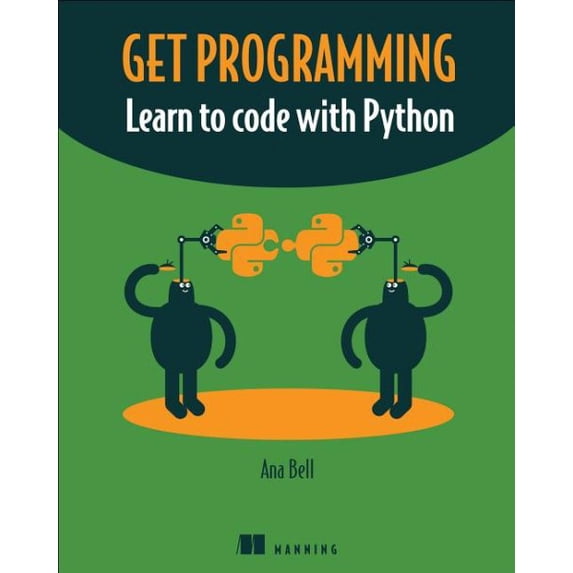
Get Programming : Learn to code with Python (Edition 1) (Paperback)
(No ratings yet)
Key item features
Summary
Get Programming: Learn to code with Python introduces you to the world of writing computer programs without drowning you in confusing jargon or theory that make getting started harder than it should be. Filled with practical examples and step-by-step lessons using the easy-on-the-brain Python language, this book will get you programming in no time!
This book works perfectly alongside our video course Get Programming with Python in Motion, available exclusively at Manning.com: www.manning.com/livevideo/get-programmin?g-with-python-in-motion
Purchase of the print book includes a free eBook in PDF, Kindle, and ePub formats from Manning Publications.
About the Technology
Let's face it. The only way to learn computer programming is to do it. Whether you want to skill up for your next job interview or just get a few pet projects done, programming can be an amazing tool. This book is designed especially for beginners, helping them learn to program hands on, step by step, project by project. It's time to get programming!
About the Book
Get Programming: Learn to code with Python teaches you the basics of computer programming using the Python language. In this exercise-driven book, you'll be doing something on nearly every page as you work through 38 compact lessons and 7 engaging capstone projects. By exploring the crystal-clear illustrations, exercises that check your understanding as you go, and tips for what to try next, you'll start thinking like a programmer in no time.
What's Inside
About the Reader
No prior programming experience needed.
About the Author
Ana Bell is an MIT lecturer and scientist who teaches the popular course, Introduction to Computer Science and Programming Using Python.
Table of Contents
LEARNING HOW TO PROGRAM
Lesson 1 - Why should you learn how to program?
Lesson 2 - Basic principles of learning a programming language
UNIT 1 - VARIABLES, TYPES, EXPRESSIONS, AND STATEMENTS
Lesson 3 - Introducing Python: a programming language
Lesson 4 - Variables and expressions: giving names and values to things
Lesson 5 - Object types and statements of code 46
Lesson 6 - Capstone project: your first Python program-convert hours to minutes
UNIT 2 - STRINGS, TUPLES, AND INTERACTING WITH THE USER
Lesson 7 - Introducing string objects: sequences of characters
Lesson 8 - Advanced string operations
Lesson 9 - Simple error messages
Lesson 10 - Tuple objects: sequences of any kind of object
Lesson 11 - Interacting with the user
Lesson 12 - Capstone project: name mashup
UNIT 3 - MAKING DECISIONS IN YOUR PROGRAMS
Lesson 13 - Introducing decisions in programs
Lesson 14 - Making more-complicated decisions
Lesson 15 - Capstone project: choose your own adventure
UNIT 4 - REPEATING TASKS
Lesson 16 - Repeating tasks with loops
Lesson 17 - Customizing loops
Lesson 18 - Repeating tasks while conditions hold
Lesson 19 - Capstone project: Scrabble, Art Edition
UNIT 5 - ORGANIZING YOUR CODE INTO REUSABLE BLOCKS
Lesson 20 - Building programs to last
Lesson 21 - Achieving modularity and abstraction with functions
Lesson 22 - Advanced operations with functions
Lesson 23 - Capstone project: analyze your friends
UNIT 6 - WORKING WITH MUTABLE DATA TYPES
Lesson 24 - Mutable and immutable objects
Lesson 25 - Working with lists
Lesson 26 - Advanced operations with lists
Lesson 27 - Dictionaries as maps between objects
Lesson 28 - Aliasing and copying lists and dictionaries
Lesson 29 - Capstone project: document similarity
UNIT 7 - MAKING YOUR OWN OBJECT TYPES BY USING OBJECT-ORIENTED PROGRAMMING
Lesson 30 - Making your own object types
Lesson 31 - Creating a class for an object type
Lesson 32 - Working with your own object types
Lesson 33 - Customizing classes
Lesson 34 - Capstone project: card game
UNIT 8 - USING LIBRARIES TO ENHANCE YOUR PROGRAMS
Lesson 35 - Useful libraries
Lesson 36 - Testing and debugging your programs
Lesson 37 - A library for graphical user interfaces
Lesson 38 - Capstone project: game of tag
Appendix A - Answers to lesson exercises
Appendix B - Python cheat sheet
Appendix C - Interesting Python libraries
Get Programming: Learn to code with Python introduces you to the world of writing computer programs without drowning you in confusing jargon or theory that make getting started harder than it should be. Filled with practical examples and step-by-step lessons using the easy-on-the-brain Python language, this book will get you programming in no time!
This book works perfectly alongside our video course Get Programming with Python in Motion, available exclusively at Manning.com: www.manning.com/livevideo/get-programmin?g-with-python-in-motion
Purchase of the print book includes a free eBook in PDF, Kindle, and ePub formats from Manning Publications.
About the Technology
Let's face it. The only way to learn computer programming is to do it. Whether you want to skill up for your next job interview or just get a few pet projects done, programming can be an amazing tool. This book is designed especially for beginners, helping them learn to program hands on, step by step, project by project. It's time to get programming!
About the Book
Get Programming: Learn to code with Python teaches you the basics of computer programming using the Python language. In this exercise-driven book, you'll be doing something on nearly every page as you work through 38 compact lessons and 7 engaging capstone projects. By exploring the crystal-clear illustrations, exercises that check your understanding as you go, and tips for what to try next, you'll start thinking like a programmer in no time.
What's Inside
- Programming skills you can use in any language
- Learn to code—no experience required
- Learn Python, the language for beginners
- Dozens of exercises and examples help you learn by doing
About the Reader
No prior programming experience needed.
About the Author
Ana Bell is an MIT lecturer and scientist who teaches the popular course, Introduction to Computer Science and Programming Using Python.
Table of Contents
LEARNING HOW TO PROGRAM
Lesson 1 - Why should you learn how to program?
Lesson 2 - Basic principles of learning a programming language
UNIT 1 - VARIABLES, TYPES, EXPRESSIONS, AND STATEMENTS
Lesson 3 - Introducing Python: a programming language
Lesson 4 - Variables and expressions: giving names and values to things
Lesson 5 - Object types and statements of code 46
Lesson 6 - Capstone project: your first Python program-convert hours to minutes
UNIT 2 - STRINGS, TUPLES, AND INTERACTING WITH THE USER
Lesson 7 - Introducing string objects: sequences of characters
Lesson 8 - Advanced string operations
Lesson 9 - Simple error messages
Lesson 10 - Tuple objects: sequences of any kind of object
Lesson 11 - Interacting with the user
Lesson 12 - Capstone project: name mashup
UNIT 3 - MAKING DECISIONS IN YOUR PROGRAMS
Lesson 13 - Introducing decisions in programs
Lesson 14 - Making more-complicated decisions
Lesson 15 - Capstone project: choose your own adventure
UNIT 4 - REPEATING TASKS
Lesson 16 - Repeating tasks with loops
Lesson 17 - Customizing loops
Lesson 18 - Repeating tasks while conditions hold
Lesson 19 - Capstone project: Scrabble, Art Edition
UNIT 5 - ORGANIZING YOUR CODE INTO REUSABLE BLOCKS
Lesson 20 - Building programs to last
Lesson 21 - Achieving modularity and abstraction with functions
Lesson 22 - Advanced operations with functions
Lesson 23 - Capstone project: analyze your friends
UNIT 6 - WORKING WITH MUTABLE DATA TYPES
Lesson 24 - Mutable and immutable objects
Lesson 25 - Working with lists
Lesson 26 - Advanced operations with lists
Lesson 27 - Dictionaries as maps between objects
Lesson 28 - Aliasing and copying lists and dictionaries
Lesson 29 - Capstone project: document similarity
UNIT 7 - MAKING YOUR OWN OBJECT TYPES BY USING OBJECT-ORIENTED PROGRAMMING
Lesson 30 - Making your own object types
Lesson 31 - Creating a class for an object type
Lesson 32 - Working with your own object types
Lesson 33 - Customizing classes
Lesson 34 - Capstone project: card game
UNIT 8 - USING LIBRARIES TO ENHANCE YOUR PROGRAMS
Lesson 35 - Useful libraries
Lesson 36 - Testing and debugging your programs
Lesson 37 - A library for graphical user interfaces
Lesson 38 - Capstone project: game of tag
Appendix A - Answers to lesson exercises
Appendix B - Python cheat sheet
Appendix C - Interesting Python libraries
Specs
Publication date, December, 2017
Author, Ana Bell
Book format, Paperback
Genre, Computing & Internet
Pages, 456
Age group, Adult
Publication date
December, 2017
Author, Ana Bell
Author
Ana Bell
Book format, Paperback
Book format
Paperback
Genre, Computing & Internet
Genre
Computing & Internet
Pages, 456
Pages
456
Age group, Adult
Age group
Adult
About this item
Product details
Summary Get Programming: Learn to code with Python introduces you to the world of writing computer programs without drowning you in confusing jargon or theory that make getting started harder than it should be. Filled with practical examples and step-by-step lessons using the easy-on-the-brain Python language, this book will get you programming in no time! This book works perfectly alongside our video course Get Programming with Python in Motion, available exclusively at Manning.com: www.manning.com/livevideo/get-programmin?g-with-python-in-motion Purchase of the print book includes a free eBook in PDF, Kindle, and ePub formats from Manning Publications. About the Technology Let's face it. The only way to learn computer programming is to do it. Whether you want to skill up for your next job interview or just get a few pet projects done, programming can be an amazing tool. This book is designed especially for beginners, helping them learn to program hands on, step by step, project by project. It's time to get programming! About the Book Get Programming: Learn to code with Python teaches you the basics of computer programming using the Python language. In this exercise-driven book, you'll be doing something on nearly every page as you work through 38 compact lessons and 7 engaging capstone projects. By exploring the crystal-clear illustrations, exercises that check your understanding as you go, and tips for what to try next, you'll start thinking like a programmer in no time. What's Inside
About the Reader No prior programming experience needed. About the Author Ana Bell is an MIT lecturer and scientist who teaches the popular course, Introduction to Computer Science and Programming Using Python. Table of Contents LEARNING HOW TO PROGRAM Lesson 1 - Why should you learn how to program?
Lesson 2 - Basic principles of learning a programming language UNIT 1 - VARIABLES, TYPES, EXPRESSIONS, AND STATEMENTS Lesson 3 - Introducing Python: a programming language
Lesson 4 - Variables and expressions: giving names and values to things
Lesson 5 - Object types and statements of code 46
Lesson 6 - Capstone project: your first Python program-convert hours to minutes UNIT 2 - STRINGS, TUPLES, AND INTERACTING WITH THE USER Lesson 7 - Introducing string objects: sequences of characters
Lesson 8 - Advanced string operations
Lesson 9 - Simple error messages
Lesson 10 - Tuple objects: sequences of any kind of object
Lesson 11 - Interacting with the user
Lesson 12 - Capstone project: name mashup UNIT 3 - MAKING DECISIONS IN YOUR PROGRAMS Lesson 13 - Introducing decisions in programs
Lesson 14 - Making more-complicated decisions
Lesson 15 - Capstone project: choose your own adventure UNIT 4 - REPEATING TASKS Lesson 16 - Repeating tasks with loops
Lesson 17 - Customizing loops
Lesson 18 - Repeating tasks while conditions hold
Lesson 19 - Capstone project: Scrabble, Art Edition UNIT 5 - ORGANIZING YOUR CODE INTO REUSABLE BLOCKS Lesson 20 - Building programs to last
Lesson 21 - Achieving modularity and abstraction with functions
Lesson 22 - Advanced operations with functions
Lesson 23 - Capstone project: analyze your friends UNIT 6 - WORKING WITH MUTABLE DATA TYPES Lesson 24 - Mutable and immutable objects
Lesson 25 - Working with lists
Lesson 26 - Advanced operations with lists
Lesson 27 - Dictionaries as maps between objects
Lesson 28 - Aliasing and copying lists and dictionaries
Lesson 29 - Capstone project: document similarity UNIT 7 - MAKING YOUR OWN OBJECT TYPES B
- Programming skills you can use in any language Learn to code--no experience required Learn Python, the language for beginners Dozens of exercises and examples help you learn by doing
About the Reader No prior programming experience needed. About the Author Ana Bell is an MIT lecturer and scientist who teaches the popular course, Introduction to Computer Science and Programming Using Python. Table of Contents LEARNING HOW TO PROGRAM Lesson 1 - Why should you learn how to program?
Lesson 2 - Basic principles of learning a programming language UNIT 1 - VARIABLES, TYPES, EXPRESSIONS, AND STATEMENTS Lesson 3 - Introducing Python: a programming language
Lesson 4 - Variables and expressions: giving names and values to things
Lesson 5 - Object types and statements of code 46
Lesson 6 - Capstone project: your first Python program-convert hours to minutes UNIT 2 - STRINGS, TUPLES, AND INTERACTING WITH THE USER Lesson 7 - Introducing string objects: sequences of characters
Lesson 8 - Advanced string operations
Lesson 9 - Simple error messages
Lesson 10 - Tuple objects: sequences of any kind of object
Lesson 11 - Interacting with the user
Lesson 12 - Capstone project: name mashup UNIT 3 - MAKING DECISIONS IN YOUR PROGRAMS Lesson 13 - Introducing decisions in programs
Lesson 14 - Making more-complicated decisions
Lesson 15 - Capstone project: choose your own adventure UNIT 4 - REPEATING TASKS Lesson 16 - Repeating tasks with loops
Lesson 17 - Customizing loops
Lesson 18 - Repeating tasks while conditions hold
Lesson 19 - Capstone project: Scrabble, Art Edition UNIT 5 - ORGANIZING YOUR CODE INTO REUSABLE BLOCKS Lesson 20 - Building programs to last
Lesson 21 - Achieving modularity and abstraction with functions
Lesson 22 - Advanced operations with functions
Lesson 23 - Capstone project: analyze your friends UNIT 6 - WORKING WITH MUTABLE DATA TYPES Lesson 24 - Mutable and immutable objects
Lesson 25 - Working with lists
Lesson 26 - Advanced operations with lists
Lesson 27 - Dictionaries as maps between objects
Lesson 28 - Aliasing and copying lists and dictionaries
Lesson 29 - Capstone project: document similarity UNIT 7 - MAKING YOUR OWN OBJECT TYPES B
Summary
Get Programming: Learn to code with Python introduces you to the world of writing computer programs without drowning you in confusing jargon or theory that make getting started harder than it should be. Filled with practical examples and step-by-step lessons using the easy-on-the-brain Python language, this book will get you programming in no time!
This book works perfectly alongside our video course Get Programming with Python in Motion, available exclusively at Manning.com: www.manning.com/livevideo/get-programmin?g-with-python-in-motion
Purchase of the print book includes a free eBook in PDF, Kindle, and ePub formats from Manning Publications.
About the Technology
Let's face it. The only way to learn computer programming is to do it. Whether you want to skill up for your next job interview or just get a few pet projects done, programming can be an amazing tool. This book is designed especially for beginners, helping them learn to program hands on, step by step, project by project. It's time to get programming!
About the Book
Get Programming: Learn to code with Python teaches you the basics of computer programming using the Python language. In this exercise-driven book, you'll be doing something on nearly every page as you work through 38 compact lessons and 7 engaging capstone projects. By exploring the crystal-clear illustrations, exercises that check your understanding as you go, and tips for what to try next, you'll start thinking like a programmer in no time.
What's Inside
About the Reader
No prior programming experience needed.
About the Author
Ana Bell is an MIT lecturer and scientist who teaches the popular course, Introduction to Computer Science and Programming Using Python.
Table of Contents
LEARNING HOW TO PROGRAM
Lesson 1 - Why should you learn how to program?
Lesson 2 - Basic principles of learning a programming language
UNIT 1 - VARIABLES, TYPES, EXPRESSIONS, AND STATEMENTS
Lesson 3 - Introducing Python: a programming language
Lesson 4 - Variables and expressions: giving names and values to things
Lesson 5 - Object types and statements of code 46
Lesson 6 - Capstone project: your first Python program-convert hours to minutes
UNIT 2 - STRINGS, TUPLES, AND INTERACTING WITH THE USER
Lesson 7 - Introducing string objects: sequences of characters
Lesson 8 - Advanced string operations
Lesson 9 - Simple error messages
Lesson 10 - Tuple objects: sequences of any kind of object
Lesson 11 - Interacting with the user
Lesson 12 - Capstone project: name mashup
UNIT 3 - MAKING DECISIONS IN YOUR PROGRAMS
Lesson 13 - Introducing decisions in programs
Lesson 14 - Making more-complicated decisions
Lesson 15 - Capstone project: choose your own adventure
UNIT 4 - REPEATING TASKS
Lesson 16 - Repeating tasks with loops
Lesson 17 - Customizing loops
Lesson 18 - Repeating tasks while conditions hold
Lesson 19 - Capstone project: Scrabble, Art Edition
UNIT 5 - ORGANIZING YOUR CODE INTO REUSABLE BLOCKS
Lesson 20 - Building programs to last
Lesson 21 - Achieving modularity and abstraction with functions
Lesson 22 - Advanced operations with functions
Lesson 23 - Capstone project: analyze your friends
UNIT 6 - WORKING WITH MUTABLE DATA TYPES
Lesson 24 - Mutable and immutable objects
Lesson 25 - Working with lists
Lesson 26 - Advanced operations with lists
Lesson 27 - Dictionaries as maps between objects
Lesson 28 - Aliasing and copying lists and dictionaries
Lesson 29 - Capstone project: document similarity
UNIT 7 - MAKING YOUR OWN OBJECT TYPES BY USING OBJECT-ORIENTED PROGRAMMING
Lesson 30 - Making your own object types
Lesson 31 - Creating a class for an object type
Lesson 32 - Working with your own object types
Lesson 33 - Customizing classes
Lesson 34 - Capstone project: card game
UNIT 8 - USING LIBRARIES TO ENHANCE YOUR PROGRAMS
Lesson 35 - Useful libraries
Lesson 36 - Testing and debugging your programs
Lesson 37 - A library for graphical user interfaces
Lesson 38 - Capstone project: game of tag
Appendix A - Answers to lesson exercises
Appendix B - Python cheat sheet
Appendix C - Interesting Python libraries
Get Programming: Learn to code with Python introduces you to the world of writing computer programs without drowning you in confusing jargon or theory that make getting started harder than it should be. Filled with practical examples and step-by-step lessons using the easy-on-the-brain Python language, this book will get you programming in no time!
This book works perfectly alongside our video course Get Programming with Python in Motion, available exclusively at Manning.com: www.manning.com/livevideo/get-programmin?g-with-python-in-motion
Purchase of the print book includes a free eBook in PDF, Kindle, and ePub formats from Manning Publications.
About the Technology
Let's face it. The only way to learn computer programming is to do it. Whether you want to skill up for your next job interview or just get a few pet projects done, programming can be an amazing tool. This book is designed especially for beginners, helping them learn to program hands on, step by step, project by project. It's time to get programming!
About the Book
Get Programming: Learn to code with Python teaches you the basics of computer programming using the Python language. In this exercise-driven book, you'll be doing something on nearly every page as you work through 38 compact lessons and 7 engaging capstone projects. By exploring the crystal-clear illustrations, exercises that check your understanding as you go, and tips for what to try next, you'll start thinking like a programmer in no time.
What's Inside
- Programming skills you can use in any language
- Learn to code—no experience required
- Learn Python, the language for beginners
- Dozens of exercises and examples help you learn by doing
About the Reader
No prior programming experience needed.
About the Author
Ana Bell is an MIT lecturer and scientist who teaches the popular course, Introduction to Computer Science and Programming Using Python.
Table of Contents
LEARNING HOW TO PROGRAM
Lesson 1 - Why should you learn how to program?
Lesson 2 - Basic principles of learning a programming language
UNIT 1 - VARIABLES, TYPES, EXPRESSIONS, AND STATEMENTS
Lesson 3 - Introducing Python: a programming language
Lesson 4 - Variables and expressions: giving names and values to things
Lesson 5 - Object types and statements of code 46
Lesson 6 - Capstone project: your first Python program-convert hours to minutes
UNIT 2 - STRINGS, TUPLES, AND INTERACTING WITH THE USER
Lesson 7 - Introducing string objects: sequences of characters
Lesson 8 - Advanced string operations
Lesson 9 - Simple error messages
Lesson 10 - Tuple objects: sequences of any kind of object
Lesson 11 - Interacting with the user
Lesson 12 - Capstone project: name mashup
UNIT 3 - MAKING DECISIONS IN YOUR PROGRAMS
Lesson 13 - Introducing decisions in programs
Lesson 14 - Making more-complicated decisions
Lesson 15 - Capstone project: choose your own adventure
UNIT 4 - REPEATING TASKS
Lesson 16 - Repeating tasks with loops
Lesson 17 - Customizing loops
Lesson 18 - Repeating tasks while conditions hold
Lesson 19 - Capstone project: Scrabble, Art Edition
UNIT 5 - ORGANIZING YOUR CODE INTO REUSABLE BLOCKS
Lesson 20 - Building programs to last
Lesson 21 - Achieving modularity and abstraction with functions
Lesson 22 - Advanced operations with functions
Lesson 23 - Capstone project: analyze your friends
UNIT 6 - WORKING WITH MUTABLE DATA TYPES
Lesson 24 - Mutable and immutable objects
Lesson 25 - Working with lists
Lesson 26 - Advanced operations with lists
Lesson 27 - Dictionaries as maps between objects
Lesson 28 - Aliasing and copying lists and dictionaries
Lesson 29 - Capstone project: document similarity
UNIT 7 - MAKING YOUR OWN OBJECT TYPES BY USING OBJECT-ORIENTED PROGRAMMING
Lesson 30 - Making your own object types
Lesson 31 - Creating a class for an object type
Lesson 32 - Working with your own object types
Lesson 33 - Customizing classes
Lesson 34 - Capstone project: card game
UNIT 8 - USING LIBRARIES TO ENHANCE YOUR PROGRAMS
Lesson 35 - Useful libraries
Lesson 36 - Testing and debugging your programs
Lesson 37 - A library for graphical user interfaces
Lesson 38 - Capstone project: game of tag
Appendix A - Answers to lesson exercises
Appendix B - Python cheat sheet
Appendix C - Interesting Python libraries
info:
We aim to show you accurate product information. Manufacturers, suppliers and others provide what you see here, and we have not verified it.
Specifications
Publication date
December, 2017
Author
Ana Bell
Book format
Paperback
Genre
Computing & Internet
Warranty
Warranty information
Please be aware that the warranty terms on items offered for sale by third party Marketplace sellers may differ from those displayed in this section (if any). To confirm warranty terms on an item offered for sale by a third party Marketplace seller, please use the 'Contact seller' feature on the third party Marketplace seller's information page and request the item's warranty terms prior to purchase.
Similar items you might like
Based on what customers bought
Fundamentos de estadÃstica descriptiva en Python, (Paperback) $67.10
 $6710current price $67.10
Fundamentos de estadÃstica descriptiva en Python, (Paperback)
Python Programming Using Problem Solving, (Paperback) $47.31
 $4731current price $47.31
Python Programming Using Problem Solving, (Paperback)
Python programming art: from basics to mastery, (Paperback) $39.99
 $3999current price $39.99
Python programming art: from basics to mastery, (Paperback)
Python for Non-Pythonians: How to Win Over Programming Languages, (Paperback) $31.98
 $3198current price $31.98
Python for Non-Pythonians: How to Win Over Programming Languages, (Paperback)
Python Programming for Beginners 2026, (Paperback) $29.99
 $2999current price $29.99
Python Programming for Beginners 2026, (Paperback)
Python and Algorithmic Thinking for the Complete Beginner (3rd Edition): Learn to Think Like a Programmer, (Paperback) $49.99
 $4999current price $49.99
Python and Algorithmic Thinking for the Complete Beginner (3rd Edition): Learn to Think Like a Programmer, (Paperback)
Ai-Assisted Python for Nonprogrammers: Learn Programming from the Ground Up, (Paperback) $47.70
 $4770current price $47.70
Ai-Assisted Python for Nonprogrammers: Learn Programming from the Ground Up, (Paperback)
Python Programming for Linguistics and Digital Humanities: Applications for Text-Focused Fields, (Paperback) $32.80
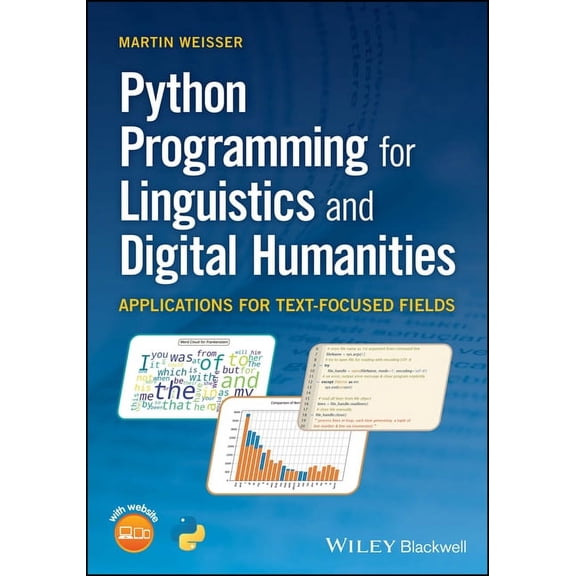 $3280current price $32.80
Python Programming for Linguistics and Digital Humanities: Applications for Text-Focused Fields, (Paperback)
Dobre Praktyki i Wzorce Projektowe w Python, (Paperback) $31.00
 $3100current price $31.00
Dobre Praktyki i Wzorce Projektowe w Python, (Paperback)
Python Programming: A Step-by-Step Guide to Learning the Language, (Paperback) $68.70
 $6870current price $68.70
Python Programming: A Step-by-Step Guide to Learning the Language, (Paperback)
Prompting Python for Full Stack Development, (Paperback) $39.95
 $3995current price $39.95
Prompting Python for Full Stack Development, (Paperback)
Logic Programming '89, (Paperback) $54.99
 $5499current price $54.99
Logic Programming '89, (Paperback)
Python API Development Fundamentals, (Paperback) $28.28 Was $33.03
 $2828current price $28.28, Was $33.03$33.03
Python API Development Fundamentals, (Paperback)
Python 3 -ohjelmoinnin perusteet, (Paperback) $26.52
 $2652current price $26.52
Python 3 -ohjelmoinnin perusteet, (Paperback)
Grundlagen der Python-Programmierung, (Paperback) $51.00
 $5100current price $51.00
Grundlagen der Python-Programmierung, (Paperback)
Computer Programming Languages Modern Python Programming for Beginners, Book 2, (Paperback) $24.99
 $2499current price $24.99
Computer Programming Languages Modern Python Programming for Beginners, Book 2, (Paperback)
Hands-On Linear and Integer Programming with Python, (Paperback) $41.07
 $4107current price $41.07
Hands-On Linear and Integer Programming with Python, (Paperback)
Python Programming for Beginners, (Paperback) $18.99
 $1899current price $18.99
Python Programming for Beginners, (Paperback)
Coding For Kids in Python, (Paperback) $15.99
 $1599current price $15.99
Coding For Kids in Python, (Paperback)
JavaScript Object Programming, (Paperback) $27.32
 $2732current price $27.32
JavaScript Object Programming, (Paperback)
Customer ratings & reviews
0 out of 5 stars
This item does not have any reviews yet
Current price is USD$60.64
Price when purchased online
- Free shipping
 Free Holiday returns until Jan 31
$60.64
$17.28
Save $43.36 vs. new
How do you want your item?
Ships to
Arrives between Dec 8 - Dec 14
|
Sold and shipped by RAREWAVES-USA
4.578936215299851 out of 5 stars

Extended holiday returns
Free Holiday returns until Jan 31Related pages
- Best Sellers In Books C Programming
- C 10 C Programming Language Books
- Data Science Programming
- Best Sellers In Books Computer Programming Logic
- Learn C Programming For Beginners
- Coding Programming Technology Engineering
- General Programming Books
- Algorithm Books
- Expert Systems Books
- Open Source Books
- Information Theory Books
- Distributed Systems & Computing Books