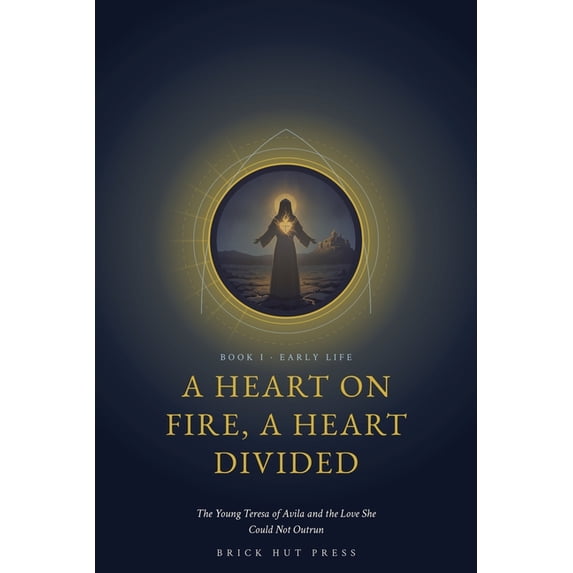
St. Teresa of Avila was a Spanish Carmelite mystic and reformer of the Carmelite order. What happens to a fervent soul when the world refuses to cooperate, leaving a young woman divided between God and the parlor?
The story begins in sixteenth century Avila, a city shaped by the Reconquista, where a seven year old Teresa convinced her brother Rodrigo to seek martyrdom in the land of the Moors. Her adolescent years brought the death of her mother, Beatriz de Ahumada, and an anguished decision to enter the Carmelite Convent of the Incarnation. Instead of immediate sanctity, she faced a catastrophic coma in 1539 and almost two decades of spiritual mediocrity in a crowded convent. The volume leaves the reader at the threshold of her second conversion before a statue of the wounded Christ, tracing her first hesitant steps toward mental prayer and the mystical locutions that followed.
- Childhood fervor: how the loss of her mother at age fourteen shaped her vocation and led her to the Carmelite Convent of the Incarnation.
- Physical suffering: the coma of 1539 and the three years of paralysis that followed.
- Spiritual dryness: her reliance on Francisco de Osuna and his Third Spiritual Alphabet when prayer would not come.
- Interior voice: the Inquisition burning her preferred texts in 1559 and the interior voice that promised a different kind of courage.
Book One of The Flame and the Castle: A Life of St. Teresa of Avila. This account hands over to the next volume, The Roads of Castile, which takes up what the previous volume left behind to follow her across Spain as she negotiates with church and royal authorities while experiencing mystical marriage. The series concludes with The Seventh Mansion, explaining her instructions concerning the soul's interior castle and the four waters of prayer.
Readers seeking an introduction to the young Saint Teresa of Avila that does not skip her two decades of spiritual mediocrity or her hesitant steps toward mental prayer.