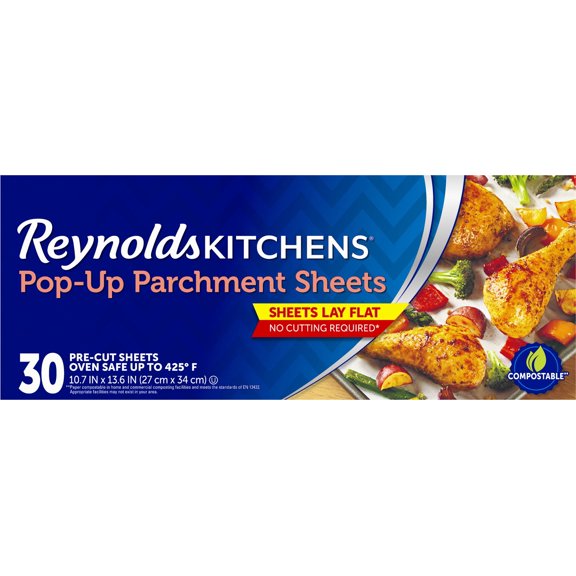
Parchment Baking Paper(2)
Best seller Reynolds Kitchens Cookie Baking Sheets, Pre-Cut Parchment Paper Sheets, 12 in x 16 in, 25 Count From $4.73
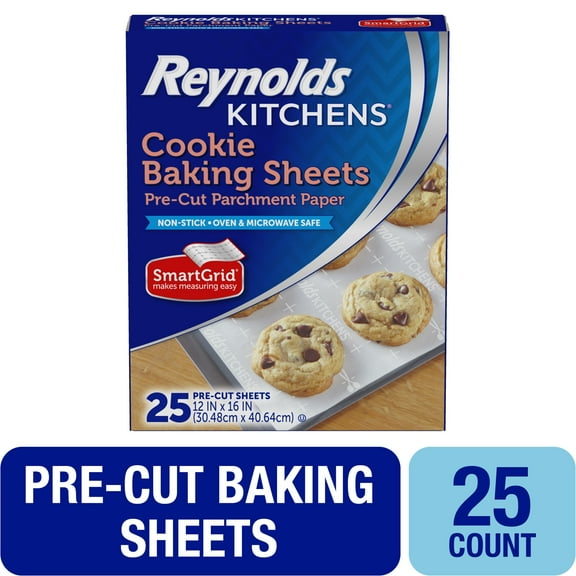
Reynolds Kitchens Cookie Baking Sheets, Pre-Cut Parchment Paper Sheets, 12 in x 16 in, 25 Count
Reynolds Kitchens Parchment Paper with SmartGrid, 90 Square Feet $7.57 8.4 ¢/sq ft
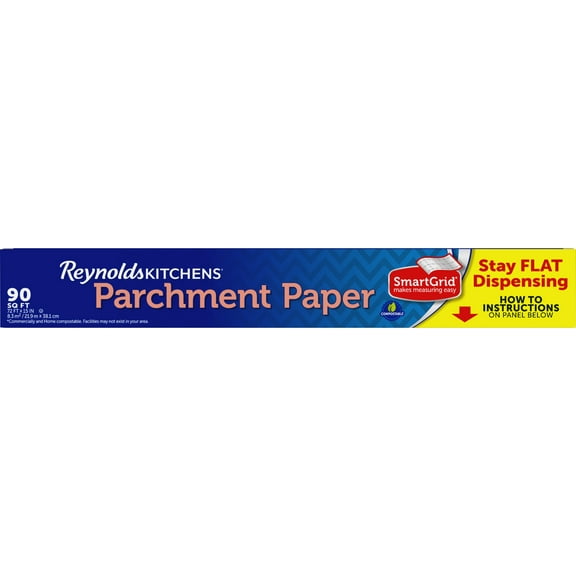
Reynolds Kitchens Parchment Paper with SmartGrid, 90 Square Feet
Other options to consider(1)
Best seller Reynolds Cut-Rite Wax Paper, 75 Square Feet From $2.66
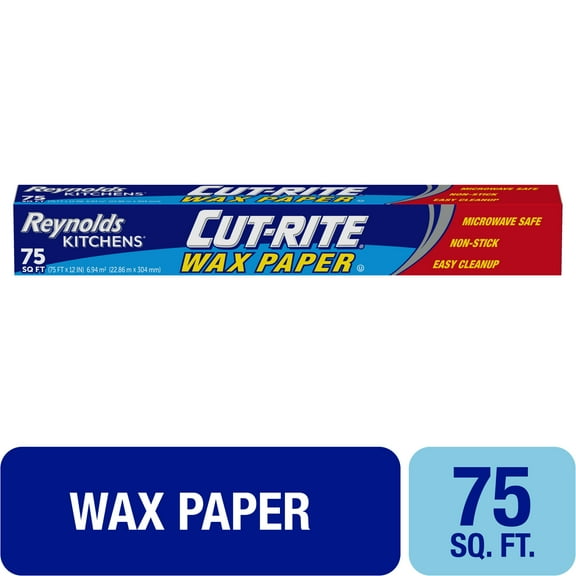
Reynolds Cut-Rite Wax Paper, 75 Square Feet
FAQ
What’s the difference between baking paper and parchment?
In home kitchens, “baking paper” and “parchment paper” usually mean the same thing—nonstick, oven-safe paper treated (often with silicone) to help foods release more easily.
- Common use: Lining sheet pans, cake tins, and trays for easier cleanup and more reliable release.
- Heat limits: Many parchments are rated around standard baking temperatures, but ratings can vary by brand. Checking the package is a good idea.
- Not the same as wax paper: Wax-coated paper isn’t designed for the oven. For baking tasks, stick with oven-safe parchment.
Results can vary by recipe and oven, so consider a quick test if you’re trying a new technique.
Any downsides to using parchment paper?
Parchment paper is handy, but there are trade-offs to keep in mind.
- Heat limits: It isn’t intended for broilers, open flames, or very high heat. Always follow the temperature guidance on the package.
- Browning: Because it reduces direct contact with the pan, foods may brown or crisp a bit less.
- Slippage: Lightweight sheets can slide, especially with very light foods. A small dab of batter or food at the corners can help keep it in place.
- Moisture/grease: Very wet or high-fat bakes may cause pooling.
Depending on your texture goals, using a bare, well-prepped pan for part of the bake can help boost crisping.
Which side of parchment paper should face the food?
Most kitchen parchment is coated on both sides, so either side can face the food. If your paper has printed guides or a textured pattern, those markings are typically food-safe and can face up or down.
- Not sure? A quick peek at the packaging can confirm if it’s double-sided.
- For best release: Smooth the paper flat so it makes even contact with the pan.
- Tip: If you’re lining a cake pan, tracing and trimming to fit can help reduce wrinkles that imprint on the cake.
As with any bakeware liner, always follow the usage notes on the package.
How do I choose rolls vs pre-cut sheets?
It comes down to your workflow and pan sizes.
- Rolls: Flexible length for odd-shaped pans and custom cuts. Ideal if you bake different tray sizes.
- Pre-cut sheets: Faster and consistent—great for cookie runs. Common sizes like 12" x 16" fit standard half-sheet pans.
- Storage: Rolls tuck into drawers; sheets stack flat and are easy to grab.
- Features: Some sheets include gridlines to help space cookies or slice bars evenly.
You’ll find both styles here, so you can match the format to your pans and prep style without extra trimming.
How do I use parchment paper in an air fryer?
Parchment can be used thoughtfully in many air fryers, but technique matters.
- Check your manual: Appliance guidance and max temperatures vary.
- Cut to size: Keep paper within the basket and away from heating elements.
- Weigh it down: Always place food on top; loose paper can lift and contact the heater.
- Airflow: Perforated liners or punching a few holes can help maintain circulation.
- Heat limits: Stay within the paper’s rated temperature and avoid broil-like settings.
Monitor your first run to see how your model behaves—small adjustments to cut size and food placement can improve results.
Popular in Parchment Baking Paper for Easy Cooking
Related Products
OUNONA Parchment Paper Roll For Baking Baking Parchment Circles White 1 Set 100 Pcs
 OUNONA Parchment Paper Roll For Baking Baking Parchment Circles White 1 Set 100 Pcs$13.73current price $13.73
CTIRCHIU 350pcs Non-Stick Round Parchment Paper Circles for Baking, Cooking, Kitchen Use, White Disposable Liners
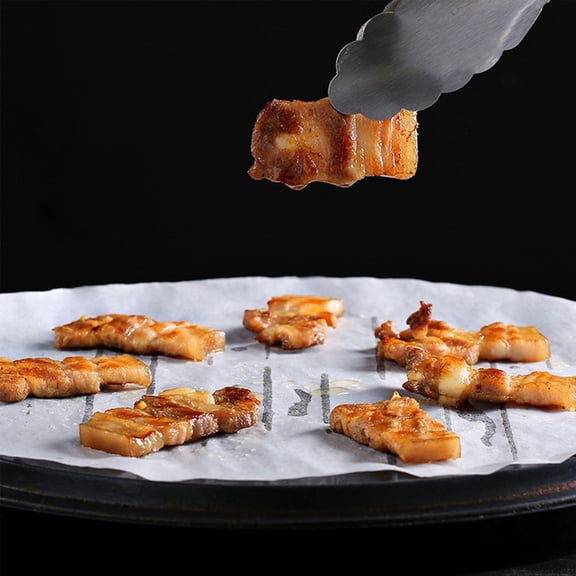 CTIRCHIU 350pcs Non-Stick Round Parchment Paper Circles for Baking, Cooking, Kitchen Use, White Disposable Liners$12.96current price $12.96
100Pcs Disposable Parchment Paper,QZS Non-Stick Food Grade Parchment Liners,8.3x13In Durable Banana Breads Baking Tool for Home,Indoor
 100Pcs Disposable Parchment Paper,QZS Non-Stick Food Grade Parchment Liners,8.3x13In Durable Banana Breads Baking Tool for Home,Indoor$12.99current price $12.99
100PCS Wax Paper Sheets,Parchment Paper,Square Non-stick Precut Baking Parchment,Parchment Baking Paper Sheets for BBQ,Kitchen,Outdoor
 100PCS Wax Paper Sheets,Parchment Paper,Square Non-stick Precut Baking Parchment,Parchment Baking Paper Sheets for BBQ,Kitchen,Outdoor$10.41current price $10.41
ORDDIART Non-Stick Reusable Parchment Paper Sheets for Baking, and Easy to Clean, 1 Set
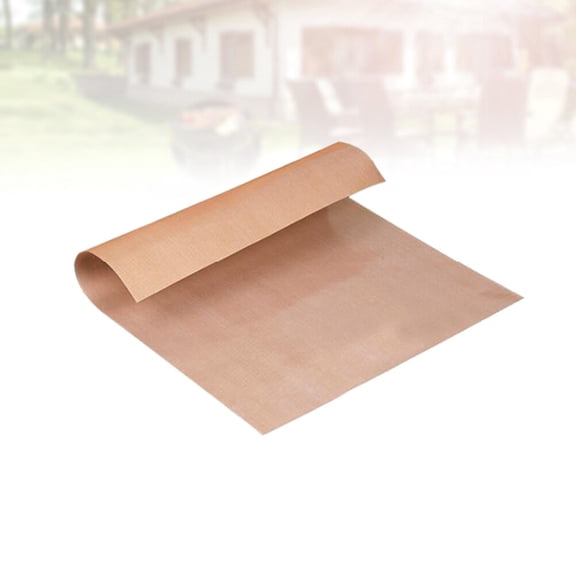 ORDDIART Non-Stick Reusable Parchment Paper Sheets for Baking, and Easy to Clean, 1 Set$9.50current price $9.50
LOLIPPYY 1 Roll Non-Stick Baking Parchment Paper for Kitchen Use with Oil Absorbing and
 LOLIPPYY 1 Roll Non-Stick Baking Parchment Paper for Kitchen Use with Oil Absorbing and$12.62current price $12.62
Kraoden Non-Stick Parchment Paper Sheets for Baking, Greaseproof Silicone Oil Paper, Double-Sided Food Wrapping, Versatile Oven Cooking Liner for Cookies, Bread, Cakes
 Kraoden Non-Stick Parchment Paper Sheets for Baking, Greaseproof Silicone Oil Paper, Double-Sided Food Wrapping, Versatile Oven Cooking Liner for Cookies, Bread, Cakes$6.99current price $6.99
Baklicious 220 Pcs 9x13 in Parchment Paper Sheets Pre-Cut Non-Stick Parchment Baking Paper
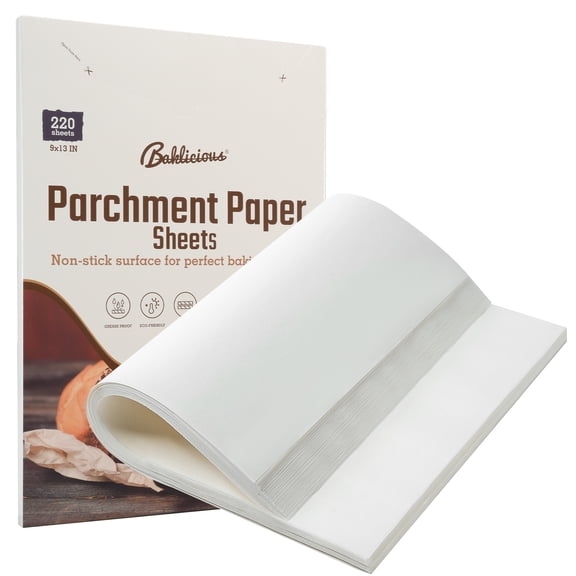 Baklicious 220 Pcs 9x13 in Parchment Paper Sheets Pre-Cut Non-Stick Parchment Baking Paper$13.99current price $13.99
200 Pcs 8x8 inch Precut Non-Stick Baking Parchment Paper Sheets Bun Sheet Pan Liners, Unbleached Parchment Paper Baking Supplies (Brown-8"x8")
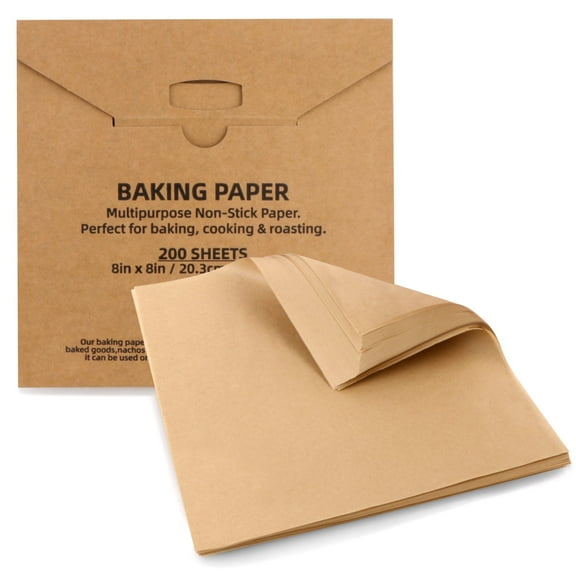 200 Pcs 8x8 inch Precut Non-Stick Baking Parchment Paper Sheets Bun Sheet Pan Liners, Unbleached Parchment Paper Baking Supplies (Brown-8"x8")$11.99current price $11.99
Nmkwnr 200 Pack Parchment Paper Baking Sheets Non Stick Baking Parchment Paper for Baking,Fryer, Cooking, Oven, 12" x 12"
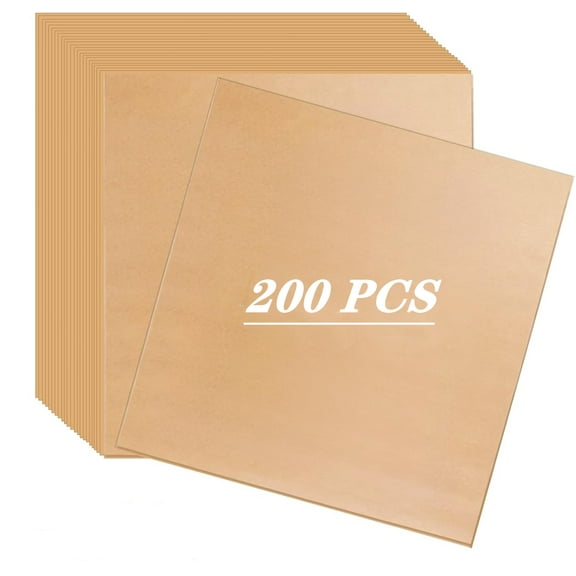 Nmkwnr 200 Pack Parchment Paper Baking Sheets Non Stick Baking Parchment Paper for Baking,Fryer, Cooking, Oven, 12" x 12"$36.69current price $36.69
Katbite Heavy Duty Parchment Paper for Baking, 9x13 inch, 200 Pcs
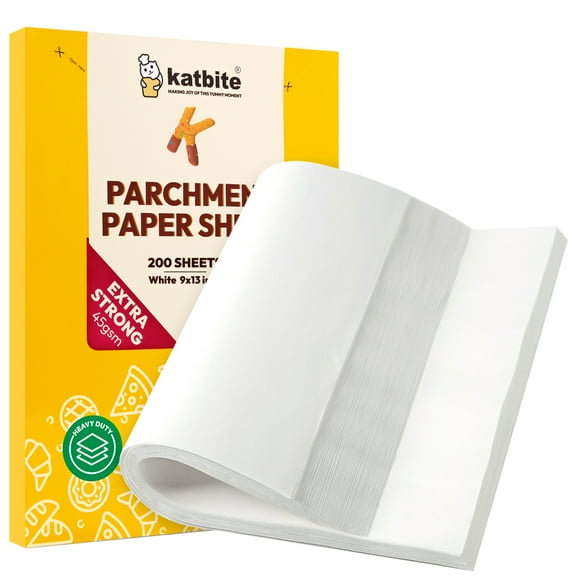 Katbite Heavy Duty Parchment Paper for Baking, 9x13 inch, 200 Pcs$12.99current price $12.99
Yellow Label Parchment Pan Liner, 12 X 12, 1,000/carton | Bundle of 2
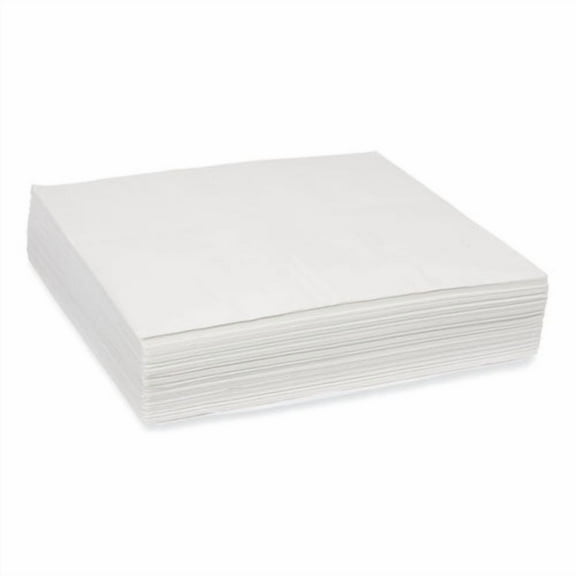 Yellow Label Parchment Pan Liner, 12 X 12, 1,000/carton | Bundle of 2$231.81current price $231.81
Katbite 6-Inch Round Parchment Paper, 400 Count (2 Packs of 200), Non-Stick Baking Paper
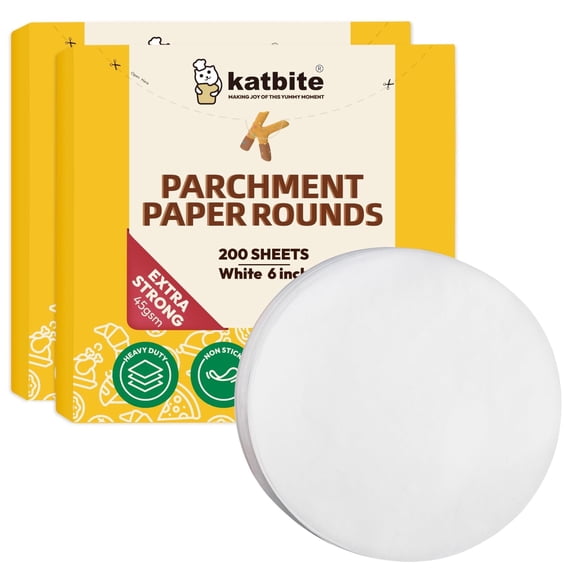 Katbite 6-Inch Round Parchment Paper, 400 Count (2 Packs of 200), Non-Stick Baking Paper$12.89current price $12.89