

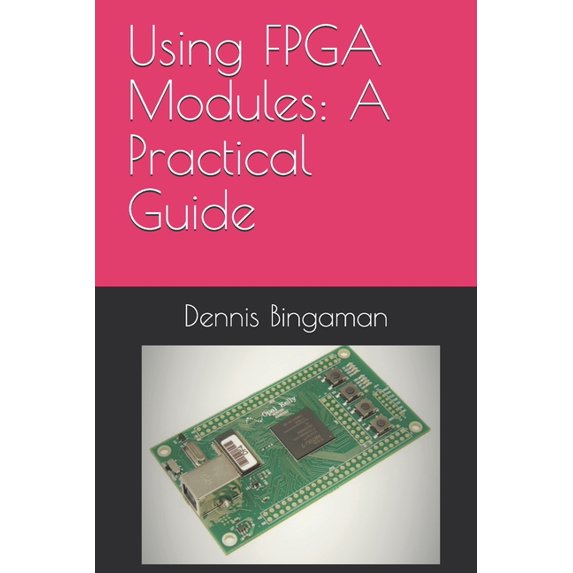
Using FPGA Modules: A Practical Guide (Paperback)
(No ratings yet)
Key item features
Using FPGA Modules: A Practical Guide (Paperback)
Specs
Book format, Paperback
Edition, Standard Edition
Pages, 270
Language, English
Brand, Dennis Bingaman
Author, Dennis Bingaman
Book format
Paperback
Edition, Standard Edition
Edition
Standard Edition
Pages, 270
Pages
270
Language, English
Language
English
Brand, Dennis Bingaman
Brand
Dennis Bingaman
Author, Dennis Bingaman
Author
Dennis Bingaman
About this item
Product details
This book is not intended to just be read. In this book you are going to get your hands dirty. It is intended to be a hands-on book with real exercises. You will be guided through a series of projects that use the Opal Kelly XEM-7001 FPGA Module. You may choose to use a different FPGA module, but you will need to modify the projects accordingly. You will have to purchase a small set of electronic components that will be used in all the projects. The book provides a list of them along with all the part numbers for ordering through www.digikey.com, one of the most popular online electronic supply stores. When you have completed this book, you will have hands-on real-world experience in using FPGA modules that you can then apply to any project you like from robotics to home automation to just about anything else you can think of.The programs used to communicate with the FPGA will be written in C++. Again, the goal is not to teach C++ but to provide code for the projects. All the code and VHDL firmware code is available online for the user to download. A little bit of programming skills is required but again we do not use any of the advanced features of C++. All the projects use simple console-based applications, as I did not want to have to go into all the ways of creating windows-based applications.Chapter 1 is an introduction to FPGA's in general, describing what they are, how they are used and what they are used for. Chapter 2 dives into the details of the Opal Kelly XEM7001 FPGA module. Its features and how to communicate with it via a Personal Computer (PC). Chapter 3 dives into the language used to program FPGA's. Specifically, VHDL. This book it not intended to teach VHDL and all the projects will be using the basics of VHDL, not the more advanced features. This chapter does not talk about it in theory alone but we actually will use it with Xilinx Vivado development tool to create VHDL code, synthesize it and run simulations on it. Unlike other books that just talk about VHDL without providing any actual integration of it with real world tools. We will dive into it in great detail using very simple examples. This will help the user learn VHDL within the Vivado tool set. Because developing an FPGA application involves more than just VHDL it also involves other files called XDC files with their own 'mini' language, this is integrated into the exercises of the chapter. You will come out of this chapter with a complete understanding of how to develop an FPGA project from start to finish. In Chapter 4 we delve into creating FPGA projects for the XEM-7001 that will actually do something. Starting with controlling the onboard LED's and moving to more complicated tasks. Chapter 4 is the longest chapter in the book. You will be breadboarding real circuits and then having the FPGA control and use those circuits while observing the results using various test instruments. There is a small investment in various components that you will need. The fun thing is, you get to see the results of your efforts from temperature sensors and other interface chips. You finally get a break at chapter 5! It just talks about communications protocols that FPGA's and Micro-controllers use to talk to other chips. Chapter 6 we pickup on communicating with other chips (ADC's, Temperature Sensors, EEPROM Memory Chips etc.) Again, you are going to be wiring up a lot of circuits and observing the results of your labor. Chapter 7 is probably one of the most fun chapters, here we are interfacing to electro-mechanical motors, from standard motors with attached encoders, to stepper motors ending with servo motors, we get the world moving some! We end this chapter implementing a 'soft-core' micro controller withing the FPGA. Specifically, the Xilinx Micro-Blaze MCS. Yes, you can actually implement a microcontroller inside of an FPGA! Chapter 8 completes the book with instructions on where you may go from here.
Using FPGA Modules: A Practical Guide (Paperback)
info:
We aim to show you accurate product information. Manufacturers, suppliers and others provide what you see here, and we have not verified it.
Specifications
Book format
Paperback
Edition
Standard Edition
Pages
270
Language
English
Warranty
Warranty information
Please be aware that the warranty terms on items offered for sale by third party Marketplace sellers may differ from those displayed in this section (if any). To confirm warranty terms on an item offered for sale by a third party Marketplace seller, please use the 'Contact seller' feature on the third party Marketplace seller's information page and request the item's warranty terms prior to purchase.
Similar items you might like
Based on what customers bought
The Secrets of Windsurfing: A Complete Guide, (Paperback) $16.56
 $1656current price $16.56
The Secrets of Windsurfing: A Complete Guide, (Paperback)
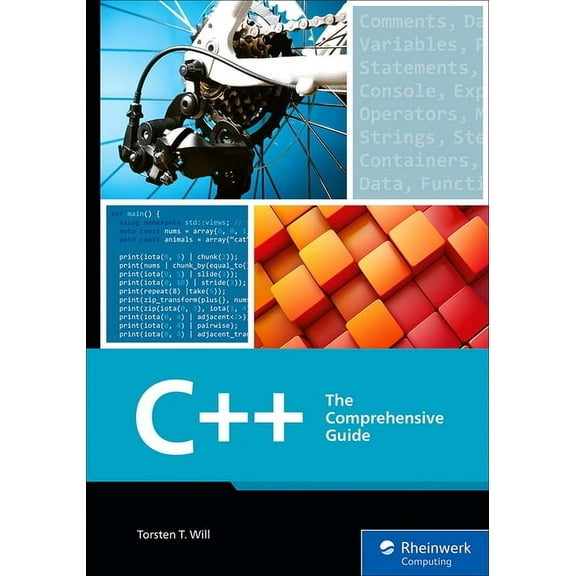
C : The Comprehensive Guide, (Paperback) $52.28
 $5228current price $52.28
C : The Comprehensive Guide, (Paperback)
Python 3: The Comprehensive Guide, (Paperback) $58.32
 $5832current price $58.32
Python 3: The Comprehensive Guide, (Paperback)
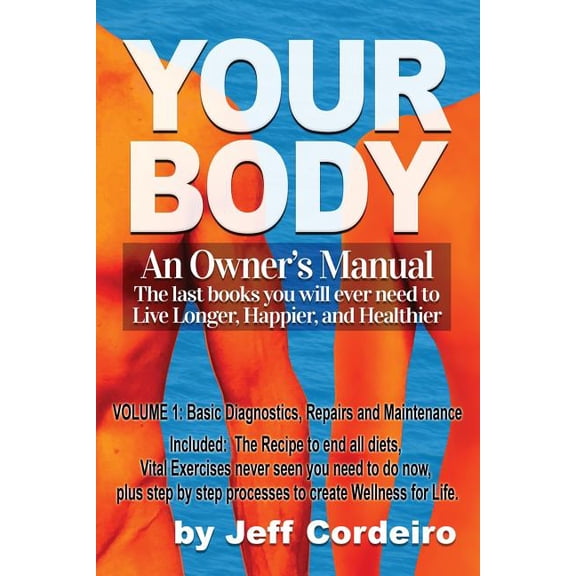
Your Body: An Owner's Manual, (Paperback) $18.17
 $1817current price $18.17
Your Body: An Owner's Manual, (Paperback)
Best seller, A Guide Book of United States Coins Red Book 2027, (Spiral-Bound) $16.73
Best seller $1673current price $16.73
A Guide Book of United States Coins Red Book 2027, (Spiral-Bound)
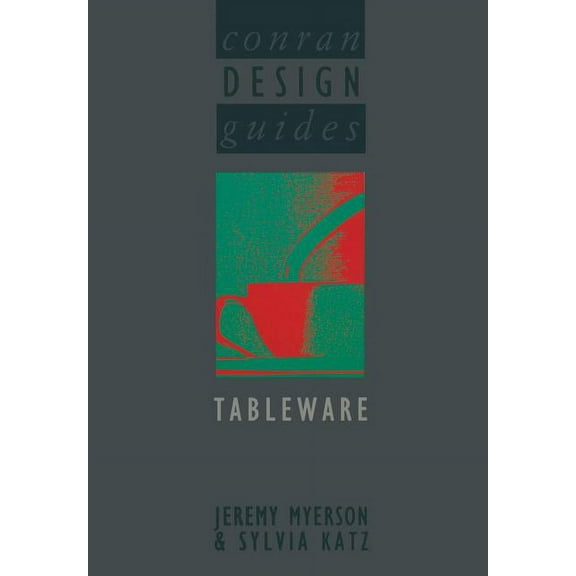
614.8 out of 5 Stars. 61 reviews4.8 out of 5 starsConran Design Guides Tableware, (Paperback) $54.99
 $5499current price $54.99
Conran Design Guides Tableware, (Paperback)
Venepuncture & Cannulation: A Practical Guide $39.39
 $3939current price $39.39
Venepuncture & Cannulation: A Practical Guide
Comptia A & Raspberry Pi 2 (Paperback) $28.27
 $2827current price $28.27
Comptia A & Raspberry Pi 2 (Paperback)
Linux Start-Up Guide: A Self-Contained Introduction, (Paperback) $54.99
 $5499current price $54.99
Linux Start-Up Guide: A Self-Contained Introduction, (Paperback)
Radiochemical Methods in Analysis, (Paperback) $54.99
 $5499current price $54.99
Radiochemical Methods in Analysis, (Paperback)
- $19.75
 $1975current price $19.75
-
FreeBSD Handbook 2/2 (Paperback) $29.97
 $2997current price $29.97
FreeBSD Handbook 2/2 (Paperback)
Agile Discussion Guide, (Paperback) $32.39
 $3239current price $32.39
Agile Discussion Guide, (Paperback)
Essential: Program Management: A Practical Guide (Paperback) $29.99
 $2999current price $29.99
Essential: Program Management: A Practical Guide (Paperback)
FreeBSD Handbook 1/2 (Paperback) $29.99
 $2999current price $29.99
FreeBSD Handbook 1/2 (Paperback)
Kubernetes Essentials: A Practical Guide to Container Orchestration, (Paperback) $24.99
 $2499current price $24.99
Kubernetes Essentials: A Practical Guide to Container Orchestration, (Paperback)
Pytorch: The Practical Guide, (Paperback) $48.67
 $4867current price $48.67
Pytorch: The Practical Guide, (Paperback)
JBoss Tools 3 Developers Guide (Paperback) $43.99
 $4399current price $43.99
JBoss Tools 3 Developers Guide (Paperback)
Effective Safety Committees: A Practical Guide (Paperback) $19.50 $45.35/lb
 $1950current price $19.50$45.35/lb
Effective Safety Committees: A Practical Guide (Paperback)
Starfinder - Second Edition Galaxy Guide $52.19
 $5219current price $52.19
Starfinder - Second Edition Galaxy Guide
Customer ratings & reviews
0 out of 5 stars
This item does not have any reviews yet

Current price is USD$54.97
Price when purchased online
 Free Holiday returns until Jan 31
How do you want your item?
Ships to
Arrives between Dec 1 - Dec 4
|Shipping fee $8.98

Sold and shipped by Best Prices & Service
4.46839546191248 out of 5 stars

Extended holiday returns
Free Holiday returns until Jan 31Related pages
- Comparative Law Books
- Ap Euro Crash Course
- Reliability Probability
- Best Sellers In Information Theory
- UML Programming Language Books
- Knowledge Management Engineer
- C# Programming Language Books
- Best Sellers In Vocational Education
- Sbl Handbook Of Style
- LISP Programming Language Books
- Federal Education Legislation Books
- General Programming Language Books