

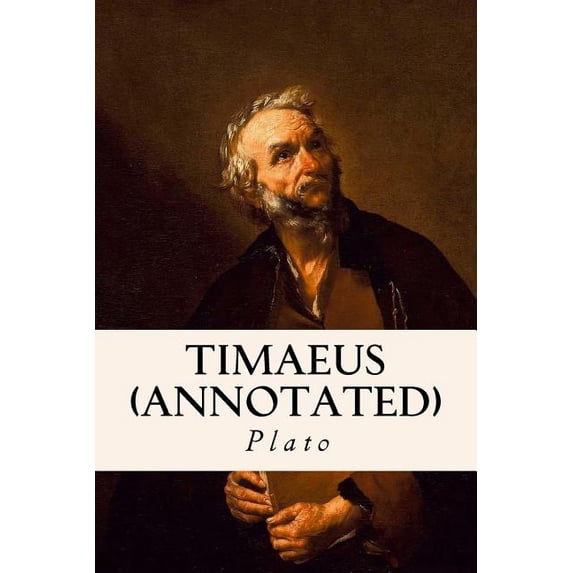
Timaeus (annotated) (Paperback)
(No ratings yet)
Key item features
Timaeus (annotated) (Paperback)
Specs
Publication date, October, 2015
Author, Benjamin Jpwett; Plato
Book format, Paperback
Genre, Philosophy/History & Surveys - Ancient & Classical, Philosophy/Mind & Body
Pages, 182
Age group, Adult
Publication date
October, 2015
Author, Benjamin Jpwett; Plato
Author
Benjamin Jpwett; Plato
Book format, Paperback
Book format
Paperback
Genre, Philosophy/History & Surveys - Ancient & Classical, Philosophy/Mind & Body
Genre
Philosophy/History & Surveys - Ancient & Classical, Philosophy/Mind & Body
Pages, 182
Pages
182
Age group, Adult
Age group
Adult
About this item
Product details
Timaeus is one of Plato's dialogues, mostly in the form of a long monologue given by the title character Timaeus of Locri, written c. 360 BC. The work puts forward speculation on the nature of the physical world and human beings and is followed by the dialogue Critias. Participants in the dialogue include Socrates, Timaeus, Hermocrates, and Critias. Some scholars believe that it is not the Critias of the Thirty Tyrants who is appearing in this dialogue, but his grandfather, who is also named Critias. It has been suggested that Timaeus influenced a book about Pythagoras, written by Philolaus. The dialogue takes place the day after Socrates described his ideal state. In Plato's works such a discussion occurs in the Republic. Socrates feels that his description of the ideal state wasn't sufficient for the purposes of entertainment and that "I would be glad to hear some account of it engaging in transactions with other states" (19b). Hermocrates wishes to oblige Socrates and mentions that Critias knows just the account (20b) to do so. Critias proceeds to tell the story of Solon's journey to Egypt where he hears the story of Atlantis, and how Athens used to be an ideal state that subsequently waged war against Atlantis (25a). Critias believes that he is getting ahead of himself, and mentions that Timaeus will tell part of the account from the origin of the universe to man. Timaeus begins with a distinction between the physical world, and the eternal world. The physical one is the world which changes and perishes: therefore it is the object of opinion and unreasoned sensation. The eternal one never changes: therefore it is apprehended by reason (28a). The speeches about the two worlds are conditioned by the different nature of their objects. Indeed, "a description of what is changeless, fixed and clearly intelligible will be changeless and fixed," (29b), while a description of what changes and is likely, will also change and be just likely. "As being is to becoming, so is truth to belief" (29c). Therefore, in a description of the physical world, one "should not look for anything more than a likely story" (29d). Timaeus suggests that since nothing "becomes or changes" without cause, then the cause of the universe must be a demiurge or a god, a figure Timaeus refers to as the father and maker of the universe. And since the universe is fair, the demiurge must have looked to the eternal model to make it, and not to the perishable one (29a). Hence, using the eternal and perfect world of "forms" or ideals as a template, he set about creating our world, which formerly only existed in a state of disorder. Timaeus continues with an explanation of the creation of the universe, which he ascribes to the handiwork of a divine craftsman. The demiurge, being good, wanted there to be as much good as was the world. The demiurge is said to bring order out of substance by imitating an unchanging and eternal model (paradigm). The ananke, often translated as 'necessity', was the only other co-existent element or presence in Plato's cosmogony. Later Platonists clarified that the eternal model existed in the mind of the Demiurge. Timaeus describes the substance as a lack of homogeneity or balance, in which the four elements (earth, air, fire and water) were shapeless, mixed and in constant motion. Considering that order is favourable over disorder, the essential act of the creator was to bring order and clarity to this substance. Therefore, all the properties of the world are to be explained by the demiurge's choice of what is fair and good; or, the idea of a dichotomy between good and evil. First of all, the world is a living creature. Since the unintelligent creatures are in their appearance less fair than intelligent creatures, and since intelligence needs to be settled in a soul, the demiurge "put intelligence in soul, and soul in body" in order to make a living and intelligent whole.
Timaeus (annotated) (Paperback)
info:
We aim to show you accurate product information. Manufacturers, suppliers and others provide what you see here, and we have not verified it.
Specifications
Publication date
October, 2015
Author
Benjamin Jpwett; Plato
Book format
Paperback
Genre
Philosophy/History & Surveys - Ancient & Classical, Philosophy/Mind & Body
Warranty
Warranty information
Please be aware that the warranty terms on items offered for sale by third party Marketplace sellers may differ from those displayed in this section (if any). To confirm warranty terms on an item offered for sale by a third party Marketplace seller, please use the 'Contact seller' feature on the third party Marketplace seller's information page and request the item's warranty terms prior to purchase.
Similar items you might like
Based on what customers bought
Best seller, Die with Zero: Getting All You Can from Your Money and Your Life (Paperback) $9.75
Best seller $975current price $9.75
Die with Zero: Getting All You Can from Your Money and Your Life (Paperback)
144.6 out of 5 Stars. 14 reviews4.6 out of 5 starsBest seller, Verity (Paperback) $7.05 Was $13.78
Best seller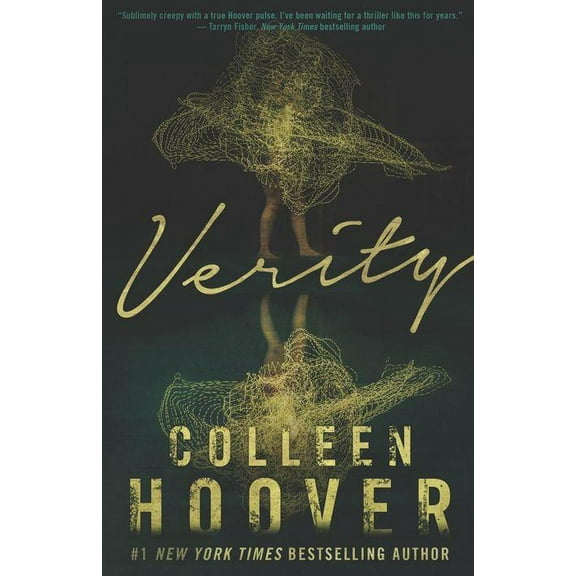 2 optionsAvailable in additional 2 options$705current price $7.05, Was $13.78$13.78
Verity (Paperback)
4794.5 out of 5 Stars. 479 reviews4.5 out of 5 starsCratylus (Annotated) $8.65
 $865current price $8.65
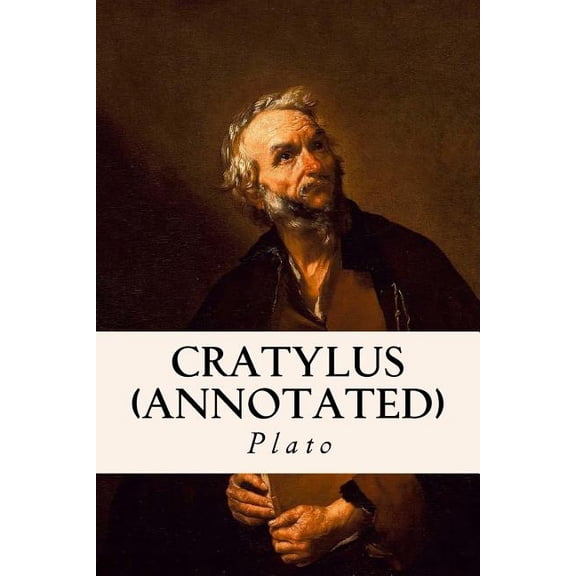
Cratylus (Annotated)
In 25+ people's carts, Project Hail Mary: A Novel (Paperback) $16.50
In 25+ people's carts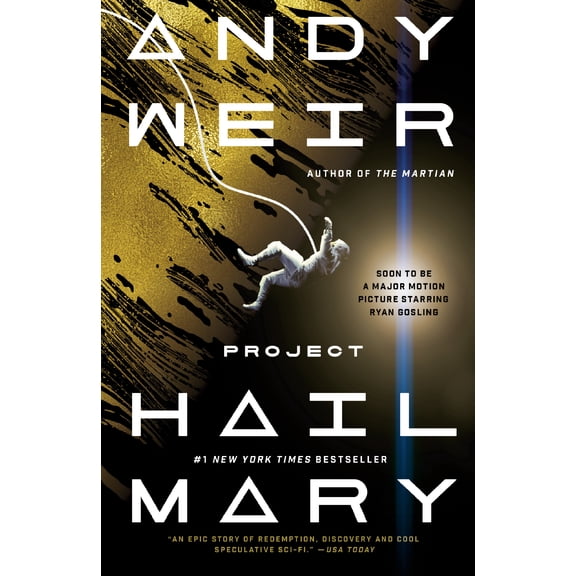 $1650current price $16.50
Project Hail Mary: A Novel (Paperback)
2484.8 out of 5 Stars. 248 reviews4.8 out of 5 starsPlato's Protagoras, (Paperback) $9.99
 $999current price $9.99
Plato's Protagoras, (Paperback)
In 25+ people's carts, The Silent Patient (Paperback) $8.59 Was $9.92
In 25+ people's carts $859current price $8.59, Was $9.92$9.92
The Silent Patient (Paperback)
2924.6 out of 5 Stars. 292 reviews4.6 out of 5 starsFall I Want: A Novel (Paperback) $14.24
 $1424current price $14.24
Fall I Want: A Novel (Paperback)
602.9 out of 5 Stars. 60 reviews2.9 out of 5 starsMeno (Paperback) $6.87
 $687current price $6.87
Meno (Paperback)
Meno (annotated) (Paperback) $6.87
 $687current price $6.87
Meno (annotated) (Paperback)
The Republic (Paperback) $8.95
 $895current price $8.95
The Republic (Paperback)
Plato: Meno (Paperback) $7.95
 $795current price $7.95
Plato: Meno (Paperback)
Phaedrus $9.64
 $964current price $9.64
Phaedrus
ALCIBIADES I/ ALCIBIADES II (annotated) (Paperback) $6.49
 $649current price $6.49
ALCIBIADES I/ ALCIBIADES II (annotated) (Paperback)
Meno (Paperback) $12.00
 $1200current price $12.00
Meno (Paperback)
Critias (Annotated) $5.99
 $599current price $5.99
Critias (Annotated)
Symposium (Paperback) $7.99
 $799current price $7.99
Symposium (Paperback)
Euthydemus, (Paperback) $6.96
 $696current price $6.96
Euthydemus, (Paperback)
Meno, (Paperback) $9.63
 $963current price $9.63
Meno, (Paperback)
Side Notes of Growing Up, (Paperback) $9.20
 $920current price $9.20
Side Notes of Growing Up, (Paperback)
Meno (Paperback) $7.09
 $709current price $7.09
Meno (Paperback)
Customer ratings & reviews
0 out of 5 stars
This item does not have any reviews yet

Current price is USD$10.81
Price when purchased online
- Free shipping
 Free Holiday returns until Jan 31
How do you want your item?
Ships to
Arrives between Nov 23 - Nov 24
|
Sold and shipped by Alibris Books
4.584300430303821 out of 5 stars

Extended holiday returns
Free Holiday returns until Jan 31More seller options (1)
Starting from $7.85