

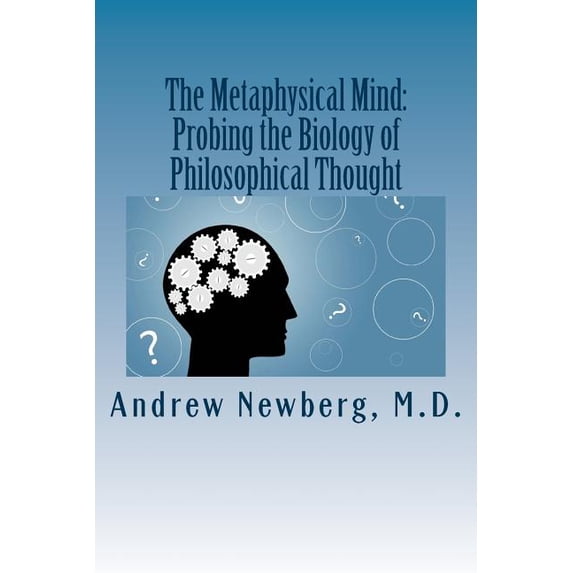
The Metaphysical Mind (Paperback)
(No ratings yet)
Key item features
How are philosophical and theological concepts conceived in the mind? Why are certain topics of greater importance to philosophers and theologians? Why do people think about these issues in the first place? These are the questions that are explored in the ground breaking book, "The Metaphysical Mind." Philosophy and theology usually considers various fundamental concepts such as those related to being, reality, causality, logic, or phenomenology. But the philosophical approach to these topics often leaves out one of the most important things - the human brain. After all, it is the brain that is actually thinking about these ideas in the first place. "The Metaphysical Mind" explores the relationship between the brain and philosophical thought and helps us to understand how the brain enables and restricts our ability to think about these metaphysical concepts. One of the major developments of contemporary thought has been the field of hermeneutics. Hermeneutics considers the environmental, linguistic, and cultural factors that influence a given philosopher in order to determine how particular ideas or texts may have been shaped. However, no one has ever examined philosophical and theological thought specifically from the hermeneutical perspective of the neurobiological and genetic substrate that underlies such thinking. This "neuroscientific hermeneutic" or "neurohermeneutic" refers specifically to the functions of the brain and how they are related to various thought processes which have been at the cornerstone of philosophical and theological thought throughout history. Additionally, this neurohermeneutic helps to better interpret how and why such thoughts develop. Neurohermeneutics is based upon a synthesis of information from multiple fields including anthropology, neurophysiology, cognitive neuroscience, genetics, theology, and philosophy. Many of the major milestones in the history of philosophical and theological thought from pre-Socratic thinkers to the present day can be considered from the perspective of the functioning of the human mind and its multimodal interaction with the social, cultural, intellectual, and physical environment. In particular, the development of some of the most dramatic concepts in philosophy and theology can be considered in relation to certain brain functions and how those functions enable human beings to interpret meaning in the world. Similarly, contemplative/meditative traditions can be considered to be associated with certain brain functions in order to explore how such experiences are perceived and interpreted. This book will also consider the issue of the experience of reality from a neurophysiological perspective. This leads to fascinating conclusions regarding the nature and degrees of reality and how the brain experiences that reality. Although not all philosophical and theological concepts will be examined, many of the major movements will be considered in order to extrapolate to the notion that a neurobiological hermeneutic may provide a basis and fundamental bias for all philosophical thinking - a "metaphilosophy" (or "metatheology" in the specific context of religion). Ultimately, this approach might even lead to a "megaphilosophy" containing universal concepts that could be conceived of from any philosophical or theological perspective. The result of this analysis leads to a description of the "metaphysical mind" which is necessarily driven to pursue philosophical and theological questions, but also shapes how the answers to such questions arise. Thus, the brain itself is "designed" to function in a philosophical or metaphysical manner. This revolutionary approach to philosophical and theological thought will provide readers something to think about for the millennium to come.
Specs
Publication date, December, 2013
Author, Andrew B Newberg
Book format, Paperback
Genre, Nonfiction
Pages, 252
Age group, Adult
Publication date
December, 2013
Author, Andrew B Newberg
Author
Andrew B Newberg
Book format, Paperback
Book format
Paperback
Genre, Nonfiction
Genre
Nonfiction
Pages, 252
Pages
252
Age group, Adult
Age group
Adult
About this item
Product details
How are philosophical and theological concepts conceived in the mind? Why are certain topics of greater importance to philosophers and theologians? Why do people think about these issues in the first place? These are the questions that are explored in the ground breaking book, "The Metaphysical Mind". Philosophy and theology usually considers various fundamental concepts such as those related to being, reality, causality, logic, or phenomenology. But the philosophical approach to these topics often leaves out one of the most important things - the human brain. After all, it is the brain that is actually thinking about these ideas in the first place. "The Metaphysical Mind" explores the relationship between the brain and philosophical thought and helps us to understand how the brain enables and restricts our ability to think about these metaphysical concepts. One of the major developments of contemporary thought has been the field of hermeneutics. Hermeneutics considers the environmental, linguistic, and cultural factors that influence a given philosopher in order to determine how particular ideas or texts may have been shaped. However, no one has ever examined philosophical and theological thought specifically from the hermeneutical perspective of the neurobiological and genetic substrate that underlies such thinking. This "neuroscientific hermeneutic" or "neurohermeneutic" refers specifically to the functions of the brain and how they are related to various thought processes which have been at the cornerstone of philosophical and theological thought throughout history. Additionally, this neurohermeneutic helps to better interpret how and why such thoughts develop. Neurohermeneutics is based upon a synthesis of information from multiple fields including anthropology, neurophysiology, cognitive neuroscience, genetics, theology, and philosophy. Many of the major milestones in the history of philosophical and theological thought from pre-Socratic thinkers to the present day can be considered from the perspective of the functioning of the human mind and its multimodal interaction with the social, cultural, intellectual, and physical environment. In particular, the development of some of the most dramatic concepts in philosophy and theology can be considered in relation to certain brain functions and how those functions enable human beings to interpret meaning in the world. Similarly, contemplative/meditative traditions can be considered to be associated with certain brain functions in order to explore how such experiences are perceived and interpreted. This book will also consider the issue of the experience of reality from a neurophysiological perspective. This leads to fascinating conclusions regarding the nature and degrees of reality and how the brain experiences that reality. Although not all philosophical and theological concepts will be examined, many of the major movements will be considered in order to extrapolate to the notion that a neurobiological hermeneutic may provide a basis and fundamental bias for all philosophical thinking - a "metaphilosophy" (or "metatheology" in the specific context of religion). Ultimately, this approach might even lead to a "megaphilosophy" containing universal concepts that could be conceived of from any philosophical or theological perspective. The result of this analysis leads to a description of the "metaphysical mind" which is necessarily driven to pursue philosophical and theological questions, but also shapes how the answers to such questions arise. Thus, the brain itself is "designed" to function in a philosophical or metaphysical manner. This revolutionary approach to philosophical and theological thought will provide readers something to think about for the millennium to come.
How are philosophical and theological concepts conceived in the mind? Why are certain topics of greater importance to philosophers and theologians? Why do people think about these issues in the first place? These are the questions that are explored in the ground breaking book, "The Metaphysical Mind." Philosophy and theology usually considers various fundamental concepts such as those related to being, reality, causality, logic, or phenomenology. But the philosophical approach to these topics often leaves out one of the most important things - the human brain. After all, it is the brain that is actually thinking about these ideas in the first place. "The Metaphysical Mind" explores the relationship between the brain and philosophical thought and helps us to understand how the brain enables and restricts our ability to think about these metaphysical concepts. One of the major developments of contemporary thought has been the field of hermeneutics. Hermeneutics considers the environmental, linguistic, and cultural factors that influence a given philosopher in order to determine how particular ideas or texts may have been shaped. However, no one has ever examined philosophical and theological thought specifically from the hermeneutical perspective of the neurobiological and genetic substrate that underlies such thinking. This "neuroscientific hermeneutic" or "neurohermeneutic" refers specifically to the functions of the brain and how they are related to various thought processes which have been at the cornerstone of philosophical and theological thought throughout history. Additionally, this neurohermeneutic helps to better interpret how and why such thoughts develop. Neurohermeneutics is based upon a synthesis of information from multiple fields including anthropology, neurophysiology, cognitive neuroscience, genetics, theology, and philosophy. Many of the major milestones in the history of philosophical and theological thought from pre-Socratic thinkers to the present day can be considered from the perspective of the functioning of the human mind and its multimodal interaction with the social, cultural, intellectual, and physical environment. In particular, the development of some of the most dramatic concepts in philosophy and theology can be considered in relation to certain brain functions and how those functions enable human beings to interpret meaning in the world. Similarly, contemplative/meditative traditions can be considered to be associated with certain brain functions in order to explore how such experiences are perceived and interpreted. This book will also consider the issue of the experience of reality from a neurophysiological perspective. This leads to fascinating conclusions regarding the nature and degrees of reality and how the brain experiences that reality. Although not all philosophical and theological concepts will be examined, many of the major movements will be considered in order to extrapolate to the notion that a neurobiological hermeneutic may provide a basis and fundamental bias for all philosophical thinking - a "metaphilosophy" (or "metatheology" in the specific context of religion). Ultimately, this approach might even lead to a "megaphilosophy" containing universal concepts that could be conceived of from any philosophical or theological perspective. The result of this analysis leads to a description of the "metaphysical mind" which is necessarily driven to pursue philosophical and theological questions, but also shapes how the answers to such questions arise. Thus, the brain itself is "designed" to function in a philosophical or metaphysical manner. This revolutionary approach to philosophical and theological thought will provide readers something to think about for the millennium to come.
info:
We aim to show you accurate product information. Manufacturers, suppliers and others provide what you see here, and we have not verified it.
Specifications
Publication date
December, 2013
Author
Andrew B Newberg
Book format
Paperback
Genre
Nonfiction
Warranty
Warranty information
Please be aware that the warranty terms on items offered for sale by third party Marketplace sellers may differ from those displayed in this section (if any). To confirm warranty terms on an item offered for sale by a third party Marketplace seller, please use the 'Contact seller' feature on the third party Marketplace seller's information page and request the item's warranty terms prior to purchase.
Similar items you might like
Based on what customers bought
Moving on, (Paperback) $18.00
 $1800current price $18.00
Moving on, (Paperback)
Barbey D'Aurevilly Rhythmes (Paperback) $14.86
 $1486current price $14.86
Barbey D'Aurevilly Rhythmes (Paperback)
In Two Minds, (Paperback) $17.99
 $1799current price $17.99
In Two Minds, (Paperback)
Gray Hairs, (Paperback) $14.95
 $1495current price $14.95
Gray Hairs, (Paperback)
Melancholia of the Mind, (Paperback) $15.00
 $1500current price $15.00
Melancholia of the Mind, (Paperback)
The Epistles of Apollonius of Tyana (Paperback) $16.24
 $1624current price $16.24
The Epistles of Apollonius of Tyana (Paperback)
His Thoughts Concern Me (Paperback) $15.99
 $1599current price $15.99
His Thoughts Concern Me (Paperback)
In 50+ people's carts, The Silent Patient (Paperback) $8.59 Was $9.92
In 50+ people's carts $859current price $8.59, Was $9.92$9.92
The Silent Patient (Paperback)
2924.6 out of 5 Stars. 292 reviews4.6 out of 5 starsWhat's on Your Mind?: How to Come Out of a Situation, (Paperback) $6.99
 $699current price $6.99
What's on Your Mind?: How to Come Out of a Situation, (Paperback)
Best seller, 21 Days of Fear: One Day, One Letter (Paperback) $15.48
Best seller $1548current price $15.48
21 Days of Fear: One Day, One Letter (Paperback)
464.5 out of 5 Stars. 46 reviews4.5 out of 5 starsOrthoepy, (Paperback) $15.95
 $1595current price $15.95
Orthoepy, (Paperback)
A Question of Spirit, (Paperback) $14.55
 $1455current price $14.55
A Question of Spirit, (Paperback)
Best seller, Verity (Paperback) $23.74
Best seller 2 optionsAvailable in additional 2 options$2374current price $23.74
Verity (Paperback)
4794.5 out of 5 Stars. 479 reviews4.5 out of 5 starsThe Infinitude Of The Mind (Paperback) $8.99
 $899current price $8.99
The Infinitude Of The Mind (Paperback)
Reflective Mind: Part-1, (Paperback) $5.60
 $560current price $5.60
Reflective Mind: Part-1, (Paperback)
Philosophy of Osteopathy, (Paperback) $15.63
 $1563current price $15.63
Philosophy of Osteopathy, (Paperback)
Siddanta Shiromani., (Paperback) $17.95
 $1795current price $17.95
Siddanta Shiromani., (Paperback)
Decolonizing the Trinidadian Mind, (Paperback) $15.00
 $1500current price $15.00
Decolonizing the Trinidadian Mind, (Paperback)
Ghuvad, (Paperback) $16.99
 $1699current price $16.99
Ghuvad, (Paperback)
Más Allá del Mindfulness, (Paperback) $18.99
 $1899current price $18.99
Más Allá del Mindfulness, (Paperback)
Customer ratings & reviews
0 out of 5 stars
This item does not have any reviews yet

Current price is USD$16.53
Price when purchased online
- Free shipping
 Free Holiday returns until Jan 31
How do you want your item?
Ships to
Arrives between Nov 24 - Nov 30
|
Sold and shipped by Alibris Books
4.584860298895387 out of 5 stars

Extended holiday returns
Free Holiday returns until Jan 31More seller options (1)
Starting from $14.95