

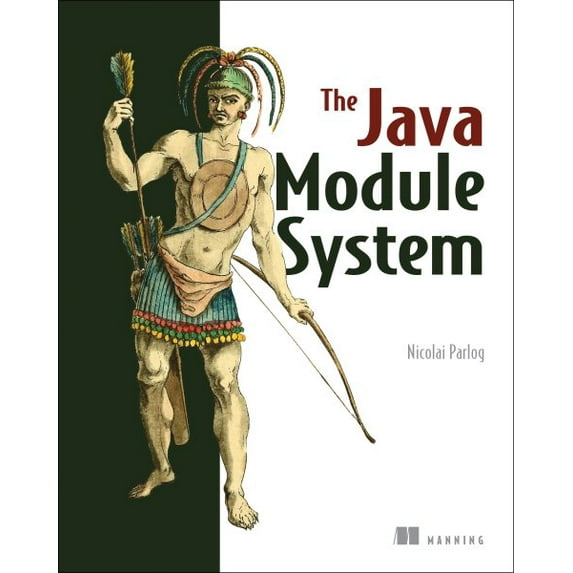
The Java Module System (Edition 1) (Paperback)
(No ratings yet)
Key item features
Summary
Java's much-awaited "Project Jigsaw" is finally here! Java 11 includes a built-in modularity framework, and The Java Module System is your guide to discovering it. In this new book, you'll learn how the module system improves reliability and maintainability, and how it can be used to reduce tight coupling of system components.
Foreword by Kevlin Henney.
Purchase of the print book includes a free eBook in PDF, Kindle, and ePub formats from Manning Publications. You'll find registration instructions inside the print book.
About the Technology
Packaging code into neat, well-defined units makes it easier to deliver safe and reliable applications. The Java Platform Module System is a language standard for creating these units. With modules, you can closely control how JARs interact and easily identify any missing dependencies at startup. This shift in design is so fundamental that starting with Java 9, all core Java APIs are distributed as modules, and libraries, frameworks, and applications will benefit from doing the same.
About the Book
The Java Module System is your in-depth guide to creating and using Java modules. With detailed examples and easy-to-understand diagrams, you'll learn the anatomy of a modular Java application. Along the way, you'll master best practices for designing with modules, debugging your modular app, and deploying to production.
What's inside
About the Reader
Perfect for developers with some Java experience.
About the Author
Nicolai Parlog is a developer, author, speaker, and trainer. His home is codefx.org.
Table of Contents
Java's much-awaited "Project Jigsaw" is finally here! Java 11 includes a built-in modularity framework, and The Java Module System is your guide to discovering it. In this new book, you'll learn how the module system improves reliability and maintainability, and how it can be used to reduce tight coupling of system components.
Foreword by Kevlin Henney.
Purchase of the print book includes a free eBook in PDF, Kindle, and ePub formats from Manning Publications. You'll find registration instructions inside the print book.
About the Technology
Packaging code into neat, well-defined units makes it easier to deliver safe and reliable applications. The Java Platform Module System is a language standard for creating these units. With modules, you can closely control how JARs interact and easily identify any missing dependencies at startup. This shift in design is so fundamental that starting with Java 9, all core Java APIs are distributed as modules, and libraries, frameworks, and applications will benefit from doing the same.
About the Book
The Java Module System is your in-depth guide to creating and using Java modules. With detailed examples and easy-to-understand diagrams, you'll learn the anatomy of a modular Java application. Along the way, you'll master best practices for designing with modules, debugging your modular app, and deploying to production.
What's inside
- The anatomy of a modular Java app
- Building modules from source to JAR
- Migrating to modular Java
- Decoupling dependencies and refining APIs
- Handling reflection and versioning
- Customizing runtime images
- Updated for Java 11
About the Reader
Perfect for developers with some Java experience.
About the Author
Nicolai Parlog is a developer, author, speaker, and trainer. His home is codefx.org.
Table of Contents
- First piece of the puzzle
- Anatomy of a modular application
- Defining modules and their properties
- Building modules from source to JAR
- Running and debugging modular applications
- Compatibility challenges when moving to Java 9 or later
- Recurring challenges when running on Java 9 or later
- Incremental modularization of existing projects
- Migration and modularization strategies
- Using services to decouple modules
- Refining dependencies and APIs
- Reflection in a modular world
- Module versions: What's possible and what's not
- Customizing runtime images with jlink
- Putting the pieces together
PART 1 - Hello, modules
PART 2 - Adapting real-world projects
PART 3 - Advanced module system features
Specs
Publication date, July, 2019
Author, Nicolai Parlog
Book format, Paperback
Genre, Computing & Internet
Pages, 440
Age group, Adult, Teen
Publication date
July, 2019
Author, Nicolai Parlog
Author
Nicolai Parlog
Book format, Paperback
Book format
Paperback
Genre, Computing & Internet
Genre
Computing & Internet
Pages, 440
Pages
440
Age group, Adult, Teen
Age group
Adult, Teen
About this item
Product details
Summary Java's much-awaited "Project Jigsaw" is finally here! Java 11 includes a built-in modularity framework, and The Java Module System is your guide to discovering it. In this new book, you'll learn how the module system improves reliability and maintainability, and how it can be used to reduce tight coupling of system components. Foreword by Kevlin Henney. Purchase of the print book includes a free eBook in PDF, Kindle, and ePub formats from Manning Publications. You'll find registration instructions inside the print book. About the Technology Packaging code into neat, well-defined units makes it easier to deliver safe and reliable applications. The Java Platform Module System is a language standard for creating these units. With modules, you can closely control how JARs interact and easily identify any missing dependencies at startup. This shift in design is so fundamental that starting with Java 9, all core Java APIs are distributed as modules, and libraries, frameworks, and applications will benefit from doing the same. About the Book The Java Module System is your in-depth guide to creating and using Java modules. With detailed examples and easy-to-understand diagrams, you'll learn the anatomy of a modular Java application. Along the way, you'll master best practices for designing with modules, debugging your modular app, and deploying to production. What's inside
About the Reader Perfect for developers with some Java experience. About the Author Nicolai Parlog is a developer, author, speaker, and trainer. His home is codefx.org. Table of Contents
- The anatomy of a modular Java app
- Building modules from source to JAR
- Migrating to modular Java
- Decoupling dependencies and refining APIs
- Handling reflection and versioning
- Customizing runtime images
- Updated for Java 11
About the Reader Perfect for developers with some Java experience. About the Author Nicolai Parlog is a developer, author, speaker, and trainer. His home is codefx.org. Table of Contents
- PART 1 - Hello, modules
- First piece of the puzzle
- Anatomy of a modular application
- Defining modules and their properties
- Building modules from source to JAR
- Running and debugging modular applications PART 2 - Adapting real-world projects
- Compatibility challenges when moving to Java 9 or later
- Recurring challenges when running on Java 9 or later
- Incremental modularization of existing projects
- Migration and modularization strategies PART 3 - Advanced module system features
- Using services to decouple modules
- Refining dependencies and APIs
- Reflection in a modular world
- Module versions: What's possible and what's not
- Customizing runtime images with jlink
- Putting the pieces together
Summary
Java's much-awaited "Project Jigsaw" is finally here! Java 11 includes a built-in modularity framework, and The Java Module System is your guide to discovering it. In this new book, you'll learn how the module system improves reliability and maintainability, and how it can be used to reduce tight coupling of system components.
Foreword by Kevlin Henney.
Purchase of the print book includes a free eBook in PDF, Kindle, and ePub formats from Manning Publications. You'll find registration instructions inside the print book.
About the Technology
Packaging code into neat, well-defined units makes it easier to deliver safe and reliable applications. The Java Platform Module System is a language standard for creating these units. With modules, you can closely control how JARs interact and easily identify any missing dependencies at startup. This shift in design is so fundamental that starting with Java 9, all core Java APIs are distributed as modules, and libraries, frameworks, and applications will benefit from doing the same.
About the Book
The Java Module System is your in-depth guide to creating and using Java modules. With detailed examples and easy-to-understand diagrams, you'll learn the anatomy of a modular Java application. Along the way, you'll master best practices for designing with modules, debugging your modular app, and deploying to production.
What's inside
About the Reader
Perfect for developers with some Java experience.
About the Author
Nicolai Parlog is a developer, author, speaker, and trainer. His home is codefx.org.
Table of Contents
Java's much-awaited "Project Jigsaw" is finally here! Java 11 includes a built-in modularity framework, and The Java Module System is your guide to discovering it. In this new book, you'll learn how the module system improves reliability and maintainability, and how it can be used to reduce tight coupling of system components.
Foreword by Kevlin Henney.
Purchase of the print book includes a free eBook in PDF, Kindle, and ePub formats from Manning Publications. You'll find registration instructions inside the print book.
About the Technology
Packaging code into neat, well-defined units makes it easier to deliver safe and reliable applications. The Java Platform Module System is a language standard for creating these units. With modules, you can closely control how JARs interact and easily identify any missing dependencies at startup. This shift in design is so fundamental that starting with Java 9, all core Java APIs are distributed as modules, and libraries, frameworks, and applications will benefit from doing the same.
About the Book
The Java Module System is your in-depth guide to creating and using Java modules. With detailed examples and easy-to-understand diagrams, you'll learn the anatomy of a modular Java application. Along the way, you'll master best practices for designing with modules, debugging your modular app, and deploying to production.
What's inside
- The anatomy of a modular Java app
- Building modules from source to JAR
- Migrating to modular Java
- Decoupling dependencies and refining APIs
- Handling reflection and versioning
- Customizing runtime images
- Updated for Java 11
About the Reader
Perfect for developers with some Java experience.
About the Author
Nicolai Parlog is a developer, author, speaker, and trainer. His home is codefx.org.
Table of Contents
- First piece of the puzzle
- Anatomy of a modular application
- Defining modules and their properties
- Building modules from source to JAR
- Running and debugging modular applications
- Compatibility challenges when moving to Java 9 or later
- Recurring challenges when running on Java 9 or later
- Incremental modularization of existing projects
- Migration and modularization strategies
- Using services to decouple modules
- Refining dependencies and APIs
- Reflection in a modular world
- Module versions: What's possible and what's not
- Customizing runtime images with jlink
- Putting the pieces together
PART 1 - Hello, modules
PART 2 - Adapting real-world projects
PART 3 - Advanced module system features
info:
We aim to show you accurate product information. Manufacturers, suppliers and others provide what you see here, and we have not verified it.
Specifications
Publication date
July, 2019
Author
Nicolai Parlog
Book format
Paperback
Genre
Computing & Internet
Warranty
Warranty information
Please be aware that the warranty terms on items offered for sale by third party Marketplace sellers may differ from those displayed in this section (if any). To confirm warranty terms on an item offered for sale by a third party Marketplace seller, please use the 'Contact seller' feature on the third party Marketplace seller's information page and request the item's warranty terms prior to purchase.
Similar items you might like
Based on what customers bought
Data-Oriented Programming in Java, (Paperback) $59.99
 $5999current price $59.99
Data-Oriented Programming in Java, (Paperback)
Scala in Depth (Edition 1) (Paperback) $5.70 Was $46.12
 $570current price $5.70, Was $46.12$46.12
Scala in Depth (Edition 1) (Paperback)
Java 11 and 12 - New Features, (Paperback) $34.99
 $3499current price $34.99
Java 11 and 12 - New Features, (Paperback)
Innowacje w horyzontalnych wierceniach kierunkowych, (Paperback) $52.00
 $5200current price $52.00
Innowacje w horyzontalnych wierceniach kierunkowych, (Paperback)
Clés de la conformité médicale, (Paperback) $68.57
 $6857current price $68.57
Clés de la conformité médicale, (Paperback)
Java All-In-One for Dummies, (Paperback) $44.37
 $4437current price $44.37
Java All-In-One for Dummies, (Paperback)
Java and JavaScript Fundamentals, (Paperback) $44.99
 $4499current price $44.99
Java and JavaScript Fundamentals, (Paperback)
Relining i Rebasing, (Paperback) $61.77
 $6177current price $61.77
Relining i Rebasing, (Paperback)
Clés de la conformité médicale, (Paperback) $72.00
 $7200current price $72.00
Clés de la conformité médicale, (Paperback)
200 domande a scelta multipla (MCQ) su Java, (Paperback) $48.00
 $4800current price $48.00
200 domande a scelta multipla (MCQ) su Java, (Paperback)
Learn NetSuite - All Modules - Part 2, (Paperback) $69.99
 $6999current price $69.99
Learn NetSuite - All Modules - Part 2, (Paperback)
Learn to Program with Java 2021 Edition (Paperback) $28.63
 $2863current price $28.63
Learn to Program with Java 2021 Edition (Paperback)
Java SE 7 Programmer I (Paperback) $39.00
 $3900current price $39.00
Java SE 7 Programmer I (Paperback)
For Dummies Developing Java Software, (Paperback) $72.62
 $7262current price $72.62
For Dummies Developing Java Software, (Paperback)
Geschiedenis Particulier Landbezit Op West-Java, (Paperback) $24.43
 $2443current price $24.43
Geschiedenis Particulier Landbezit Op West-Java, (Paperback)
Programming Languages and Systems, (Paperback) $70.78
 $7078current price $70.78
Programming Languages and Systems, (Paperback)
Java 9 High Performance, (Paperback) $54.29
 $5429current price $54.29
Java 9 High Performance, (Paperback)
Core JAVA (Paperback) $73.44
 $7344current price $73.44
Core JAVA (Paperback)
Introduction to Software Design with Java, (Paperback) $60.35
 $6035current price $60.35
Introduction to Software Design with Java, (Paperback)
Answer Set Programming, (Paperback) $58.42
 $5842current price $58.42
Answer Set Programming, (Paperback)
Customer ratings & reviews
0 out of 5 stars
This item does not have any reviews yet

Price when purchased online
More seller options (2)
Starting from $70.80
Related pages
- Masteringa P Access Code
- Computerintegrated Manufacturing
- Computer Integrated Manufacturing
- Maintenance For Dummies
- Best Sellers In Win32 API Programming
- Best Sellers In Books Computer Performance Optimization
- Business Intelligence Tools Books
- General Enterprise Applications Books
- General Certification Guide Books
- Systems Analysis & Design Books
- Email Administration Books
- Project Management Books