

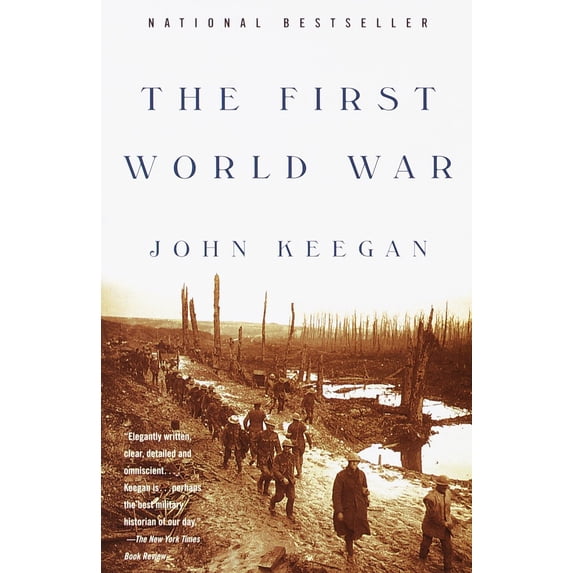
Hero image 0 of The First World War (Paperback), 0 of 1
The First World War (Paperback)
(No ratings yet)
Key item features
NATIONAL BESTSELLER • The definitive account of the Great War from one of our most eminent military historians. "Elegantly written, clear, detailed, and omniscient.... Keegan is...perhaps the best military historian of our day." —The New York Times Book Review
The First World War created the modern world. A conflict of unprecedented ferocity, it abruptly ended the relative peace and prosperity of the Victorian era, unleashing such demons of the twentieth century as mechanized warfare and mass death. It also helped to usher in the ideas that have shaped our times—modernism in the arts, new approaches to psychology and medicine, radical thoughts about economics and society—and in so doing shattered the faith in rationalism and liberalism that had prevailed in Europe since the Enlightenment.
The First World War probes the mystery of how a civilization at the height of its achievement could have propelled itself into such a ruinous conflict and takes us behind the scenes of the negotiations among Europe's crowned heads (all of them related to one another by blood) and ministers, and their doomed efforts to defuse the crisis. Keegan reveals how, by an astonishing failure of diplomacy and communication, a bilateral dispute grew to engulf an entire continent.
But the heart of Keegan's superb narrative is, of course, his analysis of the military conflict. With unequalled authority and insight, he recreates the nightmarish engagements whose names have become legend—Verdun, the Somme and Gallipoli among them—and sheds new light on the strategies and tactics employed, particularly the contributions of geography and technology. No less central to Keegan's account is the human aspect. He acquaints us with the thoughts of the intriguing personalities who oversaw the tragically unnecessary catastrophe—from heads of state like Russia's hapless tsar, Nicholas II, to renowned warmakers such as Haig, Hindenburg and Joffre. But Keegan reserves his most affecting personal sympathy for those whose individual efforts history has not recorded—"the anonymous millions, indistinguishably drab, undifferentially deprived of any scrap of the glories that by tradition made the life of the man-at-arms tolerable."
By the end of the war, three great empires—the Austro-Hungarian, the Russian and the Ottoman—had collapsed. But as Keegan shows, the devastation ex-tended over the entirety of Europe, and still profoundly informs the politics and culture of the continent today. His brilliant, panoramic account of this vast and terrible conflict is destined to take its place among the classics of world history.
The First World War created the modern world. A conflict of unprecedented ferocity, it abruptly ended the relative peace and prosperity of the Victorian era, unleashing such demons of the twentieth century as mechanized warfare and mass death. It also helped to usher in the ideas that have shaped our times—modernism in the arts, new approaches to psychology and medicine, radical thoughts about economics and society—and in so doing shattered the faith in rationalism and liberalism that had prevailed in Europe since the Enlightenment.
The First World War probes the mystery of how a civilization at the height of its achievement could have propelled itself into such a ruinous conflict and takes us behind the scenes of the negotiations among Europe's crowned heads (all of them related to one another by blood) and ministers, and their doomed efforts to defuse the crisis. Keegan reveals how, by an astonishing failure of diplomacy and communication, a bilateral dispute grew to engulf an entire continent.
But the heart of Keegan's superb narrative is, of course, his analysis of the military conflict. With unequalled authority and insight, he recreates the nightmarish engagements whose names have become legend—Verdun, the Somme and Gallipoli among them—and sheds new light on the strategies and tactics employed, particularly the contributions of geography and technology. No less central to Keegan's account is the human aspect. He acquaints us with the thoughts of the intriguing personalities who oversaw the tragically unnecessary catastrophe—from heads of state like Russia's hapless tsar, Nicholas II, to renowned warmakers such as Haig, Hindenburg and Joffre. But Keegan reserves his most affecting personal sympathy for those whose individual efforts history has not recorded—"the anonymous millions, indistinguishably drab, undifferentially deprived of any scrap of the glories that by tradition made the life of the man-at-arms tolerable."
By the end of the war, three great empires—the Austro-Hungarian, the Russian and the Ottoman—had collapsed. But as Keegan shows, the devastation ex-tended over the entirety of Europe, and still profoundly informs the politics and culture of the continent today. His brilliant, panoramic account of this vast and terrible conflict is destined to take its place among the classics of world history.
Specs
- Book formatPaperback
- Fiction/nonfictionNon-Fiction
- GenreHistory
- Publication dateMay, 2000
- Pages528
- Reading levelGeneral
Current price is USD$12.33
Price when purchased online
 Free 90-day returns
$12.33
$7.24
How do you want your item?
Try 30 days for just $1! Choose a plan at checkout.
Ships to
Arrives by Thu, Jul 9
.Order within 10 hr 23 min
Sold and shipped by Walmart.com

Free 90-day returns

This item is gift eligible
More seller options (6)
Starting from $9.98

Try 30 days of Walmart+ for just $1!
T&C apply. Claim offer now
About this item
Product details
NATIONAL BESTSELLER - The definitive account of the Great War from one of our most eminent military historians. "Elegantly written, clear, detailed, and omniscient.... Keegan is...perhaps the best military historian of our day." --The New York Times Book Review
The First World War created the modern world. A conflict of unprecedented ferocity, it abruptly ended the relative peace and prosperity of the Victorian era, unleashing such demons of the twentieth century as mechanized warfare and mass death. It also helped to usher in the ideas that have shaped our times--modernism in the arts, new approaches to psychology and medicine, radical thoughts about economics and society--and in so doing shattered the faith in rationalism and liberalism that had prevailed in Europe since the Enlightenment.
The First World War probes the mystery of how a civilization at the height of its achievement could have propelled itself into such a ruinous conflict and takes us behind the scenes of the negotiations among Europe's crowned heads (all of them related to one another by blood) and ministers, and their doomed efforts to defuse the crisis. Keegan reveals how, by an astonishing failure of diplomacy and communication, a bilateral dispute grew to engulf an entire continent. But the heart of Keegan's superb narrative is, of course, his analysis of the military conflict. With unequalled authority and insight, he recreates the nightmarish engagements whose names have become legend--Verdun, the Somme and Gallipoli among them--and sheds new light on the strategies and tactics employed, particularly the contributions of geography and technology. No less central to Keegan's account is the human aspect. He acquaints us with the thoughts of the intriguing personalities who oversaw the tragically unnecessary catastrophe--from heads of state like Russia's hapless tsar, Nicholas II, to renowned warmakers such as Haig, Hindenburg and Joffre. But Keegan reserves his most affecting personal sympathy for those whose individual efforts history has not recorded--"the anonymous millions, indistinguishably drab, undifferentially deprived of any scrap of the glories that by tradition made the life of the man-at-arms tolerable." By the end of the war, three great empires--the Austro-Hungarian, the Russian and the Ottoman--had collapsed. But as Keegan shows, the devastation ex-tended over the entirety of Europe, and still profoundly informs the politics and culture of the continent today. His brilliant, panoramic account of this vast and terrible conflict is destined to take its place among the classics of world history.
The First World War created the modern world. A conflict of unprecedented ferocity, it abruptly ended the relative peace and prosperity of the Victorian era, unleashing such demons of the twentieth century as mechanized warfare and mass death. It also helped to usher in the ideas that have shaped our times--modernism in the arts, new approaches to psychology and medicine, radical thoughts about economics and society--and in so doing shattered the faith in rationalism and liberalism that had prevailed in Europe since the Enlightenment.
The First World War probes the mystery of how a civilization at the height of its achievement could have propelled itself into such a ruinous conflict and takes us behind the scenes of the negotiations among Europe's crowned heads (all of them related to one another by blood) and ministers, and their doomed efforts to defuse the crisis. Keegan reveals how, by an astonishing failure of diplomacy and communication, a bilateral dispute grew to engulf an entire continent. But the heart of Keegan's superb narrative is, of course, his analysis of the military conflict. With unequalled authority and insight, he recreates the nightmarish engagements whose names have become legend--Verdun, the Somme and Gallipoli among them--and sheds new light on the strategies and tactics employed, particularly the contributions of geography and technology. No less central to Keegan's account is the human aspect. He acquaints us with the thoughts of the intriguing personalities who oversaw the tragically unnecessary catastrophe--from heads of state like Russia's hapless tsar, Nicholas II, to renowned warmakers such as Haig, Hindenburg and Joffre. But Keegan reserves his most affecting personal sympathy for those whose individual efforts history has not recorded--"the anonymous millions, indistinguishably drab, undifferentially deprived of any scrap of the glories that by tradition made the life of the man-at-arms tolerable." By the end of the war, three great empires--the Austro-Hungarian, the Russian and the Ottoman--had collapsed. But as Keegan shows, the devastation ex-tended over the entirety of Europe, and still profoundly informs the politics and culture of the continent today. His brilliant, panoramic account of this vast and terrible conflict is destined to take its place among the classics of world history.
NATIONAL BESTSELLER • The definitive account of the Great War from one of our most eminent military historians. "Elegantly written, clear, detailed, and omniscient.... Keegan is...perhaps the best military historian of our day." —The New York Times Book Review
The First World War created the modern world. A conflict of unprecedented ferocity, it abruptly ended the relative peace and prosperity of the Victorian era, unleashing such demons of the twentieth century as mechanized warfare and mass death. It also helped to usher in the ideas that have shaped our times—modernism in the arts, new approaches to psychology and medicine, radical thoughts about economics and society—and in so doing shattered the faith in rationalism and liberalism that had prevailed in Europe since the Enlightenment.
The First World War probes the mystery of how a civilization at the height of its achievement could have propelled itself into such a ruinous conflict and takes us behind the scenes of the negotiations among Europe's crowned heads (all of them related to one another by blood) and ministers, and their doomed efforts to defuse the crisis. Keegan reveals how, by an astonishing failure of diplomacy and communication, a bilateral dispute grew to engulf an entire continent.
But the heart of Keegan's superb narrative is, of course, his analysis of the military conflict. With unequalled authority and insight, he recreates the nightmarish engagements whose names have become legend—Verdun, the Somme and Gallipoli among them—and sheds new light on the strategies and tactics employed, particularly the contributions of geography and technology. No less central to Keegan's account is the human aspect. He acquaints us with the thoughts of the intriguing personalities who oversaw the tragically unnecessary catastrophe—from heads of state like Russia's hapless tsar, Nicholas II, to renowned warmakers such as Haig, Hindenburg and Joffre. But Keegan reserves his most affecting personal sympathy for those whose individual efforts history has not recorded—"the anonymous millions, indistinguishably drab, undifferentially deprived of any scrap of the glories that by tradition made the life of the man-at-arms tolerable."
By the end of the war, three great empires—the Austro-Hungarian, the Russian and the Ottoman—had collapsed. But as Keegan shows, the devastation ex-tended over the entirety of Europe, and still profoundly informs the politics and culture of the continent today. His brilliant, panoramic account of this vast and terrible conflict is destined to take its place among the classics of world history.
The First World War created the modern world. A conflict of unprecedented ferocity, it abruptly ended the relative peace and prosperity of the Victorian era, unleashing such demons of the twentieth century as mechanized warfare and mass death. It also helped to usher in the ideas that have shaped our times—modernism in the arts, new approaches to psychology and medicine, radical thoughts about economics and society—and in so doing shattered the faith in rationalism and liberalism that had prevailed in Europe since the Enlightenment.
The First World War probes the mystery of how a civilization at the height of its achievement could have propelled itself into such a ruinous conflict and takes us behind the scenes of the negotiations among Europe's crowned heads (all of them related to one another by blood) and ministers, and their doomed efforts to defuse the crisis. Keegan reveals how, by an astonishing failure of diplomacy and communication, a bilateral dispute grew to engulf an entire continent.
But the heart of Keegan's superb narrative is, of course, his analysis of the military conflict. With unequalled authority and insight, he recreates the nightmarish engagements whose names have become legend—Verdun, the Somme and Gallipoli among them—and sheds new light on the strategies and tactics employed, particularly the contributions of geography and technology. No less central to Keegan's account is the human aspect. He acquaints us with the thoughts of the intriguing personalities who oversaw the tragically unnecessary catastrophe—from heads of state like Russia's hapless tsar, Nicholas II, to renowned warmakers such as Haig, Hindenburg and Joffre. But Keegan reserves his most affecting personal sympathy for those whose individual efforts history has not recorded—"the anonymous millions, indistinguishably drab, undifferentially deprived of any scrap of the glories that by tradition made the life of the man-at-arms tolerable."
By the end of the war, three great empires—the Austro-Hungarian, the Russian and the Ottoman—had collapsed. But as Keegan shows, the devastation ex-tended over the entirety of Europe, and still profoundly informs the politics and culture of the continent today. His brilliant, panoramic account of this vast and terrible conflict is destined to take its place among the classics of world history.
info:
We aim to show you accurate product information. Manufacturers, suppliers and others provide what you see here, and we have not verified it.
Specifications
Book format
Paperback
Fiction/nonfiction
Non-Fiction
Genre
History
Publication date
May, 2000
Warranty
Warranty information
Please be aware that the warranty terms on items offered for sale by third party Marketplace sellers may differ from those displayed in this section (if any). To confirm warranty terms on an item offered for sale by a third party Marketplace seller, please use the 'Contact seller' feature on the third party Marketplace seller's information page and request the item's warranty terms prior to purchase.
Similar items you might like
Based on what customers bought
The Anzac Chronicles "To Our Last Man", Book 2, (Paperback) $12.99
 $1299current price $12.99
The Anzac Chronicles "To Our Last Man", Book 2, (Paperback)
Hiroshima (Paperback) $9.95
 $995current price $9.95
Hiroshima (Paperback)
Memoirs from World War Two Escape From Arnhem: A Canadian Among the Lost Paratroops, (Paperback) $11.99
 $1199current price $11.99
Memoirs from World War Two Escape From Arnhem: A Canadian Among the Lost Paratroops, (Paperback)
Pre-Owned The Days of the French Revolution (Paperback) 0688169783 9780688169787 $20.39
 $2039current price $20.39
Pre-Owned The Days of the French Revolution (Paperback) 0688169783 9780688169787
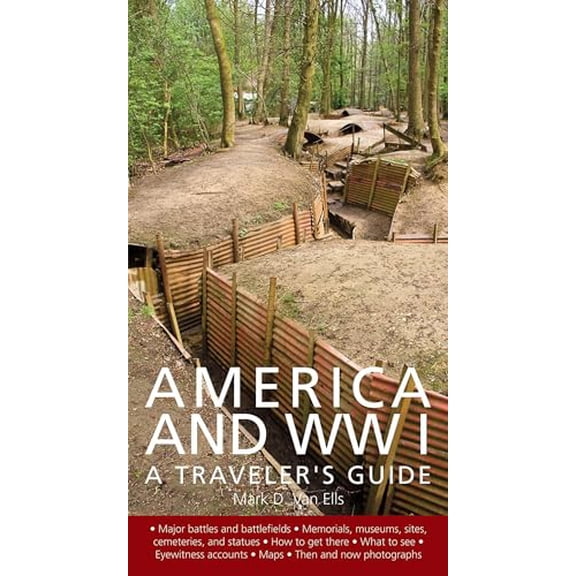
Pre-Owned America and World War I: A Traveler's Guide (Paperback) 1566569753 9781566569750 $6.89
 $689current price $6.89
Pre-Owned America and World War I: A Traveler's Guide (Paperback) 1566569753 9781566569750
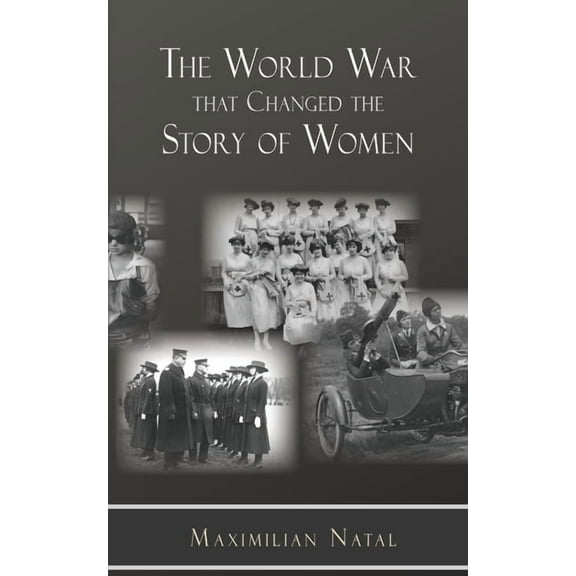
The World War That Changed the Story of Women, (Paperback) $10.99
 $1099current price $10.99
The World War That Changed the Story of Women, (Paperback)
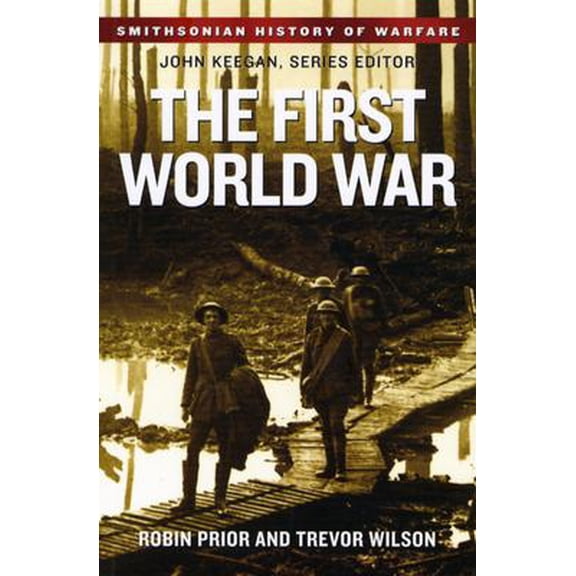
Smithsonian History of Warfare: The First World War (Paperback) $6.47
 $647current price $6.47
Smithsonian History of Warfare: The First World War (Paperback)
15 out of 5 Stars. 1 reviewsPre-Owned Trains: A Memoir of a Hidden Childhood During and After World War 2 (Paperback) 0966016203 9780966016208 $4.46 Was $6.47
 $446current price $4.46, Was $6.47$6.47
Pre-Owned Trains: A Memoir of a Hidden Childhood During and After World War 2 (Paperback) 0966016203 9780966016208
World War 2: Stories from the German Special Forces: Eyewitness Accounts (Paperback) $14.13
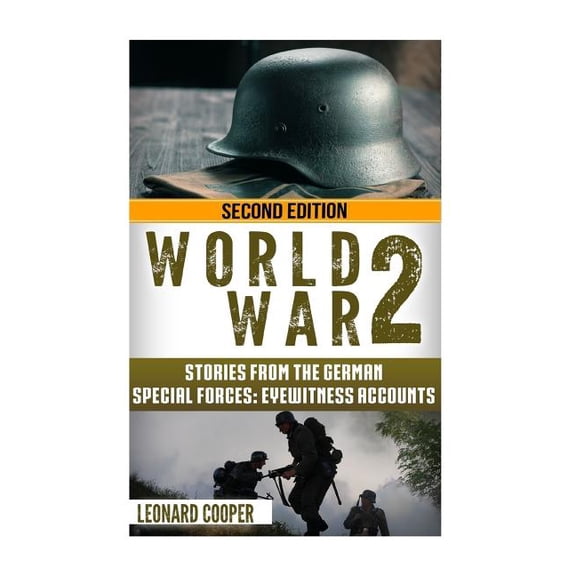 $1413current price $14.13
World War 2: Stories from the German Special Forces: Eyewitness Accounts (Paperback)
Pre-Owned Hanns and Rudolf (Paperback) 1476711852 9781476711850 $6.85
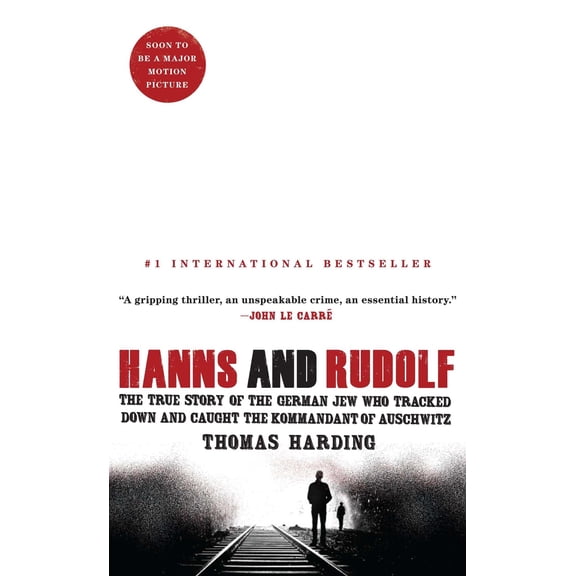 $685current price $6.85
Pre-Owned Hanns and Rudolf (Paperback) 1476711852 9781476711850
The Black Watch (WWI Centenary Series), (Paperback) $11.99
 $1199current price $11.99
The Black Watch (WWI Centenary Series), (Paperback)
Army: The Evacuation of North Russia, 1919 (Paperback) $17.75
 $1775current price $17.75
Army: The Evacuation of North Russia, 1919 (Paperback)
Pre-Owned The Origins of the First World War (Paperback) 0582423791 9780582423794 $7.77
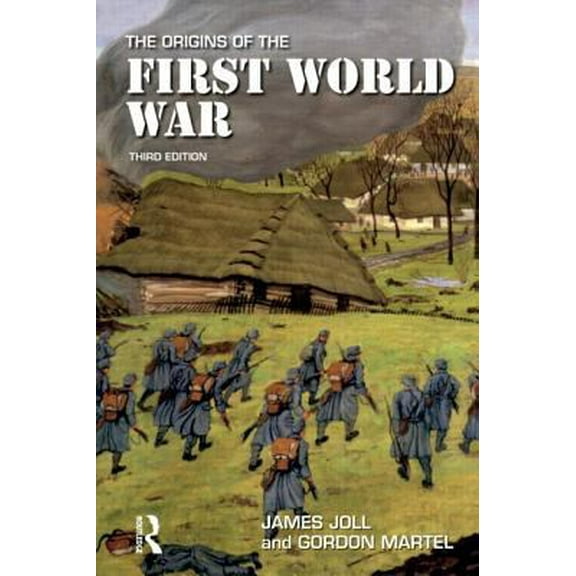 2 optionsAvailable in additional 2 options$777current price $7.77
Pre-Owned The Origins of the First World War (Paperback) 0582423791 9780582423794
Pre-Owned World War I: A History in Documents (Hardcover) 0195137469 9780195137460 $5.56
 $556current price $5.56
Pre-Owned World War I: A History in Documents (Hardcover) 0195137469 9780195137460
Shire Library: The British Sailor of the First World War (Paperback) $18.30
 $1830current price $18.30
Shire Library: The British Sailor of the First World War (Paperback)
War Dogs of the World War, (Paperback) $13.00
 $1300current price $13.00
War Dogs of the World War, (Paperback)
Everything World War 2 - WWII Island by Island: The Pacific War in Brutal Detail, Book 5, (Paperback) $9.99
 $999current price $9.99
Everything World War 2 - WWII Island by Island: The Pacific War in Brutal Detail, Book 5, (Paperback)
Customer ratings & reviews
0 ratings|0 reviews
This item does not have any reviews yet

Related pages
- Best Sellers In World War I History
- Civil Wars Civil Wars
- World War I Military History Books
- Great Britain Ministry Of Transport
- History Tanks
- Civil War Replica
- Nuclear Warfare Military History Books
- World War II Military History Books
- Wars & Conflicts Military History Books
- Hiroshima City
- General Military History Books
- Strategy in Military History Books