Learn Python from Scratch and Build Something Real
You do not need to be a programmer to learn Python. You need a clear starting point, practical examples, and a learning path that takes you beyond memorising syntax.
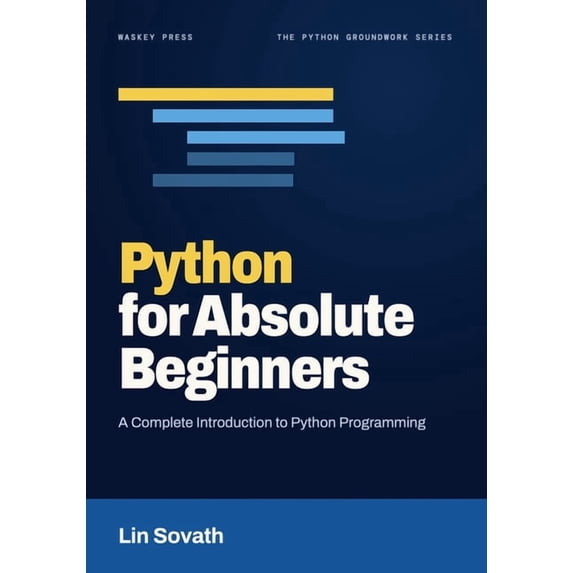
Python for Absolute Beginners is a complete introduction to Python programming for readers who want to start from zero and develop skills they can actually use. No previous programming experience is required.
Instead of jumping between unrelated exercises, this book follows one continuous project: Verzio, a fictional analytics consultancy that needs to clean, validate, and process data received in CSV and Excel files. With every chapter, you will learn a new concept and apply it to the growing project.
WHAT YOU WILL LEARN
-
Install Python and write your first programs.
-
Understand variables, data types, operators, and expressions.
-
Use conditions, comparisons, loops, and iteration.
-
Work with strings, lists, dictionaries, and other essential data structures.
-
Write reusable functions and organise your code.
-
Read, write, and process files.
-
Handle exceptions and diagnose common programming errors.
-
Organise projects with modules and classes.
-
Write automated tests with pytest.
-
Read Excel files using openpyxl.
-
Use generators, configuration files, environment variables, and command-line arguments.
-
Assemble a complete, tested, installable Python package.
FROM YOUR FIRST SCRIPT TO A COMPLETE PROJECT
You will begin with simple instructions and gradually learn how to structure more capable programs. The running Verzio project starts small and develops into a data-cleaning pipeline with reusable components, automated tests, and a command-line interface.
This approach helps you understand not only how Python works, but also how individual concepts combine to solve practical problems.
DESIGNED FOR ABSOLUTE BEGINNERS
You do not need prior knowledge of programming, object-oriented design, or software development tools. The explanations introduce concepts progressively, while practical examples help you build confidence as you go.
If you already use spreadsheets and want to learn how to process larger datasets, repeat tasks consistently, and reduce manual work, this book provides a practical starting point.
WHO SHOULD READ THIS BOOK?