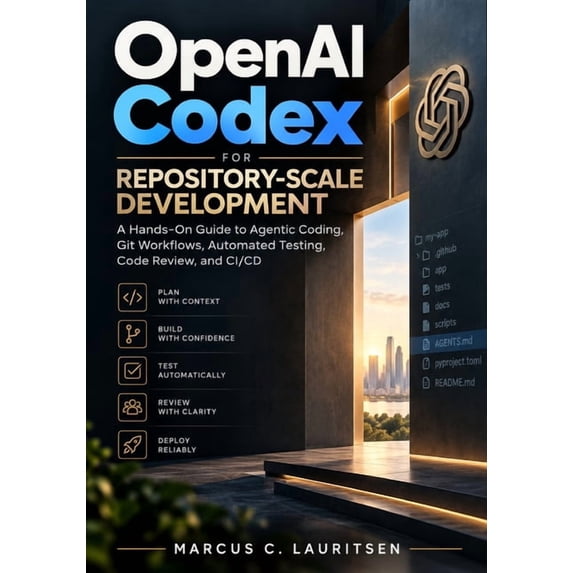
Struggling to navigate complex codebases, fix stubborn bugs, or make software changes without breaking what already works?
Modern software development doesn't have to feel overwhelming. With the right guidance, OpenAI Codex can help you understand unfamiliar repositories, implement features, troubleshoot problems, and automate repetitive tasks while keeping you in control.
OpenAI Codex for Repository-Scale Development provides a practical, step-by-step approach to AI-assisted software engineering. No previous Codex experience is required. With basic programming and Git knowledge, you can follow clear instructions, build useful skills, and develop confidence through hands-on exercises.
Rather than relying on disconnected examples, this guide follows a continuous Python and FastAPI project, showing how real development workflows evolve from initial setup to automated testing, collaborative Git workflows, and CI/CD integration.
Key Features -
Step-by-step instruction: Learn Codex workflows through clear explanations and manageable examples.
-
Continuous hands-on project: Apply each technique to a practical Python application using FastAPI, SQLite, pytest, and Git.
-
Real-world development skills: Practice debugging, testing, refactoring, code review, and repository automation.
-
Reliable engineering practices: Learn to inspect AI-generated changes, understand failures, and verify results before accepting them.
-
Practical learning resources: Reinforce your skills with chapter exercises, summaries, troubleshooting guidance, and reference checklists.
What You Will Learn
-
Install, configure, and use the Codex CLI with appropriate permissions and development settings.
-
Explore existing repositories, manage AGENTS.md instructions, and plan multi-file development tasks.
-
Implement application features, investigate bugs, and protect existing functionality.
-
Write unit, integration, and regression tests while applying automated code quality checks.
-
Refactor existing applications and manage Git branches, worktrees, commits, and pull requests.
-
Use agent skills, hooks, MCP integrations, and subagents to support repeatable development workflows.
-
Integrate Codex with GitHub Actions, CI/CD pipelines, security controls, and release quality gates.
Who This Book Is For
This book is designed for developers new to Codex, programmers with basic coding knowledge, self-taught learners, computer science students, and software professionals interested in practical AI-assisted development.
Whether you want to work more confidently with existing codebases, improve your debugging and testing sk