

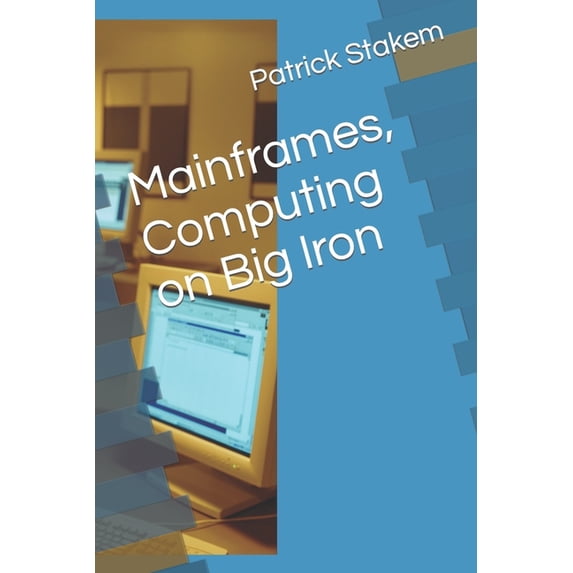
Computer Architecture Mainframes, Computing on Big Iron, Book 15, (Paperback)
(No ratings yet)
Key item features
- Computer Architecture Mainframes, Computing on Big Iron, Book 15, (Paperback)
- Author: Patrick Stakem
- ISBN: 9781520216454
- Format: Paperback
- Publication Date: 2016-12-30
- Page Count: 178
Specs
Publication date, December, 2016
Author, Patrick Stakem
Book format, Paperback
Genre, Computing & Internet
Pages, 178
Age group, Adult
Publication date
December, 2016
Author, Patrick Stakem
Author
Patrick Stakem
Book format, Paperback
Book format
Paperback
Genre, Computing & Internet
Genre
Computing & Internet
Pages, 178
Pages
178
Age group, Adult
Age group
Adult
About this item
Product details
This book covers the topic of mainframe computers, Big Iron, the room-sized units that dominated and defined computing in the 1950's and 1960's. The coverage is of efforts mainly in the United States, although significant efforts in the U.K., Germany, and others were also involved. Coverage is given for IBM and the 7 dwarfs, Burroughs, Control Data, General Electric, Hineywell, NCR, RCA, and Univac. There is also coverage of machines from Bendix, DEC, Philco, Sperry-Rand, and Sylvania.The predecessor architectures of Charles Babbage and his Differential Engine and Analytical Engine are discussed, as well as the mostly one-off predecessors Colossus, Eniac, Edvac, Whirlwind, ASCC, Sage, and Illiac-IV, How did we get where we are? Initially computers were big, unique, heavy mainframes with a dedicated priesthood of programmers and system engineers to keep them running. They were enshrined in specially air conditioned rooms with raised floor and access control. They ran one job at a time, taking punched cards as input, and producing reams of wide green-striped paper output. Data were collected on reels of magnetic tape, or large trays of punched cards. Access to these very expensive resources was necessarily limited. Computing was hard, but the advantages were obvious - we could collect and crunch data like never before, and compute things that would have worn out our slide rules. The book is focused mostly on computers that the author had experience with, although it does cover some of the one-off predecessors that lead to the mainframe industry of the 1960's. Thus, this book is not comprehensive. It probably missed your favorite. Not every machine from every manufacturer is discussed.Computers were built for one of two purposes, business accounting, or scientific calculations. There was also research in the fledging area of Computer Science, an area not yet well defined. The computers used peripherals from the Unit Record equipment, designed for business data processing. Data were typed on cards, sorted, and printed mechanically. This was a major improvements over the manual method. Herman Hollerith figured this out, and improved the processing of the U. S. Census in 1890. This took 1 year, as opposed to 8 years for the previous census. Hollerith set up a company based in Georgetown (part of the District of Columbia) on 29th street to manufacturing punched card equipment. There is a plaque on the building which housed the Tabulating Machine Company, later know as IBM. At the same time, business and science were both using mechanical calculators to handle computations. These were little changed over a hundred years or so. The technology base changed from mechanical to relay to tube, and things got faster. The arithmetic system changed from decimal to binary, because the switching elements in electronics was two-state. The next step was to put a "computer" between the card reader and the printer, and actually crunch the data.Then, a better idea evolved. Most of the time, the "big iron" was not computing, it was waiting. So, if we could devise a way to profitably use the idle time, we would increase the efficiency of the facility. This lead to the concept of time-sharing. There was a control program whose job it was to juggle the resources so that a useful program was always running. This came along about the time that remote terminals were hooked to the mainframe, to allow access from multiple, different locations. In a sense, the computer facility was virtualized; each user saw his very own machine (well, for limited periods of time, anyway). If the overhead of switching among users was not too great, the scheme worked.This evolved into a "client-server" architecture, in which the remote clients had some compute and storage capability of their own, but still relied on the big server.And, in the background, something else amazing was happening. Mainframe
- Computer Architecture Mainframes, Computing on Big Iron, Book 15, (Paperback)
- Author: Patrick Stakem
- ISBN: 9781520216454
- Format: Paperback
- Publication Date: 2016-12-30
- Page Count: 178
info:
We aim to show you accurate product information. Manufacturers, suppliers and others provide what you see here, and we have not verified it.
Specifications
Publication date
December, 2016
Author
Patrick Stakem
Book format
Paperback
Genre
Computing & Internet
Warranty
Warranty information
Please be aware that the warranty terms on items offered for sale by third party Marketplace sellers may differ from those displayed in this section (if any). To confirm warranty terms on an item offered for sale by a third party Marketplace seller, please use the 'Contact seller' feature on the third party Marketplace seller's information page and request the item's warranty terms prior to purchase.
Similar items you might like
Based on what customers bought
All about the CPU: Understanding the Brain of the Computer, (Paperback) $14.99
 $1499current price $14.99
All about the CPU: Understanding the Brain of the Computer, (Paperback)
Computer Architecture: 16 bit Microprocessors, History and Architecture (Paperback) $9.95
 $995current price $9.95
Computer Architecture: 16 bit Microprocessors, History and Architecture (Paperback)
Architecture of Massively Parallel Microprocessor Systems (Computer Architecture), 9781520250069, 1520250061, Paperback, $12.53 16.7 ¢/lb
 $1253current price $12.5316.7 ¢/lb
Architecture of Massively Parallel Microprocessor Systems (Computer Architecture), 9781520250069, 1520250061, Paperback,
Best seller, Big Print: Word Search Puzzle Books, 2 Pack (Paperback) $9.32
Best seller 2 optionsAvailable in additional 2 options$932current price $9.32
Big Print: Word Search Puzzle Books, 2 Pack (Paperback)
584.3 out of 5 Stars. 58 reviews4.3 out of 5 starsSpace: Microprocessors in Space (Paperback) $12.53
 $1253current price $12.53
Space: Microprocessors in Space (Paperback)
In 50+ people's carts, The Silent Patient (Paperback) $8.59 Was $9.92
In 50+ people's carts $859current price $8.59, Was $9.92$9.92
The Silent Patient (Paperback)
2924.6 out of 5 Stars. 292 reviews4.6 out of 5 starsSpace: Rocket Science - 101 (Paperback) $8.99
 $899current price $8.99
Space: Rocket Science - 101 (Paperback)
The Career Journey Pocketbook (Paperback) $5.38
 $538current price $5.38
The Career Journey Pocketbook (Paperback)
Best seller, Die with Zero: Getting All You Can from Your Money and Your Life (Paperback) $9.79
Best seller $979current price $9.79
Die with Zero: Getting All You Can from Your Money and Your Life (Paperback)
144.6 out of 5 Stars. 14 reviews4.6 out of 5 starsComputer Architecture: Graphics Processing Units, an overview. (Paperback) $9.99 37.0 ¢/lb
 $999current price $9.9937.0 ¢/lb
Computer Architecture: Graphics Processing Units, an overview. (Paperback)
Computer Architecture & Programming of the Intel X86 Family (Paperback) by Patrick Stakem $11.72
 $1172current price $11.72
Computer Architecture & Programming of the Intel X86 Family (Paperback) by Patrick Stakem
Space: Exoplanets (Paperback) $9.99
 $999current price $9.99
Space: Exoplanets (Paperback)
The Networked Sentience: A New Architecture of Thought, (Paperback) $12.99
 $1299current price $12.99
The Networked Sentience: A New Architecture of Thought, (Paperback)
Best seller, Verity (Paperback) $7.05 Was $13.78
Best seller 2 optionsAvailable in additional 2 options$705current price $7.05, Was $13.78$13.78
Verity (Paperback)
4794.5 out of 5 Stars. 479 reviews4.5 out of 5 starsOut from Egypt Shadow of the Storm, Book 2, (Paperback) $20.04
 $2004current price $20.04
Out from Egypt Shadow of the Storm, Book 2, (Paperback)
44.8 out of 5 Stars. 4 reviews4.8 out of 5 starsThe Architecture of Thought, (Paperback) $14.99
 $1499current price $14.99
The Architecture of Thought, (Paperback)
The Architecture of Enmeshment, (Paperback) $9.92
 $992current price $9.92
The Architecture of Enmeshment, (Paperback)
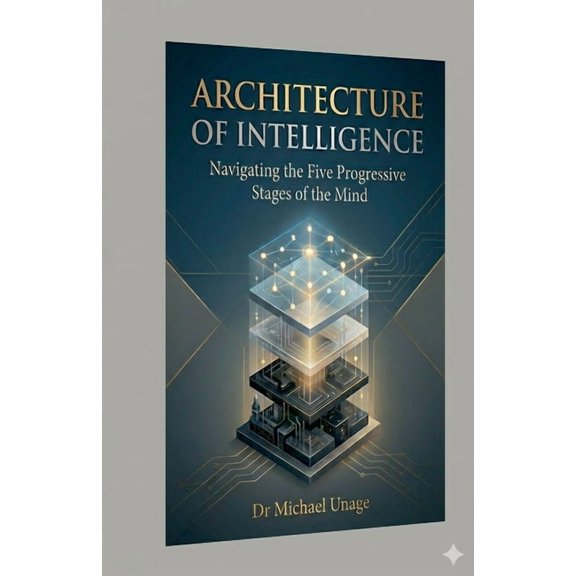
Architecture of Intelligence, (Paperback) $15.99
 $1599current price $15.99
Architecture of Intelligence, (Paperback)
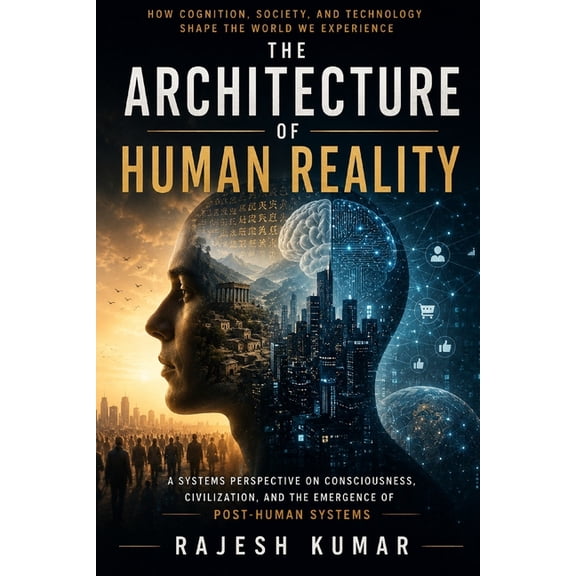
The Architecture Of Human Reality, (Paperback) $9.99
 $999current price $9.99
The Architecture Of Human Reality, (Paperback)
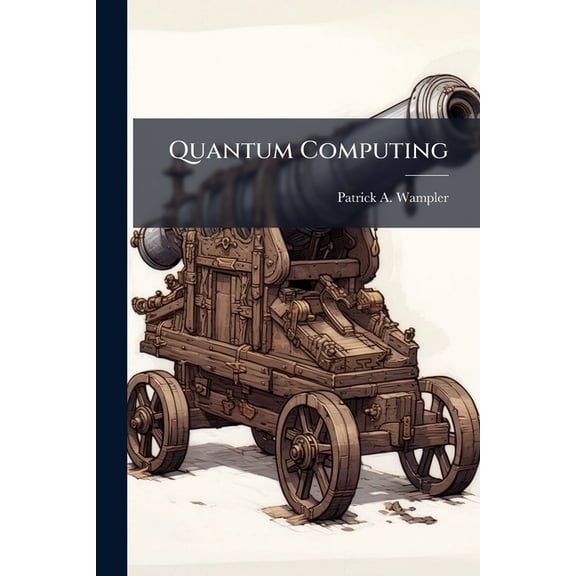
Quantum Computing, (Paperback) $13.95
 $1395current price $13.95
Quantum Computing, (Paperback)
Customer ratings & reviews
0 out of 5 stars
This item does not have any reviews yet

Current price is USD$12.99
Price when purchased online
 Free 90-day returns
How do you want your item?
Try 30 days for just $1! Choose a plan at checkout.
Ships to
Arrives by Tue, Nov 24
Sold and shipped by Walmart.com

Free 90-day returns

This item is gift eligible
Other sellers
$14.95
+Free shippingShipping, arrives by Mon, Nov 23 to Columbus, 43215
Sold and shipped by Alibris Books
Free Holiday returns until Jan 31

Try 30 days of Walmart+ for just $1!
T&C apply. Claim offer now