

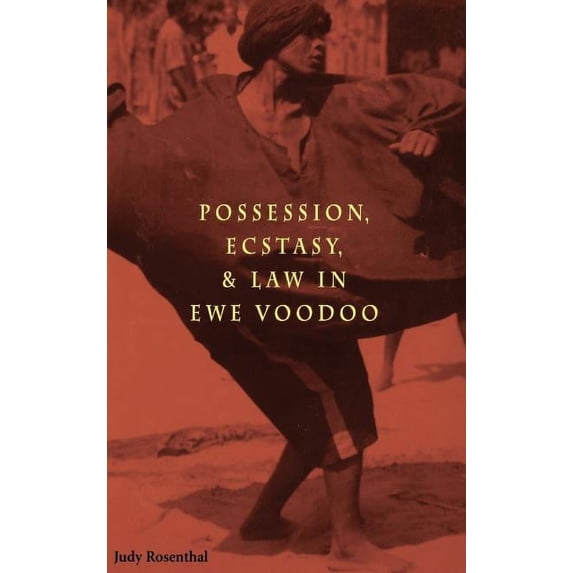
Possession, Ecstasy, and Law in Ewe Voodoo (Hardcover)
Key item features
As a new resident of Togo in 1985, Judy Rosenthal witnessed her first Gorovodu trance ritual. Over the next eleven years, she studied this voodoo in West Africa's Ewe populations of coastal Ghana, Togo, and Benin, an area once called the Slave Coast. The result is Possession, Ecstasy, and Law in Ewe Voodoo, an ethnography of spirit possession that focuses on law and morality in "medecine Vodu" orders. Gorovodu is not a doctrinal set, but rather a lingusitic, moral, and spiritual community, with both real and imagined aspects.
In medecine Vodu possession, the deities evoked are spirits of "bought people" from the savanna regions, slaves who worked for southern coastal lineages, often marrying into Ewe families. Drumming and dancing rituals, replete with voluptuous trances and gender reversals, bring these "foreign" spirits back into Ewe communities to protect worshippers, heal the sick and troubled, arbitrate disputes, and enjoy themselves as they did before they died. (Rosenthal employs Bakhtin's theory of carnival to interpret the openly festive element of Gorovodu.) The changeable nature of the religion echoes the lack of boundaries of the Gorovodu family and the residents' belief that communal and individual identity are fluid rather than fixed. Numerous name changes early in this century indicated a strategy for resisting colonial control.
Writing from a background of anthropology, Rosenthal carefully monitors her own role as narrator in the book, aware of the cultural distance between her and the Africans she is writing about. She intends this ethnography to mirror the "texts" of voodoo itself, a body of signifiers and meanings with which the reader must interact in order to make sense of it.
Specs
Author, Judy Rosenthal
Book format, Hardcover
Genre, Religion
Pages, 282
Age group, Adult
About this item
Product details
As a new resident of Togo in 1985, Judy Rosenthal witnessed her first Gorovodu trance ritual. Over the next eleven years, she studied this voodoo in West Africa's Ewe populations of coastal Ghana, Togo, and Benin, an area once called the Slave Coast. The result is Possession, Ecstasy, and Law in Ewe Voodoo, an ethnography of spirit possession that focuses on law and morality in "medecine Vodu" orders. Gorovodu is not a doctrinal set, but rather a lingusitic, moral, and spiritual community, with both real and imagined aspects.
In medecine Vodu possession, the deities evoked are spirits of "bought people" from the savanna regions, slaves who worked for southern coastal lineages, often marrying into Ewe families. Drumming and dancing rituals, replete with voluptuous trances and gender reversals, bring these "foreign" spirits back into Ewe communities to protect worshippers, heal the sick and troubled, arbitrate disputes, and enjoy themselves as they did before they died. (Rosenthal employs Bakhtin's theory of carnival to interpret the openly festive element of Gorovodu.) The changeable nature of the religion echoes the lack of boundaries of the Gorovodu family and the residents' belief that communal and individual identity are fluid rather than fixed. Numerous name changes early in this century indicated a strategy for resisting colonial control.
Writing from a background of anthropology, Rosenthal carefully monitors her own role as narrator in the book, aware of the cultural distance between her and the Africans she is writing about. She intends this ethnography to mirror the "texts" of voodoo itself, a body of signifiers and meanings with which the reader must interact in order to make sense of it.
Specifications
Publication date
Author
Book format
Genre
Warranty
Warranty information
Similar items you might like
Cobert's Manual of Drug Safety and Pharmacovigilance (Fourth Edition), (Paperback) $50.94
 $5094current price $50.94
Cobert's Manual of Drug Safety and Pharmacovigilance (Fourth Edition), (Paperback)
15 out of 5 Stars. 1 reviews5 out of 5 starsMathematisch-Physikalische Bibliothek Theorie Der Planetenbewegung, Book 8, (Paperback) $53.39
 $5339current price $53.39
Mathematisch-Physikalische Bibliothek Theorie Der Planetenbewegung, Book 8, (Paperback)
Connective Tissue What Kind of Mother: A Reckoning, (Paperback) $22.99
 $2299current price $22.99
Connective Tissue What Kind of Mother: A Reckoning, (Paperback)
How Successful Law Firms Really Work, (Paperback) $75.00
 $7500current price $75.00
How Successful Law Firms Really Work, (Paperback)
Meyler's Side Effects of Psychiatric Drugs, (Hardcover) $45.31
 $4531current price $45.31
Meyler's Side Effects of Psychiatric Drugs, (Hardcover)
Lady Vagabond, (Paperback) $27.99
 $2799current price $27.99
Lady Vagabond, (Paperback)
Mapping Geographies of Violence, (Paperback) $51.33
 $5133current price $51.33
Mapping Geographies of Violence, (Paperback)
How to Probate an Estate in California, (Paperback) $28.82 Was $33.35
 $2882current price $28.82, Was $33.35$33.35
How to Probate an Estate in California, (Paperback)
15 out of 5 Stars. 1 reviews5 out of 5 starsDavis's Drug Guide for Nurses, (Paperback) $29.24 Was $37.00
 $2924current price $29.24, Was $37.00$37.00
Davis's Drug Guide for Nurses, (Paperback)
184.7 out of 5 Stars. 18 reviews4.7 out of 5 starsNotes on the Law of Real Property (Hardcover) $41.45 Was $47.49
 $4145current price $41.45, Was $47.49$47.49
Notes on the Law of Real Property (Hardcover)
A Treatise on the Law of Damages, (Paperback) $53.90
 $5390current price $53.90
A Treatise on the Law of Damages, (Paperback)
It's Not Just Mumbo Jumbo: The 7 Steps That Will Change Your Life, (Hardcover) $27.28
 $2728current price $27.28
It's Not Just Mumbo Jumbo: The 7 Steps That Will Change Your Life, (Hardcover)
The Mother Vine: How I Healed My Heart with Ayahuasca, (Paperback) $17.27
 $1727current price $17.27
The Mother Vine: How I Healed My Heart with Ayahuasca, (Paperback)
On Lycanthropy, Transformation & Ecstasy Of Sorcerers, (Paperback) $18.00
 $1800current price $18.00
On Lycanthropy, Transformation & Ecstasy Of Sorcerers, (Paperback)
Marsupials, (Paperback) $70.00
 $7000current price $70.00
Marsupials, (Paperback)
The Automobile in St. Louis: An Illustrated Timeline, (Hardcover) $31.57
 $3157current price $31.57
The Automobile in St. Louis: An Illustrated Timeline, (Hardcover)
Unlearning: The Art of Practicing Mindful Positivity., (Hardcover) $40.98
 $4098current price $40.98
Unlearning: The Art of Practicing Mindful Positivity., (Hardcover)
Loving Allie: Transforming the Journey of Loss, (Hardcover) $28.54
 $2854current price $28.54
Loving Allie: Transforming the Journey of Loss, (Hardcover)
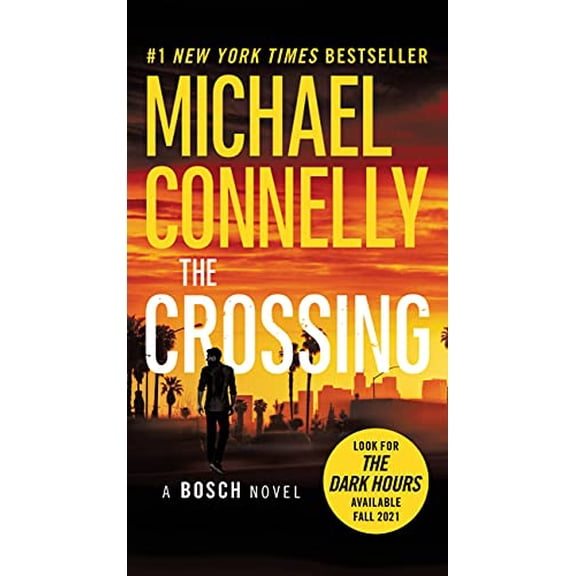
Pre-Owned The Crossing (Hardcover) 0316387797 9780316387798 $6.93
 2 optionsAvailable in additional 2 options$693current price $6.93
Pre-Owned The Crossing (Hardcover) 0316387797 9780316387798
Kindred Spirits 2 (Paperback) $61.52
 $6152current price $61.52
Kindred Spirits 2 (Paperback)
Customer ratings & reviews

- Free shipping
 Free Holiday returns until Jan 31
How do you want your item?

