

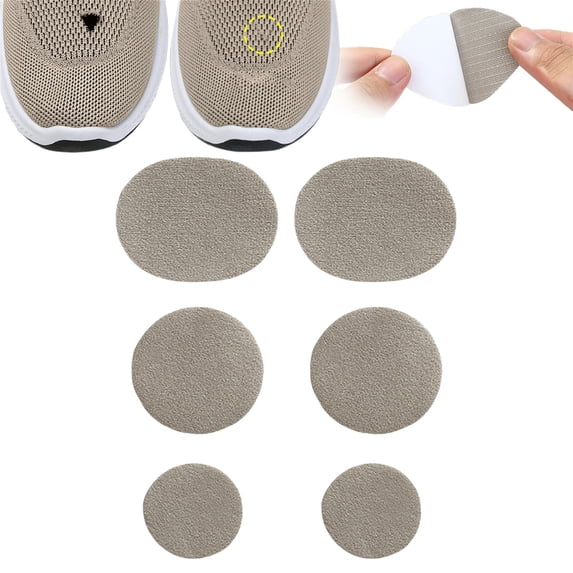
Hero image 0 of Shoe Mesh Upper Repair Patch, Self-Adhesive Anti-Wear Sticker for Sports Shoe Hole & Toe Cover, 0 of 7
Clearance
Shoe Mesh Upper Repair Patch, Self-Adhesive Anti-Wear Sticker for Sports Shoe Hole & Toe Cover
(No ratings yet)
Shoe Mesh Upper Repair Patch, Self-Adhesive Anti-Wear Sticker for Sports Shoe Hole & Toe CoverShoe Mesh Upper Repair Patch Self Adhesive Anti Wear Sticker for Sports Shoe Hole Toe CoverShoe Mesh Upper Repair Patch Self Adhesive Anti Wear Sticker for Sports Shoe Hole Toe Cover BlackShoe Mesh Upper Repair Patch Self Adhesive Anti Wear Sticker for Sports Shoe Hole Toe Cover NavyShoe Mesh Upper Repair Patch Self Adhesive Anti Wear Sticker for Sports Shoe Hole Toe CoverShoe Mesh Upper Repair Patch Self Adhesive Anti Wear Sticker for Sports Shoe Hole Toe Cover BlueShoe Mesh Upper Repair Patch Self Adhesive Anti Wear Sticker for Sports Shoe Hole Toe Cover White
Actual Color:A
A, $0.70, was $0.79
$0.70$0.79
B, $0.71, was $0.80
$0.71$0.80
Black, $1.07
$1.07
Blue, $0.70, was $0.79
$0.70$0.79
Navy, $1.61, was $5.69
$1.61$5.69
White, $0.70, was $0.79
$0.70$0.79
Key item features
- Holes open on the toe box of sneakers before the sole wears out. You are not ready to replace the whole shoe. This thin mesh patch sticks over the tear, keeps the toes out, and lets the shoe keep going. It is the cheap middle ground between a patch job and a new pair. It also stops the toe box from rubbing through further. A hole lets sand and dust in, and the rough edge abrades the foot. Cover it and the shoe feels normal again. The patch wears like part of the upper, not like a bandage. Order it before the job starts, not after. The worst time to realize you are missing the piece is mid-project. Have it on hand, lay it out, and the project stays moving. A two-day wait for a small part turns an hour job into a weekend. Here is the straight version. It works, it holds up, and it is simple to use. It will not surprise you, and that is the point. Household items that surprise you usually surprise you in a bad way. This one does what it says, at the size you ordered, on the surface you prepared. Here is the honest part no listing wants to say. It does one job well and it is not pretending to do everything. If your situation is outside what it is built for, you will be disappointed. If your situation matches, it works. Read the size and the surface it is meant for, and match those before you decide. Seasons matter more than people expect. It behaves one way in the dry heat of summer and another in the damp of winter. If you use it outdoors, bring it in before a hard freeze. If you keep it inside, it does not care about the weather. Match the season to the storage. People who live with it stop noticing it after a week. That is the compliment. A household item that keeps drawing attention is usually a hassle. Once it sits where it belongs and does its job, it fades into the background and just works, which is exactly what you want. Cleanup takes a minute. Rinse it, dry it, put it back. A minute now keeps it ready for next time. A minute saved today turns into five minutes of hunting later. The cheap habit is to leave it out; the cheap habit always costs more.
- The patch is a fine wire-mesh film that breathes, so the foot does not get hotter. A solid sticker over a toe box traps sweat; this lets air through while still covering the hole. It flexes with the mesh upper as you walk, which is why it holds instead of cracking. Match the color to the shoe. A patch in a different shade draws the eye; a matching one disappears. The pack gives you a couple of shades so you can match the shoe in question. Trim slightly larger than the hole and round the corners. After you use it, the thing you notice is that the problem is gone. You stop thinking about the gap, the sag, the drip. That is the mark of a good household item: it fixes the thing you were annoyed by and then stays out of your way. Picture the morning you reach for it. The surface is where it always is, you know the steps by heart, and the whole thing takes less time than making coffee. That is the standard worth aiming for. A household item that needs a manual every time you reach for it is one you will stop reaching for. This one is simple enough to use without thinking. Store it where the next person in the house will find it. A garage shelf nobody opens means it stays in the bag until you buy a second one. Keep it with the other household supplies and it becomes part of the normal routine instead of a project you have to plan. If it does not seem to work the first time, check the obvious before you blame the item. Is the surface clean? Is it seated properly? Did you skip a step? Nine times out of ten, the problem is in one of those three. When all three check out and it still fails, that is a different conversation. Ordinary days are what this is for. Not the one big project, but the small recurring things that add up through the month. The sink that needs a wipe, the gap that needs sealing, the shelf that needs a brace. Buy it for the ordinary, and the ordinary gets easier. Order it before the job starts, not after. The worst time to realize you are missing the piece is mid-project. Have it on hand, lay it out, and the project stays moving. A two-day wait for a small part turns an hour job into a weekend.
- Press it onto a clean, dry shoe. Peel the insole and wipe the inside of the toe box if the tear comes through, then stick from the outside. Let the shoe sit overnight before you run in it. The adhesive needs a flat, unstressed surface to grab. Press it from the outside, but wipe the inside of the toe box too. If the tear comes through to the lining, a little moisture on the inside keeps the foot comfortable. The patch seals the outside; the clean lining keeps the shoe from smelling. When you take the repair out of the box, the first job is getting it onto the surface where it will actually work. Read the steps once before you start, because halfway through is a bad time to discover a missed step. Most people finish the job in under ten minutes, and the ones who take longer are usually the ones who skipped the read-through. Lay the parts out, clear the spot, and work slowly on the first one. Once you have done it once, the next one goes twice as fast. You can overthink this. A cheaper version flimsies out in a week; an expensive version buys features you will never use. This sits in the middle: made well enough to last, priced like a household item, not a special purchase. You are paying for the job it does, not the brand printed on the box. Most households end up buying one, using it, and then buying a second one because the first one is already put away. That tells you something about how often it actually comes in handy. Buy the quantity that matches your real use, not the quantity that feels generous. Do not rush the first install. The second one is faster because you learned on the first. If you push through the first one impatiently, you create a problem you have to undo. Slow down, follow the steps, and the whole thing is done before you feel like you started. Set the right expectation. This is not a magic fix that replaces a proper repair, and it is not a decorative object. It is a tool that does a defined job. When you use it inside that job, it does not disappoint. When you stretch it, it will. Know the line.
- It covers small to medium holes on mesh running shoes, casual sneakers, and sports uppers. Trim the patch to slightly larger than the tear and round the corners so it does not catch on a sock. A clean overlap is what keeps it from peeling at the edge after a few walks. It is thin enough not to change the fit. People worry the patch adds bulk. It does not; it is a film, not a pad. Wear the shoe to test. If it feels tight at the toe, you pressed the patch over too wide an area; peel and redo. Maintenance is shorter than people make it. Wipe it, let it dry, put it back. That is the whole routine. Skipping the wipe for a week is fine; skipping it for a season is where it starts to look worn. A dry cloth does most of the work. Save the cleaner for the spots that actually need it. Treat it like the household tool it is. Keep it out of reach of small hands until it is in place, and keep it away from where it could be knocked onto the floor. None of this is complicated; it is just the ordinary care that keeps a simple item from becoming a small accident. This is a workaday piece, not a showpiece. It will not be the prettiest thing in the room, and it does not need to be. Its job is to be there when you need it and to do the quiet thing it is built for. That is a lower bar than a decor item, and it clears it easily. It is the kind of item that becomes useful after it arrives. People do not get excited ordering it, but the household that has one is quietly grateful. If you are buying for someone else, it is the practical gift they did not know they needed until they use it. Expect to reuse it more than once. A single-use mindset makes every cheap item feel expensive. This one comes back out next season and the season after. Buy it once, store it, and it covers several years of small jobs. When you take the repair out of the box, the first job is getting it onto the surface where it will actually work. Read the steps once before you start, because halfway through is a bad time to discover a missed step. Most people finish the job in under ten minutes, and the ones who take longer are usually the ones who skipped the read-through. Lay the parts out, clear the spot, and work slowly on the first one. Once you have done it once, the next one goes twice as fast.
- This is not for leather uppers or heavy ball shoes that bend hard at the joint. On flexible mesh it works well; on a stiff toe cap it will not flex enough. Keep the pair handy, because mesh holes show up one season at a time and you will fix more than one shoe. Keep the pack. Mesh holes show up one pair at a time, and you will fix more than one shoe. A running shoe and a casual sneaker can share the pack. Buy once, fix several pairs. Size is the detail people get wrong. Measure the spot you are covering before you order, then order that size. A little too large is easier to live with than a little too small, because a small piece leaves the job half done. When in doubt, round up. The return process is never worth the ten seconds of measuring. The small tip that saves time: do the prep before you need it. Clean the surface, lay the parts out, and know the next step. People who rush the first step redo the job. People who prep finish once. The difference is not skill; it is ten seconds of setup. The material is chosen for the job it has to do. It will flex where it needs to flex and hold where it needs to hold. It is not built to be indestructible, and nobody should pretend it is. Within its design limits, it lasts. Outside them, it shows it. You can tell the quality the moment you handle it. It does not feel cheap, and it does not feel like it needs careful handling. It sits in the middle: solid enough to trust, light enough to move. That balance is what makes it a household item rather than a project. The pack size is worth getting right. Too few and you are back ordering before the next job; too many and they sit in a drawer for years. Match the pack to how many jobs you actually have, not how many you imagine. Most households use fewer than they expect. Maintenance is shorter than people make it. Wipe it, let it dry, put it back. That is the whole routine. Skipping the wipe for a week is fine; skipping it for a season is where it starts to look worn. A dry cloth does most of the work. Save the cleaner for the spots that actually need it.
Specs
Brand, Tryhome
Pieces, 1
Color category, Multicolor
Weight, 0.02 lb
Has written warranty, No
Brand
Tryhome
Pieces, 1
Pieces
1
Color category, Multicolor
Color category
Multicolor
Weight, 0.02 lb
Weight
0.02 lb
Has written warranty, No
Has written warranty
No
About this item
Product details
Sneakers fail at the toe mesh while the sole still has life. The shoe looks fine from ten feet, but the hole lets dust and pebbles in. A new pair is expensive; a cobbler visit is overkill. These mesh patches are the in-between. The patch is a thin, breathable wire-mesh film. Peel it, press it over the hole, and it covers the tear while letting air pass through. It flexes with the upper as you walk, so it does not crack at the bend. Clean the shoe first. Wipe the toe box dry, peel the patch, and press from the center. Let the shoe sit overnight before putting it to real use. Round the corners so a sock does not catch and lift them. Use it on mesh running shoes, casual sneakers, and sports uppers. It is not a fix for leather, heavy ball shoes, or holes that run across the flex joint of a stiff toe cap. On flexible mesh, it buys the shoe a season or two. Keep the pack in the shoebox drawer. The first hole is never the last, and a two-dollar patch beats a hundred-dollar pair of shoes that still had tread. Sneakers fail at the toe mesh while the sole still has tread. The shoe looks fine from ten feet, but the hole lets pebbles in. A new pair is expensive; a cobbler visit is overkill. These patches are the middle answer. The patch is a thin, breathable wire-mesh film. Peel it, press over the hole, and it covers the tear while air passes through. It flexes with the upper as you walk, so it does not crack at the bend. Clean the shoe first. Wipe the toe box dry, peel the patch, and press from the center. Let the shoe sit overnight before real use. Round the corners so a sock does not catch and lift them. Use it on mesh running shoes, casual sneakers, and sports uppers. It is not for leather, heavy ball shoes, or holes across a stiff toe joint. On flexible mesh it buys the shoe a season or two. Keep the pack in the shoebox drawer. The first hole is never the last, and a cheap patch beats a good shoe retired early. This is built around how the item actually gets used, not how a catalog describes it. The small details matter more than the marketing words, and those are the parts we did not cut.
- Holes open on the toe box of sneakers before the sole wears out. You are not ready to replace the whole shoe. This thin mesh patch sticks over the tear, keeps the toes out, and lets the shoe keep going. It is the cheap middle ground between a patch job and a new pair. It also stops the toe box from rubbing through further. A hole lets sand and dust in, and the rough edge abrades the foot. Cover it and the shoe feels normal again. The patch wears like part of the upper, not like a bandage. Order it before the job starts, not after. The worst time to realize you are missing the piece is mid-project. Have it on hand, lay it out, and the project stays moving. A two-day wait for a small part turns an hour job into a weekend. Here is the straight version. It works, it holds up, and it is simple to use. It will not surprise you, and that is the point. Household items that surprise you usually surprise you in a bad way. This one does what it says, at the size you ordered, on the surface you prepared. Here is the honest part no listing wants to say. It does one job well and it is not pretending to do everything. If your situation is outside what it is built for, you will be disappointed. If your situation matches, it works. Read the size and the surface it is meant for, and match those before you decide. Seasons matter more than people expect. It behaves one way in the dry heat of summer and another in the damp of winter. If you use it outdoors, bring it in before a hard freeze. If you keep it inside, it does not care about the weather. Match the season to the storage. People who live with it stop noticing it after a week. That is the compliment. A household item that keeps drawing attention is usually a hassle. Once it sits where it belongs and does its job, it fades into the background and just works, which is exactly what you want. Cleanup takes a minute. Rinse it, dry it, put it back. A minute now keeps it ready for next time. A minute saved today turns into five minutes of hunting later. The cheap habit is to leave it out; the cheap habit always costs more.
- The patch is a fine wire-mesh film that breathes, so the foot does not get hotter. A solid sticker over a toe box traps sweat; this lets air through while still covering the hole. It flexes with the mesh upper as you walk, which is why it holds instead of cracking. Match the color to the shoe. A patch in a different shade draws the eye; a matching one disappears. The pack gives you a couple of shades so you can match the shoe in question. Trim slightly larger than the hole and round the corners. After you use it, the thing you notice is that the problem is gone. You stop thinking about the gap, the sag, the drip. That is the mark of a good household item: it fixes the thing you were annoyed by and then stays out of your way. Picture the morning you reach for it. The surface is where it always is, you know the steps by heart, and the whole thing takes less time than making coffee. That is the standard worth aiming for. A household item that needs a manual every time you reach for it is one you will stop reaching for. This one is simple enough to use without thinking. Store it where the next person in the house will find it. A garage shelf nobody opens means it stays in the bag until you buy a second one. Keep it with the other household supplies and it becomes part of the normal routine instead of a project you have to plan. If it does not seem to work the first time, check the obvious before you blame the item. Is the surface clean? Is it seated properly? Did you skip a step? Nine times out of ten, the problem is in one of those three. When all three check out and it still fails, that is a different conversation. Ordinary days are what this is for. Not the one big project, but the small recurring things that add up through the month. The sink that needs a wipe, the gap that needs sealing, the shelf that needs a brace. Buy it for the ordinary, and the ordinary gets easier. Order it before the job starts, not after. The worst time to realize you are missing the piece is mid-project. Have it on hand, lay it out, and the project stays moving. A two-day wait for a small part turns an hour job into a weekend.
- Press it onto a clean, dry shoe. Peel the insole and wipe the inside of the toe box if the tear comes through, then stick from the outside. Let the shoe sit overnight before you run in it. The adhesive needs a flat, unstressed surface to grab. Press it from the outside, but wipe the inside of the toe box too. If the tear comes through to the lining, a little moisture on the inside keeps the foot comfortable. The patch seals the outside; the clean lining keeps the shoe from smelling. When you take the repair out of the box, the first job is getting it onto the surface where it will actually work. Read the steps once before you start, because halfway through is a bad time to discover a missed step. Most people finish the job in under ten minutes, and the ones who take longer are usually the ones who skipped the read-through. Lay the parts out, clear the spot, and work slowly on the first one. Once you have done it once, the next one goes twice as fast. You can overthink this. A cheaper version flimsies out in a week; an expensive version buys features you will never use. This sits in the middle: made well enough to last, priced like a household item, not a special purchase. You are paying for the job it does, not the brand printed on the box. Most households end up buying one, using it, and then buying a second one because the first one is already put away. That tells you something about how often it actually comes in handy. Buy the quantity that matches your real use, not the quantity that feels generous. Do not rush the first install. The second one is faster because you learned on the first. If you push through the first one impatiently, you create a problem you have to undo. Slow down, follow the steps, and the whole thing is done before you feel like you started. Set the right expectation. This is not a magic fix that replaces a proper repair, and it is not a decorative object. It is a tool that does a defined job. When you use it inside that job, it does not disappoint. When you stretch it, it will. Know the line.
- It covers small to medium holes on mesh running shoes, casual sneakers, and sports uppers. Trim the patch to slightly larger than the tear and round the corners so it does not catch on a sock. A clean overlap is what keeps it from peeling at the edge after a few walks. It is thin enough not to change the fit. People worry the patch adds bulk. It does not; it is a film, not a pad. Wear the shoe to test. If it feels tight at the toe, you pressed the patch over too wide an area; peel and redo. Maintenance is shorter than people make it. Wipe it, let it dry, put it back. That is the whole routine. Skipping the wipe for a week is fine; skipping it for a season is where it starts to look worn. A dry cloth does most of the work. Save the cleaner for the spots that actually need it. Treat it like the household tool it is. Keep it out of reach of small hands until it is in place, and keep it away from where it could be knocked onto the floor. None of this is complicated; it is just the ordinary care that keeps a simple item from becoming a small accident. This is a workaday piece, not a showpiece. It will not be the prettiest thing in the room, and it does not need to be. Its job is to be there when you need it and to do the quiet thing it is built for. That is a lower bar than a decor item, and it clears it easily. It is the kind of item that becomes useful after it arrives. People do not get excited ordering it, but the household that has one is quietly grateful. If you are buying for someone else, it is the practical gift they did not know they needed until they use it. Expect to reuse it more than once. A single-use mindset makes every cheap item feel expensive. This one comes back out next season and the season after. Buy it once, store it, and it covers several years of small jobs. When you take the repair out of the box, the first job is getting it onto the surface where it will actually work. Read the steps once before you start, because halfway through is a bad time to discover a missed step. Most people finish the job in under ten minutes, and the ones who take longer are usually the ones who skipped the read-through. Lay the parts out, clear the spot, and work slowly on the first one. Once you have done it once, the next one goes twice as fast.
- This is not for leather uppers or heavy ball shoes that bend hard at the joint. On flexible mesh it works well; on a stiff toe cap it will not flex enough. Keep the pair handy, because mesh holes show up one season at a time and you will fix more than one shoe. Keep the pack. Mesh holes show up one pair at a time, and you will fix more than one shoe. A running shoe and a casual sneaker can share the pack. Buy once, fix several pairs. Size is the detail people get wrong. Measure the spot you are covering before you order, then order that size. A little too large is easier to live with than a little too small, because a small piece leaves the job half done. When in doubt, round up. The return process is never worth the ten seconds of measuring. The small tip that saves time: do the prep before you need it. Clean the surface, lay the parts out, and know the next step. People who rush the first step redo the job. People who prep finish once. The difference is not skill; it is ten seconds of setup. The material is chosen for the job it has to do. It will flex where it needs to flex and hold where it needs to hold. It is not built to be indestructible, and nobody should pretend it is. Within its design limits, it lasts. Outside them, it shows it. You can tell the quality the moment you handle it. It does not feel cheap, and it does not feel like it needs careful handling. It sits in the middle: solid enough to trust, light enough to move. That balance is what makes it a household item rather than a project. The pack size is worth getting right. Too few and you are back ordering before the next job; too many and they sit in a drawer for years. Match the pack to how many jobs you actually have, not how many you imagine. Most households use fewer than they expect. Maintenance is shorter than people make it. Wipe it, let it dry, put it back. That is the whole routine. Skipping the wipe for a week is fine; skipping it for a season is where it starts to look worn. A dry cloth does most of the work. Save the cleaner for the spots that actually need it.
info:
We aim to show you accurate product information. Manufacturers, suppliers and others provide what you see here, and we have not verified it.
Specifications
Brand
Tryhome
Pieces
1
Color category
Multicolor
Weight
0.02 lb
Warranty
Warranty information
Please be aware that the warranty terms on items offered for sale by third party Marketplace sellers may differ from those displayed in this section (if any). To confirm warranty terms on an item offered for sale by a third party Marketplace seller, please use the 'Contact seller' feature on the third party Marketplace seller's information page and request the item's warranty terms prior to purchase.
Warnings
Similar items you might like
Based on what customers bought
Best seller, Taihexin 2 Pcs Horsehair Shoes Brushes Kit, Polish Dauber Applicators, Boots Care Brushes for Cleaning Leather Shoes Shine (Brown) $10.99 Was $14.99
Best seller SponsoredNow$1099current price Now $10.99, Was $14.99$14.99You save $4.00You save$4.00
Taihexin 2 Pcs Horsehair Shoes Brushes Kit, Polish Dauber Applicators, Boots Care Brushes for Cleaning Leather Shoes Shine (Brown)
1634.6 out of 5 Stars. 163 reviews4.6 out of 5 starsSave with Shipping, arrives Fri, Nov 20
Clearance, Shoe Repair Glue, 2 OZ Clear Flexible Adhesive for Shoe Sole Repair, Waterproof Heat-resistant Shoe Care Kits for Heels, Patches Small Holes, Leather, Rubber, Vinyl, Canvas $1.79 Was $1.99
Clearance $179current price $1.79, Was $1.99$1.99
Shoe Repair Glue, 2 OZ Clear Flexible Adhesive for Shoe Sole Repair, Waterproof Heat-resistant Shoe Care Kits for Heels, Patches Small Holes, Leather, Rubber, Vinyl, Canvas
Leather Shoe Care Cream – Scratch Cover &Polish, High Gloss Shine, Long-Lasting Protection, Easy Home Application, All Leather Types, 1 Pack $3.59 Was $4.03
 $359current price $3.59, Was $4.03$4.03
Leather Shoe Care Cream – Scratch Cover &Polish, High Gloss Shine, Long-Lasting Protection, Easy Home Application, All Leather Types, 1 Pack
XIBUFE 24Pcs Shoe Patches for Holes, 4 Colors Shoe Repair Patch Rectangular Round|Self Adhesive Leather Shoe Heel Repair Patch Kit Waterproof Microfiber Leather Repair Patches for Sneakers, Boots $6.93
 $693current price $6.93
XIBUFE 24Pcs Shoe Patches for Holes, 4 Colors Shoe Repair Patch Rectangular Round|Self Adhesive Leather Shoe Heel Repair Patch Kit Waterproof Microfiber Leather Repair Patches for Sneakers, Boots
Shoe Polish with Sponge Applicator, Black, 1 Count, 1.23 oz $9.49
 2 optionsAvailable in additional 2 options$949current price $9.49
Shoe Polish with Sponge Applicator, Black, 1 Count, 1.23 oz
6 Pcs Shoe Patches for Holes, Shoe Repair Patch with 6 Colors, Shoe Repair Patches for Holes, Toe and Heel Protectors for Sneakers and Cloth Shoes $5.89


 $589current price $5.89
6 Pcs Shoe Patches for Holes, Shoe Repair Patch with 6 Colors, Shoe Repair Patches for Holes, Toe and Heel Protectors for Sneakers and Cloth Shoes
Best seller, Sof Sole Black Shoe Polish Kit $7.48
Best seller $748current price $7.48
Sof Sole Black Shoe Polish Kit
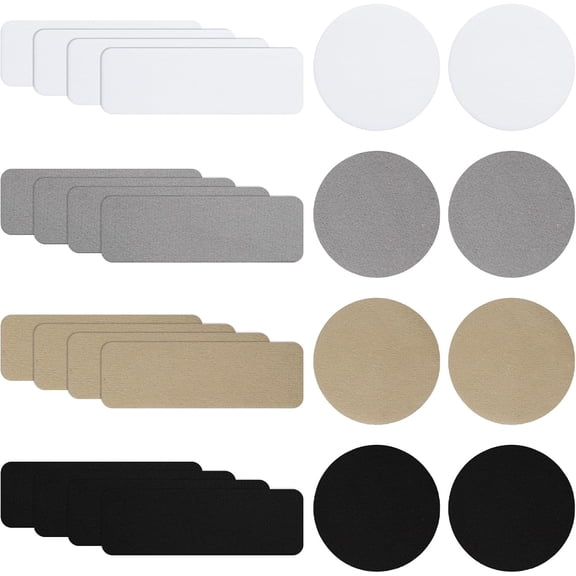
2134.3 out of 5 Stars. 213 reviews4.3 out of 5 stars24 PCS Shoe Patches for Holes, Self Adhesive Leather Shoe Heel Repair Patch Kit, Waterproof Microfiber Leather Repair Patches for Sneakers, Boots, Mesh Shoes (4 Colors, Round & Rectangular) $11.29
 $1129current price $11.29
24 PCS Shoe Patches for Holes, Self Adhesive Leather Shoe Heel Repair Patch Kit, Waterproof Microfiber Leather Repair Patches for Sneakers, Boots, Mesh Shoes (4 Colors, Round & Rectangular)
Kicx Heel & Toe Scuff Caps/Plates $5.98
 $598current price $5.98
Kicx Heel & Toe Scuff Caps/Plates
52.8 out of 5 Stars. 5 reviews2.8 out of 5 starsLwlmwt White Shoe Edge Repair Cream,50G Leather Edge Restorer,Scuff Cover Shoe Whitener,for White Shoe Sneaker Leather Canvas $2.99
 $299current price $2.99
Lwlmwt White Shoe Edge Repair Cream,50G Leather Edge Restorer,Scuff Cover Shoe Whitener,for White Shoe Sneaker Leather Canvas
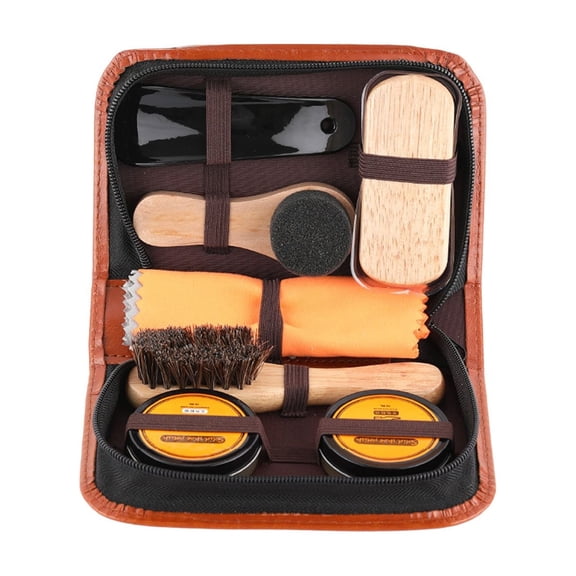
Virelaxpo 8-Piece Shoe Care Kit with Polish, Wax, and Brushes, for Leather Footwear Maintenance, Portable Storage Case for Home $6.75 Was $8.58
 $675current price $6.75, Was $8.58$8.58
Virelaxpo 8-Piece Shoe Care Kit with Polish, Wax, and Brushes, for Leather Footwear Maintenance, Portable Storage Case for Home
Best seller, Sof Sole Complete Shoe Care Kit $11.48
Best seller $1148current price $11.48
Sof Sole Complete Shoe Care Kit
1054.4 out of 5 Stars. 105 reviews4.4 out of 5 starsVotnto 100ml Shoe Sole Anti-Slip Spray Kit, Non-Slip Sole Coating with Sponge, Boosts Grip & Wear Resistance for All Shoes $3.93
 $393current price $3.93
Votnto 100ml Shoe Sole Anti-Slip Spray Kit, Non-Slip Sole Coating with Sponge, Boosts Grip & Wear Resistance for All Shoes
Snmubt Anti-Slip Sole Coating Kit 100ml, Traction Spray for Shoes, Boosts Grip & Wear Resistance, Ideal for Hiking Boots & Sports Shoes $8.29
 $829current price $8.29
Snmubt Anti-Slip Sole Coating Kit 100ml, Traction Spray for Shoes, Boosts Grip & Wear Resistance, Ideal for Hiking Boots & Sports Shoes
11 out of 5 Stars. 1 reviews1 out of 5 starsTUWAFE 2026 New Self-Adhesive Sneakers Sport Shoe Heel Toe Repair 5 Pairs Hole Patch Kit Fabric Patches Mesh Repair for Shoe Repairs, Sports Shoes, Worn-Out Heels, Toe Protection, Outdoor Activities. $6.95
 $695current price $6.95
TUWAFE 2026 New Self-Adhesive Sneakers Sport Shoe Heel Toe Repair 5 Pairs Hole Patch Kit Fabric Patches Mesh Repair for Shoe Repairs, Sports Shoes, Worn-Out Heels, Toe Protection, Outdoor Activities.
Clearance 2026 ZZYuan 8 Piece Leather Shoe Care Set Shoe Polish Set Shoe Tool Set Cleaning Tools Leather Shoe Kit Brown Furniture Protector for Hardwood Floors $6.39
 $639current price $6.39
Clearance 2026 ZZYuan 8 Piece Leather Shoe Care Set Shoe Polish Set Shoe Tool Set Cleaning Tools Leather Shoe Kit Brown Furniture Protector for Hardwood Floors
11 out of 5 Stars. 1 reviews1 out of 5 stars1Set of Shoe Repair Pen, Pen Repair Complementary Color White Go Yellow Shoe Whitening Cleaning $8.92
 $892current price $8.92
1Set of Shoe Repair Pen, Pen Repair Complementary Color White Go Yellow Shoe Whitening Cleaning
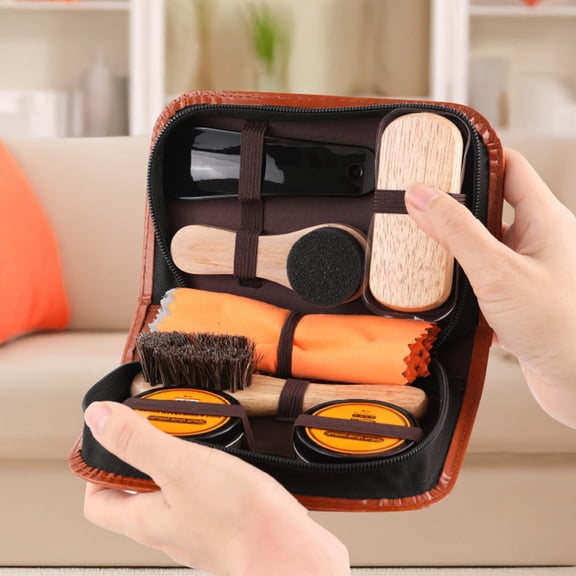
UNLLLL 8 Piece Shoe Care Kit, with Black Shoe Polish and Clear Shoe Wax, Shoes Cleaning Brushes and Applicator, Portable Shoe Care Storage Case, for Leather Footwear Maintenance $13.78
 $1378current price $13.78
UNLLLL 8 Piece Shoe Care Kit, with Black Shoe Polish and Clear Shoe Wax, Shoes Cleaning Brushes and Applicator, Portable Shoe Care Storage Case, for Leather Footwear Maintenance
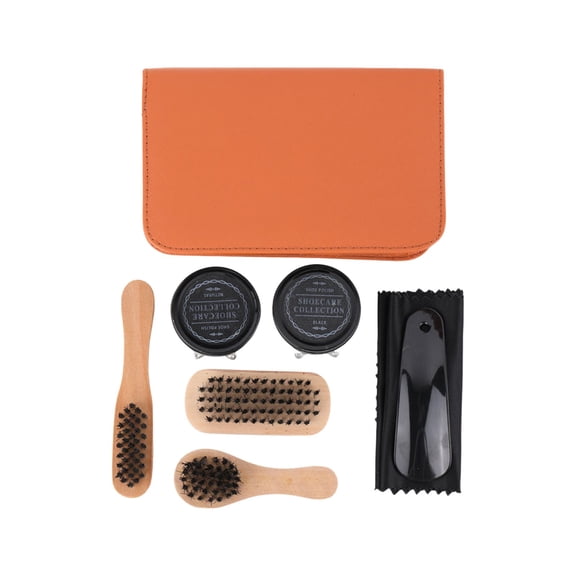
7 Piece Shoe Care Kit, Shoe Shine Kit with Black Polish Clear Wax Brushes Cloth Shoe Horn Travel Case for Leather Footwear $12.36
 $1236current price $12.36
7 Piece Shoe Care Kit, Shoe Shine Kit with Black Polish Clear Wax Brushes Cloth Shoe Horn Travel Case for Leather Footwear
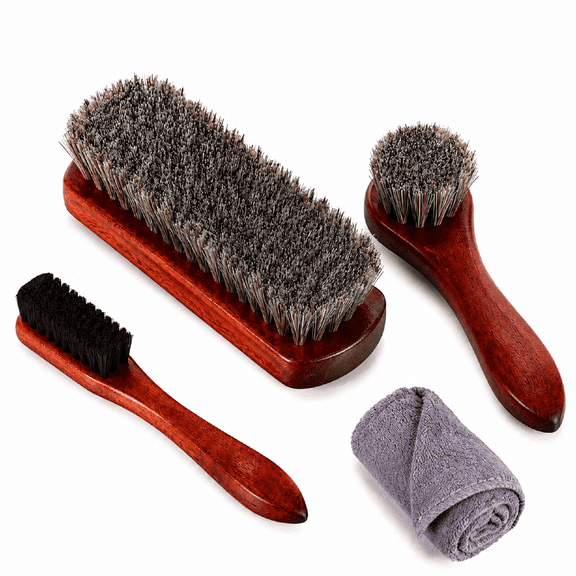
4Pcs Horsehair Shoe Shine Brush Kit Polish Dauber Applicators Leather Shoes Boots Cleaning Brushes Suede Cleaner $12.16
 Sponsored$1216current price $12.16
4Pcs Horsehair Shoe Shine Brush Kit Polish Dauber Applicators Leather Shoes Boots Cleaning Brushes Suede Cleaner
44.8 out of 5 Stars. 4 reviews4.8 out of 5 starsSave withShipping, arrives Fri, Nov 20

Customer ratings & reviews
0 out of 5 stars
This item does not have any reviews yet

Current price is USDNow $0.70
You save $0.09
was $0.79$0.79
You save$0.09
Price when purchased online
 Free Holiday returns until Jan 31
How do you want your item?
Ships to
Arrives between Dec 4 - Dec 11
|Shipping fee $4.90

Sold and shipped by yusioall

Extended holiday returns
Free Holiday returns until Jan 31