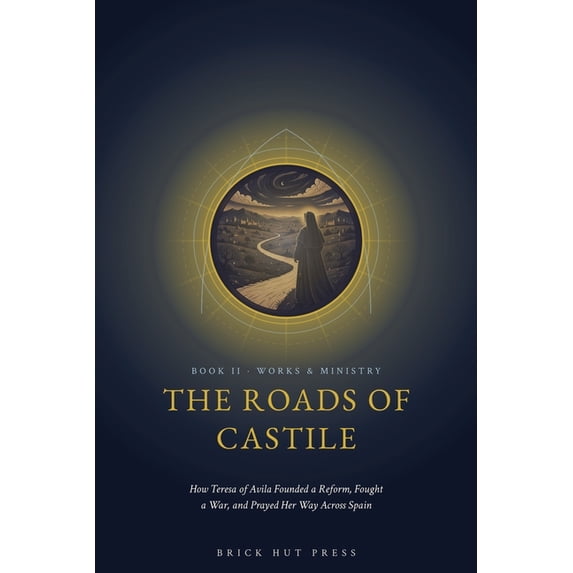
Saint Teresa of Avila was the Spanish Carmelite mystic and reformer who established the Discalced Carmelite order. How does a woman in sixteenth century Spain trust her interior visions of Christ while negotiating with bishops and building strict enclosures without losing her soul or her freedom?
The Foundress begins her work not in a quiet cloister but in the fierce opposition surrounding the establishment of Saint Joseph's Convent in Avila in 1562. From that house of poverty and strict enclosure, Teresa takes to the dusty roads of Castile by mule cart, battling illness and summer heat to build her Discalced Carmelite foundations. She forms a spiritual alliance with a young friar named John of the Cross, launching a reform that ignites a bitter institutional war with the Calced Carmelites. Even under house arrest, with her closest allies imprisoned, she submits her mystical experiences to her confessors and writes her guides to mental prayer. The reader is left with a woman who built a canonical province and an enduring doctrine out of obedience and the love of God.
- The first foundation: the secrecy and determination required to open Saint Joseph's in Avila against the wishes of the city and the Carmelite Order.
- Mystical discernment: her practice of submitting locutions, levitations, and the piercing transverberation of her heart to the judgment of spiritual directors.
- A lasting partnership: the meeting in 1567 with the young friar John of the Cross and their shared vision for the male branch of the reform.
- Writing under fire: the composition of The Interior Castle during the worst moments of the institutional conflict and her own restricted freedom.
Book Two of The Flame and the Castle: A Life of St. Teresa of Avila follows A Heart on Fire, a Heart Divided, which examines the youthful conflicts of a spirited Spanish girl torn between worldly affections and the divine call. After the present volume details her physical travels and institutional battles across Castile, the biography concludes in The Seventh Mansion with an exploration of her lasting instructions on the soul, the stages of contemplation, and her mystical union.
Readers seeking to understand how a sixteenth century nun established strict enclosures while answering an intense mystical calling, why the Discalced Carmelite reform ignited a bitter institutional war, and what she wrote about mental prayer during seasons of house arrest.