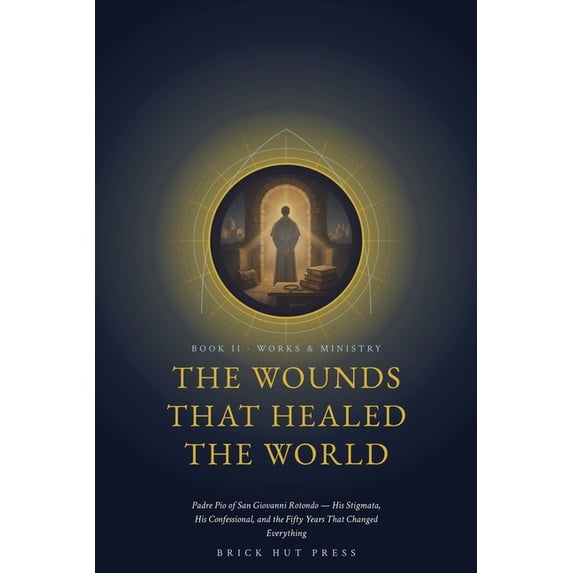
Saint Pio of Pietrelcina was the Capuchin friar and Catholic saint of San Giovanni Rotondo who bore the stigmata. What is the daily cost of carrying the wounds of Christ while giving ten to fifteen hours a day to the healing of souls?
On the morning of 20 September 1918, while making his thanksgiving after Mass in the choir chapel, Padre Pio received the permanent stigmata on his hands, feet, and side. This volume traces the fifty years spent bearing those mystical wounds in humble obedience. When canonical investigations in 1921, 1924, and 1931 restricted his public labor and forbade correspondence with spiritual children, the friar submitted without complaint. The text details the daily rhythm of rising at two in the morning, celebrating the early Mass, and spending ten to fifteen hours a day in the confessional reading hearts. It follows the immense practical effort of founding the Casa Sollievo della Sofferenza hospital in 1956, leaving the reader to meditate on the physical and spiritual weight of a half century of suffering united to Christ.
- Heavenly fragrance: the odor of violets and roses reported by witnesses across the globe.
- Mystical presence: the documented gift of bilocation that allowed him to comfort those far from San Giovanni Rotondo.
- Spiritual warfare: the physical attacks and diabolical apparitions faced as part of his daily labor.
- Letters of direction: the vast correspondence that allowed the friar to guide souls in every country.
Book Two of Wounds of Love: The Life of Saint Padre Pio. The first volume, The Boy Who Saw Angels, details the youth of Francesco Forgione in southern Italy as he devoted himself to the Lord at five years old and spoke naturally with celestial guardians, while the final volume, Pray, Hope, and Do Not Worry, explains his lasting spiritual instruction on penance and the Blessed Sacrament alongside his continued heavenly advocacy following his death.
Readers seeking the story of Saint Pio of Pietrelcina, his reception of the permanent stigmata in the choir chapel, and his submission during the canonical investigations of 1921, 1924, and later inquiries, who also want a close look at his daily labor reading hearts in the confessional.