

Poster Boards in Presentation Boards & Presentation Easels



















![BAZIC 11" X 14" Multi Color Poster Board (5/Pack) [529]](https://i5.walmartimages.com/seo/BAZIC-Poster-Board-11-X-14-Assorted-Colored-5-Pack-1-Pack_bd3b3d7d-0a8a-4a28-ab2b-c6668fe82f8c.16c5ced0738173a318f666bd5f31ca46.jpeg?odnHeight=576&odnWidth=576&odnBg=FFFFFF)




![BAZIC 11" X 14" White Poster Board (5/Pack) [512]](https://i5.walmartimages.com/seo/BAZIC-White-Poster-Board-11-X-14-For-School-Craft-5-Pack-1-Pack_1367e8f9-d7a1-473d-8c95-0415afa4eeaf.56a69e649bafc1bcaeee9afce854b6d5.jpeg?odnHeight=576&odnWidth=576&odnBg=FFFFFF)



About Poster Boards in Presentation Boards & Presentation Easels - Walmart.com
White poster board helps you create clean signs, school displays, and presentation visuals with a bright surface that keeps lettering easy to read. You can compare sizes, materials, pack counts, and finishes quickly when your project needs a specific board style.
If you're preparing a science fair poster board, classroom activity, office display, or event sign, you need the right format from the start. You can narrow your choice by checking rigidity, bleed resistance, dimensions, and whether your board should stay flat or fold.
How to choose white poster board for your project
You should start with the project requirement before you compare color or finish. Your display may need a standard sheet, a folding panel, or a sturdier board for repeated handling.
When you compare white poster board options, you can avoid rework by matching the board to your markers, paint, and transport plan. You also get a cleaner final look when your board size fits your assignment or sign holder.
- You can use flat sheets for classroom posters, event signs, and simple wall displays.
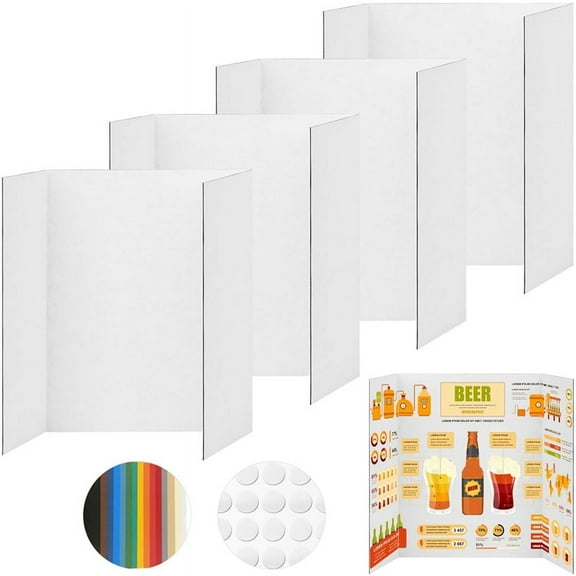
- You can choose tri-fold formats when your presentation needs freestanding side panels.
- You can pick larger boards when your layout includes charts, photos, and longer headings.
- You can select multi-packs or white poster boards bulk options for classes, teams, and office use.
Choosing the right size and format
You should measure first, because board dimensions often determine which options fit your project rules. Your teacher, office, or event space may call for a poster board 22x28 format or a smaller board.
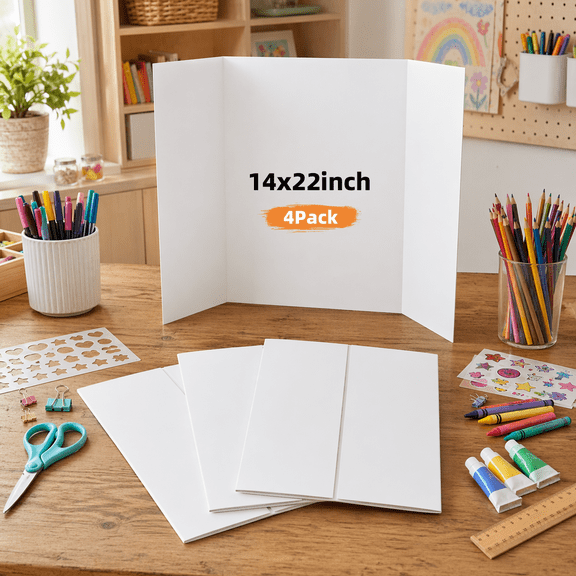
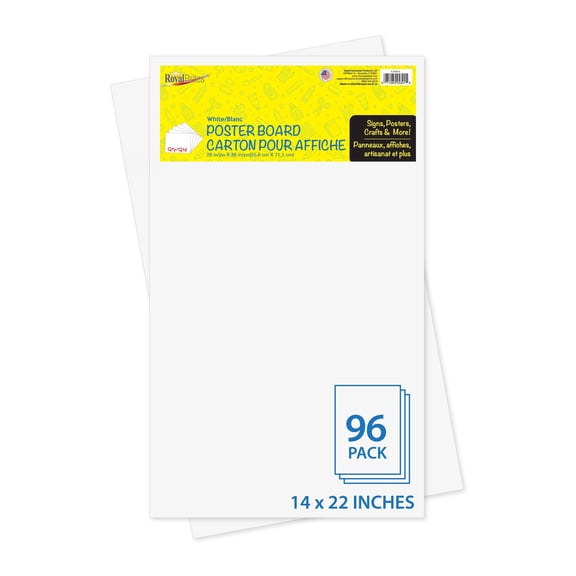
You can use 11x14 inches for quick notices, labels, and small craft displays. You can move up to 14x22 inches when your layout needs more room without using a full-size sheet.
For many school and office projects, you may look for poster board 22x28 because it gives you room for titles, images, and supporting notes. Your content usually feels easier to organize when you work with that familiar layout.
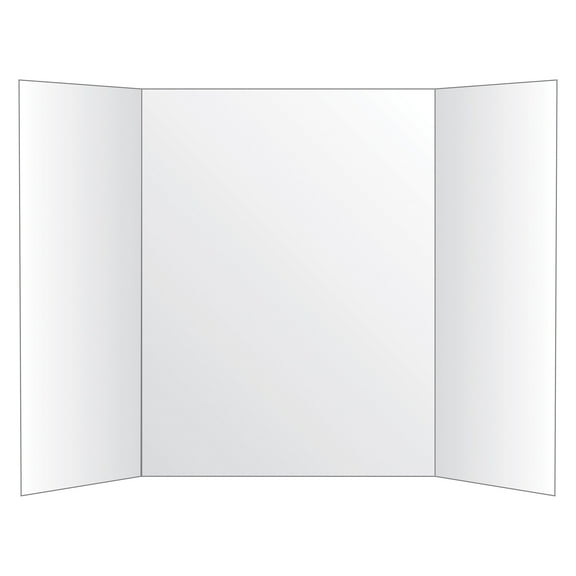
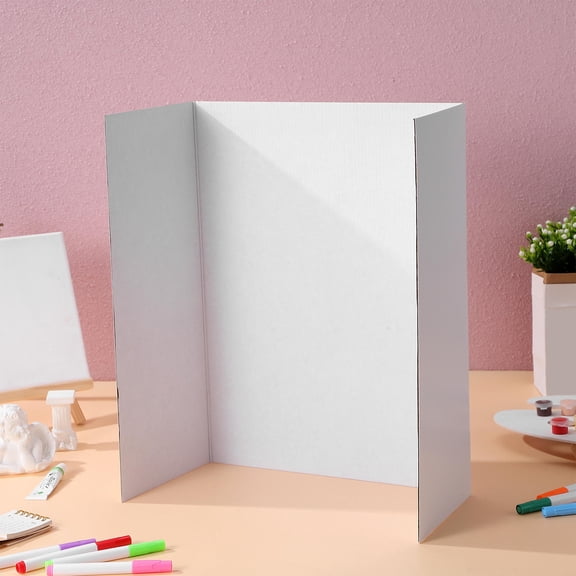
You should also compare flat sheet, tri-fold, and grid-lined formats before you choose. Your tri fold white poster board can stand on a table, while your grid-lined board can help you space letters and charts evenly.
Comparing material type and board rigidity
You can choose standard paperboard when your project needs a lightweight sheet for writing, cutting, or mounting basic materials. Your board stays easy to carry, stack, and store between uses.
If your display needs extra stiffness, you may compare foam board white options with standard paperboard. Your foam core board feels more rigid, so photos, charts, and mounted pieces often sit flatter.
You can also consider corrugated plastic when your sign needs a more structured surface for repeated setup. Your board keeps its shape well for events, directional signs, and display areas.
When you compare thickness and rigidity, you should think about how long your board needs to hold up. Your standard sheet works well for one-time classwork, while your foam core can suit more polished presentations.
Checking finish, markers, and paint compatibility
You should check the finish before you plan lettering, painting, or glued decorations. Your matte white poster board usually gives you a softer, less reflective surface for writing and reading.
If you use markers, you may want a surface that helps lines stay sharp and easy to see. Your coated or glossy options can change how ink sits, so you should compare the look you want.
You can also think about bleed resistance when your project uses heavier markers or paint. Your sturdier surfaces often help limit warping or seep-through, which keeps the front side looking neater.
For layered crafts, you should consider whether your board needs to handle glue, paper cutouts, or printed photos. Your smoother finish can help mounted pieces sit evenly and keep your display looking organized.
Picking pack size for school, office, and events
You can buy a single sheet when you only need one sign or one class assignment. Your smaller purchase makes sense for quick projects with a fixed requirement.
If you manage group work, you may prefer a five-pack or 10-pack for classroom activities and office presentations. Your team can keep matching boards on hand for a more consistent display setup.
For shared supply closets, art rooms, and event planning, you should compare white poster boards bulk counts like 25-pack options. Your larger pack can simplify prep when multiple people need the same size and color.
You can also match pack size to storage space, because large boards need room to stay flat. Your boards tend to stay cleaner and easier to use when you store them without bending corners.
Matching white poster board to real use cases
You can use a large white poster board for science fair titles, process diagrams, and photo-backed reports. Your layout gets more breathing room when you need sections for data, visuals, and conclusions.
For back to school poster board needs, you may want standard paperboard in common classroom sizes. Your child can write, color, cut, and label without carrying a board that feels too bulky.
If you build a professional display, you might choose foam board white for mounted graphics or cleaner presentation panels. Your board can look more structured when you carry it between meetings or events.
You can pick a tri fold white poster board when your content needs side panels for timelines, comparisons, or step-by-step information. Your setup becomes easier when the board stands on its own during presentations.
For signs and quick messaging, you may choose a matte board with bold marker lettering. Your message stays easier to read under classroom lights, office lighting, or event hall brightness.
When your project repeats across several people, you should standardize dimensions, finish, and pack size before ordering. Your group presentation looks more coordinated when every board follows the same format.
You can feel more prepared when your board matches your size requirement, writing tools, and display setup before you begin. Your finished project looks cleaner, stands more securely, and presents your ideas with less hassle.