Generator Line Conditioner(13)
Tripp Lite LS606M 600W Mini Tower Line Conditioner $110.00

Tripp Lite LS606M 600W Mini Tower Line Conditioner
Panamax MR5100 Line Conditioner $539.00

Panamax MR5100 Line Conditioner
Tripp Lite 2400-Watt Line Conditioner $367.88 Was $581.21

Tripp Lite 2400-Watt Line Conditioner
Newmar Pc-10 Power Conditioner $114.84
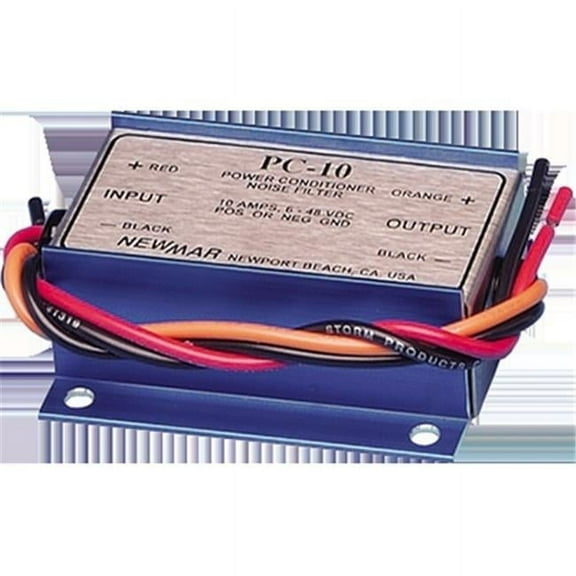
Newmar Pc-10 Power Conditioner
Furman PST-8 Sound Power Station Series Line Conditioner $144.05

Furman PST-8 Sound Power Station Series Line Conditioner
Stage Right by Monoprice 15A Power Conditioner and Sequencer with 8 Outlets and 3 Zones $180.40 Was $209.32

Stage Right by Monoprice 15A Power Conditioner and Sequencer with 8 Outlets and 3 Zones
Solahd Power Conditioner,Panel Mount,1kVA 63232108 $2,293.09

Solahd Power Conditioner,Panel Mount,1kVA 63232108
Signal Conditioner,0-10VDC,85-265VDC/VAC SC4380 $523.98
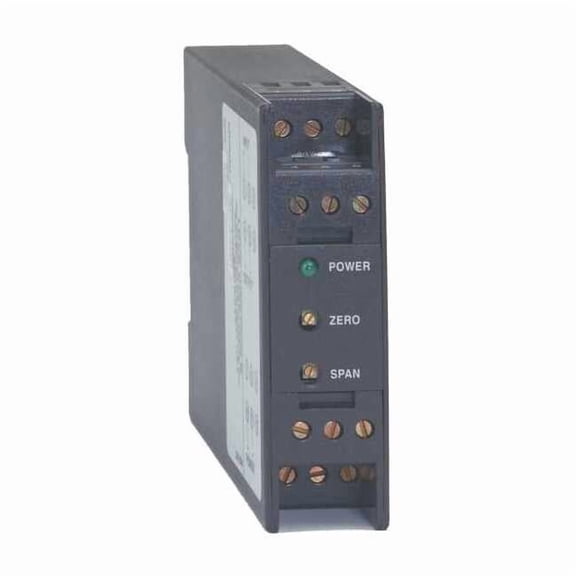
Signal Conditioner,0-10VDC,85-265VDC/VAC SC4380
White-Rodgers White Rodgers 600mV/750mV Millivolt Generator Residential Use, Standard Application $33.27

White-Rodgers White Rodgers 600mV/750mV Millivolt Generator Residential Use, Standard Application
3000W 12V Pure Sine Wave Inverter Charger, 9000W Peak Power, Low Frequency DC to AC Converter with LCD Display, Battery Charger, Automatic Transfer Switch, ETL Certified to UL 1741 for Home, RV
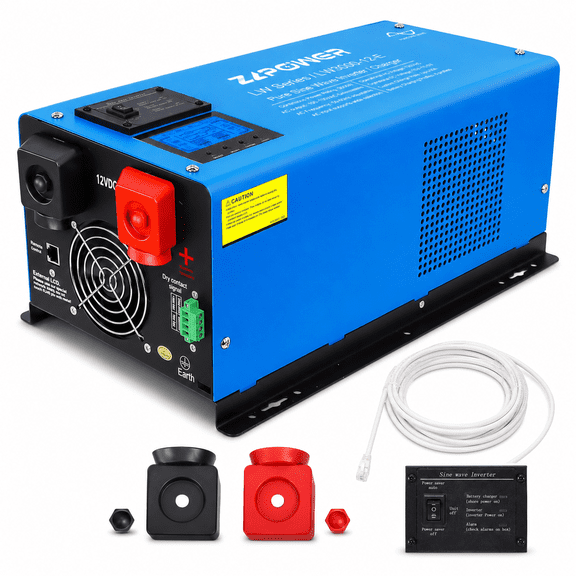


3000W 12V Pure Sine Wave Inverter Charger, 9000W Peak Power, Low Frequency DC to AC Converter with LCD Display, Battery Charger, Automatic Transfer Switch, ETL Certified to UL 1741 for Home, RV
Furman AC 215A Compact Power Conditional with Auto-Resetting Voltage Protection

Furman AC 215A Compact Power Conditional with Auto-Resetting Voltage Protection
Riwcyla CBB60 250V 120UF Run Capacitor for Motor Generator Compressor Water Pump Air Conditioner Fan and Induction Motor Start Boost Applications

Riwcyla CBB60 250V 120UF Run Capacitor for Motor Generator Compressor Water Pump Air Conditioner Fan and Induction Motor Start Boost Applications
ZLPOWER 4000W 24V Pure Sine Wave Inverter Charger – 12000W Peak, 120V/240V Split Phase Output, ETL Certified, Off-Grid Low Frequency Inverter with 90A Charger & LCD Display for Home, RV, Boat From $659.00


ZLPOWER 4000W 24V Pure Sine Wave Inverter Charger – 12000W Peak, 120V/240V Split Phase Output, ETL Certified, Off-Grid Low Frequency Inverter with 90A Charger & LCD Display for Home, RV, Boat
FAQ
How does a line conditioner help a generator?
A line (power) conditioner can help smooth out imperfect power from a generator or wall outlet so sensitive electronics are less likely to glitch.
- Voltage stabilization: It can reduce moderate sags and spikes within its design limits.
- Noise filtering: It may filter electrical noise (EMI/RFI) that can cause hum or interference in audio/video gear.
- Surge suppression: Many include protection to help absorb transient surges.
- Convenience: Multiple outlets and, on some models, power sequencing for orderly start-up.
It doesn’t create power or replace a battery backup. Place it between the generator and your devices, match its amperage to your circuit, and follow all manufacturer instructions for best results.
Surge protector vs line conditioner—what’s the difference?
They both help protect electronics, but they address different problems.
- Surge protector: Primarily clamps large spikes. It typically doesn’t regulate voltage or filter line noise.
- Line conditioner: Adds filtering and voltage regulation within a certain window, which can help with fluctuating or “noisy” power from small generators or older circuits.
- UPS (battery backup): Keeps devices running briefly during outages; some models include conditioning and surge protection.
Choose based on your gear and power conditions. Sensitive audio/video or computer equipment often benefits from conditioning, while basic appliances may only need surge suppression. Always confirm your devices’ power requirements and the product’s amperage rating and outlet count.
What size line conditioner should I buy?
Match capacity to the circuit and the equipment you plan to plug in.
- Amperage rating: Choose a unit that matches or exceeds your circuit (e.g., 15A or 20A). Don’t exceed the conditioner’s rating.
- Total load: Add up device wattage/amps and leave headroom for startup surges (motors, amplifiers, etc.).
- Outlets and zones: Ensure enough outlets; sequenced zones can help stagger turn-on for AV racks.
- Form factor: Consider rackmount vs compact housings and cord length for your space.
If you’re using a generator, also check receptacle type and available amps. When unsure, a licensed electrician can advise on home or RV connections. You can browse different sizes online and choose delivery or store pickup.
What’s the 80% rule for generator loading?
The “80% rule” is a common guideline for continuous loads on generators.
- What it suggests: Run continuous loads at about 80% of the generator’s rated capacity to allow headroom for heat and startup spikes.
- Example: On a 20-amp circuit, plan for roughly 16 amps continuous.
- Why it helps: Extra headroom can reduce nuisance trips and voltage dips.
It’s a rule of thumb—not a code by itself. Always follow the generator manufacturer’s specifications and applicable electrical codes. Load characteristics vary, so actual performance depends on your equipment and conditions.
How do I set up a line conditioner safely?
Keep it simple and follow the manuals for your generator and conditioner.
- Connection order: Power source (generator or wall) → line conditioner → your devices.
- Grounding: Use proper grounding/bonding as directed by the manufacturers.
- Load limits: Don’t exceed the conditioner’s amp rating or your circuit’s capacity.
- Environment: Keep equipment dry, ventilated, and off damp surfaces; avoid rain and excessive heat.
- Whole-home use: For home circuits, use a transfer switch; consider a licensed electrician for installation.
These steps can help reduce risk, but setups differ. Review all instructions and local regulations before use.
Popular in Generator Line Conditioner for Stable Power
Related Products
maXpeedingrods 4850 Watt Open Frame Generator,Gas Powered Portable Inverter Generator, Recoil Start, for Home Backup,Camping,RV, Gasoline
 maXpeedingrods 4850 Watt Open Frame Generator,Gas Powered Portable Inverter Generator, Recoil Start, for Home Backup,Camping,RV, Gasoline$349.99current price $349.99
Champion 6500-Watt RV Ready Portable Inverter Generator with Quiet Technology and CO Shield®
 Champion 6500-Watt RV Ready Portable Inverter Generator with Quiet Technology and CO Shield®$999.00current price $999.00
Generac 18kW Home Standby Generator with 200 amp transfer switch, cellular connectivity, easy to use, whole house power backup, smart outage solution.
 Generac 18kW Home Standby Generator with 200 amp transfer switch, cellular connectivity, easy to use, whole house power backup, smart outage solution.$6639.00current price $6639.00
Champion Power Equipment 14Kw Axis Home Standby Generator System With 150 Amp Axis Automatic Transfer Switch
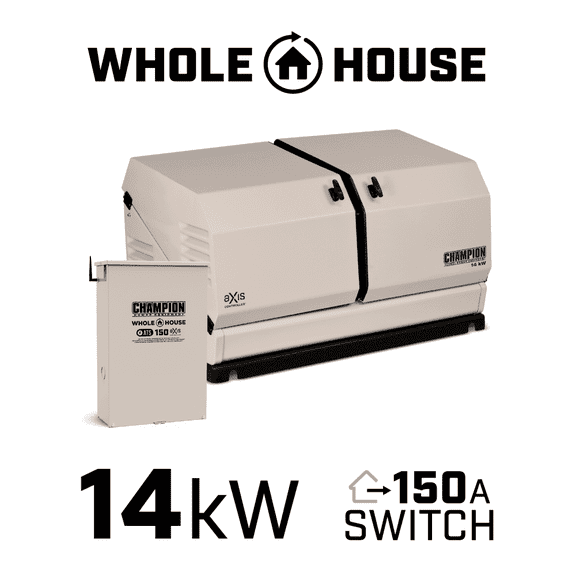 Champion Power Equipment 14Kw Axis Home Standby Generator System With 150 Amp Axis Automatic Transfer Switch$4999.00current price $4999.00
Aceup Energy 4500W Peak Portable Inverter Gas Generator, 3600W Running, Open Frame, Pure Sine Wave, RV Ready, 6 Hour Runtime, for Home Backup, Camping, Job Site, Pull Cord Start, 223cc, EPA Compliant
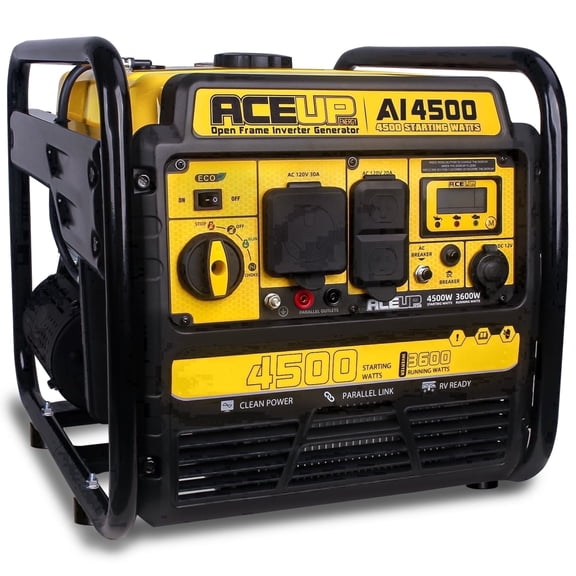 Aceup Energy 4500W Peak Portable Inverter Gas Generator, 3600W Running, Open Frame, Pure Sine Wave, RV Ready, 6 Hour Runtime, for Home Backup, Camping, Job Site, Pull Cord Start, 223cc, EPA Compliant$319.99current price $319.99
Champion 4500-Watt RV Ready Portable Open Frame Inverter Generator with Quiet Technology and CO Shield®
 Champion 4500-Watt RV Ready Portable Open Frame Inverter Generator with Quiet Technology and CO Shield®$599.00current price $599.00
Champion Power Equipment 4000-Watt RV Ready Portable Inverter Generator with Quiet Technology and CO Shield
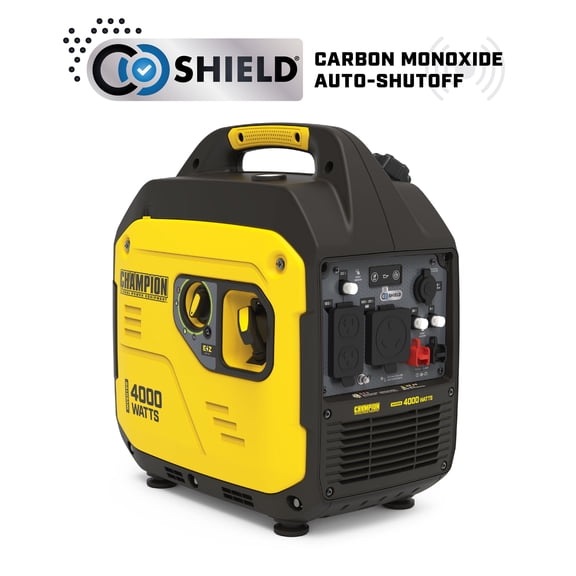 Champion Power Equipment 4000-Watt RV Ready Portable Inverter Generator with Quiet Technology and CO Shield$649.00current price $649.00
Aceup Energy 4000W Peak Portable Inverter Gas Generator, 3200W Running, Quiet 55dB, RV Ready, Parallel Ready, Eco Mode, Home Backup, Camping, EPA Compliant
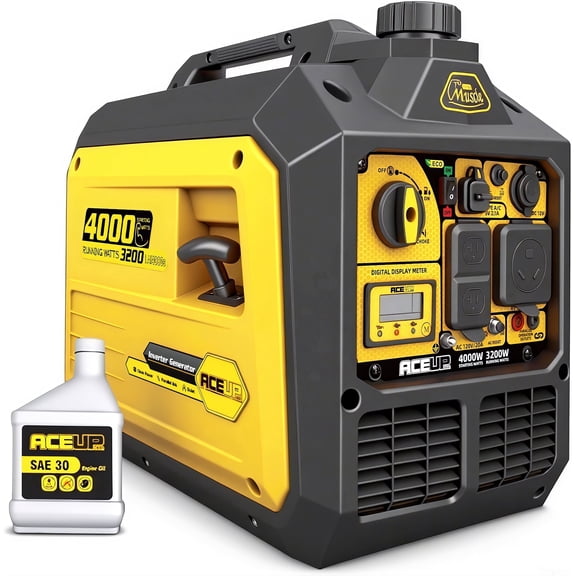 Aceup Energy 4000W Peak Portable Inverter Gas Generator, 3200W Running, Quiet 55dB, RV Ready, Parallel Ready, Eco Mode, Home Backup, Camping, EPA Compliant$369.99current price $369.99
Champion Power Equipment 14kW Axis Home Standby Generator System With 200 Amp Axis Automatic Transfer Switch
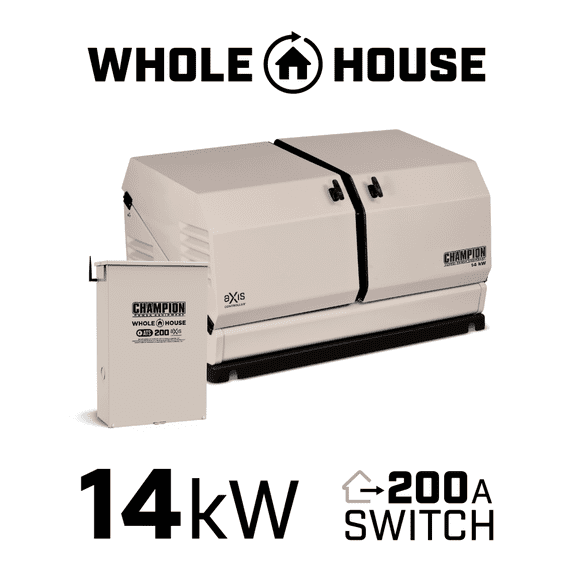 Champion Power Equipment 14kW Axis Home Standby Generator System With 200 Amp Axis Automatic Transfer Switch$4999.00current price $4999.00
Generac 24kW Home Standby Generator with 200 Amp Transfer Switch, Cellular Connectivity, Easy to Use, Whole House Power Backup, Smart Outage Solution.
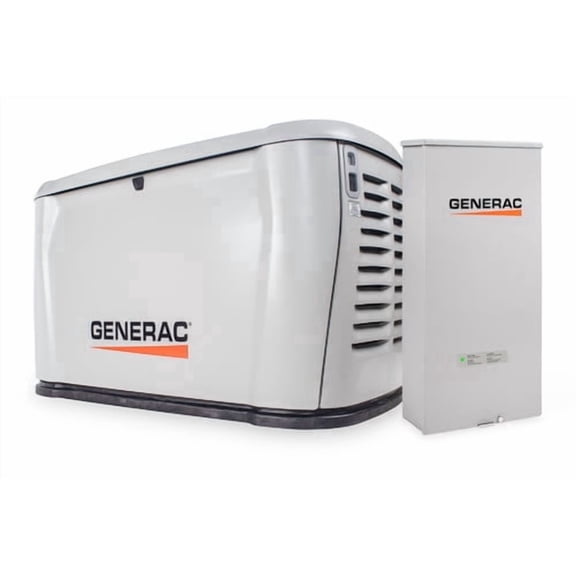 Generac 24kW Home Standby Generator with 200 Amp Transfer Switch, Cellular Connectivity, Easy to Use, Whole House Power Backup, Smart Outage Solution.$7639.00current price $7639.00
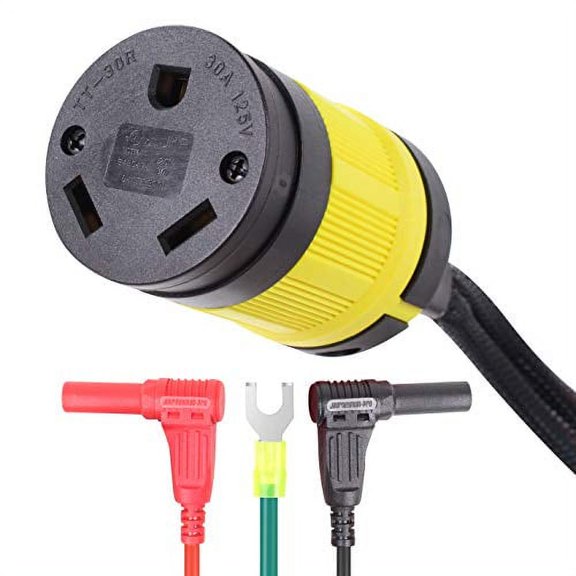
Journeyman Pro 30A Parallel Cord Connection Kit, for Inverter Generators | 120-125 VAC, 30 AMP - 4000/3750 Watts TT-30R Female Connector RV Ready (TT30R Straight Blade)
Journeyman Pro 30A Parallel Cord Connection Kit, for Inverter Generators | 120-125 VAC, 30 AMP - 4000/3750 Watts TT-30R Female Connector RV Ready (TT30R Straight Blade)