Preston Ware Orem(5)
Harmony Book for Beginners: A Text Book and Writing Book for the First Year's Work, for Class, Private and Self Instruct, (Hardcover) $30.95

Harmony Book for Beginners: A Text Book and Writing Book for the First Year's Work, for Class, Private and Self Instruct, (Hardcover)
Theory and Composition of Music, (Paperback) $17.95

Theory and Composition of Music, (Paperback)
Theory and Composition of Music, (Hardcover) $30.95

Theory and Composition of Music, (Hardcover)
Harmony Book for Beginners (Classic Reprint) $19.11
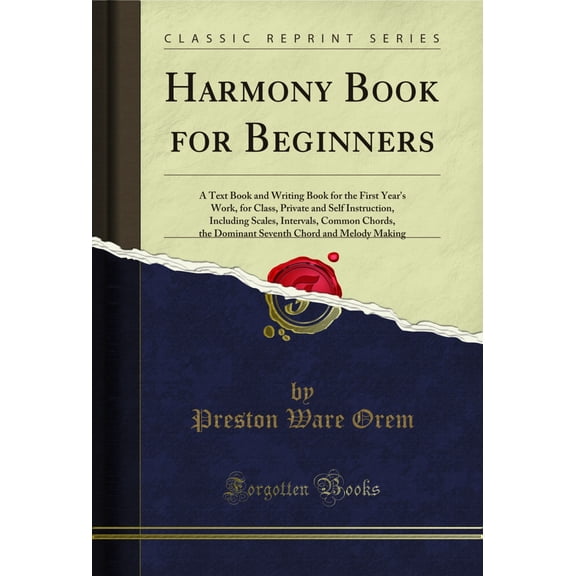
Harmony Book for Beginners (Classic Reprint)
The Art Of Interweaving Melodies: A First Method Of Counterpoint For Students Of All Ages, (Paperback) $26.95
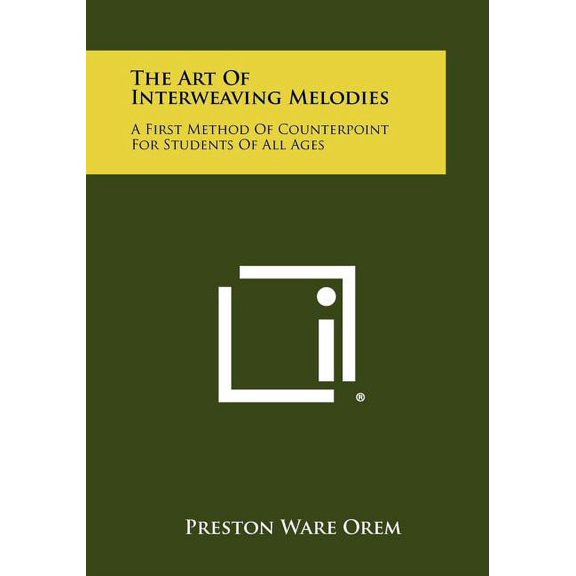
The Art Of Interweaving Melodies: A First Method Of Counterpoint For Students Of All Ages, (Paperback)
FAQ
How do these music theory books help beginners?
These music theory books offer step-by-step explanations and practical exercises designed for those just starting out. You'll find simple language, examples, and writing activities that make concepts like harmony, melody, and composition easier to understand. Many books include space for note-taking or completing assignments, so you can actively practice what you’re learning. Whether you’re in a class or studying on your own, these resources are laid out to build your confidence and skills from the ground up, offering a supportive introduction to music fundamentals.
Can I use these books for self-study?
Absolutely! Most of these books are designed for both classroom and independent learning, so you don’t need a teacher or formal course to benefit from them. They feature clear instructions, explanations, and examples aimed at guiding you through each topic at your own pace.
- Step-by-step lessons
- Practice exercises you can do at home
- Sections for writing and reflecting
Do these books cover composing original music?
Yes, several titles focus not just on theory but also on composition. You’ll find chapters and exercises geared toward writing your own melodies, harmonizing songs, and experimenting with counterpoint. The content typically starts with basic concepts, then gradually builds up to more creative tasks to help you craft original pieces. These books offer the tools and guidance needed to help you start composing, whether for fun or for future studies.
What’s the difference between paperback and hardcover versions?
The main difference is the binding and durability. Paperback versions are lighter and easier to carry, making them practical for everyday use or bringing to classes. Hardcover versions tend to last longer, especially if you plan to use them frequently or keep them as a reference over time. Content is generally identical between formats, so your choice depends on whether you prioritize portability or long-term durability.
Can these books help with practicing musical instruments?
While the focus of these books is mainly music theory and composition, understanding these concepts can absolutely support your instrument practice. By learning about harmony, melody, and structure, you’ll gain insights that make playing, improvising, and understanding sheet music easier. Many exercises prompt you to apply what you’ve learned by playing examples on your instrument, making theory a handy companion to your musical journey.
Related Products
Elliott Sharp - String Quartet, Vol. 2 - Classical - CD
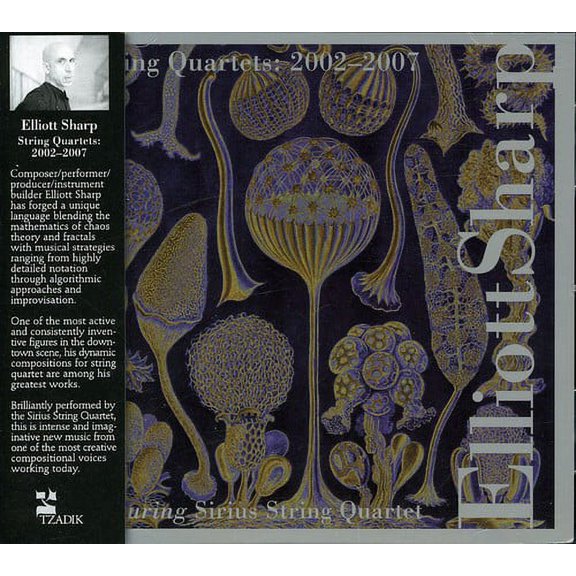 Elliott Sharp - String Quartet, Vol. 2 - Classical - CD$20.86current price $20.86
Musicians in Their Own Words Coltrane on Coltrane: The John Coltrane Interviews, (Paperback)
 Musicians in Their Own Words Coltrane on Coltrane: The John Coltrane Interviews, (Paperback)$17.09current price $17.09
Glenn Gould - Piano Sonatas - Music & Performance - CD
 Glenn Gould - Piano Sonatas - Music & Performance - CD$36.97current price $36.97
Oslo Philharmonic Orchestra - Lamenti / Magnificat / Four Interludes - Music & Performance - CD
 Oslo Philharmonic Orchestra - Lamenti / Magnificat / Four Interludes - Music & Performance - CD$22.45current price $22.45
Bruch / Nash Ensemble - Bruch: String Quintets And Octet - Music & Performance - CD
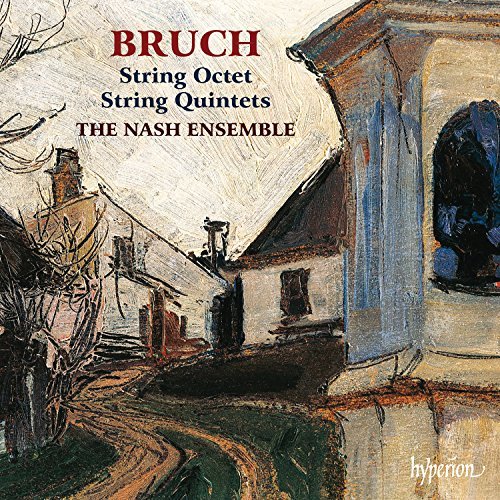 Bruch / Nash Ensemble - Bruch: String Quintets And Octet - Music & Performance - CD$20.55current price $20.55
Sierra Wind Quintet - American Classics for Winds - Music & Performance - CD
 Sierra Wind Quintet - American Classics for Winds - Music & Performance - CD$17.47current price $17.47