

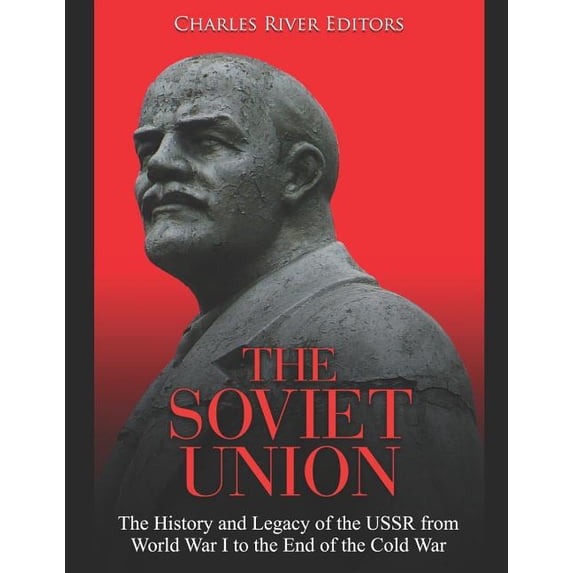
The Soviet Union (Paperback)
(No ratings yet)
Key item features
The Soviet Union (Paperback)
Specs
Publication date, July, 2019
Author, Charles River
Book format, Paperback
Genre, History
Pages, 200
Age group, Adult
Publication date
July, 2019
Author, Charles River
Author
Charles River
Book format, Paperback
Book format
Paperback
Genre, History
Genre
History
Pages, 200
Pages
200
Age group, Adult
Age group
Adult
About this item
Product details
*Includes pictures
*Includes a bibliography for further reading
For 30 years, much of the West looked on with disdain as the Bolsheviks took power in Russia and created and consolidated the Soviet Union. As bad as Vladimir Lenin seemed in the early 20th century, Joseph Stalin was so much worse that Churchill later remarked of Lenin, "Their worst misfortune was his birth... their next worst his death." Before World War II, Stalin consolidated his position by frequently purging party leaders (most famously Leon Trotsky) and Red Army leaders, executing hundreds of thousands of people at the least. And in one of history's greatest textbook examples of the idea that the enemy of my enemy is my friend, Stalin's Soviet Union allied with Britain and the United States to defeat Hitler in Europe during World War II.
Stalin ruled with an iron fist for nearly 30 years before his death in 1953, which may or may not have been murder, just as Stalin was preparing to conduct another purge. With his death, Soviet strongman and long-time Stalinist Nikita Khrushchev (1894-1971), who had managed to stay a step ahead of Stalin's purges if only because he participated in them, became the Soviet premier.
Personal histrionics aside, Khrushchev meant business when dealing with the West, especially the United States and its young president, John F. Kennedy. After sensing weakness and a lack of fortitude in Kennedy, Khrushchev made his most audacious and ultimately costly decision by attempting to place nuclear warheads at advanced, offensive bases located in Cuba, right off the American mainland. As it turned out, the Cuban Missile Crisis would show the Kennedy Administration's resolve, force Khrushchev to back down, and ultimately sow the seeds of Khrushchev's fall from power. By the time he died in 1971, he had been declared a non-citizen of the nation he had ruled for nearly 20 years.
Leonid Brezhnev became First Secretary of the Communist Party in the Soviet Union in late 1964 after a plot to oust Khrushchev. Little is remembered in the public imagination about Brezhnev in comparison to Mikhail Gorbachev, Vladimir Lenin, or Joseph Stalin, despite the fact Brezhnev ruled the USSR from 1964-1982, longer than any Soviet leader other than Stalin. In fact, he held power during a tumultuous era that changed the world in remarkable ways, and that era has been favorably remembered by many former Soviet citizens. It marked a period of relative calm and even prosperity after the destruction of World War II and the tensions brought about by Khrushchev. Foremost amongst Brezhnev's achievements would be the détente period in the early 1970s, when the Soviets and Americans came to a number of agreements that reduced Cold War pressures and the alarming threat of nuclear war.
Mikhail Gorbachev was chosen as the new General Secretary at the relatively youg age of 54 in March 1985. Gorbachev hoped to build the Soviet economy to relieve the persistent shortages of consumer goods it faced, which were caused by enormous military spending of the Soviet Union. Gorbachev tried to introduce some economic reforms, but they were blocked by communist hardliners. Gorbachev then came to the belief that the Soviet economy could not improved without political reform as well.
In comparison with other Soviet leaders, Gorbachev was leader of the USSR for a relatively short period, but the changes that took place under his leadership were monumental, including some that were intended and others that were unforeseen. Gorbachev oversaw the end of the Cold War and the peaceful transition away from communism in Central and Eastern Europe, and he ended the war in Afghanistan and many other proxy conflicts in the developing world. Gorbachev improved relations with the West and developed enough trust with President Ronald Reagan and President George H.W. Bush to decommission thousands of nuclear weapons.
The Soviet Union (Paperback)
info:
We aim to show you accurate product information. Manufacturers, suppliers and others provide what you see here, and we have not verified it.
Specifications
Publication date
July, 2019
Author
Charles River
Book format
Paperback
Genre
History
Warranty
Warranty information
Please be aware that the warranty terms on items offered for sale by third party Marketplace sellers may differ from those displayed in this section (if any). To confirm warranty terms on an item offered for sale by a third party Marketplace seller, please use the 'Contact seller' feature on the third party Marketplace seller's information page and request the item's warranty terms prior to purchase.
Similar items you might like
Based on what customers bought
Inside the Russian Revolution (Cram Edition), (Paperback) $22.95
 $2295current price $22.95
Inside the Russian Revolution (Cram Edition), (Paperback)
Beyond the Modern Age: An Archaeology of Contemporary Culture, (Paperback) $21.99
 $2199current price $21.99
Beyond the Modern Age: An Archaeology of Contemporary Culture, (Paperback)
American Legends: The Life of Bruce Lee, (Paperback) $8.14
 $814current price $8.14
American Legends: The Life of Bruce Lee, (Paperback)
The Mossad (Paperback) $11.45
 $1145current price $11.45
The Mossad (Paperback)
The Life Cycles of Stars, (Paperback) $13.46
 $1346current price $13.46
The Life Cycles of Stars, (Paperback)
Great Betrayal, (Paperback) $16.20
 $1620current price $16.20
Great Betrayal, (Paperback)
Pre-Owned Afterlives of Revolution: Everyday Counterhistories in Southern Oman (Paperback) 1503635783 9781503635784 $15.86
 $1586current price $15.86
Pre-Owned Afterlives of Revolution: Everyday Counterhistories in Southern Oman (Paperback) 1503635783 9781503635784
Pre-Owned The Future Is History (National Book Award Winner): How Totalitarianism Reclaimed Russia (Paperback) 1594634548 9781594634543 $5.23
 4 optionsAvailable in additional 4 options$523current price $5.23
Pre-Owned The Future Is History (National Book Award Winner): How Totalitarianism Reclaimed Russia (Paperback) 1594634548 9781594634543
The Cristero War, (Paperback) $9.25 Was $12.15
 $925current price $9.25, Was $12.15$12.15
The Cristero War, (Paperback)
The Fall of the Berlin Wall (Paperback) $12.72
 $1272current price $12.72
The Fall of the Berlin Wall (Paperback)
Pre-Owned The Cold War: A Very Short Introduction (Paperback) 0198859546 9780198859543 $9.99
 2 optionsAvailable in additional 2 options$999current price $9.99
Pre-Owned The Cold War: A Very Short Introduction (Paperback) 0198859546 9780198859543
British Legends: The Life and Legacy of Freddie Mercury (Paperback) $10.31
 $1031current price $10.31
British Legends: The Life and Legacy of Freddie Mercury (Paperback)
Willingly Published: More Papers to 2005, (Paperback) $15.95
 $1595current price $15.95
Willingly Published: More Papers to 2005, (Paperback)
Pre-Owned The Korean War: A History (Paperback) 081297896X 9780812978964 $9.99
 $999current price $9.99
Pre-Owned The Korean War: A History (Paperback) 081297896X 9780812978964
Pre-Owned The Houses of History: A Criticial Reader in Twentieth-Century History and Theory (Paperback) 0814731279 9780814731277 $6.33
 3 optionsAvailable in additional 3 options$633current price $6.33
Pre-Owned The Houses of History: A Criticial Reader in Twentieth-Century History and Theory (Paperback) 0814731279 9780814731277
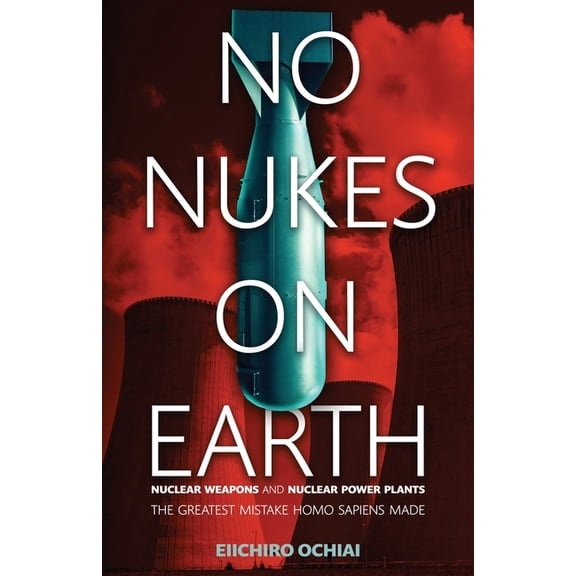
No Nukes on the Earth, (Paperback) $13.76
 $1376current price $13.76
No Nukes on the Earth, (Paperback)
London Terminal Stations in the 1960s (Paperback) $20.43
 $2043current price $20.43
London Terminal Stations in the 1960s (Paperback)
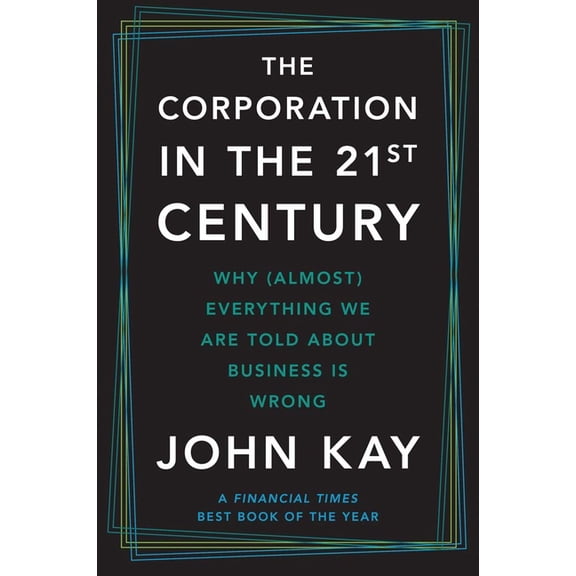
The Corporation in the Twenty-First Century: Why (Almost) Everything We Are Told about Business Is Wrong, (Paperback) $13.52
 $1352current price $13.52
The Corporation in the Twenty-First Century: Why (Almost) Everything We Are Told about Business Is Wrong, (Paperback)
The End of the End of History: Politics in the Twenty-First Century, (Paperback) $13.60
 $1360current price $13.60
The End of the End of History: Politics in the Twenty-First Century, (Paperback)
Pepita Jiménez, (Paperback) $17.99
 $1799current price $17.99
Pepita Jiménez, (Paperback)
Customer ratings & reviews
0 out of 5 stars
This item does not have any reviews yet

Current price is USD$18.09
Price when purchased online
- Free shipping
 Free Holiday returns until Jan 31
How do you want your item?
Ships to
Arrives between Nov 28 - Dec 2
|
Sold and shipped by Alibris Books
4.585271066778937 out of 5 stars

Extended holiday returns
Free Holiday returns until Jan 31More seller options (1)
Starting from $16.76
Related pages
- 19th Century Modern History Books
- Russian & Former Soviet Union Political Books
- Russia Hoax
- European Political Books
- 21st Century Modern History Books
- Russian Hoax
- United Russia
- Iraq Newspaper
- Best Sellers In Books Political History
- Best Sellers In Books 21st Century History
- 18th Century Modern History Books
- Revolutionary History Books