

Suggested
Interlocking Deck Tiles(7)
Inlays C620506 6" x 6" 6 IN Printed Deck Ceramic Tile $28.96

Inlays C620506 6" x 6" 6 IN Printed Deck Ceramic Tile
Inlays CC621060 6" x 6" 6 or 9 Printed Deck Ceramic Tile $27.08

Inlays CC621060 6" x 6" 6 or 9 Printed Deck Ceramic Tile
Inlays CC623505 6 in. Printed Deck Ceramic Tile - IN $28.96

Inlays CC623505 6 in. Printed Deck Ceramic Tile - IN
AURA 12" x 12" Premium Polymer Outdoor Patio Deck Tile, Walnut Brown (6 Pack) $53.44 Was $62.06

AURA 12" x 12" Premium Polymer Outdoor Patio Deck Tile, Walnut Brown (6 Pack)
Inlays CC621020 6" x 6" 2 Printed Deck Ceramic Tile $33.96

Inlays CC621020 6" x 6" 2 Printed Deck Ceramic Tile
Inlays C621040 6 in. Deck Ceramic Tile - No. 4 $26.21

Inlays C621040 6 in. Deck Ceramic Tile - No. 4
Inlays CC620050 6" x 6" 5 FT Printed Deck Ceramic Tile

Inlays CC620050 6" x 6" 5 FT Printed Deck Ceramic Tile
Other options to consider(2)
Inlays CC623090 6" x 6" Metric 9 with M Deck Ceramic Tile $33.96

Inlays CC623090 6" x 6" Metric 9 with M Deck Ceramic Tile
Inlays C621711 6 in. Deep TMG Series Non Skid Ceramic Information Tile $25.21

Inlays C621711 6 in. Deep TMG Series Non Skid Ceramic Information Tile
FAQ
What makes interlocking deck tiles a good option?
They’re a quick way to refresh outdoor floors without a major project. Customers like that they snap together, so most installs don’t require adhesives or special tools.
- Fast makeover: Great for balconies, patios, porches, and poolside areas.
- Modular design: You can lift a section to access the surface below or swap a single tile if one gets damaged.
- Drainage and airflow: Many designs allow water to pass through, which can help surfaces dry.
- Versatility: Available in wood-look, stone-texture, and polymer styles.
They perform best on flat, stable, well-draining surfaces. For uneven or soft ground, prep work is usually needed.
What base do interlocking deck tiles need?
They typically work best over solid, level, and well-draining surfaces.
- Ideal surfaces: Clean concrete, existing deck boards in good condition, or flat pavers.
- On bare ground: Consider creating a compacted base (e.g., paver base or gravel) to reduce movement. A slight slope away from the home can help with drainage.
- Rooftops/balconies: Check building guidelines and the tile manufacturer’s instructions, especially if a protective membrane is involved.
- Edging: Perimeter trim or edging can help minimize shifting at open edges.
Always review the specific installation guidance provided by the tile manufacturer for best results.
How do I budget for interlocking deck tiles?
Start with your project size and work toward pack coverage.
- Measure your space: Length × width for total square feet (or meters).
- Check coverage per pack: Many tiles are 12" × 12" (about 1 sq ft each), but always confirm the listed coverage on the product page.
- Plan for extras: Add 5–10% for cuts, patterns, and future replacements.
- Account for accessories: Edging, corner pieces, and optional underlayment can affect your total.
- Consider logistics: Delivery or store pickup options can influence overall project budgeting.
Comparing materials and finishes can help balance look, durability, and total cost.
Which interlocking deck tile material should I pick?
It comes down to look, maintenance, and how you’ll use the space.
- Polymer/Plastic: Low maintenance and water-friendly; colors and textures vary widely.
- Composite/Wood-look: Natural aesthetic with the feel of deck boards; maintenance needs vary by product.
- Stone-texture: A sturdy, classic look that can feel more substantial underfoot.
Consider sun exposure (UV stability), moisture (near pools or sprinklers), and climate (freeze–thaw cycles). For balconies, lighter-weight options may be preferable. Checking the product’s surface texture and any slip-resistance details can help you match tiles to your environment.
How do I clean and care for these tiles?
Regular light maintenance can help keep tiles looking their best.
- Routine cleaning: Sweep or blow off debris, then rinse with a garden hose.
- Spot cleaning: Use mild soap and a soft brush for spills or stains; avoid harsh solvents unless the manufacturer approves them.
- Pressure washing: If used, keep the nozzle at a safe distance and a gentle setting.
- Underneath care: Lift a few tiles occasionally to clear trapped leaves and check drainage.
- Repairs: Because they’re modular, you can replace individual tiles as needed.
Always follow the care instructions provided by the tile manufacturer.
Popular in Interlocking Deck Tiles for Outdoor Flooring
Related Products
Interlocking Deck Tiles 11.42x11.42 in, Plastic Waterproof Flooring, Eco-Friendly Non-Toxic for Indoor Outdoor Use, Brown, 68pcs
 Interlocking Deck Tiles 11.42x11.42 in, Plastic Waterproof Flooring, Eco-Friendly Non-Toxic for Indoor Outdoor Use, Brown, 68pcs$109.99current price $109.99
Interlocking Deck Tiles 11.42x11.42 in, Plastic Waterproof Flooring, Eco-Friendly Non-Toxic for Indoor Outdoor Use, Brown, 68pcs
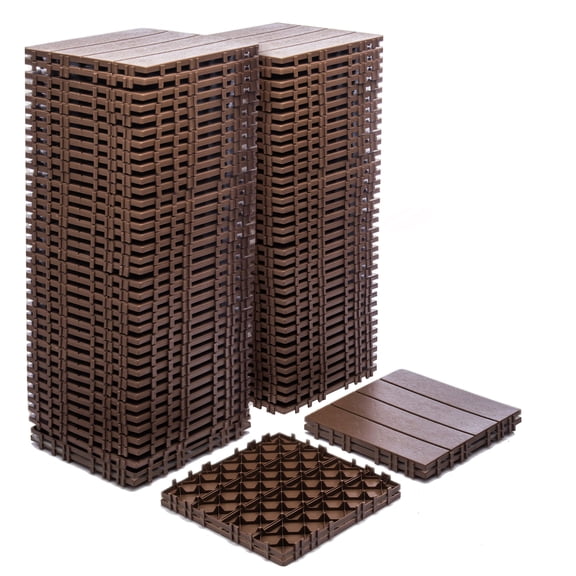 Interlocking Deck Tiles 11.42x11.42 in, Plastic Waterproof Flooring, Eco-Friendly Non-Toxic for Indoor Outdoor Use, Brown, 68pcs$108.99current price $108.99
Interlocking Deck Tiles 11.42x11.42 in, Plastic Waterproof Flooring with 3D Wood Grain Texture, Eco-Friendly Non-Toxic for Indoor Outdoor Use, Dark Gray, 68pcs
 Interlocking Deck Tiles 11.42x11.42 in, Plastic Waterproof Flooring with 3D Wood Grain Texture, Eco-Friendly Non-Toxic for Indoor Outdoor Use, Dark Gray, 68pcs$108.99current price $108.99
Interlocking Deck Tiles 12 in. x 12 in. Acacia Wood 12 Slats Checker Pattern 30 Pieces for Porch Balcony Poolside Indoor Outdoor
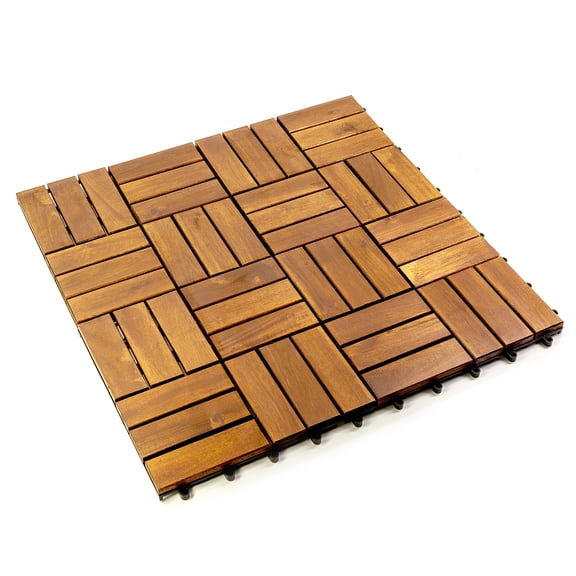 Interlocking Deck Tiles 12 in. x 12 in. Acacia Wood 12 Slats Checker Pattern 30 Pieces for Porch Balcony Poolside Indoor Outdoor$152.89current price $152.89
GARITIN 25 Pack 11.8x11.8 Inch Interlocking WPC Deck Tiles, Wood Plastic Composite Patio Floor Tiles, Waterproof Drainage Outdoor Flooring for Balcony Backyard Poolside, Natural Wood
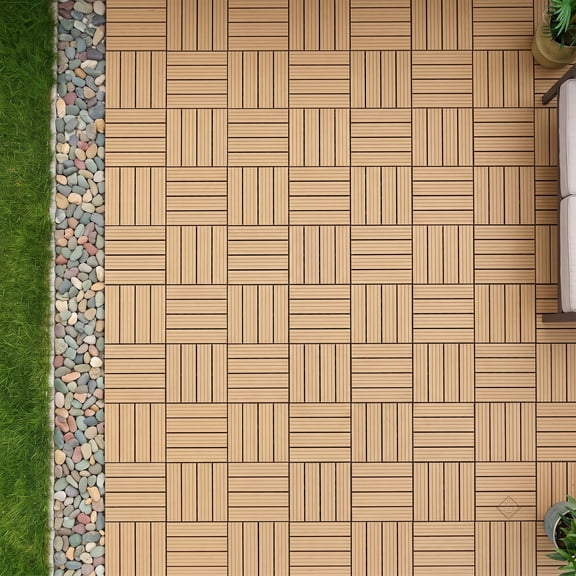 GARITIN 25 Pack 11.8x11.8 Inch Interlocking WPC Deck Tiles, Wood Plastic Composite Patio Floor Tiles, Waterproof Drainage Outdoor Flooring for Balcony Backyard Poolside, Natural Wood$62.99current price $62.99
ALPULON Acacia Wood Interlocking Deck Tiles, 27 Pcs 12 x 12 Inch Snap Together Wood Flooring Tiles for Patio Balcony Deck Poolside Garden Indoor Outdoor, 27, Natural
 ALPULON Acacia Wood Interlocking Deck Tiles, 27 Pcs 12 x 12 Inch Snap Together Wood Flooring Tiles for Patio Balcony Deck Poolside Garden Indoor Outdoor, 27, Natural$89.99current price $89.99
Resenkos Plastic Deck Tiles, 27 Pack Of Interlocking Flooring, 11.8"x11.8" Water-Resistant Tiles For Indoor & Outdoor Spaces, Dark Gray
 Resenkos Plastic Deck Tiles, 27 Pack Of Interlocking Flooring, 11.8"x11.8" Water-Resistant Tiles For Indoor & Outdoor Spaces, Dark Gray$60.82current price $60.82
Patiojoy 27PCS 12"x12" Patio Interlocking Tiles Acacia Slat Wood Garden Outdoor &Indoor
 Patiojoy 27PCS 12"x12" Patio Interlocking Tiles Acacia Slat Wood Garden Outdoor &Indoor$84.99current price $84.99
TOTAL 12" x 12" Plastic Interlocking Deck Tiles, 9 Pack, Waterproof Outdoor Flooring for Patio, Porch, Shed, Poolside, Garden & Backyard,Dark Gray
 TOTAL 12" x 12" Plastic Interlocking Deck Tiles, 9 Pack, Waterproof Outdoor Flooring for Patio, Porch, Shed, Poolside, Garden & Backyard,Dark Gray$29.99current price $29.99
TOTAL Outdoor Living 12"x12" Interlocking Deck Tiles, 36PCS/Pack, Waterproof Plastic Outdoor Flooring for Patio, Shed, Porch, Poolside, Garden, Backyard,Brown
 TOTAL Outdoor Living 12"x12" Interlocking Deck Tiles, 36PCS/Pack, Waterproof Plastic Outdoor Flooring for Patio, Shed, Porch, Poolside, Garden, Backyard,Brown$62.99current price $62.99
27 Pack Waterproof Interlocking Deck Tiles, 12"x12" Plastic Patio Tiles | for Indoor Outdoor Use, Patio Floor Decking Tiles for Garden Lawn Porch Poolside Balcony
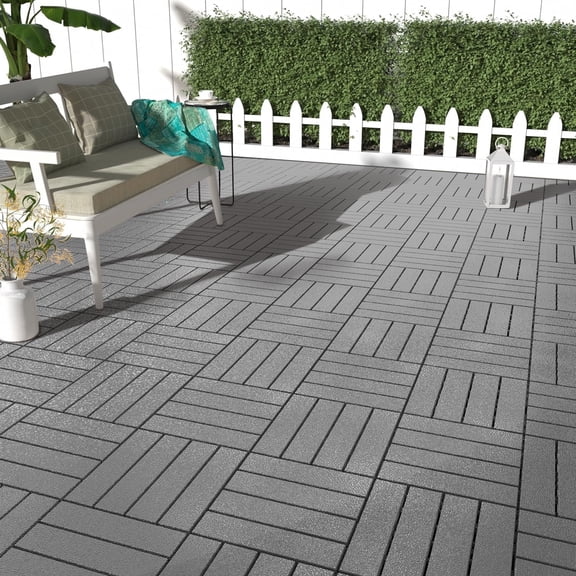 27 Pack Waterproof Interlocking Deck Tiles, 12"x12" Plastic Patio Tiles | for Indoor Outdoor Use, Patio Floor Decking Tiles for Garden Lawn Porch Poolside Balcony$49.95current price $49.95
TOTAL Outdoor Living 12" x 12" Composite Deck Tiles,9 Pack Interlocking Plastic Flooring for Patio, Deck,and Outdoor Spaces, Dark Grey
 TOTAL Outdoor Living 12" x 12" Composite Deck Tiles,9 Pack Interlocking Plastic Flooring for Patio, Deck,and Outdoor Spaces, Dark Grey$29.99current price $29.99
Greatmats Wood Grain Interlocking Wood Look Reversible Foam Tiles 1/2 Inch x 2x2 Ft. Dark Wood/Tan 15 Pack
 Greatmats Wood Grain Interlocking Wood Look Reversible Foam Tiles 1/2 Inch x 2x2 Ft. Dark Wood/Tan 15 Pack$137.66current price $137.66
Domi Outdoor Living 2787-27P Patio 12"x12" Composite Interlocking Decking Tile, 27 Pieces One Pack, Dark Grey
 Domi Outdoor Living 2787-27P Patio 12"x12" Composite Interlocking Decking Tile, 27 Pieces One Pack, Dark Grey$67.99current price $67.99
TrumanPick 36 PCS Deck Tiles Patio Pavers Interlocking Flooring Tiles 12"W x 12"L Waterproof Outdoor Flooring for Patio Garden Balcony Backyard All Weather Use, Brown
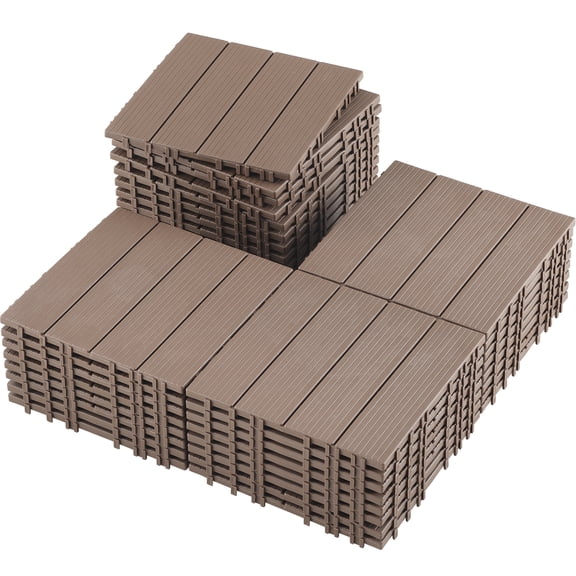 TrumanPick 36 PCS Deck Tiles Patio Pavers Interlocking Flooring Tiles 12"W x 12"L Waterproof Outdoor Flooring for Patio Garden Balcony Backyard All Weather Use, Brown$89.99current price $89.99
Plastic Interlocking Deck Tiles, 27/44 Pack 12"x12" Waterproof Outdoor Patio Tiles, All-Weather Interlocking Floor Tiles for Poolside, Balcony, Backyard, Easy to Install & Durable PP Material
 Plastic Interlocking Deck Tiles, 27/44 Pack 12"x12" Waterproof Outdoor Patio Tiles, All-Weather Interlocking Floor Tiles for Poolside, Balcony, Backyard, Easy to Install & Durable PP Material$66.56current price $66.56