

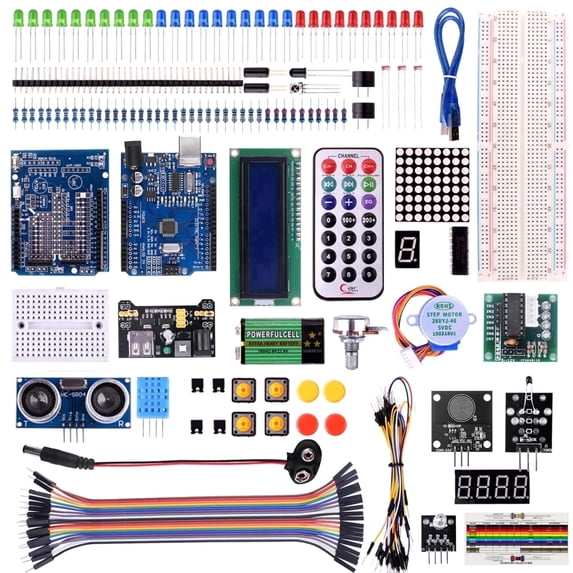
Kuman R3 Project Complete Starter Kit, Compatible with Arduino IDE and Tutorial
Key item features
- Beginner - Friendly Design:Ideal for novices, offering a comprehensive learning experience in electronics, robotics, and coding.
- Rich Component Set:Includes R3 board, various sensors, motors, LCD display, breadboard, jumper wires, and control board.
- Step - by - Step Tutorials:Provides clear instructions for wiring, programming, and testing, guiding users through each project stage.
- Arduino IDE Compatibility:Enables easy code writing, uploading, and testing, for real - world programming practice.
- Skill Development:Fosters problem - solving, creativity, and logical thinking, suitable for STEM education and DIY enthusiasts.
Specs
 Free 30-day returns
How do you want your item?



Try 30 days of Walmart+ for just $1!
About this item
Product details
Specifications
Warranty
Similar items you might like
Based on what customers bought
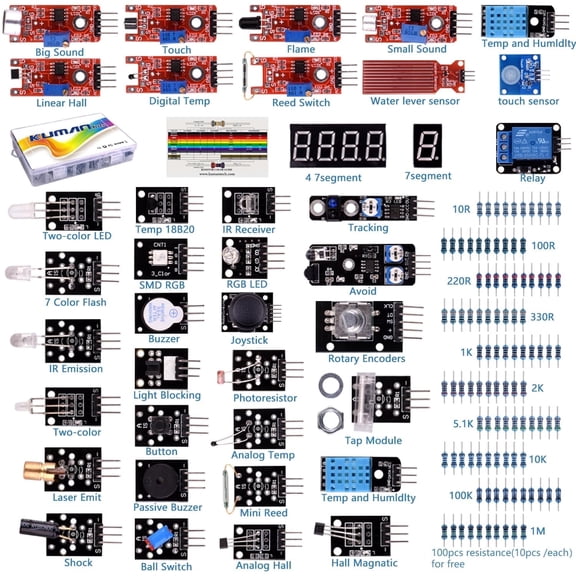
Kuman 37 in 1 Sensor Module Kit for Arduino and Raspberry Pi with Project Tutorials $27.35
 $2735current price $27.35
Kuman 37 in 1 Sensor Module Kit for Arduino and Raspberry Pi with Project Tutorials
34.7 out of 5 Stars. 3 reviewsReduced price Kuman R3 Project Complete Starter Kit, Compatible with Arduino IDE and Tutorial $31.44 Was $36.99
Reduced price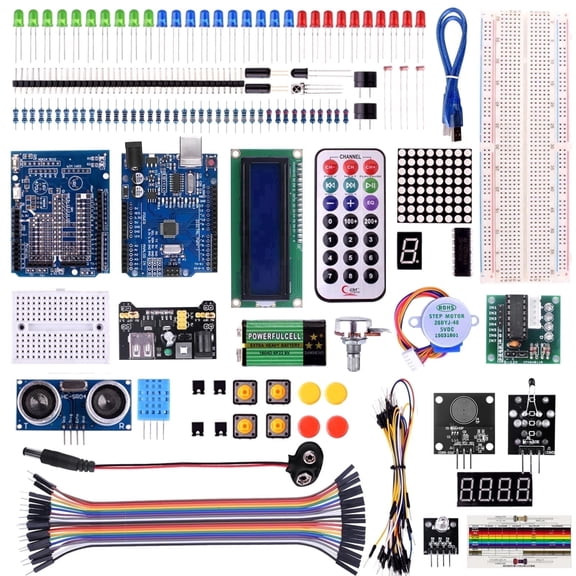 SponsoredNow$3144current price Now $31.44, Was $36.99$36.99You save $5.55You save$5.55
Kuman R3 Project Complete Starter Kit, Compatible with Arduino IDE and Tutorial
64.3 out of 5 Stars. 6 reviewsSave with Shipping arrives Tue, Jul 28
R3 For Starter Kit With Tutorial Compatible For Arduino Diy Electronic Kit $40.09
 $4009current price $40.09
R3 For Starter Kit With Tutorial Compatible For Arduino Diy Electronic Kit
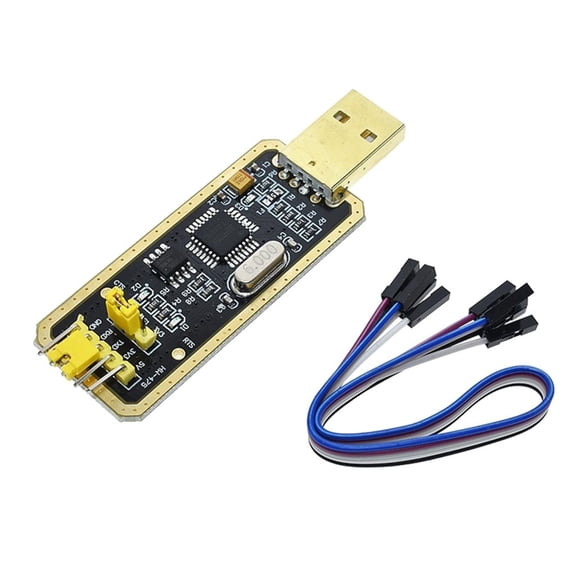
FT232 USB to TTL Adapter USB to Serial Converters for Development Project Hardware Development Programmer Module $6.73
 $673current price $6.73
FT232 USB to TTL Adapter USB to Serial Converters for Development Project Hardware Development Programmer Module
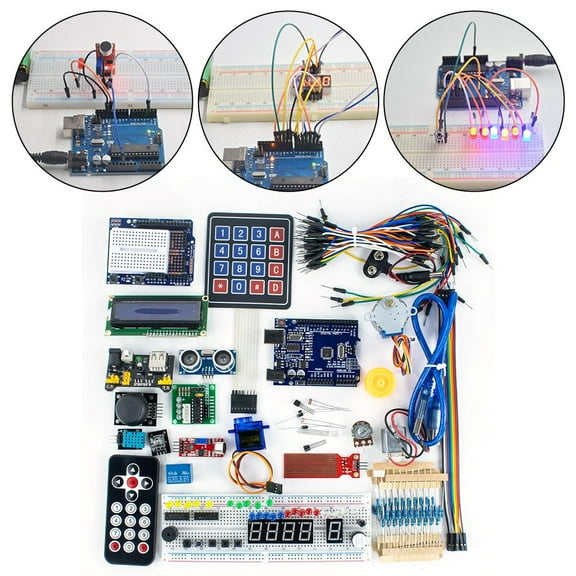
Complete R3 Starter Kit for Arduino Learn with 60 Components and Sensors $36.89 Was $49.53
 $3689current price $36.89, Was $49.53$49.53
Complete R3 Starter Kit for Arduino Learn with 60 Components and Sensors
23 out of 5 Stars. 2 reviewsClearance Super Starter Kit for SET R3 Breadboard with Detailed Tutorial Programming $42.56 Was $47.90
Clearance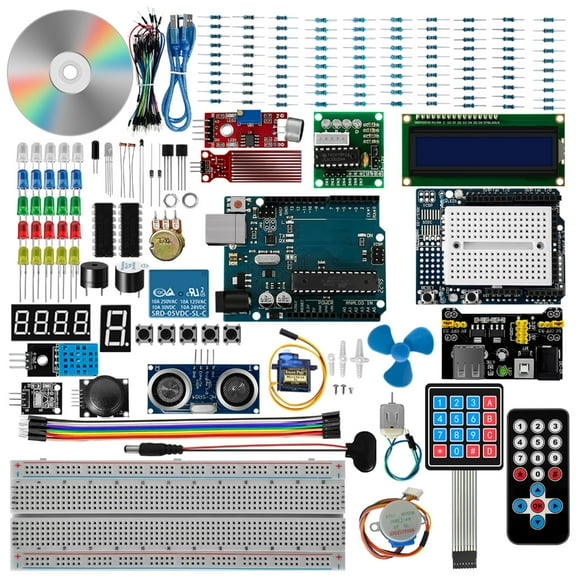 $4256current price $42.56, Was $47.90$47.90
Super Starter Kit for SET R3 Breadboard with Detailed Tutorial Programming
Best seller Full Starter Learning Kit for Arduino MEGA 2560, LCD1602 Display & Servo Motor Included $52.10
Best seller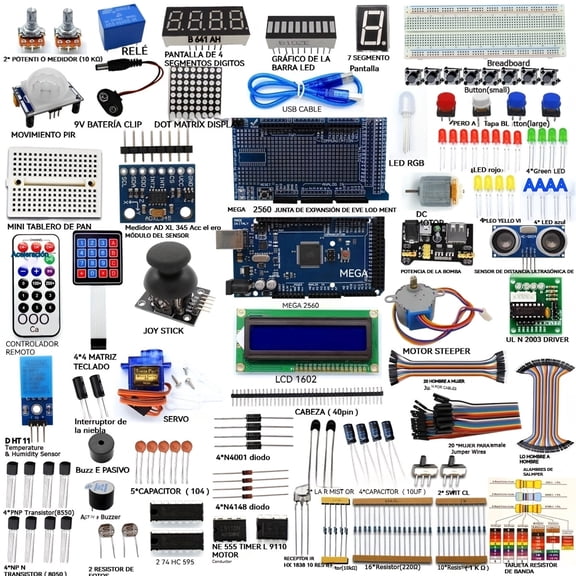 $5210current price $52.10
Full Starter Learning Kit for Arduino MEGA 2560, LCD1602 Display & Servo Motor Included
64.3 out of 5 Stars. 6 reviewsDIY Electronics Components Kit 830 Tie-point Breadboard for Arduino UNO R3 w/Box $28.91
 $2891current price $28.91
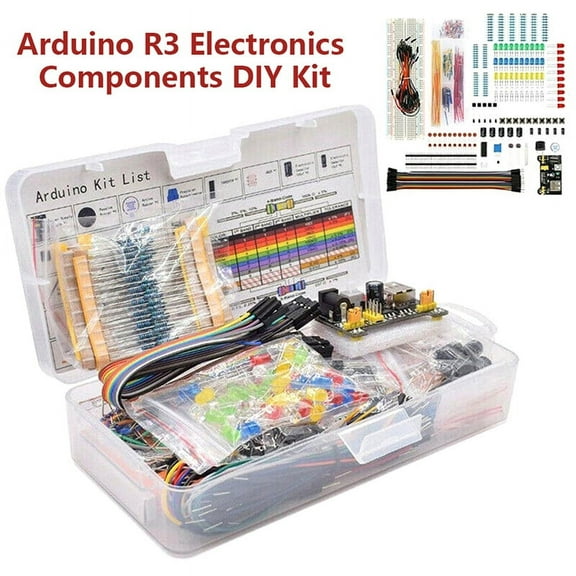
DIY Electronics Components Kit 830 Tie-point Breadboard for Arduino UNO R3 w/Box
BOFEER Most Complete Starter Kit for Arduino UNO R3 Programming Beginner Learning Kit with Servo Most Complete Electrnoics Starter Kit LEDs Compatible with Arduino IDE $69.48
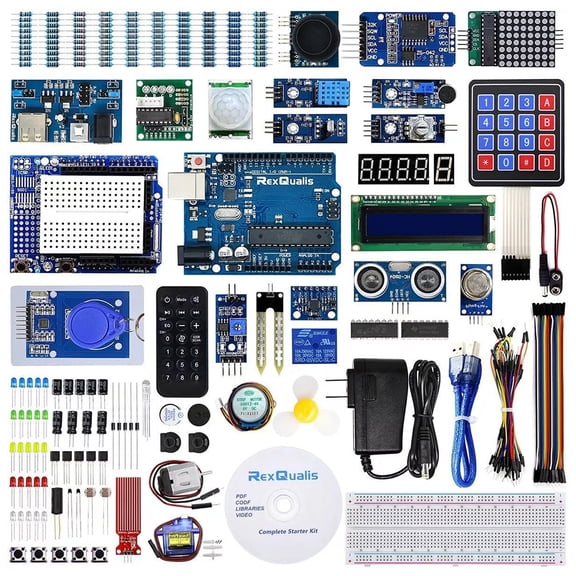 $6948current price $69.48
BOFEER Most Complete Starter Kit for Arduino UNO R3 Programming Beginner Learning Kit with Servo Most Complete Electrnoics Starter Kit LEDs Compatible with Arduino IDE
25 out of 5 Stars. 2 reviewsFor Raspberry Pi Pico W Starter Kit, MicroPython & C/C Compatible, 450 Projects, 117 Guided Tutorials, Online Learning Support, IDE Compatible $42.80
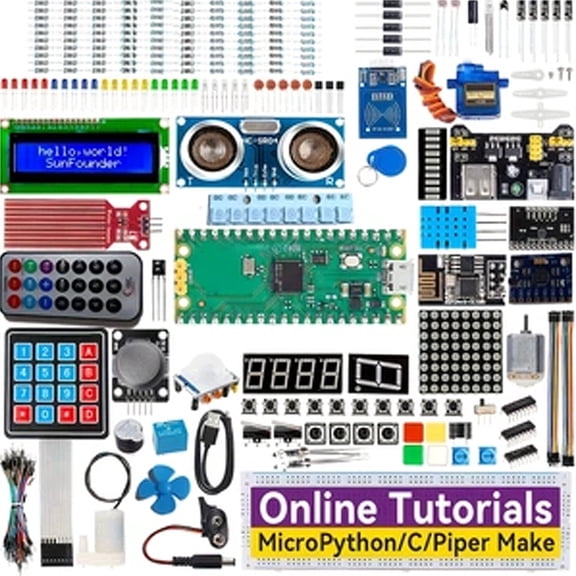 $4280current price $42.80
For Raspberry Pi Pico W Starter Kit, MicroPython & C/C Compatible, 450 Projects, 117 Guided Tutorials, Online Learning Support, IDE Compatible
12 out of 5 Stars. 1 reviewsFast-Learning Super Starter Kit Breadboard with Step Motor / SG90 Servo / 1602 LCD / jumper- Wire / Tutorial DIY $43.88
$4388current price $43.88Fast-Learning Super Starter Kit Breadboard with Step Motor / SG90 Servo / 1602 LCD / jumper- Wire / Tutorial DIY
Easy Programming Electronics Super Starter for SET R3 board Detailed Tutorial $36.44
$3644current price $36.44Easy Programming Electronics Super Starter for SET R3 board Detailed Tutorial
15 out of 5 Stars. 1 reviewsLIANXUE Super Starter Kit for SET R3 Breadboard with Detailed Tutorial for Easy Programming Electronics Learning DIY Kit $35.94
 $3594current price $35.94
LIANXUE Super Starter Kit for SET R3 Breadboard with Detailed Tutorial for Easy Programming Electronics Learning DIY Kit
PICKIT2 PIC Kit2 USB Programmer and Emulator for PIC Microcontrollers for MPLAB IDE $29.02
 $2902current price $29.02
PICKIT2 PIC Kit2 USB Programmer and Emulator for PIC Microcontrollers for MPLAB IDE
Best seller iFixit Mako 64-Piece Precision Driver Kit for Electronics Repair $39.96
Best seller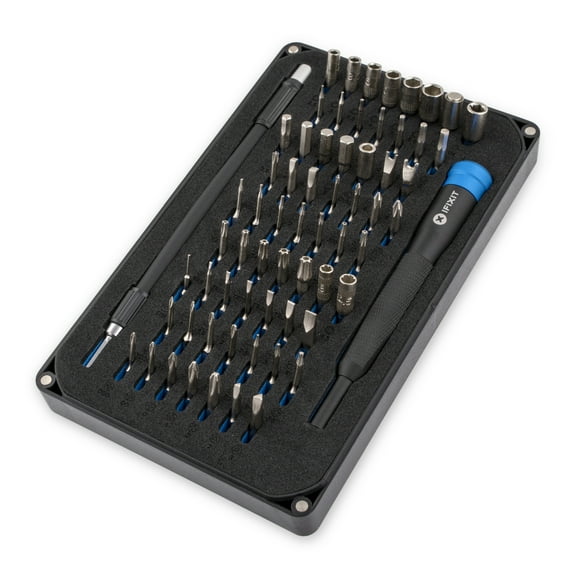 $3996current price $39.96
iFixit Mako 64-Piece Precision Driver Kit for Electronics Repair
434.9 out of 5 Stars. 43 reviewsArduino Uno Rev 3 (Uno R3 A000066) $27.60
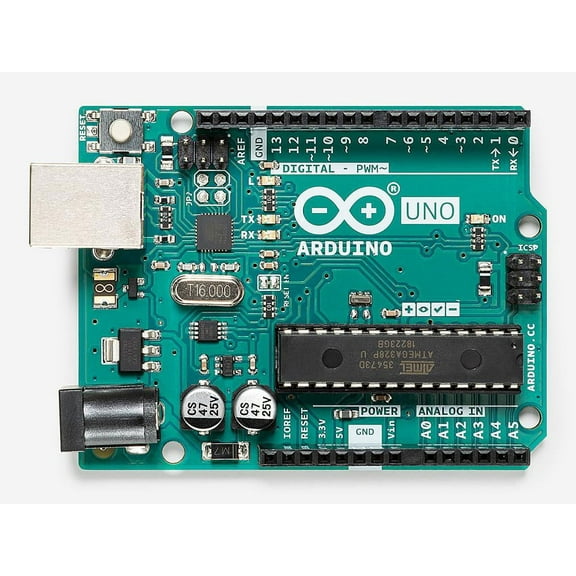 $2760current price $27.60
Arduino Uno Rev 3 (Uno R3 A000066)
35 out of 5 Stars. 3 reviewsFor K150 Programmer For Easy And Fast For Pic Microcontroller Programming Tasks $11.19 Was $17.54
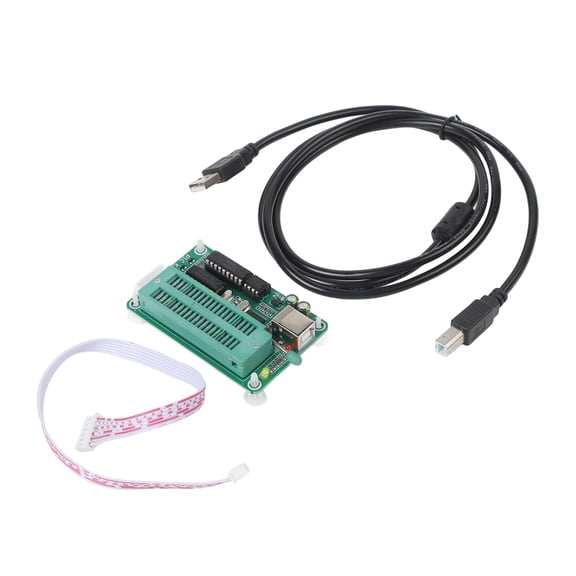 $1119current price $11.19, Was $17.54$17.54
For K150 Programmer For Easy And Fast For Pic Microcontroller Programming Tasks
Basic Starter Kit for Arduino Project,Breadboard, Power Supply, Jumper Wires, Resistors, LED, Electronic Fun Kit Compatible with Arduino R3 Project, Arduino Mega2560 Project, Raspberry Pi $19.40
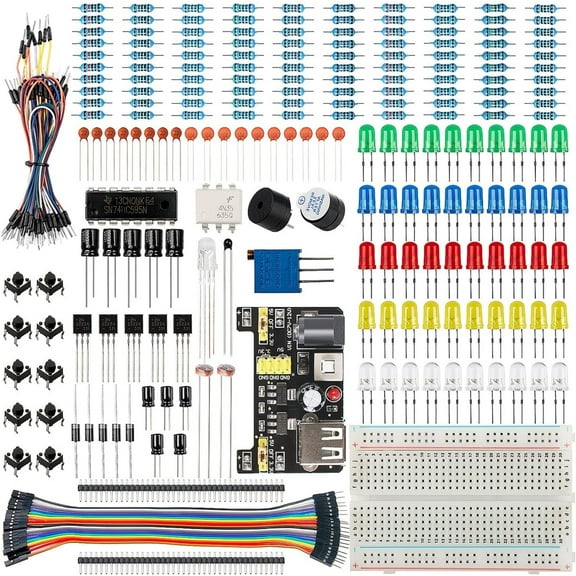 $1940current price $19.40
Basic Starter Kit for Arduino Project,Breadboard, Power Supply, Jumper Wires, Resistors, LED, Electronic Fun Kit Compatible with Arduino R3 Project, Arduino Mega2560 Project, Raspberry Pi
22-In-1 Starter Kit Sensor Module With Tutorial For Arduino Raspberry Pi Durable $23.71
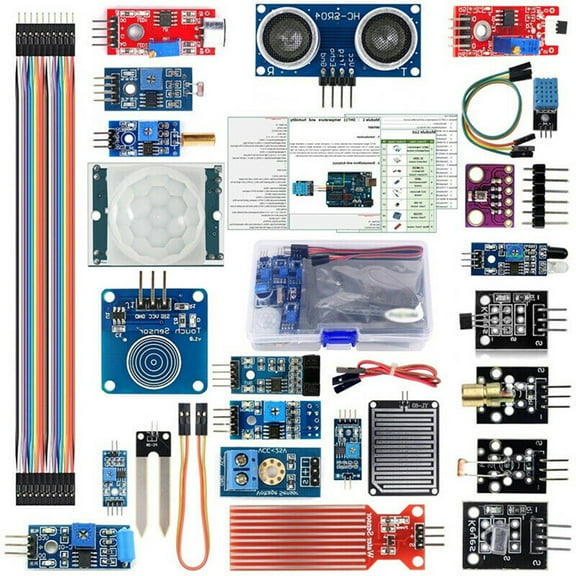 $2371current price $23.71
22-In-1 Starter Kit Sensor Module With Tutorial For Arduino Raspberry Pi Durable
High Presision MIDI Shield Board Testing Module for Microcontrollers $13.56
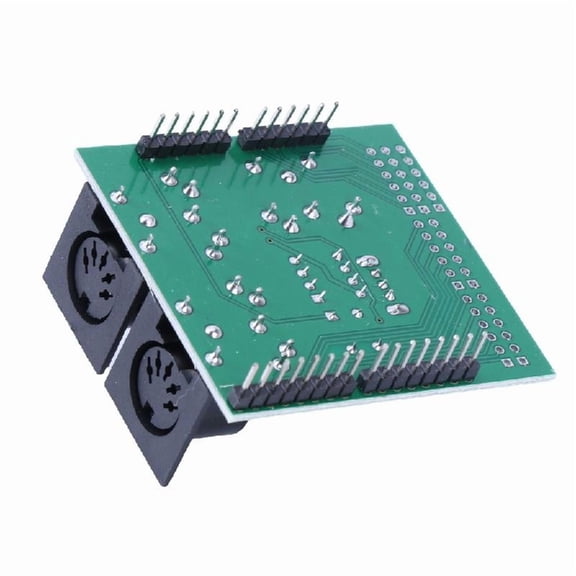 $1356current price $13.56
High Presision MIDI Shield Board Testing Module for Microcontrollers

Customer ratings & reviews
Filtered and sorted results would be available on the new 'Customer ratings & reviews' page.
Showing 1-3 of 5 reviews
Verified Purchase
I bought this starter kit to learn more about electronics and coding, and it has been a great experience. The kit came with a good variety of parts, including sensors, wires, a breadboard, and an R3 board, so I was able to start building projects right away. The tutorials were easy to follow, and I liked that I could use the Arduino IDE to upload and test my code without any trouble. Everything was packed neatly, which made it easy to find the parts I needed. I enjoyed trying different projects and learning how each component worked. It kept me busy for hours and helped me gain confidence with programming and basic electronics.
Verified Purchase
Super value for a great Arduino starter kit!
This is a very nice Arduino starter kit and a great value for what you get. There is no instruction CD. I contacted the seller about this and he replied promptly. Apparently these kits have transitioned away from the CD to a web folder. On the bottom of the kit is a QR code you can scan to access the folder, along with the link itself. I went to the folder but the files were missing. There was only a "blink" pdf example in the top directory. I have reported this to the seller and made them aware of the issue. I have confidence they will get it sorted out. I don't feel this product deserves any less than 5 stars for this easily fixed issue. If you are concerned about the instruction manual you can contact the seller first to make sure the issue has been resolved. I have delt with Arduino and several other different Atmega microcontrollers for many years now. I have been programming and working with electronics all of my life. I am retired now, so that's well over 40 years. This kit is great and includes some very nice items. First, it comes with the UNO R3 board. That alone would cost around half of what this kit lists for. You get a handy breadboard power supply, an expansion board, a sonic range finder, a motor driver, an 8x8 matrix and a 1602 display. These are all nice items that don't always come with many kits. There are also quite a few different sensors, switches, buzzers, LEDs, 7 segment displays, resistors, bread boards and a 74HC595 chip. There are oodles and oodles of jumper wires, more than you'll probably ever need. It also comes with a 9v battery and battery connector. Arduino works on 5v. The battery connector connects the 9v battery to a barrel jack on the board, which is connected to an onboard voltage regulator which drops it down to 5v. I took a picture of what's included. It has everything shown except the CD. This probably sounds overwhelming, but within a month or two you will probably become familiar with everything. Soon you will probably want to add some capacitors, transistors, a few diodes and maybe a few other 7400 or 4000 series chips. The fun never ends with Arduino. You can even scrap parts out of old speakers, radios and other components. Last Christmas I was working on music playing projects. You only need 2 Arduino outputs for the speaker to play music. The rest is in the code. I have bought many of these kits. I own many Arduino boards already. I never use the actual boards in my final product. I buy the Atmega328 chip in a DIP form and use a programmer to upload the code to it. It only takes a couple of capacitors and a resistor to connect the actual 328 chip to a circuit. I use these boards for prototyping only. It took me a while to get to that point though. Some people prefer just using the boards, because it is much faster and easier. No soldering needed either. If you need a manual, the internet is full of info. Google Arduino projects or starter course. Most manuals are too basic. Also check youtube!
Verified Purchase
Great kit for beginners!!!!!
Everything you need to get started building and programming arduino modules. It comes with a couple solderless bread boards, a solder together project board, and tons of modules and components. My favorite part is the QR code on the box takes you to a cloud folder full of resources, including a beginner's tutorial and instructions. I am 110% satisfied!!
