

Marble End Tables in End Tables




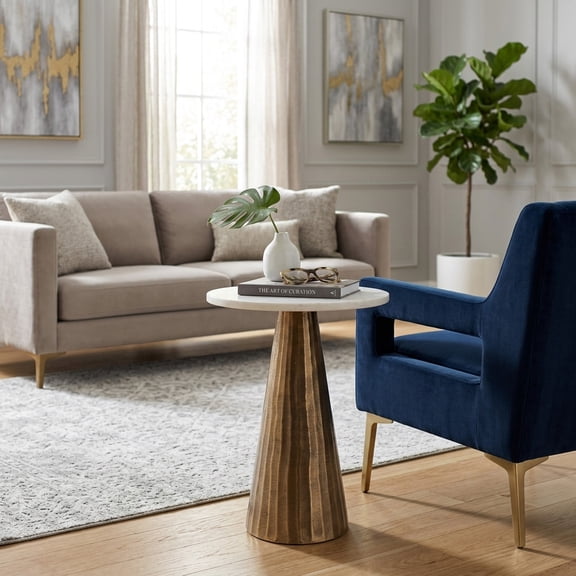


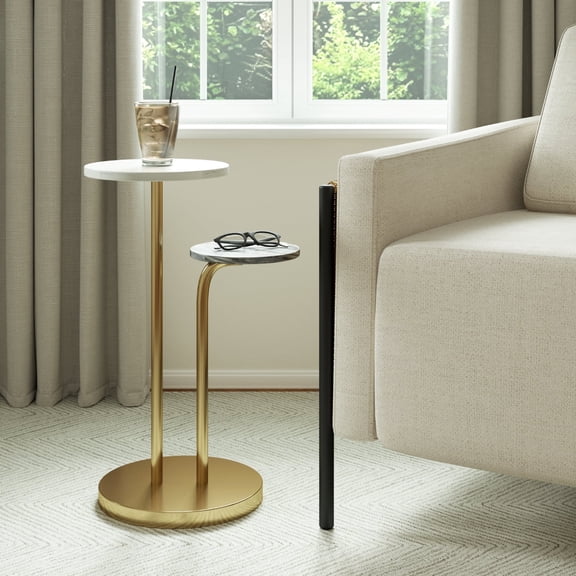
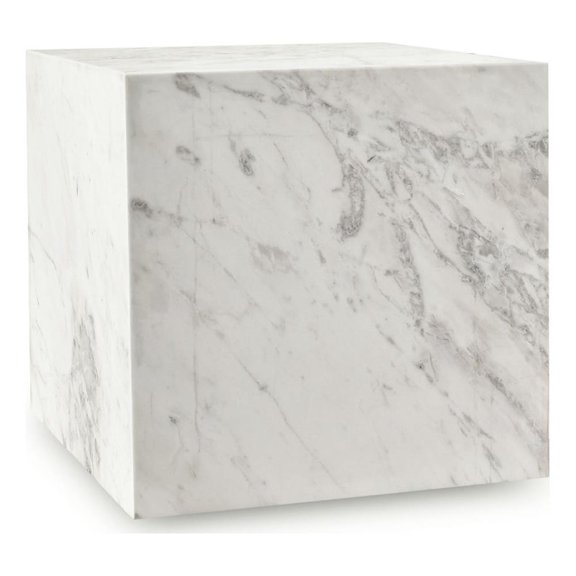


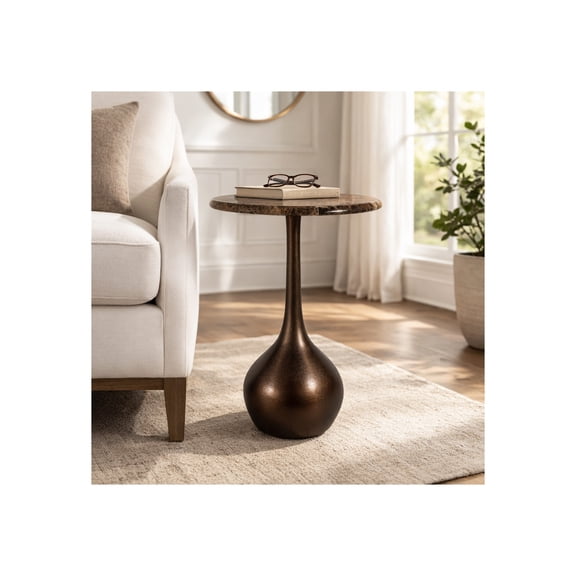
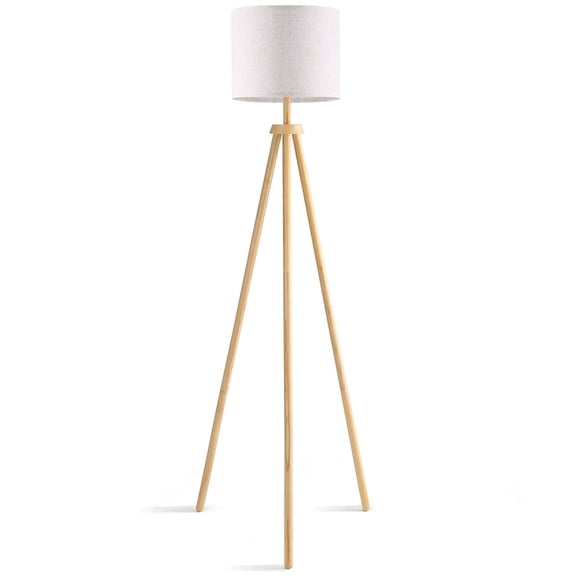
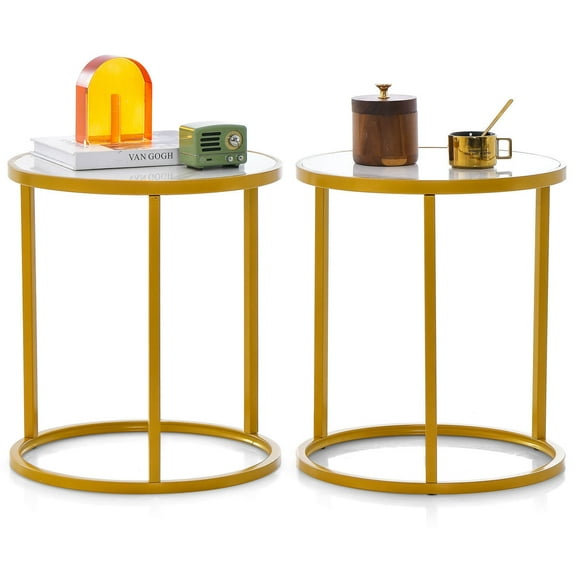


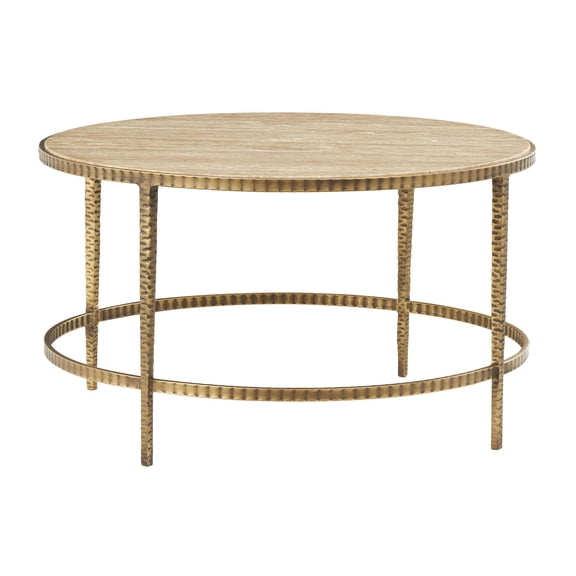


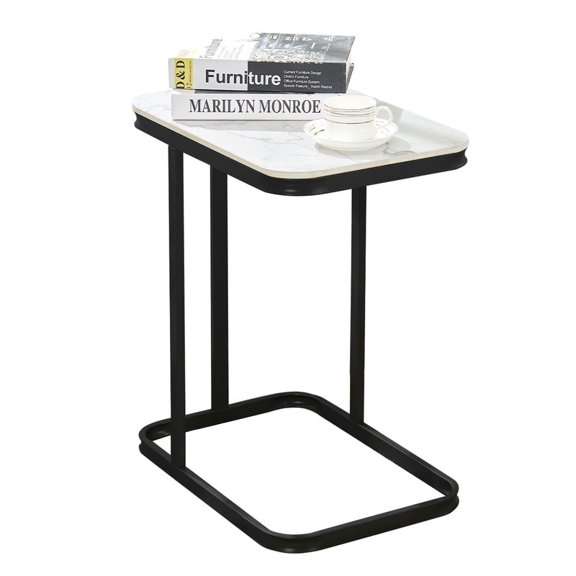













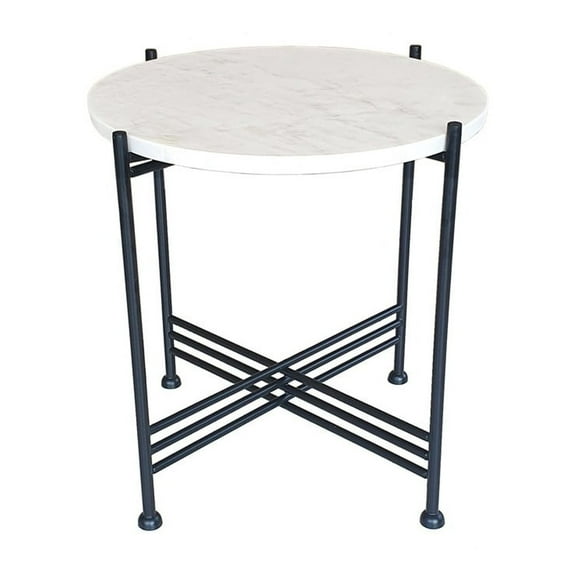
About Marble End Tables in End Tables - Walmart.com
Your marble side table can give your seating area a polished surface and a compact footprint. By comparing shape, finish, material, and scale, you can choose a table that fits your room and daily routine.
Within this category, you’ll find genuine marble, faux marble, and marble veneer options for different layouts. That range helps you match a sofa, reading chair, or apartment corner with more precision.
How to choose a marble side table
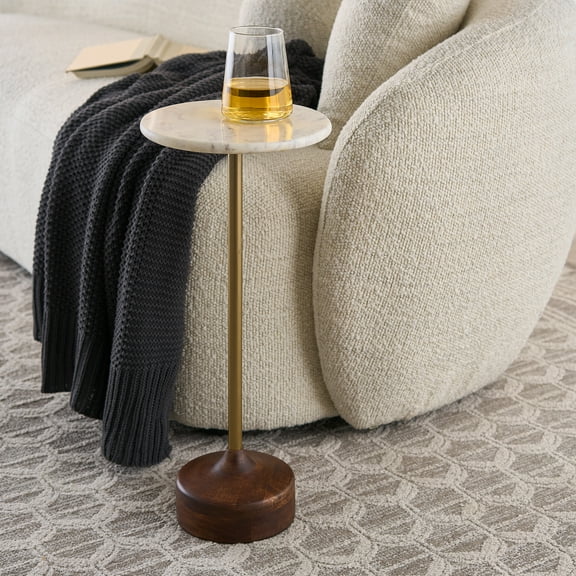
Start with the way your table works beside your seat, because function shapes every other choice. A full end table gives your lamp and book more room, while a drink table keeps a narrow corner open.
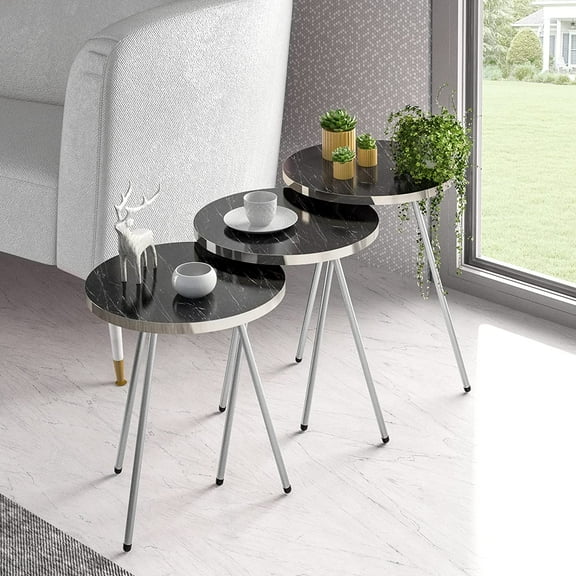
For flexible rooms, nesting tables give you extra surface space without taking over the floor. After guests leave, you can tuck the smaller piece under the larger one.
Before choosing a size, measure your sofa arm or chair arm so your tabletop feels easy to reach. A marble top table small in scale can still feel useful when the height lines up well.
- Round tops can help you move through tighter walkways with fewer sharp corners.
- Square and rectangular tops can give your lamp, tray, and remote more usable space.
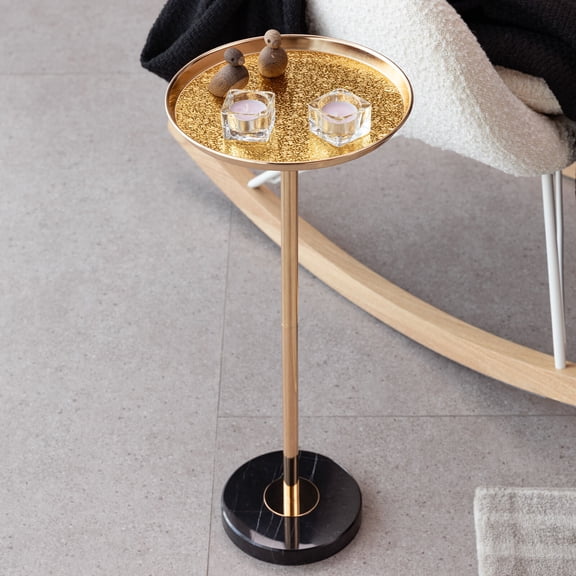
- A black marble drink table can add contrast while keeping the profile slim.
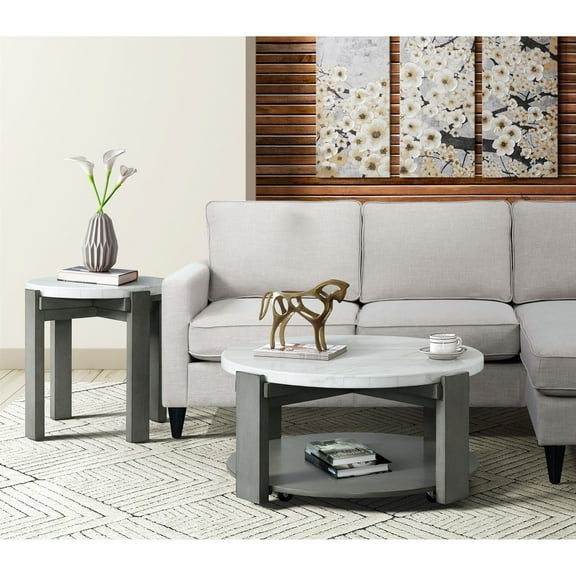
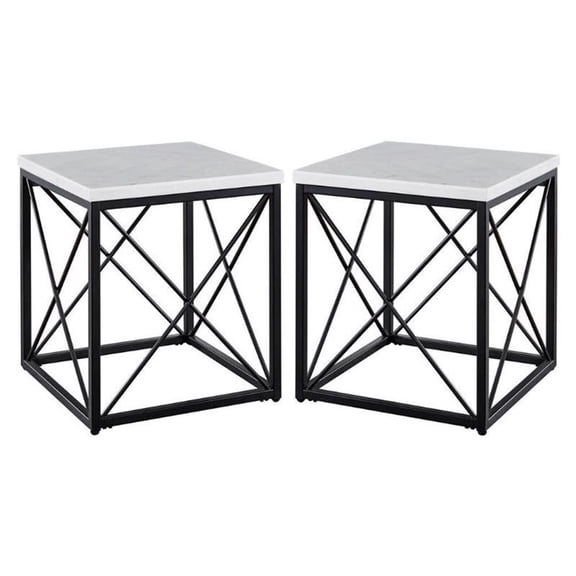
- A faux marble end table set can help you create symmetry on both sides of your sofa.
Shape also changes how your table feels in motion, not just how it looks in photos. In narrow layouts, a small side table with marble top can feel lighter when the outline stays soft.
Choosing marble topped side table shapes and finishes
When you compare shapes, think about both traffic flow and surface needs in your room. Round and oval tops often feel easier beside sectionals, while square tops suit corners and straight sofa arms.
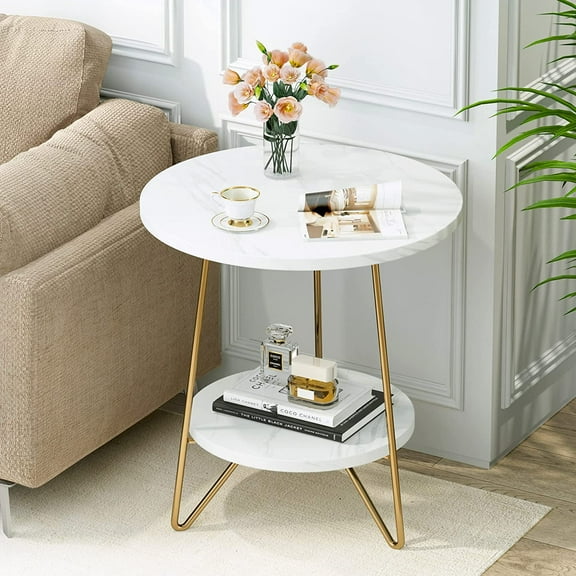
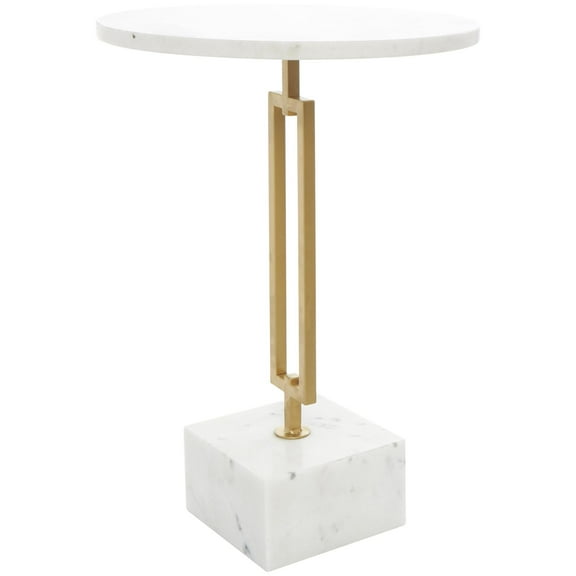
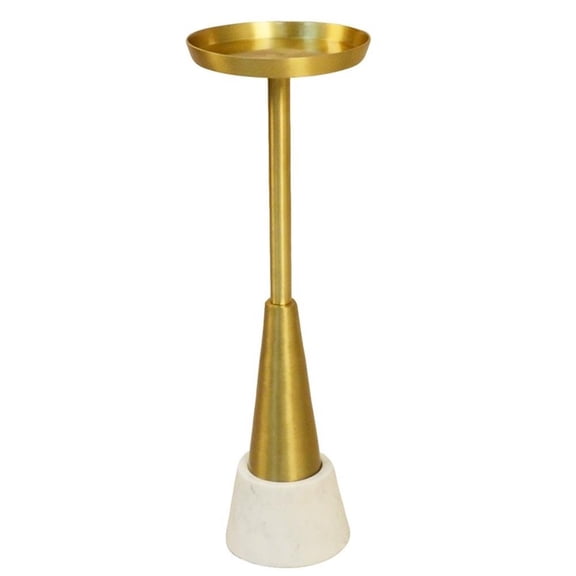
A rectangular top can work well when you want extra room for your lamp, coaster, and stacked books. If your room feels busy already, a round marble table with gold base can soften the layout.
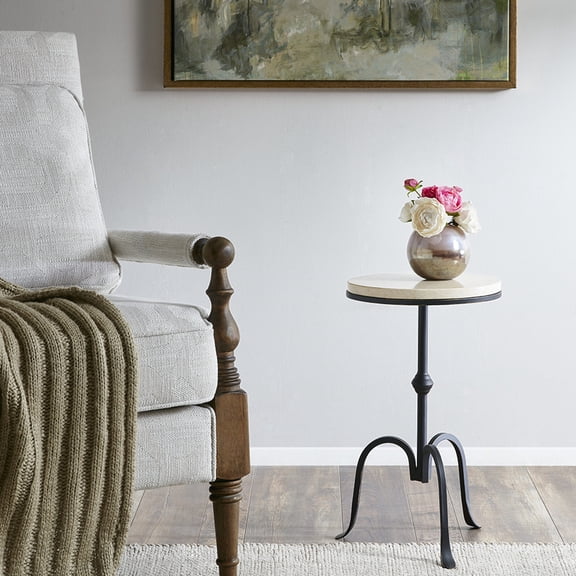
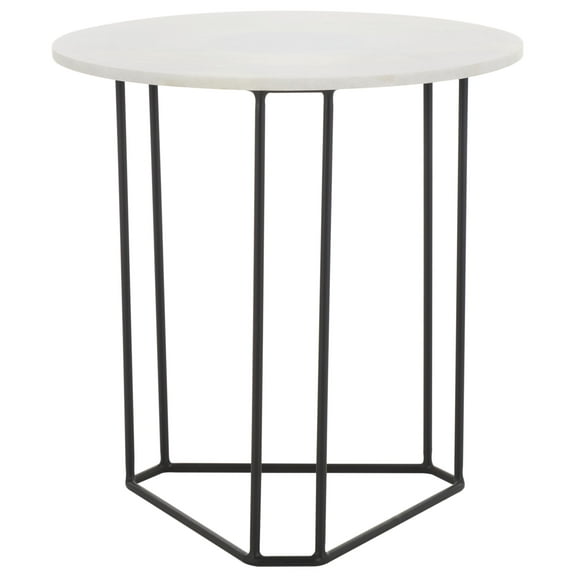
Base finish matters because it changes the mood around your stone top and nearby furniture. Gold and brass can warm neutral seating, while black and chrome can keep your look crisp and modern.
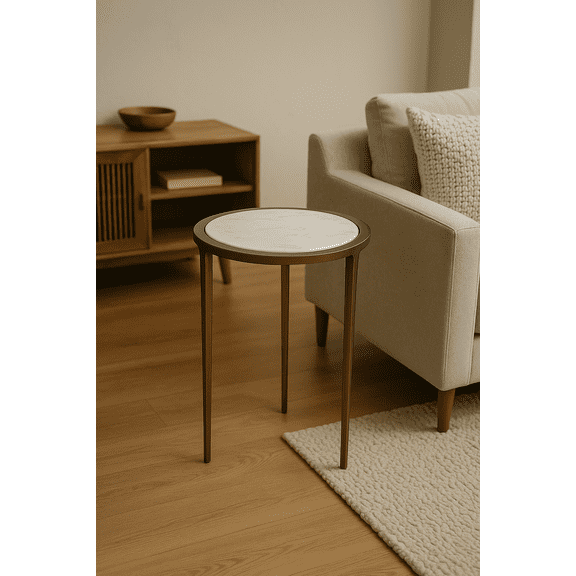
Wood bases can make marble top tables feel more relaxed and grounded in casual spaces. With metal bases, you can echo nearby lighting, frames, or hardware for a more connected look.
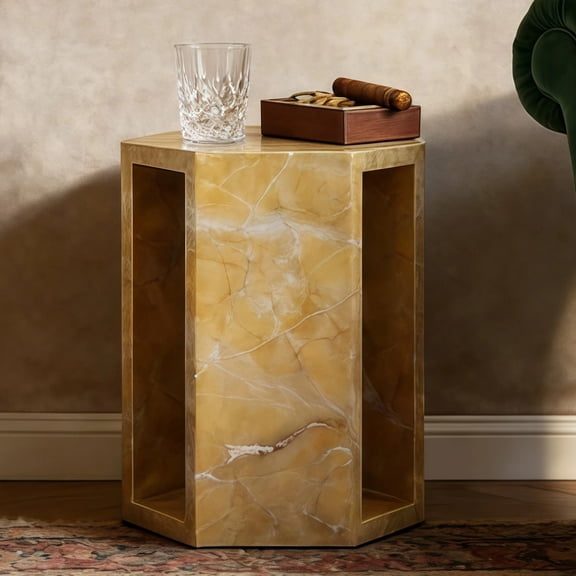
Color is another useful filter when you want your table to blend in or stand out. White and gray marble can brighten darker corners, while a brown marble end table adds warmth and depth.
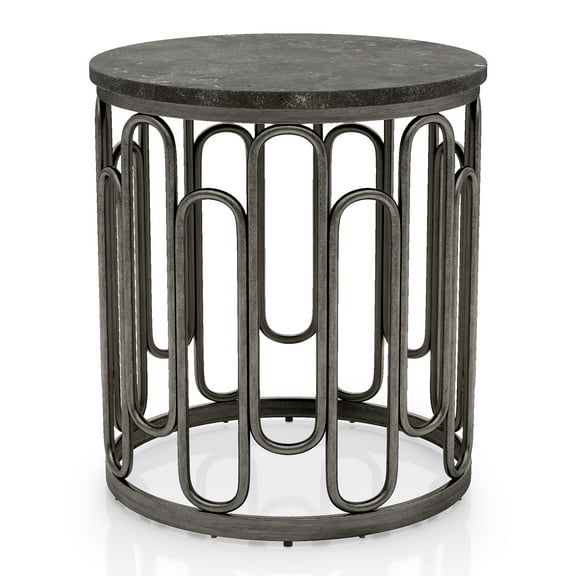
Darker tops can create stronger contrast beside your light upholstery and pale rugs. If your room needs a focal point, black marble can anchor the space without adding visual bulk.
Comparing genuine and faux marble end tables
Material type is a key choice because it affects weight, upkeep, and pattern variation. Genuine marble gives you natural veining and a heavier feel, while faux marble can feel easier to move.
Marble veneer sits between those options and can give you the stone look with less overall weight. That difference can matter when you like to rearrange your room or carry a table upstairs.
With genuine marble, check if the top needs sealing so your finish keeps its intended look over time. Product details can also tell you about scratch and stain resistance for that specific construction.
For active households, faux marble end tables can simplify your regular wipe-downs and room changes. If you want matching pieces, a faux marble end table set can also make your seating area feel coordinated.
Natural variation is part of what makes genuine marble distinct from one top to the next. If you want a more uniform appearance, faux finishes may give your room a more consistent pattern.
Care habits matter too, so coasters and trays can help your marble top tables stay neat during daily use. That simple routine can support a cleaner look on both real and faux surfaces.
Checking stability, weight support, and assembly
Base design deserves close attention because your stone-look top needs steady support underneath. Look for balanced frames, wide foot placement, and clear weight guidance in the product details.
In active homes, that guidance can help you choose a table that feels planted beside your seating. A stable base can matter even more when your table holds a lamp, books, or serving pieces.
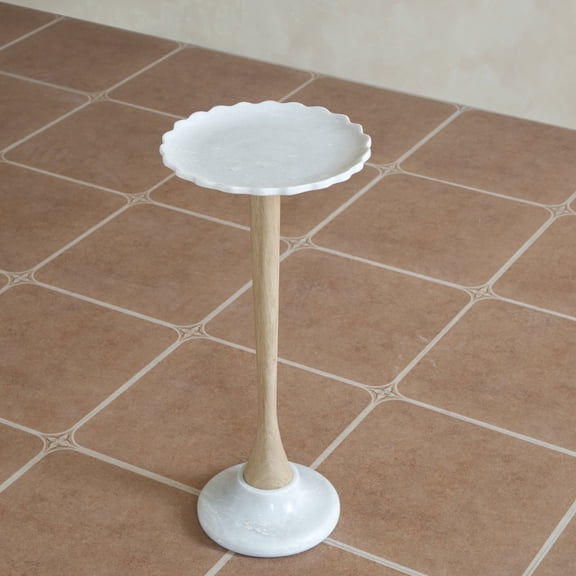
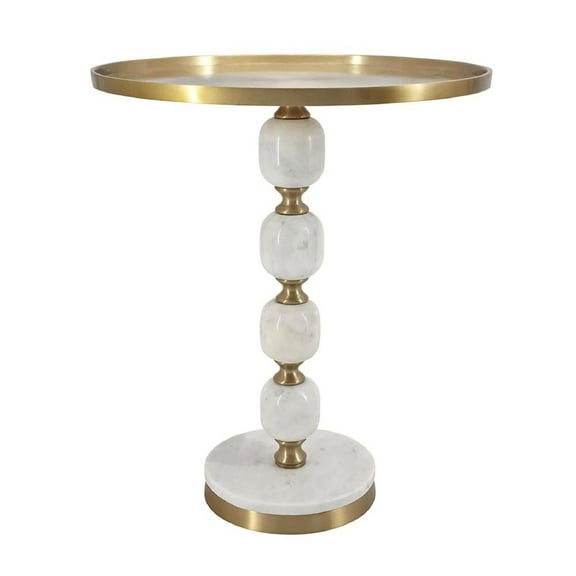
Pedestal styles can free up legroom and create a lighter visual footprint in small spaces. Four-leg frames can feel more familiar and may suit rooms where you want a grounded look.
Assembly details can reduce frustration before your order arrives. Check if the package includes tools, how many steps to follow, and whether to only attach the base.
Weight also affects how often you want to move your table from room to room. Smaller drink tables and lighter faux styles can feel easier to reposition during seasonal updates.
Using marble top tables in real rooms
Beside your sofa, the table can hold a lamp, a drink, and a few daily essentials without crowding the seat. In a reading corner, the same table can support your book, glasses, and a small tray.
Apartment layouts often call for a small side table marble design that keeps your floor open. In those spaces, a marble top table small enough for a tight corner can still make the room feel finished.
For modern spaces, a black marble drink table with a simple metal base can create sharp contrast. In warmer rooms, a brown marble end table can pair naturally with brass details, wood tones, and soft upholstery.
Matching pairs can frame your sofa neatly when you want a more formal setup. Mixed shapes can work well when your room has a chaise, an uneven wall, or a tighter path on one side.
When you compare shape, height, material, and base support together, your choice becomes easier. That approach helps you land on a marble side table that keeps essentials close and your room looking pulled together.