

Canopy Beds








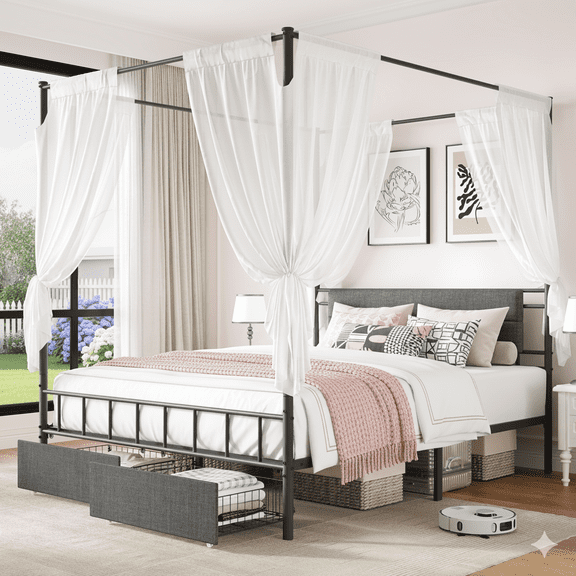


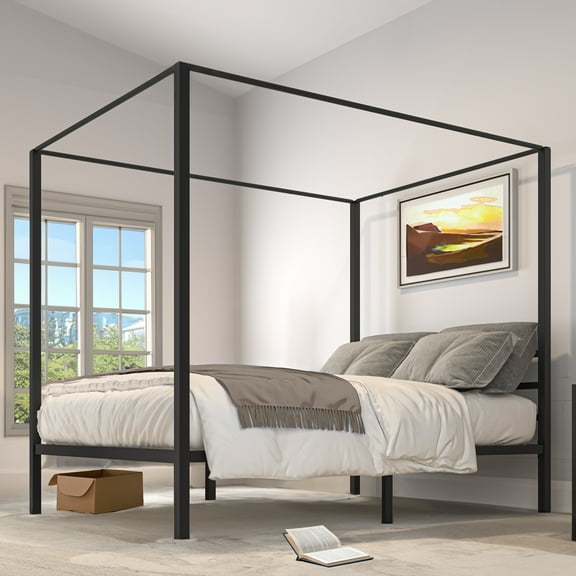


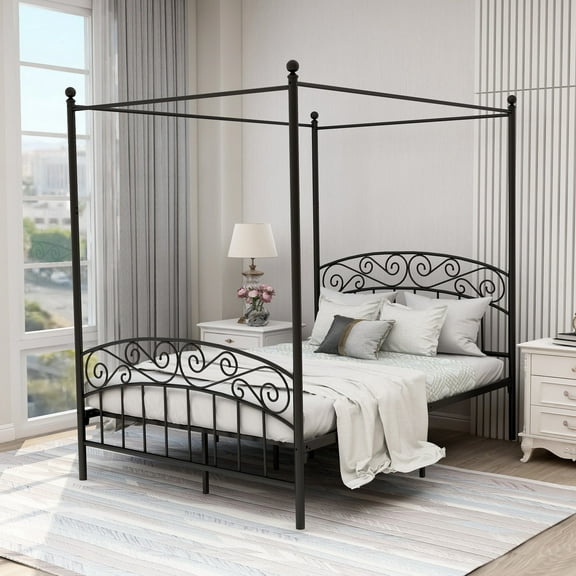
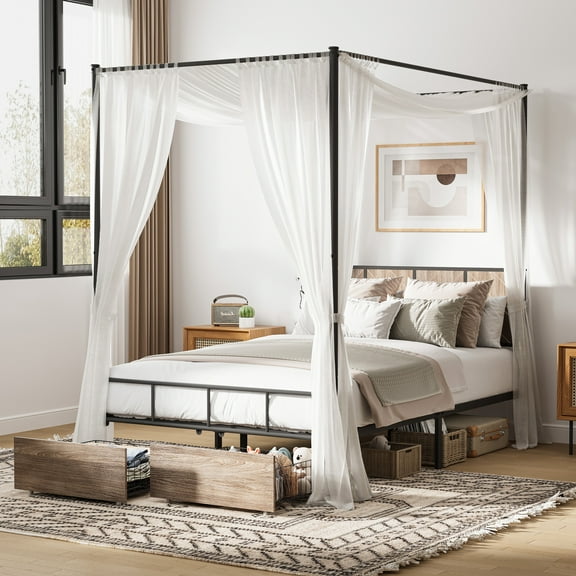











About Canopy Beds - Walmart.com
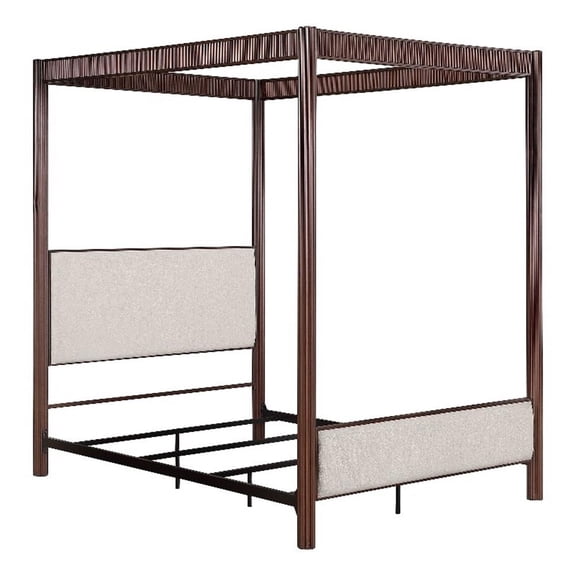
Canopy beds help you create a striking bedroom focal point while giving your space height, structure, and flexible styling options. You can compare sizes, materials, and frame types to match your room layout, ceiling clearance, and design goals.
If you're furnishing a main suite, guest room, or teen bedroom, you can use this category to narrow your choices quickly. You'll find options that support modern lines, farmhouse warmth, industrial contrast, or traditional detail without losing everyday function.
How to choose canopy beds for your room
When you compare canopy beds, you should start with room size and ceiling height. You need enough overhead clearance for the canopy rails to feel open instead of crowded.
In a room with standard eight-foot ceilings, you should check the exact bed height before you decide. You may prefer a lower-profile frame if your ceiling fan, pendant, or crown molding sits close.
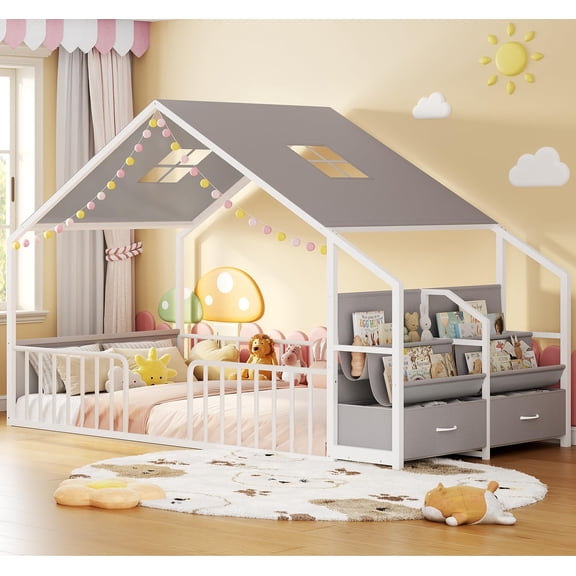
Your next decision is bed size, because scale changes the whole look of the room. A twin works well in smaller spaces, while a full gives you extra width without taking over.
If you want a balance of sleep space and layout flexibility, a queen canopy bed often fits the widest range of bedrooms. If you have a larger main suite, a king canopy bed can give you a broader, more dramatic footprint.
- You can use taller canopy lines to define an open bedroom layout.
- You can choose a lower frame profile when your ceiling clearance feels tighter.
- You can match queen and king sizes to primary bedrooms and full or twin sizes to compact rooms.
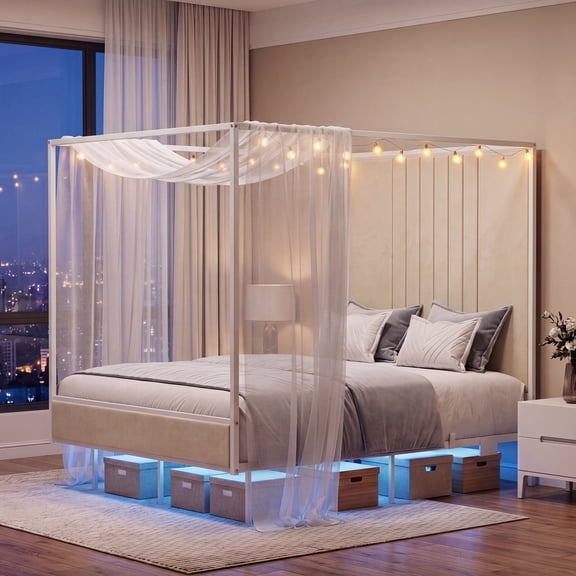
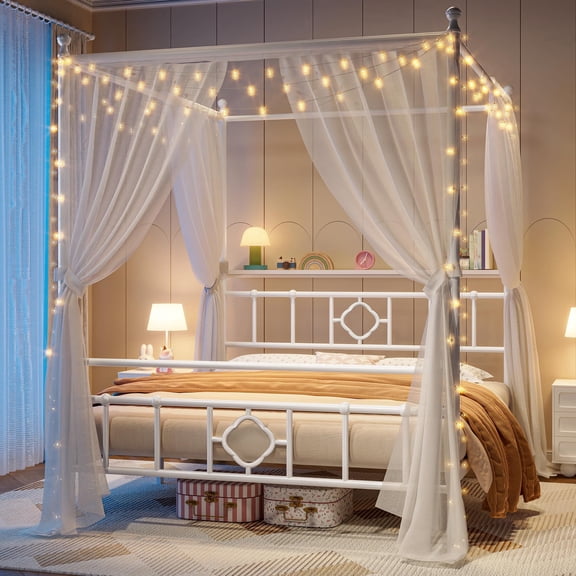
- You can use canopy rails to support light drapes, string lights, or layered bedding style.
Choosing the right canopy bed frame
Your canopy bed frame should match both your style and your practical setup. You should compare platform designs and box spring required designs before you focus on color or finish.
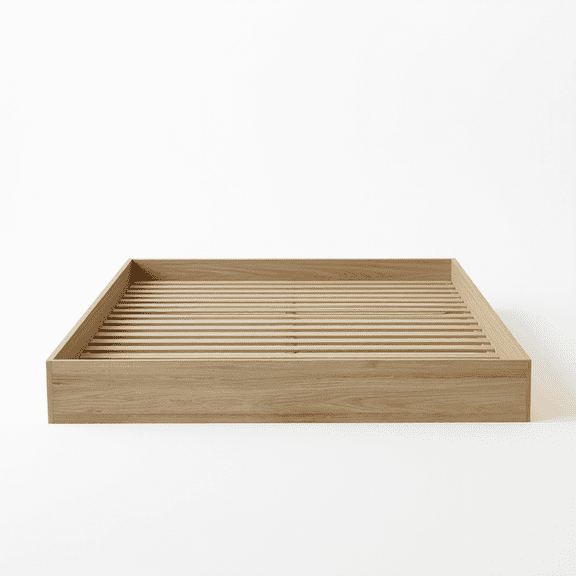
If you choose a platform frame, you may not need a separate box spring under your mattress. If you choose a box spring required frame, you should plan for added height and a different mattress feel.
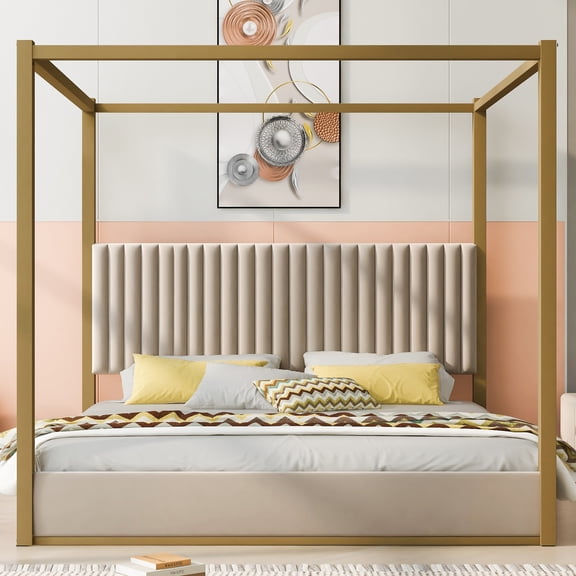
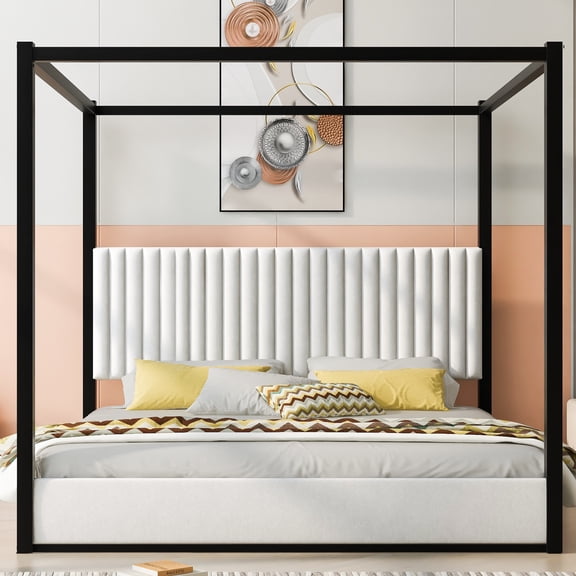
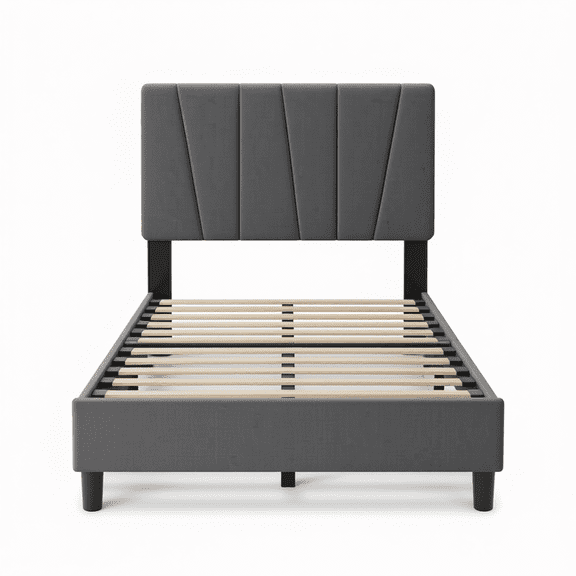
You should also look at whether the frame includes a headboard, because that changes the finished look. A headboard can give you a stronger visual anchor when you layer pillows and bedding.
Assembly details matter because larger frames include tall posts, top rails, and more connection points. You should check how the parts come together if you want a setup that feels straightforward in your space.
Weight capacity is another useful detail when you compare construction styles. You can use that information to understand how the frame supports your mattress, foundation, and everyday use.
Comparing metal canopy bed and wooden canopy bed styles
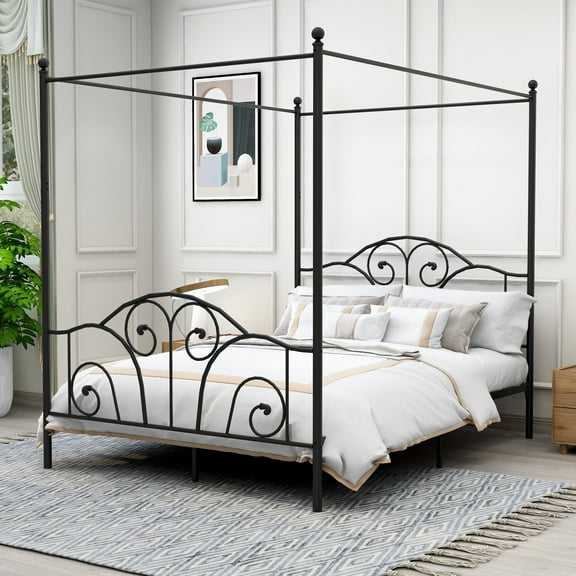
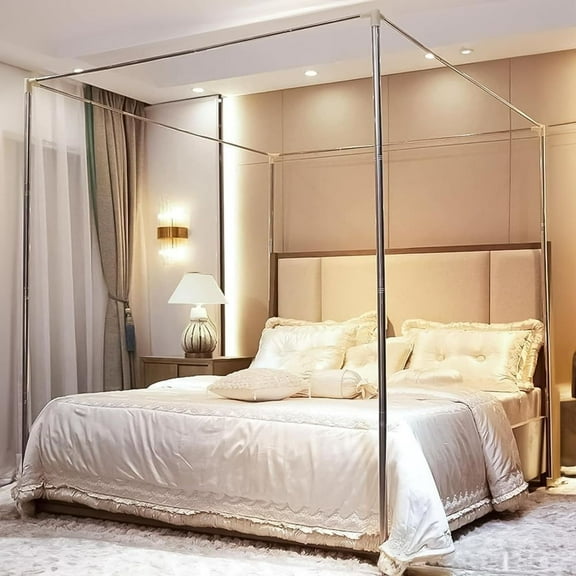
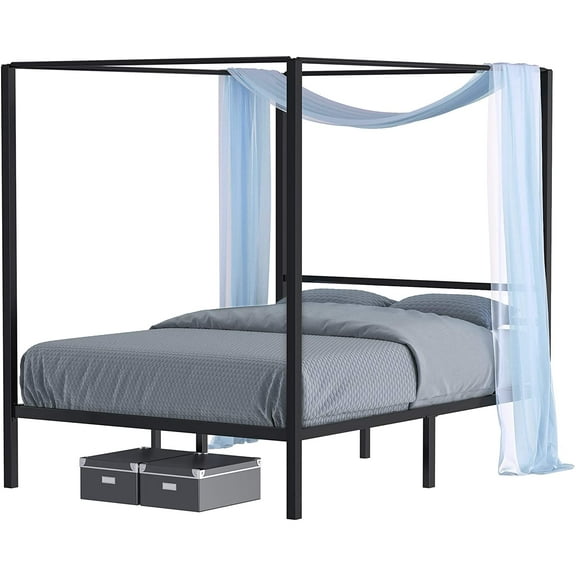
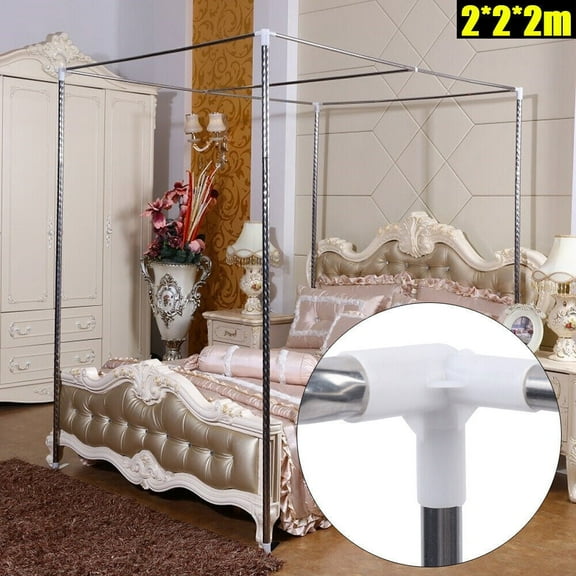
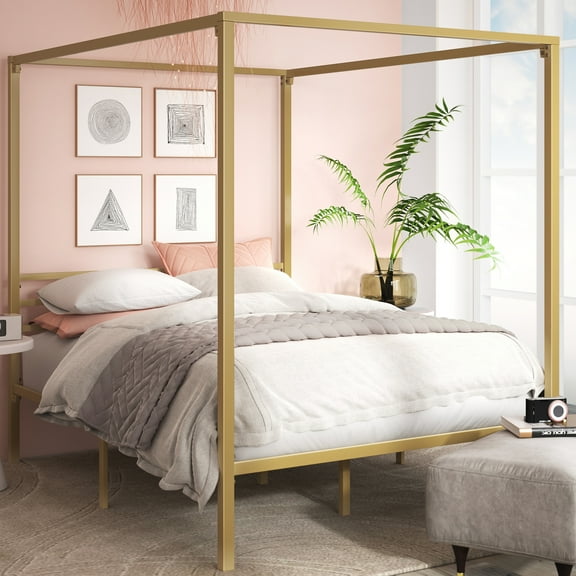
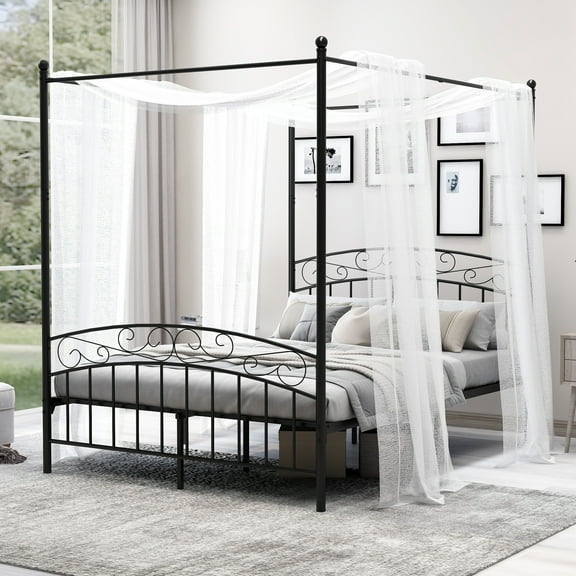
Your material choice shapes the room's mood right away. A metal canopy bed usually gives you cleaner lines, slimmer posts, and an airy look that works well in smaller rooms.
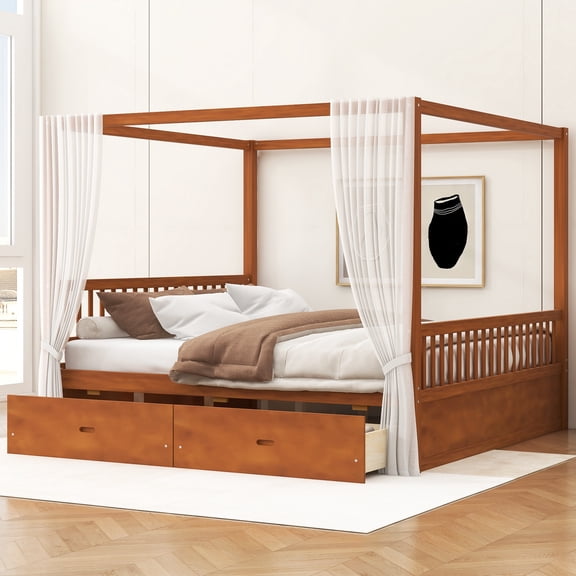
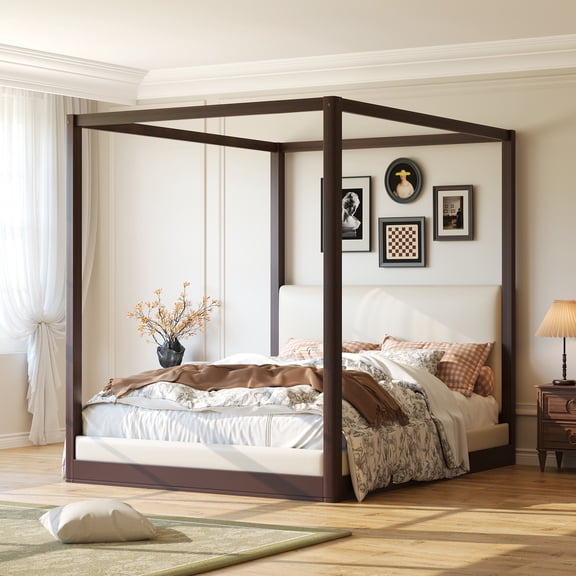
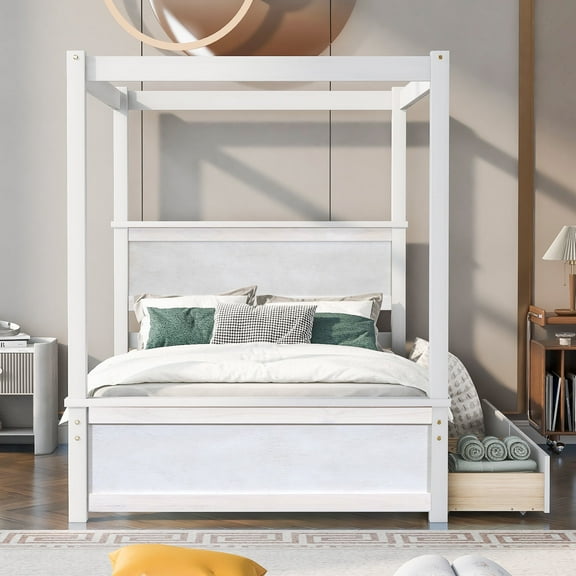
If you like visible texture and a warmer feel, a wooden canopy bed can bring more depth to the bedroom. You may notice that wood tones pair well with farmhouse, traditional, and rustic-inspired spaces.
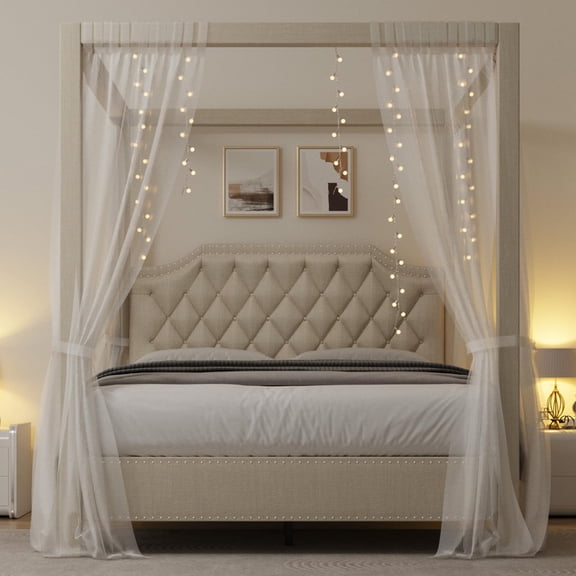
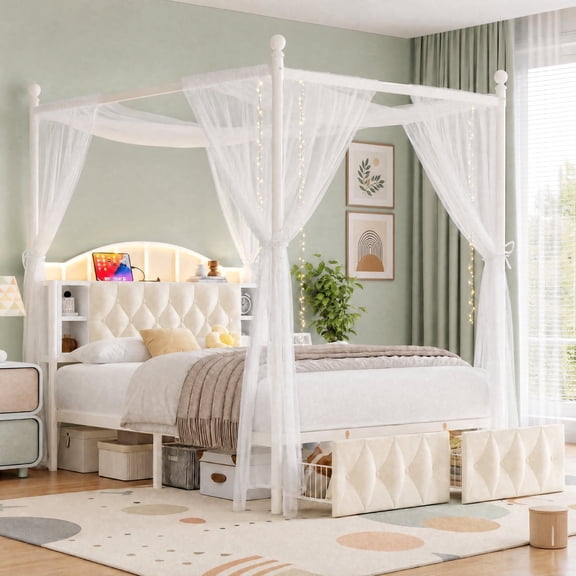
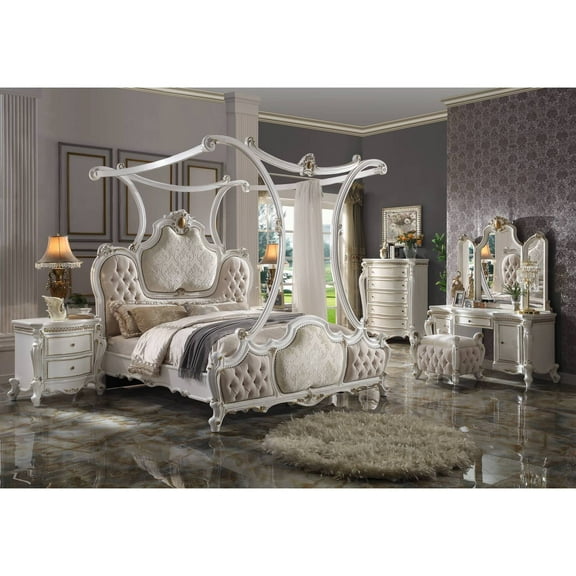
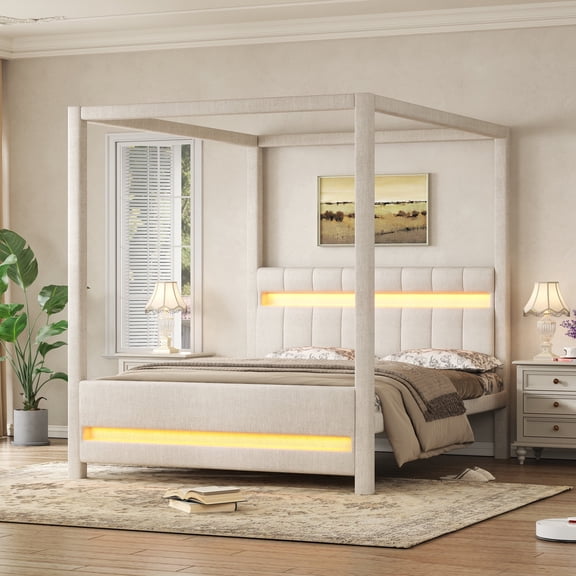
An upholstered design adds another layer of softness around the bed frame. You can use that look when you want the canopy silhouette with a more cushioned, tailored finish.
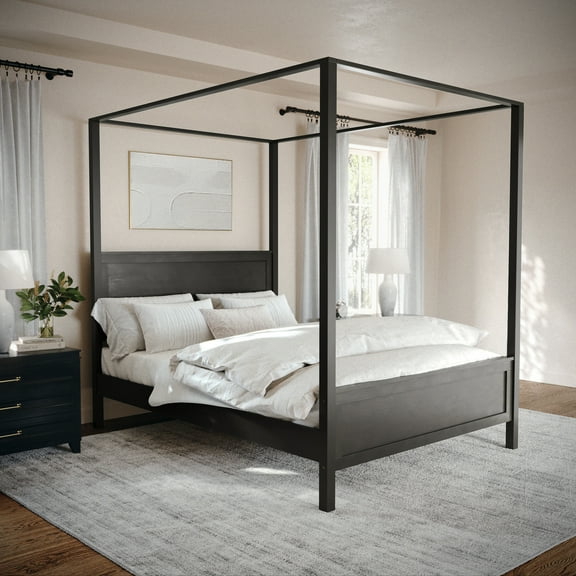
Style also changes how the frame reads in your room. Modern canopy bed designs often use simple geometry, while industrial options lean into dark finishes and mixed-material appeal.
If your bedroom includes vintage accents or classic case goods, traditional details may feel more natural. If your room mixes natural wood, soft neutrals, and casual textures, farmhouse styling can feel easy to coordinate.
What to look for in size, clearance, and curtain styling
You should measure both floor space and vertical space before you choose a frame. Your bed may fit the footprint, but the canopy height still needs breathing room above it.
You should leave enough space around the frame so the tall posts don't crowd nightstands, dressers, or walking paths. You can create a cleaner layout when the frame has visual space on every side.
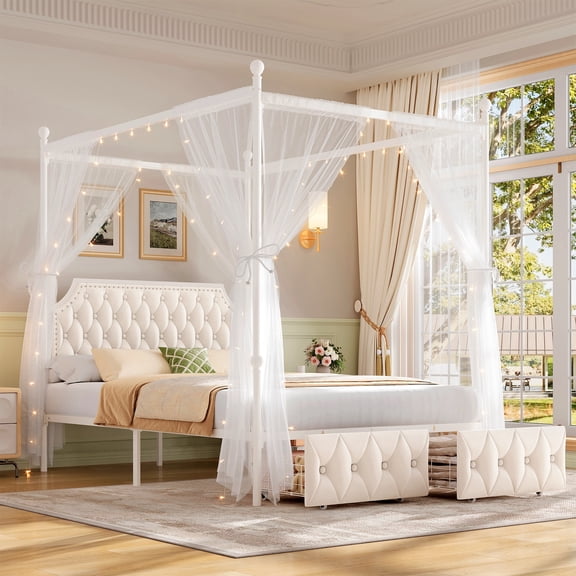
If you want to add drapes, you should check how the top rails are shaped and connected. You can hang light panels more easily when the rails allow simple looping or tie-top styling.
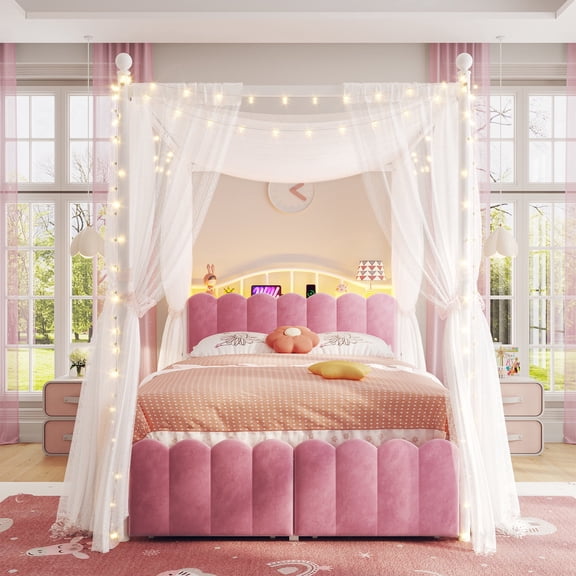
Your curtain choice should stay light enough to suit the frame design and room scale. You can keep the look airy with sheer panels, or you can use corner accents for a softer layered effect.
For guest rooms, you may want a frame that feels decorative without becoming hard to place. For a main bedroom, you may prefer a larger silhouette that highlights ceiling height and anchors the room.
If you're planning around existing furniture, you should compare finish and style with your dresser or nightstands. You can create a more pulled-together room when the bed frame echoes those details.
Canopy beds for everyday bedroom planning
You can use these buying points to narrow your options with more confidence. When you match size, material, style, and frame type carefully, your canopy bed supports both your layout and your finished bedroom look.
Your choice feels easier when you know how height, assembly, and foundation needs affect the room. You can land on a frame that fits your ceiling, your mattress setup, and your design vision.