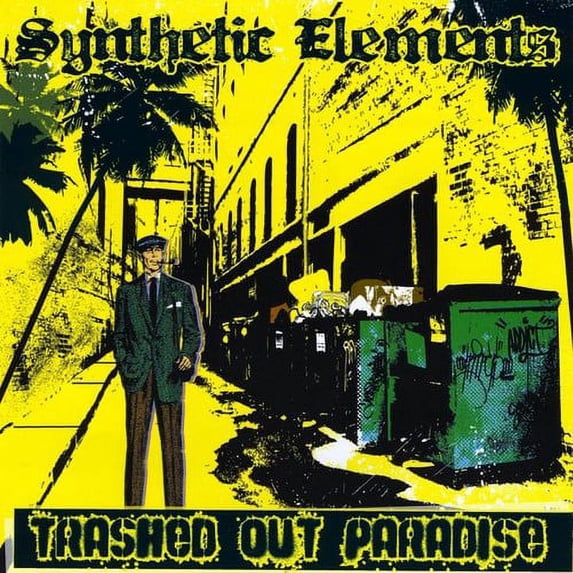
There's definitely something to be said about a band that's both self-sustaining and has a sense of dogged perseverance. In fact, there's a whole story to tell about one of the few that meet the aforementioned traits, Denver-based Synthetic Elements. And although the punk-based fivesome, which played it's first show in April 2001, has deftly maintained it's strident do-it-yourself mentality and attitude, it's fourth album, Trashed Out Paradise, is finally finding the band getting just a little help from it's friends. Originally hailing from the small farming and factory town of Ft. Morgan, Colo., the members of Synthetic Elements didn't have much choice in their band's upbringing. With an immediate music scene that was dominated by two styles-country or hip-hop-the only method of survival for the band was to take things on their own terms. That meant spending it's formidable years figuring everything out, from recordings to tours to self-promotion and songwriting. Though they were just an hour outside of Denver, life out in the plains was decidedly remote from the big city. Todd and Kyle, amateur competitive skaters, started the band as a reason to do something during the snowy wintry months. Skateboards were traded for guitars once the pair heard ska-punk acts like Mustard Plug, Goldfinger and Less Than Jake. They were quickly hooked and immediately put their future band plans into action. quot;The first two years, we were really young,quot; recalls Mike. quot;We were 16 or 17 when it started. After a short while, we went on the road for two-and-a-half years straight, living in the van in Wal-Mart parking lots.quot; Doing it all indie was the only way Synthetic Elements could make their dreams of a full-time band come to fruition. But because of the band's heavy road presence, the act had a difficult time making a name and generating a following in it's own vicinity. quot;We would have bigger shows in Indiana, New Orleans or like, Alabama,quot; Mike says. quot;We could pack the house in other cities, but we couldn't bring more than 50 people in Denver.quot; With the release of the band's full-length, Standing Still, came local radio support and more respect in the Denver scene. Consequently, Synthetic Elements opted to shift it's focus in Denver, eventually becoming one of the punk-ska frontrunners in the city. But the popularity of Standing Still posed a problem for a band that had so quickly progressed musically than what the full-length had represented. In 2008, they decided to record and release another album, their fourth, to demonstrate the band's musical growth. And this time, things were done a little differently, as a conscientious shift was made to relinquish internal control of their efforts, and instead whittle away at their strident self-sufficient battle plan. For starters, though the members of Synthetic Elements owned and operated their own recording studio, they opted to put the recording process into more seasoned hands by selecting the well-known punk rock record haven, The Blasting Room in Ft. Collins, Colo., upon the advice of their friend, Nate Maxwell of Flogging Molly. quot;Nate suggested The Blasting Room, 'You guys are lucky enough to have the best person for your style in your backyards,'quot; says Mike of the realization to work at another studio. quot;It's 45 minutes from our house. It's so legendary in the punk rock music recording scene.quot; Synthetic Elements self-produced their latest creation, Trashed Out Paradise with a little help and advice from