

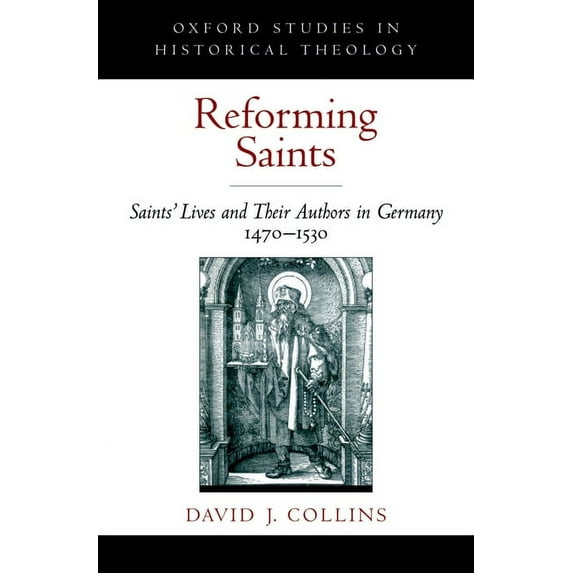
Hero image 0 of Reforming Saints: Saints' Lives and Their Authors in Germany, 1470-1530 (Hardcover) by David J Collins, 0 of 2
Reforming Saints: Saints' Lives and Their Authors in Germany, 1470-1530 (Hardcover) by David J Collins
(No ratings yet)
Key item features
- ISBN: 9780195329537
- Condition: New
- Hard cover
- Language: English
- Pages: 246
- Sewn binding. Cloth over boards. With dust jacket. 246 p. Contains: Maps, Figures. Oxford Studies in Historical Theology.
- In Reforming Saints, David J. Collins explains how and why Renaissance humanists composed Latin hagiography in Germany in the decades leading up to the Reformation. Contrary to the traditional wisdom, Collins's research uncovers a resurgence in the composition of saints' lives in the half century leading up to 1520. German humanists, he finds, were among the most active authors and editors of these texts. Focusing on forty Latin depictions of German saints written between 1470 and 1520, Collins finds patterns both in how these humanists chose their subjects and how they presented their holiness. He argues that the humanist hagiographers took up the writing of saints' lives to investigate Germany's medieval past, to reconstruct and exalt its greatness, and to advocate programs of religious and cultural reform. This literature, says Collins, left a legacy that polemicists and philologists in Catholic Europe would be using for their own purposes by the end of the sixteenth century. These hagiographic writings are thus both reflective and formative of the religious and cultural conflicts that defined this period of European history. To bolster his case, Collins draws not only on the Latin saints' lives, but also on vernacular lives, maps and chorographic documents, personal and professional letters, papal, urban, and municipal archives, painting, sculpture and broadside print, and medieval and early modern histories and chronicles. The result is a fresh, new portrait of the humanism of Renaissance Germany. With his surprising and insightful conclusions, Collins sheds new light on humanism's appropriation in Germany, particularly in its religious aspect. He approaches the humanists' writings on their own terms and recaptures the creative energy the humanists brought to the task of revising the legends of the saints. His scholarly perspective includes the roles of emperors, princes, abbots, city councilmen, artists, librarians, soldiers, peasants, and pilgrims, showing how humanists reached larger and less learned audiences than many other kinds of writing ever could. The cult of the saints and Renaissance humanism are two topics that have attracted considerable scholarly attention. Reforming Saints considers them as seldom before - at their intersection.
Specs
- Book formatHardcover
- Fiction/nonfictionNon-Fiction
- GenreReligion, History
- Pub date20080101
- Pages246
- EditionIllustrated
Current price is USD$71.82
Price when purchased online
Out of stock
How do you want your item?
Out of stock
About this item
Product details
9780195329537. New condition. Hard cover. Language: English. Pages: 246. Sewn binding. Cloth over boards. With dust jacket. 246 p. Contains: Maps, Figures. Oxford Studies in Historical Theology. In Reforming Saints, David J. Collins explains how and why Renaissance humanists composed Latin hagiography in Germany in the decades leading up to the Reformation. Contrary to the traditional wisdom, Collins's research uncovers a resurgence in the composition of saints' lives in the half century leading up to 1520. German humanists, he finds, were among the most active authors and editors of these texts. Focusing on forty Latin depictions of German saints written between 1470 and 1520, Collins finds patterns both in how these humanists chose their subjects and how they presented their holiness. He argues that the humanist hagiographers took up the writing of saints' lives to investigate Germany's medieval past, to reconstruct and exalt its greatness, and to advocate programs of religious and cultural reform. This literature, says Collins, left a legacy that polemicists and philologists in Catholic Europe would be using for their own purposes by the end of the sixteenth century. These hagiographic writings are thus both reflective and formative of the religious and cultural conflicts that defined this period of European history. To bolster his case, Collins draws not only on the Latin saints' lives, but also on vernacular lives, maps and chorographic documents, personal and professional letters, papal, urban, and municipal archives, painting, sculpture and broadside print, and medieval and early modern histories and chronicles. The result is a fresh, new portrait of the humanism of Renaissance Germany. With his surprising and insightful conclusions, Collins sheds new light on humanism's appropriation in Germany, particularly in its religious aspect. He approaches the humanists' writings on their own terms and recaptures the creative energy the humanists brought to the task of revising the legends of the saints. His scholarly perspective includes the roles of emperors, princes, abbots, city councilmen, artists, librarians, soldiers, peasants, and pilgrims, showing how humanists reached larger and less learned audiences than many other kinds of writing ever could. The cult of the saints and Renaissance humanism are two topics that have attracted considerable scholarly attention. Reforming Saints considers them as seldom before - at their intersection.
- ISBN: 9780195329537
- Condition: New
- Hard cover
- Language: English
- Pages: 246
- Sewn binding. Cloth over boards. With dust jacket. 246 p. Contains: Maps, Figures. Oxford Studies in Historical Theology.
- In Reforming Saints, David J. Collins explains how and why Renaissance humanists composed Latin hagiography in Germany in the decades leading up to the Reformation. Contrary to the traditional wisdom, Collins's research uncovers a resurgence in the composition of saints' lives in the half century leading up to 1520. German humanists, he finds, were among the most active authors and editors of these texts. Focusing on forty Latin depictions of German saints written between 1470 and 1520, Collins finds patterns both in how these humanists chose their subjects and how they presented their holiness. He argues that the humanist hagiographers took up the writing of saints' lives to investigate Germany's medieval past, to reconstruct and exalt its greatness, and to advocate programs of religious and cultural reform. This literature, says Collins, left a legacy that polemicists and philologists in Catholic Europe would be using for their own purposes by the end of the sixteenth century. These hagiographic writings are thus both reflective and formative of the religious and cultural conflicts that defined this period of European history. To bolster his case, Collins draws not only on the Latin saints' lives, but also on vernacular lives, maps and chorographic documents, personal and professional letters, papal, urban, and municipal archives, painting, sculpture and broadside print, and medieval and early modern histories and chronicles. The result is a fresh, new portrait of the humanism of Renaissance Germany. With his surprising and insightful conclusions, Collins sheds new light on humanism's appropriation in Germany, particularly in its religious aspect. He approaches the humanists' writings on their own terms and recaptures the creative energy the humanists brought to the task of revising the legends of the saints. His scholarly perspective includes the roles of emperors, princes, abbots, city councilmen, artists, librarians, soldiers, peasants, and pilgrims, showing how humanists reached larger and less learned audiences than many other kinds of writing ever could. The cult of the saints and Renaissance humanism are two topics that have attracted considerable scholarly attention. Reforming Saints considers them as seldom before - at their intersection.
info:
We aim to show you accurate product information. Manufacturers, suppliers and others provide what you see here, and we have not verified it.
Specifications
Book format
Hardcover
Fiction/nonfiction
Non-Fiction
Genre
Religion, History
Pub date
20080101
Warranty
Warranty information
Please be aware that the warranty terms on items offered for sale by third party Marketplace sellers may differ from those displayed in this section (if any). To confirm warranty terms on an item offered for sale by a third party Marketplace seller, please use the 'Contact seller' feature on the third party Marketplace seller's information page and request the item's warranty terms prior to purchase.
Customer ratings & reviews
0 ratings|0 reviews
This item does not have any reviews yet
