

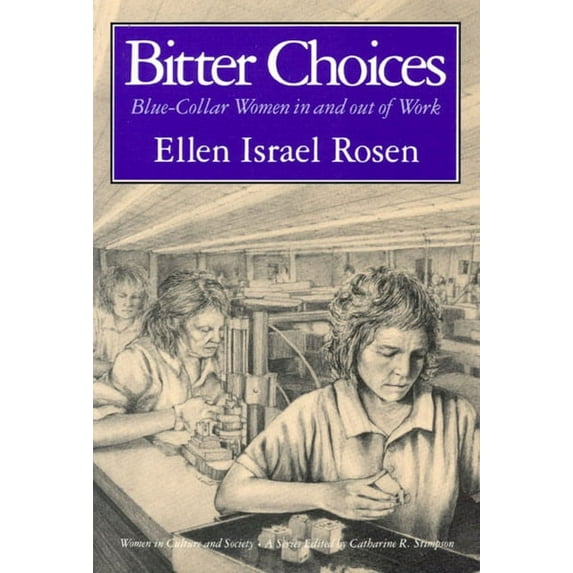
Hero image 0 of Women in Culture and Society: Bitter Choices : Blue-Collar Women in and out of Work (Paperback), 0 of 1
Women in Culture and Society: Bitter Choices : Blue-Collar Women in and out of Work (Paperback)
(No ratings yet)
Key item features
Ellen Israel Rosen presents a compelling portrait of married women who work on New England's assembly lines while they also maintain their homes and marriages. With skill and sympathy, she documents the reasons these women work; their experiences on the job, in the union, and at home; the sources of their job satisfaction; and their management of the "double day." The major issue for this segment of the labor force, Rosen suggests, is not whether to work, but the availability and quality of jobs. Rosen argues that deindustrialization—plant closings and job displacement—confronts blue-collar women factory workers with a "bitter choice" between work at lower and lower wages or no work at all.
Drawing on quantitative and qualitative data from interviews with more than two hundred such women factory workers, Rosen traces the ways in which women who do "unskilled" factory work have gained in self-esteem as well as financial stability from holding paid jobs. Throughout, Rosen explores the relationship between public work experiences and private family life. She analyzes the dynamics of two-paycheck, working class families, clarifies relationships between class and gender, and explores the impact of patriarchy and capitalism on working class women. At the same time Rosen places women's job loss within the broader economic context of global industrial transformations, demonstrating how international capital shifts to cheaper labor in developing countries, as well as technological progress, are changing the shape of the entire American labor force and are beginning to undermine the material and symbolic gains of the American female factory worker, the promise of market equality, and progressive working conditions.
"This book is a significant contribution to our understanding of women's work and family lives, but it is also a valuable look at the consequences of deindustrialization in America for workers, their families, and their communities."—Myra Marx Ferree, American Journal of Sociology
Drawing on quantitative and qualitative data from interviews with more than two hundred such women factory workers, Rosen traces the ways in which women who do "unskilled" factory work have gained in self-esteem as well as financial stability from holding paid jobs. Throughout, Rosen explores the relationship between public work experiences and private family life. She analyzes the dynamics of two-paycheck, working class families, clarifies relationships between class and gender, and explores the impact of patriarchy and capitalism on working class women. At the same time Rosen places women's job loss within the broader economic context of global industrial transformations, demonstrating how international capital shifts to cheaper labor in developing countries, as well as technological progress, are changing the shape of the entire American labor force and are beginning to undermine the material and symbolic gains of the American female factory worker, the promise of market equality, and progressive working conditions.
"This book is a significant contribution to our understanding of women's work and family lives, but it is also a valuable look at the consequences of deindustrialization in America for workers, their families, and their communities."—Myra Marx Ferree, American Journal of Sociology
Specs
- Book formatPaperback
- Fiction/nonfictionNon-Fiction
- GenreBusiness & Investing
- Pub date1990-03-23
- Pages210
- Edition1
Current price is USD$38.26
Price when purchased online
- Free shipping
 Free 30-day returns
How do you want your item?
Columbus, 43215
Arrives between Apr 16 - Apr 22
|
Sold and shipped by newbookdeals
4.557855626326964 stars out of 5, based on 1884 seller reviews(4.6)1884 seller reviews

Free 30-day returns
About this item
Product details
Ellen Israel Rosen presents a compelling portrait of married women who work on New England's assembly lines while they also maintain their homes and marriages. With skill and sympathy, she documents the reasons these women work; their experiences on the job, in the union, and at home; the sources of their job satisfaction; and their management of the "double day." The major issue for this segment of the labor force, Rosen suggests, is not whether to work, but the availability and quality of jobs. Rosen argues that deindustrialization--plant closings and job displacement--confronts blue-collar women factory workers with a "bitter choice" between work at lower and lower wages or no work at all. Drawing on quantitative and qualitative data from interviews with more than two hundred such women factory workers, Rosen traces the ways in which women who do "unskilled" factory work have gained in self-esteem as well as financial stability from holding paid jobs. Throughout, Rosen explores the relationship between public work experiences and private family life. She analyzes the dynamics of two-paycheck, working class families, clarifies relationships between class and gender, and explores the impact of patriarchy and capitalism on working class women. At the same time Rosen places women's job loss within the broader economic context of global industrial transformations, demonstrating how international capital shifts to cheaper labor in developing countries, as well as technological progress, are changing the shape of the entire American labor force and are beginning to undermine the material and symbolic gains of the American female factory worker, the promise of market equality, and progressive working conditions. "This book is a significant contribution to our understanding of women's work and family lives, but it is also a valuable look at the consequences of deindustrialization in America for workers, their families, and their communities."--Myra Marx Ferree, American Journal of Sociology
Ellen Israel Rosen presents a compelling portrait of married women who work on New England's assembly lines while they also maintain their homes and marriages. With skill and sympathy, she documents the reasons these women work; their experiences on the job, in the union, and at home; the sources of their job satisfaction; and their management of the "double day." The major issue for this segment of the labor force, Rosen suggests, is not whether to work, but the availability and quality of jobs. Rosen argues that deindustrialization—plant closings and job displacement—confronts blue-collar women factory workers with a "bitter choice" between work at lower and lower wages or no work at all.
Drawing on quantitative and qualitative data from interviews with more than two hundred such women factory workers, Rosen traces the ways in which women who do "unskilled" factory work have gained in self-esteem as well as financial stability from holding paid jobs. Throughout, Rosen explores the relationship between public work experiences and private family life. She analyzes the dynamics of two-paycheck, working class families, clarifies relationships between class and gender, and explores the impact of patriarchy and capitalism on working class women. At the same time Rosen places women's job loss within the broader economic context of global industrial transformations, demonstrating how international capital shifts to cheaper labor in developing countries, as well as technological progress, are changing the shape of the entire American labor force and are beginning to undermine the material and symbolic gains of the American female factory worker, the promise of market equality, and progressive working conditions.
"This book is a significant contribution to our understanding of women's work and family lives, but it is also a valuable look at the consequences of deindustrialization in America for workers, their families, and their communities."—Myra Marx Ferree, American Journal of Sociology
Drawing on quantitative and qualitative data from interviews with more than two hundred such women factory workers, Rosen traces the ways in which women who do "unskilled" factory work have gained in self-esteem as well as financial stability from holding paid jobs. Throughout, Rosen explores the relationship between public work experiences and private family life. She analyzes the dynamics of two-paycheck, working class families, clarifies relationships between class and gender, and explores the impact of patriarchy and capitalism on working class women. At the same time Rosen places women's job loss within the broader economic context of global industrial transformations, demonstrating how international capital shifts to cheaper labor in developing countries, as well as technological progress, are changing the shape of the entire American labor force and are beginning to undermine the material and symbolic gains of the American female factory worker, the promise of market equality, and progressive working conditions.
"This book is a significant contribution to our understanding of women's work and family lives, but it is also a valuable look at the consequences of deindustrialization in America for workers, their families, and their communities."—Myra Marx Ferree, American Journal of Sociology
info:
We aim to show you accurate product information. Manufacturers, suppliers and others provide what you see here, and we have not verified it.
Specifications
Book format
Paperback
Fiction/nonfiction
Non-Fiction
Genre
Business & Investing
Pub date
1990-03-23
Warranty
Warranty information
Please be aware that the warranty terms on items offered for sale by third party Marketplace sellers may differ from those displayed in this section (if any). To confirm warranty terms on an item offered for sale by a third party Marketplace seller, please use the 'Contact seller' feature on the third party Marketplace seller's information page and request the item's warranty terms prior to purchase.
Warnings
State Chemical Disclosure
None
Customer ratings & reviews
0 ratings|0 reviews
This item does not have any reviews yet
