

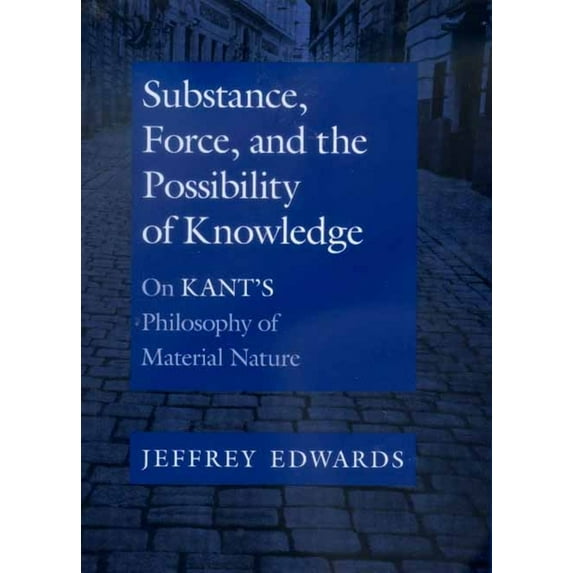
Substance, Force, and the Possibility of Knowledge : On Kant's Philosophy of Material Nature (Edition 1) (Hardcover)
(No ratings yet)
Key item features
A new understanding of Kant’s theory of a priori knowledge and his natural philosophy emerges from Jeffrey Edwards’s mature and penetrating study. In the Third Analogy of Experience, Kant argues for the existence of a dynamical plenum in space. This argument against empty space demonstrates that the dynamical plenum furnishes an a priori necessary condition for our experience and knowledge of an objective world.
Such an a priori existence proof, however, transgresses the limits Kant otherwise places on transcendental arguments in the Critique of Pure Reason because it establishes a material transcendental condition of possible experience. This finding motivates Edwards to examine the broader context of Kant’s views about matter, substance, causal influence, and physical aether in connection with the developmental history of his theory of transcendental idealism. Against the backdrop of early modern metaphysics and contemporaneous physical theory, Edwards explicates the origins of the Third Analogy in Kant’s early work on the metaphysics of nature.
The argument against empty space presented in the Third Analogy reveals a central aspect of Kant’s transcendental theory of experience that Edwards explains lucidly. By clarifying the epistemological standpoint at issue in the Third Analogy, he shows that the fundamental revisions to which Kant subjects his theory of knowledge in the Opus postumum not only originate in his precritical metaphysics of nature but are developments of an argument central to the Critique of Pure Reason itself. Edwards’s work is important to scholars working in the history of philosophy and the history and philosophy of science, as well as to Kant specialists.
Such an a priori existence proof, however, transgresses the limits Kant otherwise places on transcendental arguments in the Critique of Pure Reason because it establishes a material transcendental condition of possible experience. This finding motivates Edwards to examine the broader context of Kant’s views about matter, substance, causal influence, and physical aether in connection with the developmental history of his theory of transcendental idealism. Against the backdrop of early modern metaphysics and contemporaneous physical theory, Edwards explicates the origins of the Third Analogy in Kant’s early work on the metaphysics of nature.
The argument against empty space presented in the Third Analogy reveals a central aspect of Kant’s transcendental theory of experience that Edwards explains lucidly. By clarifying the epistemological standpoint at issue in the Third Analogy, he shows that the fundamental revisions to which Kant subjects his theory of knowledge in the Opus postumum not only originate in his precritical metaphysics of nature but are developments of an argument central to the Critique of Pure Reason itself. Edwards’s work is important to scholars working in the history of philosophy and the history and philosophy of science, as well as to Kant specialists.
Specs
- Book formatHardcover
- Fiction/nonfictionNon-Fiction
- Pub date20000419
- Pages291
- Reading levelScholarly & Professional
- SubgenreHistory & Surveys
Current price is USD$64.00
Price when purchased online
- Free shipping
 Free 90-day returns
How do you want your item?
Try 30 days of Free Shipping with Walmart+! Choose plan at checkout.
Columbus, 43215
Arrives by Tue, Apr 7
Sold and shipped by Walmart.com

Free 90-day returns

This item is gift eligible
More seller options (4)
Starting from $78.52

Get free delivery, shipping and more*
*Restrictions apply Try Walmart+ now
About this item
Product details
A new understanding of Kant's theory of a priori knowledge and his natural philosophy emerges from Jeffrey Edwards's mature and penetrating study. In the Third Analogy of Experience, Kant argues for the existence of a dynamical plenum in space. This argument against empty space demonstrates that the dynamical plenum furnishes an a priori necessary condition for our experience and knowledge of an objective world.
Such an a priori existence proof, however, transgresses the limits Kant otherwise places on transcendental arguments in the Critique of Pure Reason because it establishes a material transcendental condition of possible experience. This finding motivates Edwards to examine the broader context of Kant's views about matter, substance, causal influence, and physical aether in connection with the developmental history of his theory of transcendental idealism. Against the backdrop of early modern metaphysics and contemporaneous physical theory, Edwards explicates the origins of the Third Analogy in Kant's early work on the metaphysics of nature.
The argument against empty space presented in the Third Analogy reveals a central aspect of Kant's transcendental theory of experience that Edwards explains lucidly. By clarifying the epistemological standpoint at issue in the Third Analogy, he shows that the fundamental revisions to which Kant subjects his theory of knowledge in the Opus postumum not only originate in his precritical metaphysics of nature but are developments of an argument central to the Critique of Pure Reason itself. Edwards's work is important to scholars working in the history of philosophy and the history and philosophy of science, as well as to Kant specialists.
Such an a priori existence proof, however, transgresses the limits Kant otherwise places on transcendental arguments in the Critique of Pure Reason because it establishes a material transcendental condition of possible experience. This finding motivates Edwards to examine the broader context of Kant's views about matter, substance, causal influence, and physical aether in connection with the developmental history of his theory of transcendental idealism. Against the backdrop of early modern metaphysics and contemporaneous physical theory, Edwards explicates the origins of the Third Analogy in Kant's early work on the metaphysics of nature.
The argument against empty space presented in the Third Analogy reveals a central aspect of Kant's transcendental theory of experience that Edwards explains lucidly. By clarifying the epistemological standpoint at issue in the Third Analogy, he shows that the fundamental revisions to which Kant subjects his theory of knowledge in the Opus postumum not only originate in his precritical metaphysics of nature but are developments of an argument central to the Critique of Pure Reason itself. Edwards's work is important to scholars working in the history of philosophy and the history and philosophy of science, as well as to Kant specialists.
A new understanding of Kant’s theory of a priori knowledge and his natural philosophy emerges from Jeffrey Edwards’s mature and penetrating study. In the Third Analogy of Experience, Kant argues for the existence of a dynamical plenum in space. This argument against empty space demonstrates that the dynamical plenum furnishes an a priori necessary condition for our experience and knowledge of an objective world.
Such an a priori existence proof, however, transgresses the limits Kant otherwise places on transcendental arguments in the Critique of Pure Reason because it establishes a material transcendental condition of possible experience. This finding motivates Edwards to examine the broader context of Kant’s views about matter, substance, causal influence, and physical aether in connection with the developmental history of his theory of transcendental idealism. Against the backdrop of early modern metaphysics and contemporaneous physical theory, Edwards explicates the origins of the Third Analogy in Kant’s early work on the metaphysics of nature.
The argument against empty space presented in the Third Analogy reveals a central aspect of Kant’s transcendental theory of experience that Edwards explains lucidly. By clarifying the epistemological standpoint at issue in the Third Analogy, he shows that the fundamental revisions to which Kant subjects his theory of knowledge in the Opus postumum not only originate in his precritical metaphysics of nature but are developments of an argument central to the Critique of Pure Reason itself. Edwards’s work is important to scholars working in the history of philosophy and the history and philosophy of science, as well as to Kant specialists.
Such an a priori existence proof, however, transgresses the limits Kant otherwise places on transcendental arguments in the Critique of Pure Reason because it establishes a material transcendental condition of possible experience. This finding motivates Edwards to examine the broader context of Kant’s views about matter, substance, causal influence, and physical aether in connection with the developmental history of his theory of transcendental idealism. Against the backdrop of early modern metaphysics and contemporaneous physical theory, Edwards explicates the origins of the Third Analogy in Kant’s early work on the metaphysics of nature.
The argument against empty space presented in the Third Analogy reveals a central aspect of Kant’s transcendental theory of experience that Edwards explains lucidly. By clarifying the epistemological standpoint at issue in the Third Analogy, he shows that the fundamental revisions to which Kant subjects his theory of knowledge in the Opus postumum not only originate in his precritical metaphysics of nature but are developments of an argument central to the Critique of Pure Reason itself. Edwards’s work is important to scholars working in the history of philosophy and the history and philosophy of science, as well as to Kant specialists.
info:
We aim to show you accurate product information. Manufacturers, suppliers and others provide what you see here, and we have not verified it.
Specifications
Book format
Hardcover
Fiction/nonfiction
Non-Fiction
Genre
Political & Social Sciences
Pub date
20000419
Warranty
Warranty information
Please be aware that the warranty terms on items offered for sale by third party Marketplace sellers may differ from those displayed in this section (if any). To confirm warranty terms on an item offered for sale by a third party Marketplace seller, please use the 'Contact seller' feature on the third party Marketplace seller's information page and request the item's warranty terms prior to purchase.
Similar items you might like
Based on what customers bought
Agency in Mental Disorder: Philosophical Dimensions, (Hardcover) $55.06 Was $64.40
 $5506current price $55.06, Was $64.40$64.40
Agency in Mental Disorder: Philosophical Dimensions, (Hardcover)
The Presence of Nature: A Study in Phenomenology and Environmental Philosophy, (Hardcover) $56.14
 $5614current price $56.14
The Presence of Nature: A Study in Phenomenology and Environmental Philosophy, (Hardcover)
Lotze's System of Philosophy: Logic - Of Thought, of Investigation, and of Knowledge, (Hardcover) $52.58
 $5258current price $52.58
Lotze's System of Philosophy: Logic - Of Thought, of Investigation, and of Knowledge, (Hardcover)
The Nature of Perception, (Hardcover) $69.15
 $6915current price $69.15
The Nature of Perception, (Hardcover)
Foundations of Black Epistemology: Knowledge Discourse in Africana Philosophy, (Hardcover) $58.90
 $5890current price $58.90
Foundations of Black Epistemology: Knowledge Discourse in Africana Philosophy, (Hardcover)
Freedom and the End of Reason: On the Moral Foundation of Kant's Critical Philosophy, (Hardcover) $85.39
 $8539current price $85.39
Freedom and the End of Reason: On the Moral Foundation of Kant's Critical Philosophy, (Hardcover)
Preludes to Pragmatism: Toward a Reconstruction of Philosophy, (Hardcover) $65.71
 $6571current price $65.71
Preludes to Pragmatism: Toward a Reconstruction of Philosophy, (Hardcover)
Nietzsche's Philosophy of Life Affirmation: Experimenting with Art and Science to Transfigure Humankind, (Hardcover) $172.03
 $17203current price $172.03
Nietzsche's Philosophy of Life Affirmation: Experimenting with Art and Science to Transfigure Humankind, (Hardcover)
The Critical Philosophy of Immanuel Kant (Hardcover) $49.72
 $4972current price $49.72
The Critical Philosophy of Immanuel Kant (Hardcover)
The Age of Epistemology: Aristotelian Logic in Early Modern Philosophy 1500-1700, (Hardcover) $114.51
 $11451current price $114.51
The Age of Epistemology: Aristotelian Logic in Early Modern Philosophy 1500-1700, (Hardcover)
Hackett Classics: Hume: Moral Philosophy (Hardcover) $54.00
 $5400current price $54.00
Hackett Classics: Hume: Moral Philosophy (Hardcover)
Knowledge, Reason, and Taste: Kant's Response to Hume, (Hardcover) $47.83
 $4783current price $47.83
Knowledge, Reason, and Taste: Kant's Response to Hume, (Hardcover)
Shaping the Normative Landscape, (Hardcover) $88.50
 $8850current price $88.50
Shaping the Normative Landscape, (Hardcover)
Political Philosophy and Public Purpose The Rationalism of Georg Lukács, (Hardcover) $56.14
 $5614current price $56.14
Political Philosophy and Public Purpose The Rationalism of Georg Lukács, (Hardcover)
Library of Ethics and Applied Philosophy New Perspectives on Paternalism and Health Care, Book 35, (Hardcover) $54.99
 $5499current price $54.99
Library of Ethics and Applied Philosophy New Perspectives on Paternalism and Health Care, Book 35, (Hardcover)
D'Holbach's Moral Philosophy; Its Background and Development. --, (Hardcover) $31.95
 $3195current price $31.95
D'Holbach's Moral Philosophy; Its Background and Development. --, (Hardcover)
Kantian Subjects: Critical Philosophy and Late Modernity, (Hardcover) $65.41
 $6541current price $65.41
Kantian Subjects: Critical Philosophy and Late Modernity, (Hardcover)
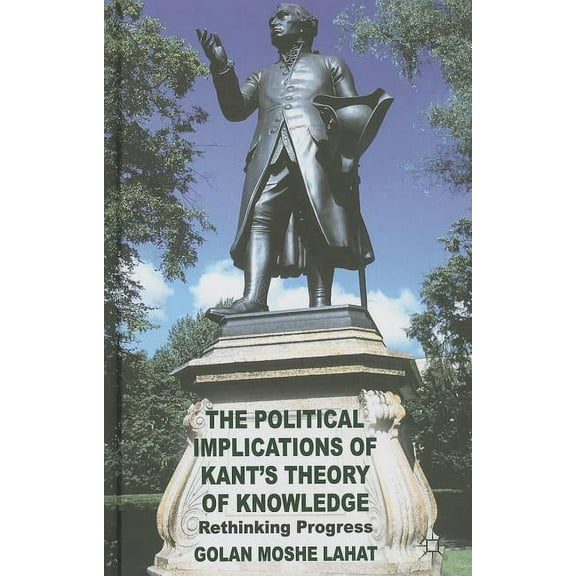
The Political Implications of Kant's Theory of Knowledge: Rethinking Progress, (Hardcover) $56.14
 $5614current price $56.14
The Political Implications of Kant's Theory of Knowledge: Rethinking Progress, (Hardcover)
Zizek and the Rhetorical Unconscious: Global Politics, Philosophy, and Subjectivity, (Hardcover) $57.27
 $5727current price $57.27
Zizek and the Rhetorical Unconscious: Global Politics, Philosophy, and Subjectivity, (Hardcover)
Logic and the Limits of Philosophy in Kant and Hegel, (Hardcover) $56.14
 $5614current price $56.14
Logic and the Limits of Philosophy in Kant and Hegel, (Hardcover)
Customer ratings & reviews
0 ratings|0 reviews
This item does not have any reviews yet

Related pages
- Gerhard Ebeling
- Post-Structuralism Philosophy Movement Books
- Best Sellers In 21st Century Literary Criticism
- Structuralism Philosophy Movement Books
- Constructivism Piaget
- Skandia Professor Of Management Studies Barbara Czarniawska
- Practical Idealism
- Utilitarianism Philosophy Movement Books
- Limite Limite
- Idealism Philosophy Movement Books
- Humanism Philosophy Movement Books
- Existentialism Philosophy Movement Books