


Hero image 0 of Time's Fool: A Tale in Verse, (Paperback), 0 of 1
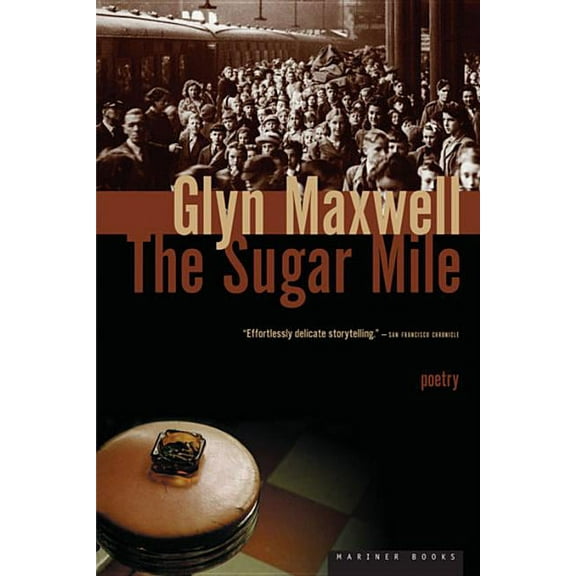
Time's Fool: A Tale in Verse, (Paperback)
(No ratings yet)
Key item features
Publishers Weekly,When the train stopped I started and woke up./ Was nowhere, as before, no change in that." As the Flying Dutchman suffered aboard his ghost ship, so Maxwell's Fool, Edmund Lea, suffers alone aboard his train, waiting for redemption from a sin he does not even at first recognize as such. Every seven years on Christmas Eve, beginning in 1977, Edmund is allowed to disembark from his train and spend one evening in Hartisle, his hometown. The inhabitants of that world believe he has run away of his own secret volition�a remarkable possibility, but not nearly as remarkable as the impossible and timeless world that he inhabits, stuck forever at age 17. Following in the wake of such recent verse-novels as Les Murray's phenomenal Fredy Neptune and W.S. Merwin's plodding Folding Cliffs, British ex-pat Maxwell, who got a lot of critical attention for his U.S. debut The Breakage last year, here checks in with his addition to this burgeoning genre. Apart from its Wagnerian netherworld, Time's Fool also bears a considerable Dantean influence: Edmund's journey counts among its ingredients an instructive guide (a grumpy poet, though, rather than a helpful philosopher); a lady love in the form of Clare Kendall, an old classmate; fellow travelers in the form of two long-suffering orphans, Pele and Wasgood; terror in the form of threatened eternal damnation and ferocious weather; and, ultimately, deliverance in female form�not to mention that the lines are in strict terza rima. Under the form's strictures, the narration can be labored and heavy, but Maxwell does find a synergy of form and content, with the best parts being descriptive rather than expository, as in one moment of Edmund's looking out the train window: "I saw beyond/ [my] shoulder the dark wind and the wild trees/ waving to the sky, and a grey wound// of sky was where the darkness was least,/ an opening or a closing where a hole/ was yellow almost with a feel of west..." The formal ambition of the project and Maxwell's relative success in carrying it off should wow more technically inclined readers and those looking for Fredy-like adolescent pleasures, minus the larger-scale import. More subtly ambitious, Maxwell's Boys selects from his first three U.K.-only releases and covers a wide and varied prosodic spectrum in its short time span. Most poems possess a slow, quiet fire, generally not announcing their emotion as much as offering it up in a waxed envelope. The pieces betray only the faintest well-chosen hints of what they are about, besides the quotidian�a man kills a wasp, a man falls in and out of love, a man escapes from an unnamed pursuer�but from those hints it is easy to extrapolate a world. Maddeningly little happens in these poems, and at its best, this quality bespeaks Blake's "world in a grain of sand"�but at its worst, it's hard to hear the poems above the noise of a smug, schoolboyish pride in the success of their formal mechanics. Nevertheless, the collection's steadfast belief in the transcendence of the quotidian is as impossible to discount when reflected in the melancholy of entreaties to "sit, forget/ the city-licking sound/ of water moving slowly through the Thames/ like years in thought." The co-release of these two books is clearly a push for Muldoon (whose book-length Madoc: A Mystery was a career-builder) or Murray-like recognition, but, unfortunately, Senator, Edmund is no Fredy, and the novel's audience will remain confined to the poetically inclined. (Oct.) (c) Copyright PWxyz, LLC. All rights reserved,Publishers Weekly,Publishers Weekly,When the train stopped I started and woke up./ Was nowhere, as before, no change in that." As the Flying Dutchman suffered aboard his ghost ship, so Maxwell's Fool, Edmund Lea, suffers alone aboard his train, waiting for redemption from a sin he does not even at first recognize as such. Every seven years on Christmas Eve, beginning in 1977, Edmund is allowed to disembark from his train and spend one evening in Hartisle, his hometown. The inhabitants of that world believe he has run away of his own secret volition�a remarkable possibility, but not nearly as remarkable as the impossible and timeless world that he inhabits, stuck forever at age 17. Following in the wake of such recent verse-novels as Les Murray's phenomenal Fredy Neptune and W.S. Merwin's plodding Folding Cliffs, British ex-pat Maxwell, who got a lot of critical attention for his U.S. debut The Breakage last year, here checks in with his addition to this burgeoning genre. Apart from its Wagnerian netherworld, Time's Fool also bears a considerable Dantean influence: Edmund's journey counts among its ingredients an instructive guide (a grumpy poet, though, rather than a helpful philosopher); a lady love in the form of Clare Kendall, an old classmate; fellow travelers in the form of two long-suffering orphans, Pele and Wasgood; terror in the form of threatened eternal damnation and ferocious weather; and, ultimately, deliverance in female form�not to mention that the lines are in strict terza rima. Under the form's strictures, the narration can be labored and heavy, but Maxwell does find a synergy of form and content, with the best parts being descriptive rather than expository, as in one moment of Edmund's looking out the train window: "I saw beyond/ [my] shoulder the dark wind and the wild trees/ waving to the sky, and a grey wound// of sky was where the darkness was least,/ an opening or a closing where a hole/ was yellow almost with a feel of west..." The formal ambition of the project and Maxwell's relative success in carrying it off should wow more technically inclined readers and those looking for Fredy-like adolescent pleasures, minus the larger-scale import. More subtly ambitious, Maxwell's Boys selects from his first three U.K.-only releases and covers a wide and varied prosodic spectrum in its short time span. Most poems possess a slow, quiet fire, generally not announcing their emotion as much as offering it up in a waxed envelope. The pieces betray only the faintest well-chosen hints of what they are about, besides the quotidian�a man kills a wasp, a man falls in and out of love, a man escapes from an unnamed pursuer�but from those hints it is easy to extrapolate a world. Maddeningly little happens in these poems, and at its best, this quality bespeaks Blake's "world in a grain of sand"�but at its worst, it's hard to hear the poems above the noise of a smug, schoolboyish pride in the success of their formal mechanics. Nevertheless, the collection's steadfast belief in the transcendence of the quotidian is as impossible to discount when reflected in the melancholy of entreaties to "sit, forget/ the city-licking sound/ of water moving slowly through the Thames/ like years in thought." The co-release of these two books is clearly a push for Muldoon (whose book-length Madoc: A Mystery was a career-builder) or Murray-like recognition, but, unfortunately, Senator, Edmund is no Fredy, and the novel's audience will remain confined to the poetically inclined. (Oct.) (c) Copyright PWxyz, LLC. All rights reserved
Specs
- Book formatPaperback
- Fiction/nonfictionNon-Fiction
- GenreLiterature & Fiction
- Pub date2002-09-24
- Pages416
- SubgenreEuropean
Current price is USD$14.24
Price when purchased online
 Free 90-day returns
How do you want your item?
Try 30 days of Free Shipping with Walmart+! Choose plan at checkout.
Columbus, 43215
Arrives by Thu, Apr 9
Sold and shipped by Walmart.com

Free 90-day returns

This item is gift eligible
More seller options (4)
Starting from $20.00

Get free delivery, shipping and more*
*Restrictions apply Try Walmart+ now
About this item
Product details
Time's Fool tells the tale of Edmund Lea, a young man condemned to eternity alone until he determines how to lift the curse upon him. Edmund perpetually rides a phantom train -- except on Christmas Eve every seven years, when he is allowed to revisit his English hometown. He tries to break the spell by way of love, repentance, and death -- all in vain. Time passes, from 1970 to 2019, but Edmund remains seventeen, unable to age but watching the world grow older. Infused with a dark humor and an almost unbearable nostalgia, Time's Fool is a brilliant achievement, "classic yet hip, stylized yet inventive" (Scotsman).
Publishers Weekly,When the train stopped I started and woke up./ Was nowhere, as before, no change in that." As the Flying Dutchman suffered aboard his ghost ship, so Maxwell's Fool, Edmund Lea, suffers alone aboard his train, waiting for redemption from a sin he does not even at first recognize as such. Every seven years on Christmas Eve, beginning in 1977, Edmund is allowed to disembark from his train and spend one evening in Hartisle, his hometown. The inhabitants of that world believe he has run away of his own secret volition�a remarkable possibility, but not nearly as remarkable as the impossible and timeless world that he inhabits, stuck forever at age 17. Following in the wake of such recent verse-novels as Les Murray's phenomenal Fredy Neptune and W.S. Merwin's plodding Folding Cliffs, British ex-pat Maxwell, who got a lot of critical attention for his U.S. debut The Breakage last year, here checks in with his addition to this burgeoning genre. Apart from its Wagnerian netherworld, Time's Fool also bears a considerable Dantean influence: Edmund's journey counts among its ingredients an instructive guide (a grumpy poet, though, rather than a helpful philosopher); a lady love in the form of Clare Kendall, an old classmate; fellow travelers in the form of two long-suffering orphans, Pele and Wasgood; terror in the form of threatened eternal damnation and ferocious weather; and, ultimately, deliverance in female form�not to mention that the lines are in strict terza rima. Under the form's strictures, the narration can be labored and heavy, but Maxwell does find a synergy of form and content, with the best parts being descriptive rather than expository, as in one moment of Edmund's looking out the train window: "I saw beyond/ [my] shoulder the dark wind and the wild trees/ waving to the sky, and a grey wound// of sky was where the darkness was least,/ an opening or a closing where a hole/ was yellow almost with a feel of west..." The formal ambition of the project and Maxwell's relative success in carrying it off should wow more technically inclined readers and those looking for Fredy-like adolescent pleasures, minus the larger-scale import. More subtly ambitious, Maxwell's Boys selects from his first three U.K.-only releases and covers a wide and varied prosodic spectrum in its short time span. Most poems possess a slow, quiet fire, generally not announcing their emotion as much as offering it up in a waxed envelope. The pieces betray only the faintest well-chosen hints of what they are about, besides the quotidian�a man kills a wasp, a man falls in and out of love, a man escapes from an unnamed pursuer�but from those hints it is easy to extrapolate a world. Maddeningly little happens in these poems, and at its best, this quality bespeaks Blake's "world in a grain of sand"�but at its worst, it's hard to hear the poems above the noise of a smug, schoolboyish pride in the success of their formal mechanics. Nevertheless, the collection's steadfast belief in the transcendence of the quotidian is as impossible to discount when reflected in the melancholy of entreaties to "sit, forget/ the city-licking sound/ of water moving slowly through the Thames/ like years in thought." The co-release of these two books is clearly a push for Muldoon (whose book-length Madoc: A Mystery was a career-builder) or Murray-like recognition, but, unfortunately, Senator, Edmund is no Fredy, and the novel's audience will remain confined to the poetically inclined. (Oct.) (c) Copyright PWxyz, LLC. All rights reserved,Publishers Weekly,Publishers Weekly,When the train stopped I started and woke up./ Was nowhere, as before, no change in that." As the Flying Dutchman suffered aboard his ghost ship, so Maxwell's Fool, Edmund Lea, suffers alone aboard his train, waiting for redemption from a sin he does not even at first recognize as such. Every seven years on Christmas Eve, beginning in 1977, Edmund is allowed to disembark from his train and spend one evening in Hartisle, his hometown. The inhabitants of that world believe he has run away of his own secret volition�a remarkable possibility, but not nearly as remarkable as the impossible and timeless world that he inhabits, stuck forever at age 17. Following in the wake of such recent verse-novels as Les Murray's phenomenal Fredy Neptune and W.S. Merwin's plodding Folding Cliffs, British ex-pat Maxwell, who got a lot of critical attention for his U.S. debut The Breakage last year, here checks in with his addition to this burgeoning genre. Apart from its Wagnerian netherworld, Time's Fool also bears a considerable Dantean influence: Edmund's journey counts among its ingredients an instructive guide (a grumpy poet, though, rather than a helpful philosopher); a lady love in the form of Clare Kendall, an old classmate; fellow travelers in the form of two long-suffering orphans, Pele and Wasgood; terror in the form of threatened eternal damnation and ferocious weather; and, ultimately, deliverance in female form�not to mention that the lines are in strict terza rima. Under the form's strictures, the narration can be labored and heavy, but Maxwell does find a synergy of form and content, with the best parts being descriptive rather than expository, as in one moment of Edmund's looking out the train window: "I saw beyond/ [my] shoulder the dark wind and the wild trees/ waving to the sky, and a grey wound// of sky was where the darkness was least,/ an opening or a closing where a hole/ was yellow almost with a feel of west..." The formal ambition of the project and Maxwell's relative success in carrying it off should wow more technically inclined readers and those looking for Fredy-like adolescent pleasures, minus the larger-scale import. More subtly ambitious, Maxwell's Boys selects from his first three U.K.-only releases and covers a wide and varied prosodic spectrum in its short time span. Most poems possess a slow, quiet fire, generally not announcing their emotion as much as offering it up in a waxed envelope. The pieces betray only the faintest well-chosen hints of what they are about, besides the quotidian�a man kills a wasp, a man falls in and out of love, a man escapes from an unnamed pursuer�but from those hints it is easy to extrapolate a world. Maddeningly little happens in these poems, and at its best, this quality bespeaks Blake's "world in a grain of sand"�but at its worst, it's hard to hear the poems above the noise of a smug, schoolboyish pride in the success of their formal mechanics. Nevertheless, the collection's steadfast belief in the transcendence of the quotidian is as impossible to discount when reflected in the melancholy of entreaties to "sit, forget/ the city-licking sound/ of water moving slowly through the Thames/ like years in thought." The co-release of these two books is clearly a push for Muldoon (whose book-length Madoc: A Mystery was a career-builder) or Murray-like recognition, but, unfortunately, Senator, Edmund is no Fredy, and the novel's audience will remain confined to the poetically inclined. (Oct.) (c) Copyright PWxyz, LLC. All rights reserved
info:
We aim to show you accurate product information. Manufacturers, suppliers and others provide what you see here, and we have not verified it.
Specifications
Book format
Paperback
Fiction/nonfiction
Non-Fiction
Genre
Literature & Fiction
Pub date
2002-09-24
Warranty
Warranty information
Please be aware that the warranty terms on items offered for sale by third party Marketplace sellers may differ from those displayed in this section (if any). To confirm warranty terms on an item offered for sale by a third party Marketplace seller, please use the 'Contact seller' feature on the third party Marketplace seller's information page and request the item's warranty terms prior to purchase.
Similar items you might like
Based on what customers bought
100+ bought since yesterday Project Hail Mary: A Novel (Paperback) $13.98
100+ bought since yesterday $1398current price $13.98
Project Hail Mary: A Novel (Paperback)
764.6 out of 5 Stars. 76 reviews50+ bought since yesterday The Housemaid (Paperback) $14.24
50+ bought since yesterday 2 optionsAvailable in additional 2 options$1424current price $14.24
The Housemaid (Paperback)
5394.7 out of 5 Stars. 539 reviews50+ bought since yesterday The Tenant (Paperback) $7.78
50+ bought since yesterday $778current price $7.78
The Tenant (Paperback)
734.6 out of 5 Stars. 73 reviewsBest seller Dungeon Crawler Carl (Paperback) $14.98
Best seller $1498current price $14.98
Dungeon Crawler Carl (Paperback)
155 out of 5 Stars. 15 reviewsBest seller The Coworker (Paperback) $9.46
Best seller $946current price $9.46
The Coworker (Paperback)
3244.8 out of 5 Stars. 324 reviewsBest seller The Housemaid Is Watching (Paperback) $7.78 Was $9.87
Best seller $778current price $7.78, Was $9.87$9.87
The Housemaid Is Watching (Paperback)
1634.7 out of 5 Stars. 163 reviewsBest seller One by One (Paperback) $8.71 Was $10.04
Best seller $871current price $8.71, Was $10.04$10.04
One by One (Paperback)
1534.7 out of 5 Stars. 153 reviewsA New Miscellany in Verse and Prose. (Paperback) $18.75
 $1875current price $18.75
A New Miscellany in Verse and Prose. (Paperback)
How The Hell Are You, (Paperback) $14.66
 $1466current price $14.66
How The Hell Are You, (Paperback)
Mona Oakheart In Deep and Far Out, Book 2, (Paperback) $14.99
 $1499current price $14.99
Mona Oakheart In Deep and Far Out, Book 2, (Paperback)
Little Becomes A Lot, (Paperback) $12.48
 $1248current price $12.48
Little Becomes A Lot, (Paperback)
Geet Tumhare Liye, (Paperback) $14.06
 $1406current price $14.06
Geet Tumhare Liye, (Paperback)
Cadáver exquisito, (Paperback) $14.40
 $1440current price $14.40
Cadáver exquisito, (Paperback)
Does God Have Free Will?, (Paperback) $10.99
 $1099current price $10.99
Does God Have Free Will?, (Paperback)
Our Numbered Days T(w)o Bits, Book 1, (Paperback) $13.30
 $1330current price $13.30
Our Numbered Days T(w)o Bits, Book 1, (Paperback)
Good Spirits: A Novel (Paperback) $11.40 Was $12.99
 $1140current price $11.40, Was $12.99$12.99
Good Spirits: A Novel (Paperback)
184.7 out of 5 Stars. 18 reviewsOne Thousand Nights and Counting, (Paperback) $17.70
 $1770current price $17.70
One Thousand Nights and Counting, (Paperback)
MaraLi Goodige: ಭಾವಗಳ ರಂಗೋಲಿ (Paperback) $9.00
 $900current price $9.00
MaraLi Goodige: ಭಾವಗಳ ರಂಗೋಲಿ (Paperback)
Customer ratings & reviews
0 ratings|0 reviews
This item does not have any reviews yet
