

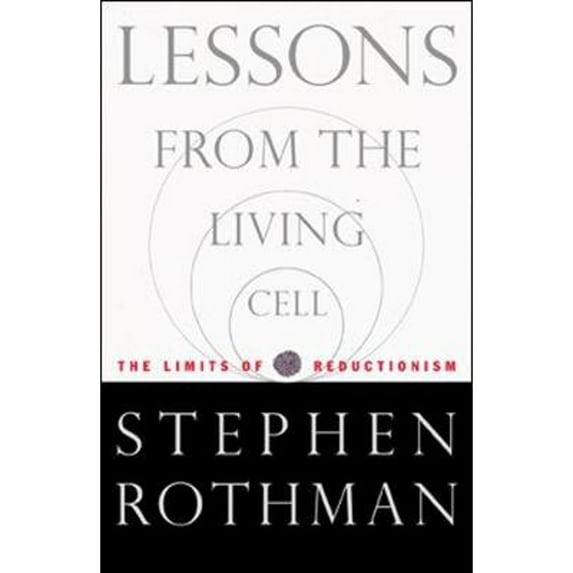
Hero image 0 of Lessons from the Living Cell: The Limits of Reductionism (Hardcover) by Stephen Rothman, 0 of 1
Lessons from the Living Cell: The Limits of Reductionism (Hardcover) by Stephen Rothman
(No ratings yet)
Key item features
9780071378208. New condition. Hard cover. Language: English. Pages: 300. Sewn binding. Cloth over boards. 300 p. As we enter the Genomic Age, the practice of molecular biology will take on increasing importance. Much is at stake, from the discovery of new drugs and treatments, to the development of new agricultural products, to a greater understanding of all natural systems, even a new conception of ourselves. Like most of modern science, molecular biology is based on a method called reductionism, whereby a system is broken down into its constituent parts to be studied at the most fundamental level possible. Reductionism is an extraordinarily powerful tool that has been incredibly productive; but, some would argue, it has its dangers. In Lessons from the Living Cell, veteran experimental biologist Stephen Rothman argues that reductionism is a philosophical spectrum that tends to lead its practioners along a logical path to its extreme conclusion, what he calls strong microreductionism. In other words, biologists who enter the lab to take a reductionist approach to a problem are participating in a scientific culture that in its methods and assumptions reinforces the view that biological processes can be fully understood from the description of their fundamental elements - that ultimately a complete understanding of a biological system, or even an organism, can be built from the bottom up. Common sense would dictate that this is not so, that even though the study of molecular entities yields extremely useful data, its final interpretation requires a reference to the whole. And most biologists would acknowledge this as self-evident, but their day-to-day practice belies a different philosophy. This is not an idle philosophical conundrum: Rothman argues that the collective, unwitting practice of strong microreductionism can lead to misinterpretations of scientific results and the persistence of faulty paradigms. Lessons from the Living Cell is an extended meditation on what makes a system living and how our methods of approaching this question determine our results. It is a clear-eyed look at the social climate in which science is practiced and the collective psychology that Rothman fears is leading scientists astray. It is an elegant argument that draws upon the author's personal experience to reveal how the passive acceptance of strong microreductionism can make it difficult for new scientific ideas to be accepted. Ultimately it is a passionate plea for the adoption of a new kind of science, one that goes beyond reductionism to embrace the full complexity of living systems.
Specs
- Book formatHardcover
- Fiction/nonfictionNon-Fiction
- Pages300
- PublisherMcGraw-Hill Companies
Current price is USD$65.38
Price when purchased online
Out of stock
How do you want your item?
Out of stock
About this item
Product details
9780071378208. New condition. Hard cover. Language: English. Pages: 300. Sewn binding. Cloth over boards. 300 p. As we enter the Genomic Age, the practice of molecular biology will take on increasing importance. Much is at stake, from the discovery of new drugs and treatments, to the development of new agricultural products, to a greater understanding of all natural systems, even a new conception of ourselves. Like most of modern science, molecular biology is based on a method called reductionism, whereby a system is broken down into its constituent parts to be studied at the most fundamental level possible. Reductionism is an extraordinarily powerful tool that has been incredibly productive; but, some would argue, it has its dangers. In Lessons from the Living Cell, veteran experimental biologist Stephen Rothman argues that reductionism is a philosophical spectrum that tends to lead its practioners along a logical path to its extreme conclusion, what he calls strong microreductionism. In other words, biologists who enter the lab to take a reductionist approach to a problem are participating in a scientific culture that in its methods and assumptions reinforces the view that biological processes can be fully understood from the description of their fundamental elements - that ultimately a complete understanding of a biological system, or even an organism, can be built from the bottom up. Common sense would dictate that this is not so, that even though the study of molecular entities yields extremely useful data, its final interpretation requires a reference to the whole. And most biologists would acknowledge this as self-evident, but their day-to-day practice belies a different philosophy. This is not an idle philosophical conundrum: Rothman argues that the collective, unwitting practice of strong microreductionism can lead to misinterpretations of scientific results and the persistence of faulty paradigms. Lessons from the Living Cell is an extended meditation on what makes a system living and how our methods of approaching this question determine our results. It is a clear-eyed look at the social climate in which science is practiced and the collective psychology that Rothman fears is leading scientists astray. It is an elegant argument that draws upon the author's personal experience to reveal how the passive acceptance of strong microreductionism can make it difficult for new scientific ideas to be accepted. Ultimately it is a passionate plea for the adoption of a new kind of science, one that goes beyond reductionism to embrace the full complexity of living systems.
info:
We aim to show you accurate product information. Manufacturers, suppliers and others provide what you see here, and we have not verified it.
Specifications
Book format
Hardcover
Fiction/nonfiction
Non-Fiction
Pages
300
Publisher
McGraw-Hill Companies
Warranty
Warranty information
Please be aware that the warranty terms on items offered for sale by third party Marketplace sellers may differ from those displayed in this section (if any). To confirm warranty terms on an item offered for sale by a third party Marketplace seller, please use the 'Contact seller' feature on the third party Marketplace seller's information page and request the item's warranty terms prior to purchase.
Customer ratings & reviews
0 ratings|0 reviews
This item does not have any reviews yet
