


Hero image 0 of In Praise of Poison Ivy : The Secret Virtues, Astonishing History, and Dangerous Lore of the World's Most Hated Plant (Hardcover), 0 of 1
In Praise of Poison Ivy : The Secret Virtues, Astonishing History, and Dangerous Lore of the World's Most Hated Plant (Hardcover)
(No ratings yet)
Key item features
Deadly. Powerful. Beautiful. The much-hated plant called poison ivy is all of these—and more.
Poison ivy has long irritated humans, but the astounding paradox is that poison ivy is a plant of immense ecological value. In Praise of Poison Ivy explores the vices and virtues of a plant with a dramatic history and a rosy future. Once planted in gardens from Versailles to Monticello, poison ivy now has a crucial role in the American landscape. The detested plant is a lens through which to observe the changes and challenges that face our planet.
For centuries, poison ivy has bedeviled, inconvenienced, and downright tortured the human race. This book covers the unique history of the plant, starting with the brash and adventurous explorer Captain John Smith, who “discovered” poison ivy the hard way in 1607. Despite its irritating qualities, the magnificent scarlet-and-gold autumn foliage lured Virginia entrepreneurs to export the vine to Europe, making it one of the earliest documented New World plants to cross the Atlantic, and its meteoric rise to fame as–of all unlikely things—a garden plant. Showcased in the pleasure grounds of emperors and kings, poison ivy was displayed like a captive tiger, admired by Thomas Jefferson, Marie Antoinette, and Josephine Bonaparte.
Today, poison ivy is valued by environmentalists and native plant enthusiasts who name it one of our most important plants for wildlife as well as for soil conservation. In Praise of Poison Ivy will reveal why, in its native American habitat, poison ivy is a plant of astonishing ecological value. Poison ivy leaves are an important wildlife food, and the berries are a crucial source of winter nutrition for beloved bird species like robins, bluebirds and cardinals. On a national listing of hundreds of native plants that are of value to wildlife, poison ivy ranks seventh in importance.
InPraise of Poison Ivy also explores the question of why this plant is apparently on a mission to give us humans grief, from itchy ankles to life-threatening medical emergencies. The book will examine why poison ivy targets humans, but no other species, and explain the mystery of why a privileged few are immune to its itchy consequences.
Since the time of John Smith and Pocahontas, the American landscape has changed in countless ways—many obvious, some subtle. This book will reveal why there is far more poison ivy on the planet now than there was in 1607, with lots more on its way. It examines the ecological reasons for poison ivy’s rosy future, note the effects of climate change on native plants, and investigate the valuable role that poison ivy could play in our changing world.
Poison ivy has long irritated humans, but the astounding paradox is that poison ivy is a plant of immense ecological value. In Praise of Poison Ivy explores the vices and virtues of a plant with a dramatic history and a rosy future. Once planted in gardens from Versailles to Monticello, poison ivy now has a crucial role in the American landscape. The detested plant is a lens through which to observe the changes and challenges that face our planet.
For centuries, poison ivy has bedeviled, inconvenienced, and downright tortured the human race. This book covers the unique history of the plant, starting with the brash and adventurous explorer Captain John Smith, who “discovered” poison ivy the hard way in 1607. Despite its irritating qualities, the magnificent scarlet-and-gold autumn foliage lured Virginia entrepreneurs to export the vine to Europe, making it one of the earliest documented New World plants to cross the Atlantic, and its meteoric rise to fame as–of all unlikely things—a garden plant. Showcased in the pleasure grounds of emperors and kings, poison ivy was displayed like a captive tiger, admired by Thomas Jefferson, Marie Antoinette, and Josephine Bonaparte.
Today, poison ivy is valued by environmentalists and native plant enthusiasts who name it one of our most important plants for wildlife as well as for soil conservation. In Praise of Poison Ivy will reveal why, in its native American habitat, poison ivy is a plant of astonishing ecological value. Poison ivy leaves are an important wildlife food, and the berries are a crucial source of winter nutrition for beloved bird species like robins, bluebirds and cardinals. On a national listing of hundreds of native plants that are of value to wildlife, poison ivy ranks seventh in importance.
InPraise of Poison Ivy also explores the question of why this plant is apparently on a mission to give us humans grief, from itchy ankles to life-threatening medical emergencies. The book will examine why poison ivy targets humans, but no other species, and explain the mystery of why a privileged few are immune to its itchy consequences.
Since the time of John Smith and Pocahontas, the American landscape has changed in countless ways—many obvious, some subtle. This book will reveal why there is far more poison ivy on the planet now than there was in 1607, with lots more on its way. It examines the ecological reasons for poison ivy’s rosy future, note the effects of climate change on native plants, and investigate the valuable role that poison ivy could play in our changing world.
Specs
- Manual & guide typeInstruction Manual
- Book formatHardcover
- Pages208
- LanguageEnglish
- BrandAnita Sanchez
- Pub date20160401
Current price is USD$22.84
Price when purchased online
Out of stock
How do you want your item?
Out of stock
About this item
Product details
For centuries, poison ivy has bedeviled, inconvenienced, and downright tortured the human race. In Praise ofPoison Ivy explores the question of why this plant is apparently on a mission to give us humans grief, from itchy ankles to life-threatening medical emergencies. This book also examines why poison ivy targets humans, but no other species, and explains the mystery of why a privileged few are immune to its itchy consequences.
Deadly. Powerful. Beautiful. The much-hated plant called poison ivy is all of these—and more.
Poison ivy has long irritated humans, but the astounding paradox is that poison ivy is a plant of immense ecological value. In Praise of Poison Ivy explores the vices and virtues of a plant with a dramatic history and a rosy future. Once planted in gardens from Versailles to Monticello, poison ivy now has a crucial role in the American landscape. The detested plant is a lens through which to observe the changes and challenges that face our planet.
For centuries, poison ivy has bedeviled, inconvenienced, and downright tortured the human race. This book covers the unique history of the plant, starting with the brash and adventurous explorer Captain John Smith, who “discovered” poison ivy the hard way in 1607. Despite its irritating qualities, the magnificent scarlet-and-gold autumn foliage lured Virginia entrepreneurs to export the vine to Europe, making it one of the earliest documented New World plants to cross the Atlantic, and its meteoric rise to fame as–of all unlikely things—a garden plant. Showcased in the pleasure grounds of emperors and kings, poison ivy was displayed like a captive tiger, admired by Thomas Jefferson, Marie Antoinette, and Josephine Bonaparte.
Today, poison ivy is valued by environmentalists and native plant enthusiasts who name it one of our most important plants for wildlife as well as for soil conservation. In Praise of Poison Ivy will reveal why, in its native American habitat, poison ivy is a plant of astonishing ecological value. Poison ivy leaves are an important wildlife food, and the berries are a crucial source of winter nutrition for beloved bird species like robins, bluebirds and cardinals. On a national listing of hundreds of native plants that are of value to wildlife, poison ivy ranks seventh in importance.
InPraise of Poison Ivy also explores the question of why this plant is apparently on a mission to give us humans grief, from itchy ankles to life-threatening medical emergencies. The book will examine why poison ivy targets humans, but no other species, and explain the mystery of why a privileged few are immune to its itchy consequences.
Since the time of John Smith and Pocahontas, the American landscape has changed in countless ways—many obvious, some subtle. This book will reveal why there is far more poison ivy on the planet now than there was in 1607, with lots more on its way. It examines the ecological reasons for poison ivy’s rosy future, note the effects of climate change on native plants, and investigate the valuable role that poison ivy could play in our changing world.
Poison ivy has long irritated humans, but the astounding paradox is that poison ivy is a plant of immense ecological value. In Praise of Poison Ivy explores the vices and virtues of a plant with a dramatic history and a rosy future. Once planted in gardens from Versailles to Monticello, poison ivy now has a crucial role in the American landscape. The detested plant is a lens through which to observe the changes and challenges that face our planet.
For centuries, poison ivy has bedeviled, inconvenienced, and downright tortured the human race. This book covers the unique history of the plant, starting with the brash and adventurous explorer Captain John Smith, who “discovered” poison ivy the hard way in 1607. Despite its irritating qualities, the magnificent scarlet-and-gold autumn foliage lured Virginia entrepreneurs to export the vine to Europe, making it one of the earliest documented New World plants to cross the Atlantic, and its meteoric rise to fame as–of all unlikely things—a garden plant. Showcased in the pleasure grounds of emperors and kings, poison ivy was displayed like a captive tiger, admired by Thomas Jefferson, Marie Antoinette, and Josephine Bonaparte.
Today, poison ivy is valued by environmentalists and native plant enthusiasts who name it one of our most important plants for wildlife as well as for soil conservation. In Praise of Poison Ivy will reveal why, in its native American habitat, poison ivy is a plant of astonishing ecological value. Poison ivy leaves are an important wildlife food, and the berries are a crucial source of winter nutrition for beloved bird species like robins, bluebirds and cardinals. On a national listing of hundreds of native plants that are of value to wildlife, poison ivy ranks seventh in importance.
InPraise of Poison Ivy also explores the question of why this plant is apparently on a mission to give us humans grief, from itchy ankles to life-threatening medical emergencies. The book will examine why poison ivy targets humans, but no other species, and explain the mystery of why a privileged few are immune to its itchy consequences.
Since the time of John Smith and Pocahontas, the American landscape has changed in countless ways—many obvious, some subtle. This book will reveal why there is far more poison ivy on the planet now than there was in 1607, with lots more on its way. It examines the ecological reasons for poison ivy’s rosy future, note the effects of climate change on native plants, and investigate the valuable role that poison ivy could play in our changing world.
info:
We aim to show you accurate product information. Manufacturers, suppliers and others provide what you see here, and we have not verified it.
Specifications
Manual & guide type
Instruction Manual
Book format
Hardcover
Pages
208
Language
English
Warranty
Warranty information
Please be aware that the warranty terms on items offered for sale by third party Marketplace sellers may differ from those displayed in this section (if any). To confirm warranty terms on an item offered for sale by a third party Marketplace seller, please use the 'Contact seller' feature on the third party Marketplace seller's information page and request the item's warranty terms prior to purchase.
Similar items you might like
Based on what customers bought
Lives of the Natural World The Lives of Bees: A Natural History of Our Planet's Bee Life, Book 9, (Hardcover) $22.85 Was $26.00
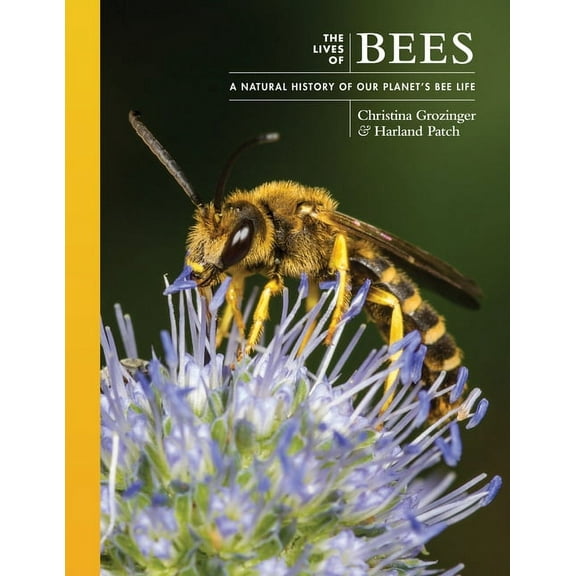 $2285current price $22.85, Was $26.00$26.00
Lives of the Natural World The Lives of Bees: A Natural History of Our Planet's Bee Life, Book 9, (Hardcover)
Rare Birds : The Extraordinary Tale of the Bermuda Petrel and the Man Who Brought It Back from Extinction (Paperback) $25.69
 $2569current price $25.69
Rare Birds : The Extraordinary Tale of the Bermuda Petrel and the Man Who Brought It Back from Extinction (Paperback)
Studies of the Essex Flora: An Enumeration of all Plants Found Growing Naturally within the Limits of Lynn, Mass., (Paperback) $23.10
 $2310current price $23.10
Studies of the Essex Flora: An Enumeration of all Plants Found Growing Naturally within the Limits of Lynn, Mass., (Paperback)
The Secret Mind of Bertha Pappenheim : The Woman Who Invented Freud's Talking Cure (Hardcover) $23.14
 $2314current price $23.14
The Secret Mind of Bertha Pappenheim : The Woman Who Invented Freud's Talking Cure (Hardcover)
Moon of Popping Trees (Paperback) $11.63
 $1163current price $11.63
Moon of Popping Trees (Paperback)
The Woking Dead : How Society's Vogue Virus Destroys Our Culture (Hardcover) $22.65
 $2265current price $22.65
The Woking Dead : How Society's Vogue Virus Destroys Our Culture (Hardcover)
A Generous Nature: Lives Transformed by Oregon, (Paperback) $21.96
 $2196current price $21.96
A Generous Nature: Lives Transformed by Oregon, (Paperback)
Seven Wonders of the Ancient World: A Captivating Guide to the Great Pyramid of Giza, Hanging Gardens of Babylon, Temple, (Hardcover) $21.33
 $2133current price $21.33
Seven Wonders of the Ancient World: A Captivating Guide to the Great Pyramid of Giza, Hanging Gardens of Babylon, Temple, (Hardcover)
Fire and Sword in Shansi : The Story of the Martyrdom of Foreigners and Chinese Christians (Classic Reprint) $31.98
 $3198current price $31.98
Fire and Sword in Shansi : The Story of the Martyrdom of Foreigners and Chinese Christians (Classic Reprint)
MitologÃa nórdica: Una fascinante guÃa para entender las sagas, dioses, héroes y creencias de los vikingos, (Hardcover) $23.32 Was $26.99
 $2332current price $23.32, Was $26.99$26.99
MitologÃa nórdica: Una fascinante guÃa para entender las sagas, dioses, héroes y creencias de los vikingos, (Hardcover)
Dubossary Memorial Yizkor Book (Dubasari, Moldova) - Translation of Dubossary; Sefer Zikaron, (Hardcover) $49.78
 $4978current price $49.78
Dubossary Memorial Yizkor Book (Dubasari, Moldova) - Translation of Dubossary; Sefer Zikaron, (Hardcover)
Rspb Handbook of the Seashore $24.92
 $2492current price $24.92
Rspb Handbook of the Seashore
The One-Straw Revolution : An Introduction to Natural Farming (Paperback) $11.72
 $1172current price $11.72
The One-Straw Revolution : An Introduction to Natural Farming (Paperback)
15 out of 5 Stars. 1 reviewsOf Myths and Movements : Rewriting Chipko into Himalayan History (Paperback) $30.28
 $3028current price $30.28
Of Myths and Movements : Rewriting Chipko into Himalayan History (Paperback)
Strong Like Her : A Celebration of Rule Breakers, History Makers, and Unstoppable Athletes (Hardcover) $23.87
 $2387current price $23.87
Strong Like Her : A Celebration of Rule Breakers, History Makers, and Unstoppable Athletes (Hardcover)
Methodus Differentialis: Sive Tractatus de Summatione Et Interpolatione Serierum Infinitarum. Auctore Jacobo Stirling, R.S.S. (Paperback) $21.75
 $2175current price $21.75
Methodus Differentialis: Sive Tractatus de Summatione Et Interpolatione Serierum Infinitarum. Auctore Jacobo Stirling, R.S.S. (Paperback)
Selaginella Species: Closed terrarium, Beginner's Guide, (Paperback) $20.58
 $2058current price $20.58
Selaginella Species: Closed terrarium, Beginner's Guide, (Paperback)
Be a Prepper Nuclear War Survival Skills and Prepping, Book 5, (Paperback) $7.99
 $799current price $7.99
Be a Prepper Nuclear War Survival Skills and Prepping, Book 5, (Paperback)
How to Grow Stuff : Easy, No-Stress Gardening for Beginners (Paperback) $22.36
 $2236current price $22.36
How to Grow Stuff : Easy, No-Stress Gardening for Beginners (Paperback)

Customer ratings & reviews
0 ratings|0 reviews
This item does not have any reviews yet
