


Hero image 0 of On the Principles of Taxing Beer : and Other Brief Philosophical Essays (Hardcover), 0 of 2
On the Principles of Taxing Beer : and Other Brief Philosophical Essays (Hardcover)
(No ratings yet)
Key item features
What is real and what is noble, as well as what is deranged and wrong, can often be stated briefly. Nietzsche was famous for his succinct aphorisms and epigrams. Aquinas in one of his responses could manage to state clearly what he held to be true. Ultimately, all of our thought needs to be so refined and concentrated that we can see the point. So these are “brief” essays and they are largely of a philosophical “hue.” They touch on things worth thinking about. Indeed, often they consider things we really need to think about if our lives are to make sense.
The advantage of a collection of essays is that it is free to talk about many things. It can speak of them in a learned way or in an amused and humorous way. As Chesterton said, there is no necessary conflict between what is true and what is funny. Oftentimes, the greatest things we learn are through laughter, even laughter at ourselves and our own foibles and faults.
So these essays are “brief.” And they are largely of philosophical import. At first sight, taxing beer may seem to have no serious principle, except perhaps for the brewer and the consumer. But wherever there is reality, we can find something to learn.
Each of these essays begins with the proposition “on”—this is a classical form of essay in the English language. Belloc, one the essay’s greatest masters, wrote a book simply entitled “ON”—and several other books with that introductory “ON” to begin it. The word has the advantage of focusing our attention on some idea, place, book, person, or reality that we happen to come across and notice, then notice again, then wonder about.
These essays are relatively short, often lightsome, hopefully always with a consideration that illumines the world through the mind of the reader. These essays are written in the spirit that the things we encounter provoke us, our minds. We need to come to terms, to understand what we come across in our pathways through this world. Often the best way to know what we observe or confront is to write about it, preferably briefly and with some philosophical insight. This is what we do here.
The advantage of a collection of essays is that it is free to talk about many things. It can speak of them in a learned way or in an amused and humorous way. As Chesterton said, there is no necessary conflict between what is true and what is funny. Oftentimes, the greatest things we learn are through laughter, even laughter at ourselves and our own foibles and faults.
So these essays are “brief.” And they are largely of philosophical import. At first sight, taxing beer may seem to have no serious principle, except perhaps for the brewer and the consumer. But wherever there is reality, we can find something to learn.
Each of these essays begins with the proposition “on”—this is a classical form of essay in the English language. Belloc, one the essay’s greatest masters, wrote a book simply entitled “ON”—and several other books with that introductory “ON” to begin it. The word has the advantage of focusing our attention on some idea, place, book, person, or reality that we happen to come across and notice, then notice again, then wonder about.
These essays are relatively short, often lightsome, hopefully always with a consideration that illumines the world through the mind of the reader. These essays are written in the spirit that the things we encounter provoke us, our minds. We need to come to terms, to understand what we come across in our pathways through this world. Often the best way to know what we observe or confront is to write about it, preferably briefly and with some philosophical insight. This is what we do here.
Specs
- Book formatHardcover
- Fiction/nonfictionNon-Fiction
- Publication dateMarch, 2019
- Pages184
- EditionStandard Edition
- PublisherSt. Augustine's Press
Current price is USD$36.96
Price when purchased online
- Free shipping
 Free 30-day returns
How do you want your item?
Ships to
Arrives between Jul 7 - Jul 13
|
Sold and shipped by Rarewaves.com
4.266393442622951 stars out of 5, based on 3172 seller reviews(4.3)3172 seller reviews

Free 30-day returns
More seller options (1)
Starting from $36.93
Similar items you might like
Based on what customers bought
The Return To Reason Essays In Realistic Philosophy (Hardcover) $36.95
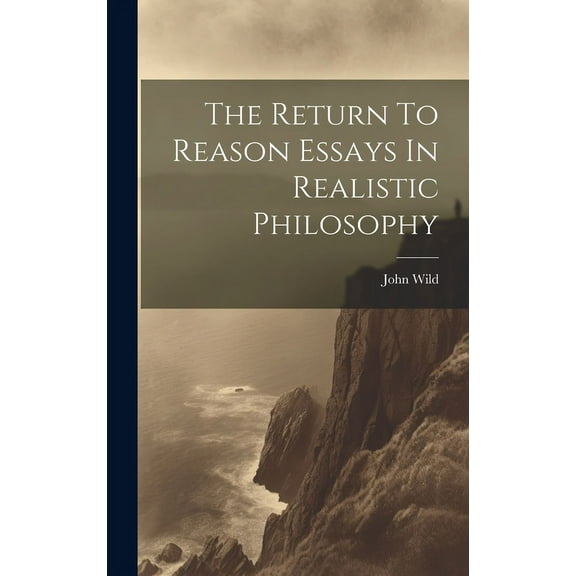 $3695current price $36.95
The Return To Reason Essays In Realistic Philosophy (Hardcover)
Glimpses of Pre-Socratic Philosophers: Through Brief Qs & As (Paperback) $10.01
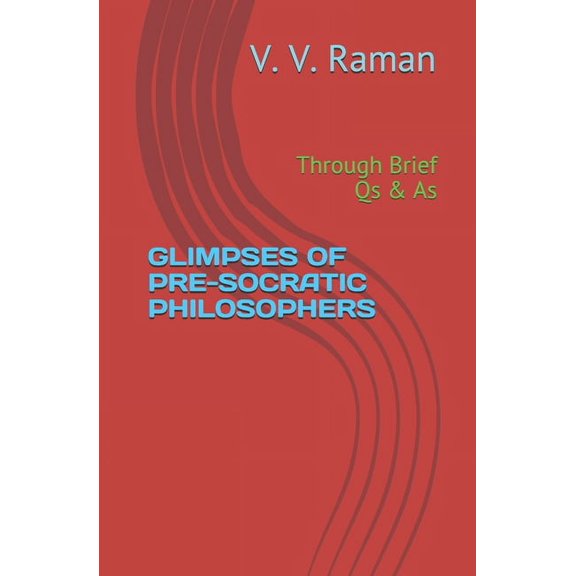 $1001current price $10.01
Glimpses of Pre-Socratic Philosophers: Through Brief Qs & As (Paperback)
The Forms of Things Unknown; Essays Towards an Aesthetic Philosophy, (Hardcover) $33.95
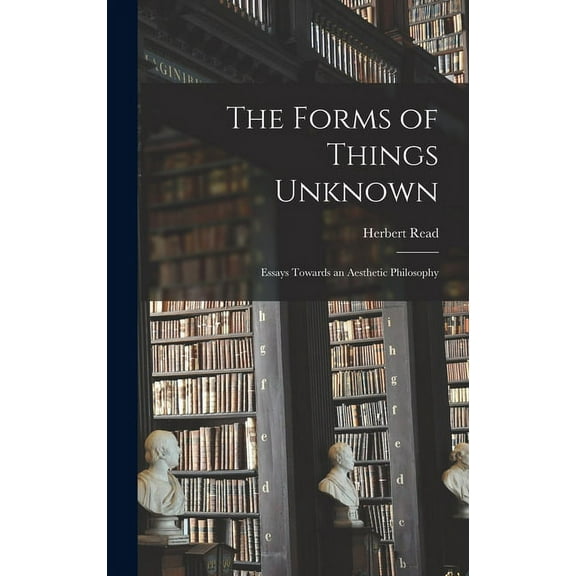 $3395current price $33.95
The Forms of Things Unknown; Essays Towards an Aesthetic Philosophy, (Hardcover)
The Philosophy of War (Hardcover) $31.95
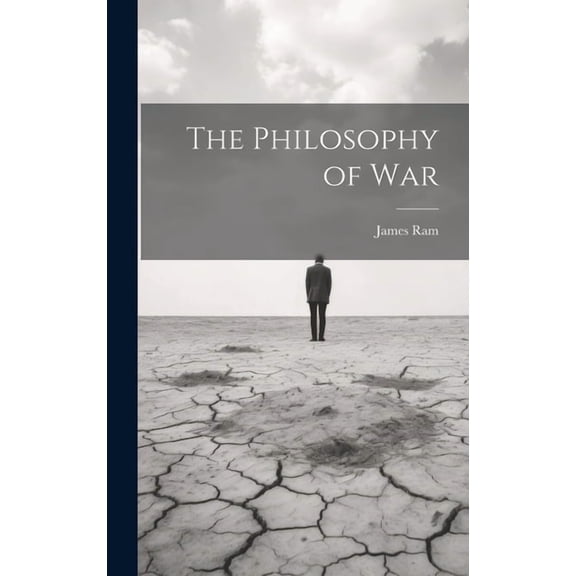 $3195current price $31.95
The Philosophy of War (Hardcover)
Best seller Stripped Down: Unfiltered and Unapologetic (Hardcover) $20.98
Best seller $2098current price $20.98
Stripped Down: Unfiltered and Unapologetic (Hardcover)
1344.9 out of 5 Stars. 134 reviewsA Treatise On Pulmonary Consumption (Hardcover) $34.83
 $3483current price $34.83
A Treatise On Pulmonary Consumption (Hardcover)
- $33.34
 $3334current price $33.34
-
Christian Philosophy or Materials for Thought (Hardcover) $36.94
 $3694current price $36.94
Christian Philosophy or Materials for Thought (Hardcover)
Beyond Humanism: Essays in the New Philosophy of Nature, (Hardcover) $36.18
 $3618current price $36.18
Beyond Humanism: Essays in the New Philosophy of Nature, (Hardcover)
Engaging the World: A Philosopher's Essays on Morality and Religion, (Paperback) $19.99
 $1999current price $19.99
Engaging the World: A Philosopher's Essays on Morality and Religion, (Paperback)
The Philosophy of Mathematics, an Introductory Essay, (Hardcover) $32.79
 $3279current price $32.79
The Philosophy of Mathematics, an Introductory Essay, (Hardcover)
Divine Imagining: An Essay on the First Principles of Philosophy (Hardcover) $33.95
 $3395current price $33.95
Divine Imagining: An Essay on the First Principles of Philosophy (Hardcover)
Palgrave Frontiers in Philosophy of Reli Religious Knowledge, (Hardcover) $46.14
 $4614current price $46.14
Palgrave Frontiers in Philosophy of Reli Religious Knowledge, (Hardcover)
Lectures on Moral Philosophy, (Hardcover) $31.93
 $3193current price $31.93
Lectures on Moral Philosophy, (Hardcover)
C.S. Lewis: A Philosophy of Education, (Hardcover) $41.81
 $4181current price $41.81
C.S. Lewis: A Philosophy of Education, (Hardcover)
Essays On a Liberal Education, Ed. by F. W. Farrar, (Hardcover) $36.95
 $3695current price $36.95
Essays On a Liberal Education, Ed. by F. W. Farrar, (Hardcover)
Introduction To Philosophical Analysis, (Hardcover) $41.36
 $4136current price $41.36
Introduction To Philosophical Analysis, (Hardcover)
Philosophy Of History An Introduction (Hardcover) $31.95
 $3195current price $31.95
Philosophy Of History An Introduction (Hardcover)
A Practical Enquiry Into the Philosophy of Education (Hardcover) $39.07
 $3907current price $39.07
A Practical Enquiry Into the Philosophy of Education (Hardcover)
The Philosophy of Epictetus, (Hardcover) $34.32
 $3432current price $34.32
The Philosophy of Epictetus, (Hardcover)
About this item
Product details
What is real and what is noble, as well as what is deranged and wrong, can often be stated briefly. Nietzsche was famous for his succinct aphorisms and epigrams. Aquinas in one of his responses could manage to state clearly what he held to be true. Ultimately, all of our thought needs to be so refined and concentrated that we can see the point. So these are "brief" essays and they are largely of a philosophical "hue." They touch on things worth thinking about. Indeed, often they consider things we really need to think about if our lives are to make sense. The advantage of a collection of essays is that it is free to talk about many things. It can speak of them in a learned way or in an amused and humorous way. As Chesterton said, there is no necessary conflict between what is true and what is funny. Oftentimes, the greatest things we learn are through laughter, even laughter at ourselves and our own foibles and faults. So these essays are "brief." And they are largely of philosophical import. At first sight, taxing beer may seem to have no serious principle, except perhaps for the brewer and the consumer. But wherever there is reality, we can find something to learn. Each of these essays begins with the proposition "on"--this is a classical form of essay in the English language. Belloc, one the essay's greatest masters, wrote a book simply entitled "ON"--and several other books with that introductory "ON" to begin it. The word has the advantage of focusing our attention on some idea, place, book, person, or reality that we happen to come across and notice, then notice again, then wonder about. These essays are relatively short, often lightsome, hopefully always with a consideration that illumines the world through the mind of the reader. These essays are written in the spirit that the things we encounter provoke us, our minds. We need to come to terms, to understand what we come across in our pathways through this world. Often the best way to know what we observe or confront is to write about it, preferably briefly and with some philosophical insight. This is what we do here.
What is real and what is noble, as well as what is deranged and wrong, can often be stated briefly. Nietzsche was famous for his succinct aphorisms and epigrams. Aquinas in one of his responses could manage to state clearly what he held to be true. Ultimately, all of our thought needs to be so refined and concentrated that we can see the point. So these are “brief” essays and they are largely of a philosophical “hue.” They touch on things worth thinking about. Indeed, often they consider things we really need to think about if our lives are to make sense.
The advantage of a collection of essays is that it is free to talk about many things. It can speak of them in a learned way or in an amused and humorous way. As Chesterton said, there is no necessary conflict between what is true and what is funny. Oftentimes, the greatest things we learn are through laughter, even laughter at ourselves and our own foibles and faults.
So these essays are “brief.” And they are largely of philosophical import. At first sight, taxing beer may seem to have no serious principle, except perhaps for the brewer and the consumer. But wherever there is reality, we can find something to learn.
Each of these essays begins with the proposition “on”—this is a classical form of essay in the English language. Belloc, one the essay’s greatest masters, wrote a book simply entitled “ON”—and several other books with that introductory “ON” to begin it. The word has the advantage of focusing our attention on some idea, place, book, person, or reality that we happen to come across and notice, then notice again, then wonder about.
These essays are relatively short, often lightsome, hopefully always with a consideration that illumines the world through the mind of the reader. These essays are written in the spirit that the things we encounter provoke us, our minds. We need to come to terms, to understand what we come across in our pathways through this world. Often the best way to know what we observe or confront is to write about it, preferably briefly and with some philosophical insight. This is what we do here.
The advantage of a collection of essays is that it is free to talk about many things. It can speak of them in a learned way or in an amused and humorous way. As Chesterton said, there is no necessary conflict between what is true and what is funny. Oftentimes, the greatest things we learn are through laughter, even laughter at ourselves and our own foibles and faults.
So these essays are “brief.” And they are largely of philosophical import. At first sight, taxing beer may seem to have no serious principle, except perhaps for the brewer and the consumer. But wherever there is reality, we can find something to learn.
Each of these essays begins with the proposition “on”—this is a classical form of essay in the English language. Belloc, one the essay’s greatest masters, wrote a book simply entitled “ON”—and several other books with that introductory “ON” to begin it. The word has the advantage of focusing our attention on some idea, place, book, person, or reality that we happen to come across and notice, then notice again, then wonder about.
These essays are relatively short, often lightsome, hopefully always with a consideration that illumines the world through the mind of the reader. These essays are written in the spirit that the things we encounter provoke us, our minds. We need to come to terms, to understand what we come across in our pathways through this world. Often the best way to know what we observe or confront is to write about it, preferably briefly and with some philosophical insight. This is what we do here.
info:
We aim to show you accurate product information. Manufacturers, suppliers and others provide what you see here, and we have not verified it.
Specifications
Book format
Hardcover
Fiction/nonfiction
Non-Fiction
Publication date
March, 2019
Pages
184
Warranty
Warranty information
Please be aware that the warranty terms on items offered for sale by third party Marketplace sellers may differ from those displayed in this section (if any). To confirm warranty terms on an item offered for sale by a third party Marketplace seller, please use the 'Contact seller' feature on the third party Marketplace seller's information page and request the item's warranty terms prior to purchase.
Customer ratings & reviews
0 ratings|0 reviews
This item does not have any reviews yet
