


Hero image 0 of Demography : The Science of Population (Edition 2) (Paperback), 0 of 1
Demography : The Science of Population (Edition 2) (Paperback)
(No ratings yet)
Key item features
This comprehensive, introductory text takes an applied, interdisciplinary approach. Because one author is a sociologist and the other a demographer, the text introduces perspectives from many different disciplines. The most applied book on the market, Demography: The Science of Population teaches students how to use the multitude of demographic resources available to them as consumers of data. Using case studies throughout to illustrate key concepts in a realistic and concrete manner, the authors also draw examples from recent U.S. Census data, United Nations and World Bank reports, tables from the National Center for Health Statistics, and other U.S. state- and county-level sources.
New to the Second Edition
This second edition is divided into four main parts; each part begins with a short introduction, and all chapters include end-of-chapter summaries. All tables, related narrative, and graphics have been updated to include data from the 2000 and 2010 census counts, more recent estimates for the United States—especially the American Community Survey—and comparable new data from international sources (e.g. World Bank, Population Research Bureau World Data Sheet). Several new figures have been added throughout the text.
Part I: An Overview of Population Science, introduces the field of demography and provides a summary of its subject matter. The chapters in this part have been reorganized to reflect changes in the discipline.
Part II: Population Dynamics: Vital Events and Growth, reflects the wealth of data and analytical techniques now available from The U.S. Centers for Disease Control and Prevention (CDC) and its “Wonder” utility. The first three chapters focus on the vital events of birth, death, and migration. The final chapter in this part brings this material together in a discussion of population growth: its measurement, its history, and current related policy concerns.
Part III: Population Models, introduces the principles of life table analysis, population estimation, and projection. This material has been simplified and updated. Chapter 9, The Life Table: An Introduction, has been revised to accord with the new federal alignment for vital statistics between the CDC and National Institute for Health Statistics. Life tables from non-U.S. sources are increased in number and in detailed functions.
Part IV: Demography in Application, provides overviews of population policy, the environment, and demographic resources, along with a brief postscript on population in the larger scheme of things. What appeared as two appendices in the first edition, one on the history of population policy and one on tourism as a type of international migration, have been combined to create a new Chapter 14.
The end-of-chapter material has been shortened and now contains a summary, key terms, and notes.
A full-color enhanced eText is also available, and the second edition is accompanied by a teaching and learning package, including instructor’s manual, test bank, lecture slides, and a companion website that offers students additional resources, flashcards, and self-study quizzes.
New to the Second Edition
This second edition is divided into four main parts; each part begins with a short introduction, and all chapters include end-of-chapter summaries. All tables, related narrative, and graphics have been updated to include data from the 2000 and 2010 census counts, more recent estimates for the United States—especially the American Community Survey—and comparable new data from international sources (e.g. World Bank, Population Research Bureau World Data Sheet). Several new figures have been added throughout the text.
Part I: An Overview of Population Science, introduces the field of demography and provides a summary of its subject matter. The chapters in this part have been reorganized to reflect changes in the discipline.
- Chapter 1 now includes a new “the study of populations” section, a shorter Chapter 2 covers population size, and its former discussion of structure has been moved to Chapter 3. This de-emphasizes the history of population science to some extent and increases emphasis on population size as the key demographic variable.
- Chapter 4 presents the main principles and analytical techniques associated with the three “static” characteristics of populations: size, structure, and geographic distribution.
Part II: Population Dynamics: Vital Events and Growth, reflects the wealth of data and analytical techniques now available from The U.S. Centers for Disease Control and Prevention (CDC) and its “Wonder” utility. The first three chapters focus on the vital events of birth, death, and migration. The final chapter in this part brings this material together in a discussion of population growth: its measurement, its history, and current related policy concerns.
Part III: Population Models, introduces the principles of life table analysis, population estimation, and projection. This material has been simplified and updated. Chapter 9, The Life Table: An Introduction, has been revised to accord with the new federal alignment for vital statistics between the CDC and National Institute for Health Statistics. Life tables from non-U.S. sources are increased in number and in detailed functions.
Part IV: Demography in Application, provides overviews of population policy, the environment, and demographic resources, along with a brief postscript on population in the larger scheme of things. What appeared as two appendices in the first edition, one on the history of population policy and one on tourism as a type of international migration, have been combined to create a new Chapter 14.
The end-of-chapter material has been shortened and now contains a summary, key terms, and notes.
A full-color enhanced eText is also available, and the second edition is accompanied by a teaching and learning package, including instructor’s manual, test bank, lecture slides, and a companion website that offers students additional resources, flashcards, and self-study quizzes.
Specs
- Book formatPaperback
- Fiction/nonfictionNon-Fiction
- GenreNonfiction
- Pub date2015-10-29
- Pages448
- Age range20 - 22 Years
Current price is USD$108.03
Price when purchased online
Out of stock
How do you want your item?
Out of stock
About this item
Product details
This comprehensive, introductory text takes an applied, interdisciplinary approach. Because one author is a sociologist and the other a demographer, the text introduces perspectives from many different disciplines. Demography: The Science of Population, Second Edition, includes two chapters focusing on quantitative models, a topic not usually covered so extensively in introductory texts. It uses case studies throughout to illustrate in a realistic and concrete manner key points made in the text. It draws examples from recent U.S. Census data, United Nations and World Bank reports, tables from the National Center for Health Statistics, and from U.S. state and county-level sources.
This comprehensive, introductory text takes an applied, interdisciplinary approach. Because one author is a sociologist and the other a demographer, the text introduces perspectives from many different disciplines. The most applied book on the market, Demography: The Science of Population teaches students how to use the multitude of demographic resources available to them as consumers of data. Using case studies throughout to illustrate key concepts in a realistic and concrete manner, the authors also draw examples from recent U.S. Census data, United Nations and World Bank reports, tables from the National Center for Health Statistics, and other U.S. state- and county-level sources.
New to the Second Edition
This second edition is divided into four main parts; each part begins with a short introduction, and all chapters include end-of-chapter summaries. All tables, related narrative, and graphics have been updated to include data from the 2000 and 2010 census counts, more recent estimates for the United States—especially the American Community Survey—and comparable new data from international sources (e.g. World Bank, Population Research Bureau World Data Sheet). Several new figures have been added throughout the text.
Part I: An Overview of Population Science, introduces the field of demography and provides a summary of its subject matter. The chapters in this part have been reorganized to reflect changes in the discipline.
Part II: Population Dynamics: Vital Events and Growth, reflects the wealth of data and analytical techniques now available from The U.S. Centers for Disease Control and Prevention (CDC) and its “Wonder” utility. The first three chapters focus on the vital events of birth, death, and migration. The final chapter in this part brings this material together in a discussion of population growth: its measurement, its history, and current related policy concerns.
Part III: Population Models, introduces the principles of life table analysis, population estimation, and projection. This material has been simplified and updated. Chapter 9, The Life Table: An Introduction, has been revised to accord with the new federal alignment for vital statistics between the CDC and National Institute for Health Statistics. Life tables from non-U.S. sources are increased in number and in detailed functions.
Part IV: Demography in Application, provides overviews of population policy, the environment, and demographic resources, along with a brief postscript on population in the larger scheme of things. What appeared as two appendices in the first edition, one on the history of population policy and one on tourism as a type of international migration, have been combined to create a new Chapter 14.
The end-of-chapter material has been shortened and now contains a summary, key terms, and notes.
A full-color enhanced eText is also available, and the second edition is accompanied by a teaching and learning package, including instructor’s manual, test bank, lecture slides, and a companion website that offers students additional resources, flashcards, and self-study quizzes.
New to the Second Edition
This second edition is divided into four main parts; each part begins with a short introduction, and all chapters include end-of-chapter summaries. All tables, related narrative, and graphics have been updated to include data from the 2000 and 2010 census counts, more recent estimates for the United States—especially the American Community Survey—and comparable new data from international sources (e.g. World Bank, Population Research Bureau World Data Sheet). Several new figures have been added throughout the text.
Part I: An Overview of Population Science, introduces the field of demography and provides a summary of its subject matter. The chapters in this part have been reorganized to reflect changes in the discipline.
- Chapter 1 now includes a new “the study of populations” section, a shorter Chapter 2 covers population size, and its former discussion of structure has been moved to Chapter 3. This de-emphasizes the history of population science to some extent and increases emphasis on population size as the key demographic variable.
- Chapter 4 presents the main principles and analytical techniques associated with the three “static” characteristics of populations: size, structure, and geographic distribution.
Part II: Population Dynamics: Vital Events and Growth, reflects the wealth of data and analytical techniques now available from The U.S. Centers for Disease Control and Prevention (CDC) and its “Wonder” utility. The first three chapters focus on the vital events of birth, death, and migration. The final chapter in this part brings this material together in a discussion of population growth: its measurement, its history, and current related policy concerns.
Part III: Population Models, introduces the principles of life table analysis, population estimation, and projection. This material has been simplified and updated. Chapter 9, The Life Table: An Introduction, has been revised to accord with the new federal alignment for vital statistics between the CDC and National Institute for Health Statistics. Life tables from non-U.S. sources are increased in number and in detailed functions.
Part IV: Demography in Application, provides overviews of population policy, the environment, and demographic resources, along with a brief postscript on population in the larger scheme of things. What appeared as two appendices in the first edition, one on the history of population policy and one on tourism as a type of international migration, have been combined to create a new Chapter 14.
The end-of-chapter material has been shortened and now contains a summary, key terms, and notes.
A full-color enhanced eText is also available, and the second edition is accompanied by a teaching and learning package, including instructor’s manual, test bank, lecture slides, and a companion website that offers students additional resources, flashcards, and self-study quizzes.
info:
We aim to show you accurate product information. Manufacturers, suppliers and others provide what you see here, and we have not verified it.
Specifications
Book format
Paperback
Fiction/nonfiction
Non-Fiction
Genre
Nonfiction
Pub date
2015-10-29
Warranty
Warranty information
Please be aware that the warranty terms on items offered for sale by third party Marketplace sellers may differ from those displayed in this section (if any). To confirm warranty terms on an item offered for sale by a third party Marketplace seller, please use the 'Contact seller' feature on the third party Marketplace seller's information page and request the item's warranty terms prior to purchase.
Similar items you might like
Based on what customers bought
Comprehensive Radiographic Pathology, (Paperback) $84.63 Was $98.49
 $8463current price $84.63, Was $98.49$98.49
Comprehensive Radiographic Pathology, (Paperback)
15 out of 5 Stars. 1 reviewsHandbook of Vegetation Science The Population Structure of Vegetation, Book 3, (Paperback) $107.90
 $10790current price $107.90
Handbook of Vegetation Science The Population Structure of Vegetation, Book 3, (Paperback)
Monographs in Population Biology Geographic Variation, Speciation and Clines, Book 10, (Paperback) $43.16
 $4316current price $43.16
Monographs in Population Biology Geographic Variation, Speciation and Clines, Book 10, (Paperback)
Advances in Polymer Science Fortschritte Der Hochpolymeren Forschung, Book 7, (Paperback) $109.99
 $10999current price $109.99
Advances in Polymer Science Fortschritte Der Hochpolymeren Forschung, Book 7, (Paperback)
Demographic Research Monographs Supercentenarians, (Paperback) $108.99
 $10899current price $108.99
Demographic Research Monographs Supercentenarians, (Paperback)
Proceedings in Life Sciences Population Biology and Evolution, (Paperback) $109.99
 $10999current price $109.99
Proceedings in Life Sciences Population Biology and Evolution, (Paperback)
Parasitoid Population Biology, (Paperback) $67.89
 $6789current price $67.89
Parasitoid Population Biology, (Paperback)
Age-Structured Population Dynamics in Demography and Epidemiology, (Paperback) $109.45
 $10945current price $109.45
Age-Structured Population Dynamics in Demography and Epidemiology, (Paperback)
Sci & Culture in the Nineteenth Century Adolphe Quetelet, Social Physics and the Average Men of Science, 1796-1874, Book 87, (Paperback) $43.94
 $4394current price $43.94
Sci & Culture in the Nineteenth Century Adolphe Quetelet, Social Physics and the Average Men of Science, 1796-1874, Book 87, (Paperback)
Monographs on Endocrinology Major Sex-Determining Genes, Book 11, (Paperback) $107.90
 $10790current price $107.90
Monographs on Endocrinology Major Sex-Determining Genes, Book 11, (Paperback)
Against the Gods: The Remarkable Story of Risk, (Paperback) $14.97
 $1497current price $14.97
Against the Gods: The Remarkable Story of Risk, (Paperback)
15 out of 5 Stars. 1 reviewsNew Trends in Reproductive Medicine, (Paperback) $109.99
 $10999current price $109.99
New Trends in Reproductive Medicine, (Paperback)
Quantitative papierchromatographische Alkalibestimmungen, (Paperback) $76.25
 $7625current price $76.25
Quantitative papierchromatographische Alkalibestimmungen, (Paperback)
Evolutionary Games and Population Dynamics, (Paperback) $98.19
 $9819current price $98.19
Evolutionary Games and Population Dynamics, (Paperback)
Monographs in Population Biology Population Harvesting: Demographic Models of Fish, Forest, and Animal Resources, Book 27, (Paperback) $115.00
 $11500current price $115.00
Monographs in Population Biology Population Harvesting: Demographic Models of Fish, Forest, and Animal Resources, Book 27, (Paperback)
International Studies in Population Navigating Time and Space in Population Studies, Book 9, (Paperback) $104.59
 $10459current price $104.59
International Studies in Population Navigating Time and Space in Population Studies, Book 9, (Paperback)
Monographs in Population Biology Consumer-Resource Dynamics (Mpb-36), Book 36, (Paperback) $99.00
 $9900current price $99.00
Monographs in Population Biology Consumer-Resource Dynamics (Mpb-36), Book 36, (Paperback)
Population Biology of Grasses, (Paperback) $54.68
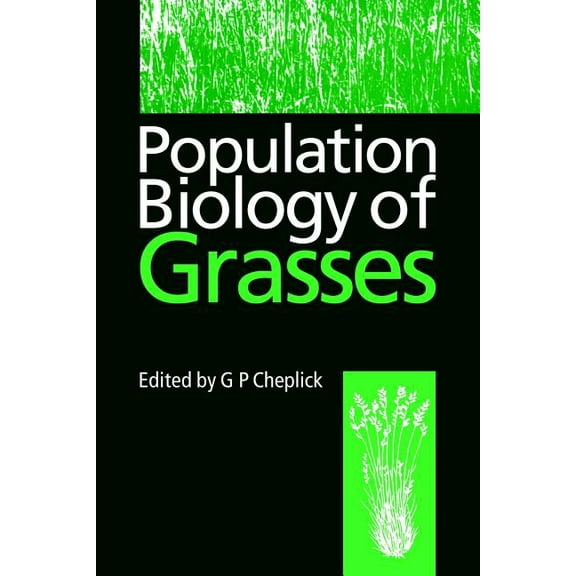 $5468current price $54.68
Population Biology of Grasses, (Paperback)
Monographs in Population Biology Caste and Ecology in the Social Insects, Book 12, (Paperback) $86.65
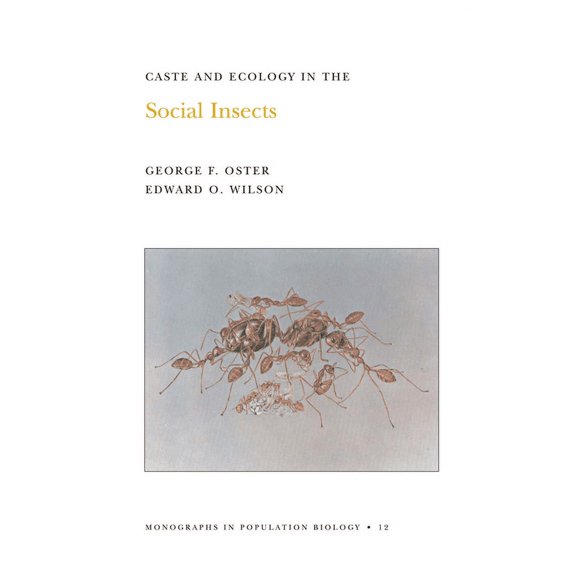 $8665current price $86.65
Monographs in Population Biology Caste and Ecology in the Social Insects, Book 12, (Paperback)
High-Field Science, (Paperback) $89.54
 $8954current price $89.54
High-Field Science, (Paperback)
Customer ratings & reviews
0 ratings|0 reviews
This item does not have any reviews yet
