


Le Ton Beau de Marot: In Praise of the Music of Language, (Paperback)
(No ratings yet)
Key item features
Publishers Weekly,Cl���ment Marot (1496-1544) may have been a great French poet, but "A une Da-moyselle malade" is not his best effort. Essentially it's a get-well greeting: sorry that you're sick, but try to eat something and get some fresh air. The ditty serves as a springboard for Hofstadter's thoughts about language, translation, culture and human genius as the author, his friends, translators, scholars and even computer programs contribute to numbing permutations of this one weak lyric. Hofstadter, a professor of artificial intelligence at Indiana University, had bestsellers with the 1980 Pulitzer Prize-winning G���del, Escher, Bach and a collection of essays reprinted from Scientific American, called Metamagical Themas. Here he is on shakier ground. Hofstadter is not a poet but doesn't hesitate to lay out his opinions: for example, all rhyming translations of "Eugene Onegin" are "excellent" and "fine," but he trashes Vladimir Nabokov's monumental and helpful literal version; he also calls Lolita "pedophilic pornography." And while there are moments of wit, intelligence and uncommon curiosity, there is also a diffuse structure and inflated���and sometimes hokey���prose: "In SimTown, many other things can happen including houses being set on fire and goldfish flopping out of their bowls. (I'm leaving off the quotes merely as a shorthand���I know they aren't real goldfish!)". His cheery gee-whizzery often rings false, and there's probably a good reason for the hollow sound���in 1993, his wife died of a rare disease, which probably also explains his choice of the verse. This book pays tribute to her, while illustrating the powers and limitations of speech. $60,000 ad/promo. (Apr.) (c) Copyright PWxyz, LLC. All rights reserved,Publishers Weekly,Publishers Weekly,Cl���ment Marot (1496-1544) may have been a great French poet, but "A une Da-moyselle malade" is not his best effort. Essentially it's a get-well greeting: sorry that you're sick, but try to eat something and get some fresh air. The ditty serves as a springboard for Hofstadter's thoughts about language, translation, culture and human genius as the author, his friends, translators, scholars and even computer programs contribute to numbing permutations of this one weak lyric. Hofstadter, a professor of artificial intelligence at Indiana University, had bestsellers with the 1980 Pulitzer Prize-winning G���del, Escher, Bach and a collection of essays reprinted from Scientific American, called Metamagical Themas. Here he is on shakier ground. Hofstadter is not a poet but doesn't hesitate to lay out his opinions: for example, all rhyming translations of "Eugene Onegin" are "excellent" and "fine," but he trashes Vladimir Nabokov's monumental and helpful literal version; he also calls Lolita "pedophilic pornography." And while there are moments of wit, intelligence and uncommon curiosity, there is also a diffuse structure and inflated���and sometimes hokey���prose: "In SimTown, many other things can happen including houses being set on fire and goldfish flopping out of their bowls. (I'm leaving off the quotes merely as a shorthand���I know they aren't real goldfish!)". His cheery gee-whizzery often rings false, and there's probably a good reason for the hollow sound���in 1993, his wife died of a rare disease, which probably also explains his choice of the verse. This book pays tribute to her, while illustrating the powers and limitations of speech. $60,000 ad/promo. (Apr.) (c) Copyright PWxyz, LLC. All rights reserved
Specs
- Book formatPaperback
- Fiction/nonfictionNon-Fiction
- GenreTextbooks
- Pub date1998-05-23
- Pages832
- SubgenreTranslating & Interpreting
Current price is USD$54.80
Price when purchased online
Out of stock
How do you want your item?
Out of stock
About this item
Product details
Lost in an art--the art of translation. Thus, in an elegant anagram (translation = lost in an art), Pulitzer Prize-winning author and pioneering cognitive scientist Douglas Hofstadter hints at what led him to pen a deep personal homage to the witty sixteenth-century French poet Clément Marot."Le ton beau de Marot" literally means "The sweet tone of Marot", but to a French ear it suggests "Le tombeau de Marot"--that is, "The tomb of Marot". That double entendre foreshadows the linguistic exuberance of this book, which was sparked a decade ago when Hofstadter, under the spell of an exquisite French miniature by Marot, got hooked on the challenge of recreating both its sweet message and its tight rhymes in English--jumping through two tough hoops at once.In the next few years, he not only did many of his own translations of Marot's poem, but also enlisted friends, students, colleagues, family, noted poets, and translators--even three state-of-the-art translation programs!--to try their hand at this subtle challenge.The rich harvest is represented here by 88 wildly diverse variations on Marot's little theme. Yet this barely scratches the surface of Le Ton beau de Marot, for small groups of these poems alternate with chapters that run all over the map of language and thought.Not merely a set of translations of one poem, Le Ton beau de Marot is an autobiographical essay, a love letter to the French language, a series of musings on life, loss, and death, a sweet bouquet of stirring poetry--but most of all, it celebrates the limitless creativity fired by a passion for the music of words.Dozens of literary themes and creations are woven into the picture, including Pushkin's Eugene Onegin, Dante's Inferno, Salinger's Catcher in the Rye, Villon's Ballades, Nabokov's essays, Georges Perec's La Disparition, Vikram Seth's Golden Gate, Horace's odes, and more.Rife with stunning form-content interplay, crammed with creative linguistic experiments yet always crystal-clear, this book is meant not only for lovers of literature, but also for people who wish to be brought into contact with current ideas about how creativity works, and who wish to see how today's computational models of language and thought stack up next to the human mind.Le Ton beau de Marot is a sparkling, personal, and poetic exploration aimed at both the literary and the scientific world, and is sure to provoke great excitement and heated controversy among poets and translators, critics and writers, and those involved in the study of creativity and its elusive wellsprings.
Publishers Weekly,Cl���ment Marot (1496-1544) may have been a great French poet, but "A une Da-moyselle malade" is not his best effort. Essentially it's a get-well greeting: sorry that you're sick, but try to eat something and get some fresh air. The ditty serves as a springboard for Hofstadter's thoughts about language, translation, culture and human genius as the author, his friends, translators, scholars and even computer programs contribute to numbing permutations of this one weak lyric. Hofstadter, a professor of artificial intelligence at Indiana University, had bestsellers with the 1980 Pulitzer Prize-winning G���del, Escher, Bach and a collection of essays reprinted from Scientific American, called Metamagical Themas. Here he is on shakier ground. Hofstadter is not a poet but doesn't hesitate to lay out his opinions: for example, all rhyming translations of "Eugene Onegin" are "excellent" and "fine," but he trashes Vladimir Nabokov's monumental and helpful literal version; he also calls Lolita "pedophilic pornography." And while there are moments of wit, intelligence and uncommon curiosity, there is also a diffuse structure and inflated���and sometimes hokey���prose: "In SimTown, many other things can happen including houses being set on fire and goldfish flopping out of their bowls. (I'm leaving off the quotes merely as a shorthand���I know they aren't real goldfish!)". His cheery gee-whizzery often rings false, and there's probably a good reason for the hollow sound���in 1993, his wife died of a rare disease, which probably also explains his choice of the verse. This book pays tribute to her, while illustrating the powers and limitations of speech. $60,000 ad/promo. (Apr.) (c) Copyright PWxyz, LLC. All rights reserved,Publishers Weekly,Publishers Weekly,Cl���ment Marot (1496-1544) may have been a great French poet, but "A une Da-moyselle malade" is not his best effort. Essentially it's a get-well greeting: sorry that you're sick, but try to eat something and get some fresh air. The ditty serves as a springboard for Hofstadter's thoughts about language, translation, culture and human genius as the author, his friends, translators, scholars and even computer programs contribute to numbing permutations of this one weak lyric. Hofstadter, a professor of artificial intelligence at Indiana University, had bestsellers with the 1980 Pulitzer Prize-winning G���del, Escher, Bach and a collection of essays reprinted from Scientific American, called Metamagical Themas. Here he is on shakier ground. Hofstadter is not a poet but doesn't hesitate to lay out his opinions: for example, all rhyming translations of "Eugene Onegin" are "excellent" and "fine," but he trashes Vladimir Nabokov's monumental and helpful literal version; he also calls Lolita "pedophilic pornography." And while there are moments of wit, intelligence and uncommon curiosity, there is also a diffuse structure and inflated���and sometimes hokey���prose: "In SimTown, many other things can happen including houses being set on fire and goldfish flopping out of their bowls. (I'm leaving off the quotes merely as a shorthand���I know they aren't real goldfish!)". His cheery gee-whizzery often rings false, and there's probably a good reason for the hollow sound���in 1993, his wife died of a rare disease, which probably also explains his choice of the verse. This book pays tribute to her, while illustrating the powers and limitations of speech. $60,000 ad/promo. (Apr.) (c) Copyright PWxyz, LLC. All rights reserved
info:
We aim to show you accurate product information. Manufacturers, suppliers and others provide what you see here, and we have not verified it.
Specifications
Book format
Paperback
Fiction/nonfiction
Non-Fiction
Genre
Textbooks
Pub date
1998-05-23
Warranty
Warranty information
Please be aware that the warranty terms on items offered for sale by third party Marketplace sellers may differ from those displayed in this section (if any). To confirm warranty terms on an item offered for sale by a third party Marketplace seller, please use the 'Contact seller' feature on the third party Marketplace seller's information page and request the item's warranty terms prior to purchase.
Similar items you might like
Based on what customers bought
Best seller Big Book of Wordsearch: 500 Puzzles $10.22
Best seller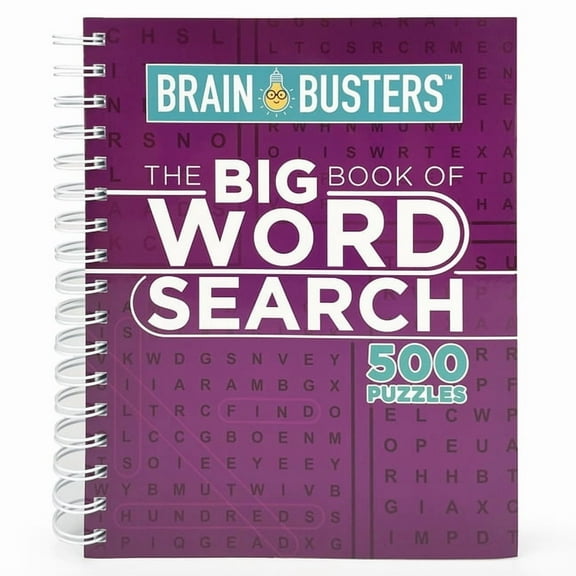 $1022current price $10.22
Big Book of Wordsearch: 500 Puzzles
2124.7 out of 5 Stars. 212 reviewsContact Languages and Music, (Paperback) $43.49
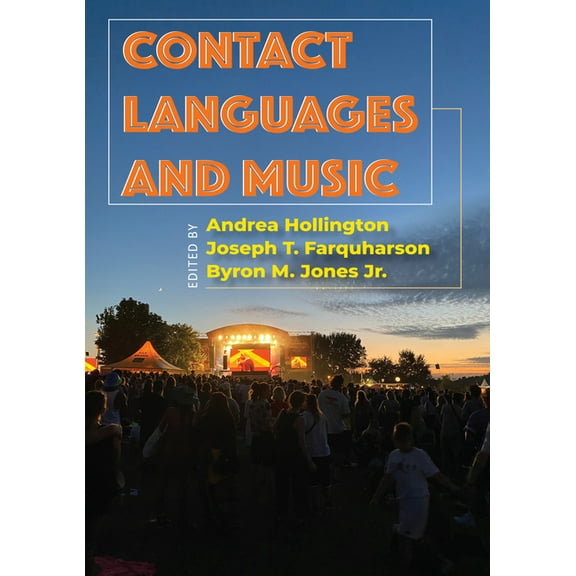 $4349current price $43.49
Contact Languages and Music, (Paperback)
Losange: L'éveil de Thulé, (Paperback) $47.50
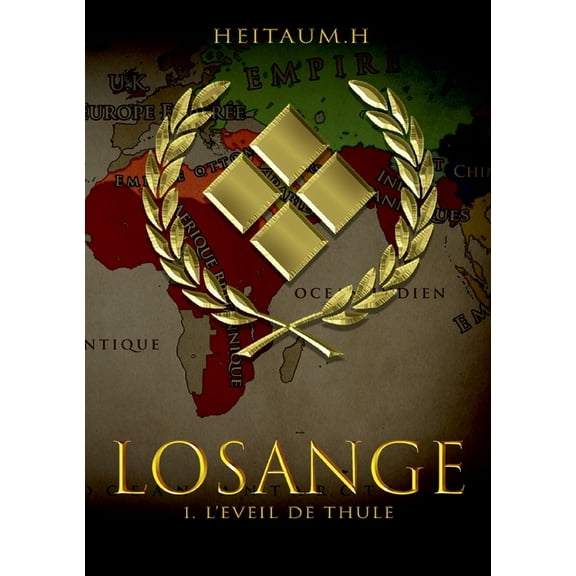 $4750current price $47.50
Losange: L'éveil de Thulé, (Paperback)
Les guerriers de la paix, (Paperback) $46.42
 $4642current price $46.42
Les guerriers de la paix, (Paperback)
The Mende Language (Paperback) $32.95
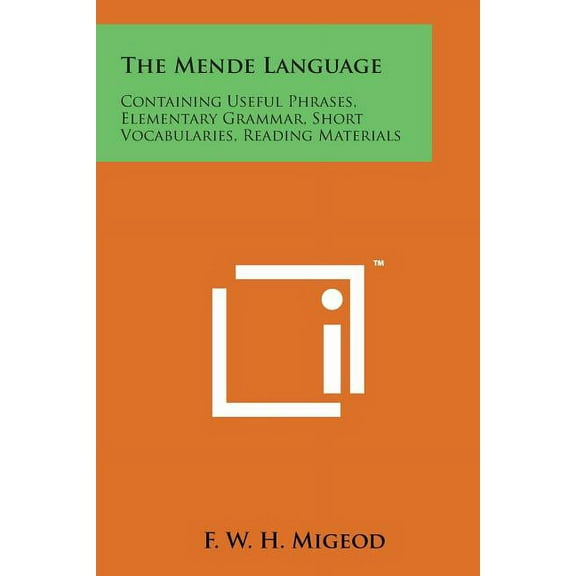 $3295current price $32.95
The Mende Language (Paperback)
La Langue Sacrée (Paperback) $32.95
 $3295current price $32.95
La Langue Sacrée (Paperback)
Bastard Sun, (Paperback) $62.55
 $6255current price $62.55
Bastard Sun, (Paperback)
La belle imposture, (Paperback) $29.80
 $2980current price $29.80
La belle imposture, (Paperback)
Peace, Power And Plenty (Paperback) $36.95
 $3695current price $36.95
Peace, Power And Plenty (Paperback)
Don't Forget to Love Me, (Paperback) $21.19 Was $25.00
 $2119current price $21.19, Was $25.00$25.00
Don't Forget to Love Me, (Paperback)
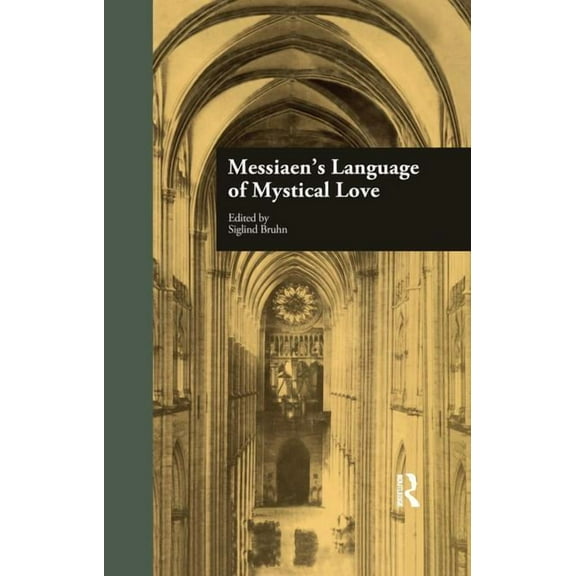
Studies in Contemporary Music and Cultur Messiaen's Language of Mystical Love, (Paperback) $68.99
 $6899current price $68.99
Studies in Contemporary Music and Cultur Messiaen's Language of Mystical Love, (Paperback)
Sing Love 101, (Paperback) $33.26
 $3326current price $33.26
Sing Love 101, (Paperback)
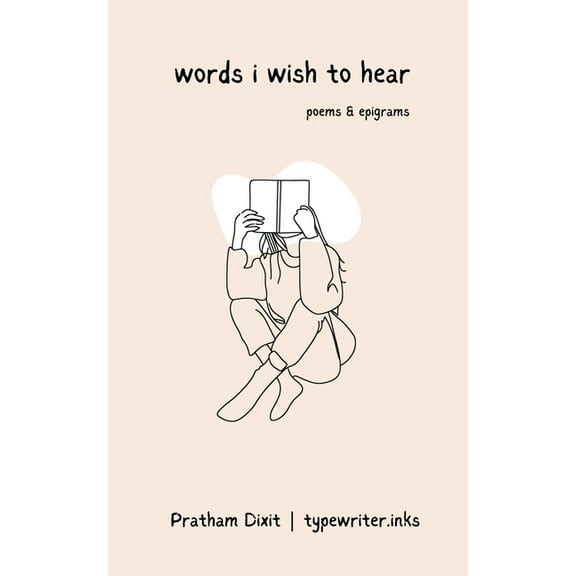
Words I Wish To Hear (Paperback) $15.96
 $1596current price $15.96
Words I Wish To Hear (Paperback)
The Poetic Voice, (Paperback) $15.93 Was $19.95
 $1593current price $15.93, Was $19.95$19.95
The Poetic Voice, (Paperback)
Comme les taureaux d'un même élevage, (Paperback) $23.95
 $2395current price $23.95
Comme les taureaux d'un même élevage, (Paperback)
The Great Passion, (Paperback) $18.77
 $1877current price $18.77
The Great Passion, (Paperback)
Dil Dariya Hai (दिल दरिया है), (Paperback) $19.15
 $1915current price $19.15
Dil Dariya Hai (दिल दरिया है), (Paperback)
To Love and Other Insanities, (Paperback) $13.12
 $1312current price $13.12
To Love and Other Insanities, (Paperback)
Myriad Expressions, (Paperback) $15.95
 $1595current price $15.95
Myriad Expressions, (Paperback)
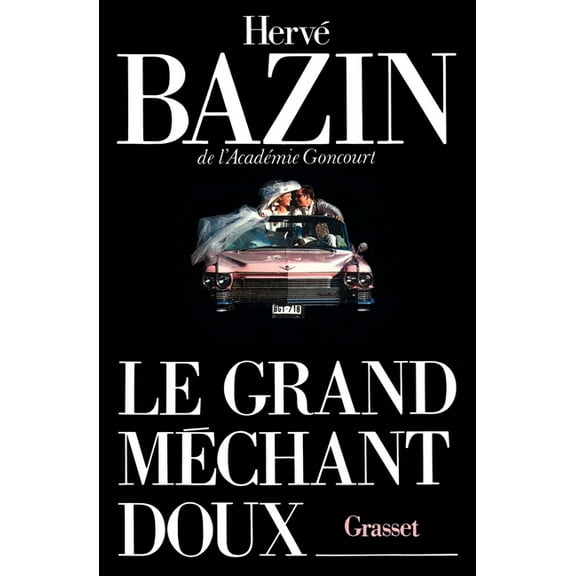
Le grand méchant doux, (Paperback) $27.26
 $2726current price $27.26
Le grand méchant doux, (Paperback)
Customer ratings & reviews
0 ratings|0 reviews
This item does not have any reviews yet
