


Mark Twain's Ethical Realism : The Aesthetics of Race, Class, and Gender (Hardcover)
Key item features
Mark Twain's interest in the relationship between ethics and aesthetics provides the basis for this groundbreaking work of scholarship. Beginning with Twain's observation that a writer of realism becomes "like another conscience" for readers, Joe B. Fulton asks, "What is literary realism?" "In what ways is realism ethical?"
Taking a hard look at recent criticism of Mark Twain and American realism, Fulton explores the skepticism associated with terms such as realism that has led scholars to ignore Twain's view of how a writer creates believable fictions. Recent critics have also attacked the claim that realistic writing is ethically oriented and ignored Twain's belief that because realism demands the authentic depiction of individuals living on the "other" side of race, class, or gender boundaries, it honors their subjectivity. Realism introduces a conventional readership to these "others," Fulton argues, and so fuses ethical and aesthetic concerns.
Russian philosopher Mikhail Bakhtin's neglected, early theories of ethics and aesthetics provide a theoretical framework and vocabulary for Fulton's discussion of Twain's ethical realism. Bakhtin's concept of creativity bears a striking resemblance to Twain's belief that the writer who strives for a realistic depiction of characters becomes "another conscience" within the work of art. For Twain, the realism of portraying people "as they do talk" is inextricably associated with becoming that other conscience for his characters and readers. Likewise, within his novels, Twain's doubled and switched characters serve as another conscience for each other.
Mark Twain's Ethical Realism is the only work that looks specifically at how Twain blends ethical and aesthetic concerns in the act of composing his novels. Fulton conducts a spirited discussion regarding these concepts, and his explanation of how they relate to Twain's writing helps to clarify the complexities of his creative genius. This vital work will make a lasting contribution to our understanding of Mark Twain.
Specs
- Book formatHardcover
- Fiction/nonfictionNon-Fiction
- Publication dateJanuary, 1998
- Pages192
- Edition1
- Original languagesEnglish
How do you want your item?
About this item
Product details
Mark Twain's interest in the relationship between ethics and aesthetics provides the basis for this groundbreaking work of scholarship. Beginning with Twain's observation that a writer of realism becomes "like another conscience" for readers, Joe B. Fulton asks, "What is literary realism?" "In what ways is realism ethical?"
Taking a hard look at recent criticism of Mark Twain and American realism, Fulton explores the skepticism associated with terms such as realism that has led scholars to ignore Twain's view of how a writer creates believable fictions. Recent critics have also attacked the claim that realistic writing is ethically oriented and ignored Twain's belief that because realism demands the authentic depiction of individuals living on the "other" side of race, class, or gender boundaries, it honors their subjectivity. Realism introduces a conventional readership to these "others," Fulton argues, and so fuses ethical and aesthetic concerns.
Russian philosopher Mikhail Bakhtin's neglected, early theories of ethics and aesthetics provide a theoretical framework and vocabulary for Fulton's discussion of Twain's ethical realism. Bakhtin's concept of creativity bears a striking resemblance to Twain's belief that the writer who strives for a realistic depiction of characters becomes "another conscience" within the work of art. For Twain, the realism of portraying people "as they do talk" is inextricably associated with becoming that other conscience for his characters and readers. Likewise, within his novels, Twain's doubled and switched characters serve as another conscience for each other.
Mark Twain's Ethical Realism is the only work that looks specifically at how Twain blends ethical and aesthetic concerns in the act of composing his novels. Fulton conducts a spirited discussion regarding these concepts, and his explanation of how they relate to Twain's writing helps to clarify the complexities of his creative genius. This vital work will make a lasting contribution to our understanding of Mark Twain.
Mark Twain's interest in the relationship between ethics and aesthetics provides the basis for this groundbreaking work of scholarship. Beginning with Twain's observation that a writer of realism becomes "like another conscience" for readers, Joe B. Fulton asks, "What is literary realism?" "In what ways is realism ethical?"
Taking a hard look at recent criticism of Mark Twain and American realism, Fulton explores the skepticism associated with terms such as realism that has led scholars to ignore Twain's view of how a writer creates believable fictions. Recent critics have also attacked the claim that realistic writing is ethically oriented and ignored Twain's belief that because realism demands the authentic depiction of individuals living on the "other" side of race, class, or gender boundaries, it honors their subjectivity. Realism introduces a conventional readership to these "others," Fulton argues, and so fuses ethical and aesthetic concerns.
Russian philosopher Mikhail Bakhtin's neglected, early theories of ethics and aesthetics provide a theoretical framework and vocabulary for Fulton's discussion of Twain's ethical realism. Bakhtin's concept of creativity bears a striking resemblance to Twain's belief that the writer who strives for a realistic depiction of characters becomes "another conscience" within the work of art. For Twain, the realism of portraying people "as they do talk" is inextricably associated with becoming that other conscience for his characters and readers. Likewise, within his novels, Twain's doubled and switched characters serve as another conscience for each other.
Mark Twain's Ethical Realism is the only work that looks specifically at how Twain blends ethical and aesthetic concerns in the act of composing his novels. Fulton conducts a spirited discussion regarding these concepts, and his explanation of how they relate to Twain's writing helps to clarify the complexities of his creative genius. This vital work will make a lasting contribution to our understanding of Mark Twain.
Specifications
Book format
Fiction/nonfiction
Genre
Publication date
Warranty
Warranty information
Similar items you might like
Rom (Hardcover) $105.03
 $10503current price $105.03
Rom (Hardcover)
Studies in American Literary Realism and Naturalism: Mark Twain and Money : Language, Capital, and Culture (Hardcover) $50.29
 $5029current price $50.29
Studies in American Literary Realism and Naturalism: Mark Twain and Money : Language, Capital, and Culture (Hardcover)
Contemporary American Literature Aging Masculinity in the American Novel, (Hardcover) $98.48
 $9848current price $98.48
Contemporary American Literature Aging Masculinity in the American Novel, (Hardcover)
Gender, Theory, and Religion Of Women Borne: A Literary Ethics of Suffering, (Hardcover) $95.45
 $9545current price $95.45
Gender, Theory, and Religion Of Women Borne: A Literary Ethics of Suffering, (Hardcover)
Legacies of Paul de Man, (Hardcover) $110.18
 $11018current price $110.18
Legacies of Paul de Man, (Hardcover)
Shy: (born that way), (Paperback) $23.89
 $2389current price $23.89
Shy: (born that way), (Paperback)
United States Playing the Races: Ethnic Caricature and American Literary Realism, (Hardcover) $90.78
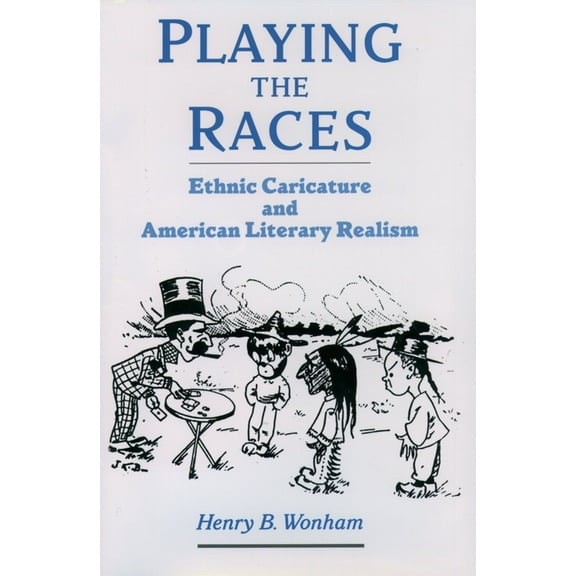 $9078current price $90.78
United States Playing the Races: Ethnic Caricature and American Literary Realism, (Hardcover)
The Universal Decorator, (Hardcover) $69.90
 $6990current price $69.90
The Universal Decorator, (Hardcover)
Casebooks on Modern Dramatists Joe Orton: A Casebook, (Hardcover) $123.78
 $12378current price $123.78
Casebooks on Modern Dramatists Joe Orton: A Casebook, (Hardcover)
Victorian Novel Dreams of the Real: Conventions and Ideology, (Hardcover) $104.17
 $10417current price $104.17
Victorian Novel Dreams of the Real: Conventions and Ideology, (Hardcover)
Works of Mark Twain Pudd'nhead Wilson: The Authoritative Edition, with Those Extraordinary Twins, (Hardcover) $84.34
 $8434current price $84.34
Works of Mark Twain Pudd'nhead Wilson: The Authoritative Edition, with Those Extraordinary Twins, (Hardcover)
Robinson's Progressive Practical Arithmetic (Paperback) $69.90
 $6990current price $69.90
Robinson's Progressive Practical Arithmetic (Paperback)
Crucible, (Hardcover) $24.71 Was $27.46
 $2471current price $24.71, Was $27.46$27.46
Crucible, (Hardcover)
Tactics of the Human: Experimental Technics in American Fiction, (Hardcover) $87.98
 $8798current price $87.98
Tactics of the Human: Experimental Technics in American Fiction, (Hardcover)
Conceived in Modernism: The Aesthetics and Politics of Birth Control, (Hardcover) $196.83
 $19683current price $196.83
Conceived in Modernism: The Aesthetics and Politics of Birth Control, (Hardcover)
Joe Wilson and His Mates : in large print (Hardcover) $79.90
 $7990current price $79.90
Joe Wilson and His Mates : in large print (Hardcover)
Sketches New and Old: Part 1 - in large print (Hardcover) $84.40
 $8440current price $84.40
Sketches New and Old: Part 1 - in large print (Hardcover)
God Still Don't Like Ugly (Hardcover) by Mary Monroe $6.61
 $661current price $6.61
God Still Don't Like Ugly (Hardcover) by Mary Monroe
Fore and Aft: A Story of Actual Sea Life (Hardcover) $72.63
 $7263current price $72.63
Fore and Aft: A Story of Actual Sea Life (Hardcover)
Women and Gender in the Early Modern Wor Baptist Women's Writings in Revolutionary Culture, 1640-1680, (Hardcover) $106.88
 $10688current price $106.88
Women and Gender in the Early Modern Wor Baptist Women's Writings in Revolutionary Culture, 1640-1680, (Hardcover)
