

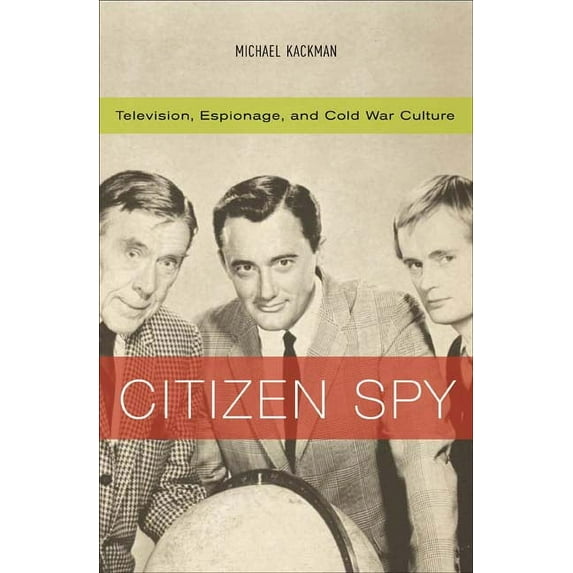
Hero image 0 of Citizen Spy : Television, Espionage, and Cold War Culture (Paperback), 0 of 1
Citizen Spy : Television, Espionage, and Cold War Culture (Paperback)
(No ratings yet)
Key item features
In Citizen Spy, Michael Kackman investigates how media depictions of the slick, smart, and resolute spy have been embedded in the American imagination. Looking at secret agents on television and the relationships among networks, producers, government bureaus, and the viewing public in the 1950s and 1960s, Kackman explores how Americans see themselves in times of political and cultural crisis.
During the first decade of the Cold War, Hollywood developed such shows as I Led 3 Lives and Behind Closed Doors with the approval of federal intelligence agencies, even basing episodes on actual case files. These “documentary melodramas” were, Kackman argues, vehicles for the fledgling television industry to proclaim its loyalty to the government, and they came stocked with appeals to patriotism and anti-Communist vigilance.
As the rigid cultural logic of the Red Scare began to collapse, spy shows became more playful, self-referential, and even critical of the ideals professed in their own scripts. From parodies such as The Man from U.N.C.L.E. and Get Smart to the more complicated global and political situations of I Spy and Mission: Impossible, Kackman situates espionage television within the tumultuous culture of the civil rights and women’s movements and the war in Vietnam. Yet, even as spy shows introduced African-American and female characters, they continued to reinforce racial and sexual stereotypes.
Bringing these concerns to the political and cultural landscape of the twenty-first century, Kackman asserts that the roles of race and gender in national identity have become acutely contentious. Increasingly exclusive definitions of legitimate citizenship, heroism, and dissent have been evident through popular accounts of the Iraq war. Moving beyond a snapshot of television history, Citizen Spy provides a contemporary lens to analyze the nature—and implications—of American nationalism in practice.
Michael Kackman is assistant professor in Radio-Television-Film at the University of Texas, Austin.
During the first decade of the Cold War, Hollywood developed such shows as I Led 3 Lives and Behind Closed Doors with the approval of federal intelligence agencies, even basing episodes on actual case files. These “documentary melodramas” were, Kackman argues, vehicles for the fledgling television industry to proclaim its loyalty to the government, and they came stocked with appeals to patriotism and anti-Communist vigilance.
As the rigid cultural logic of the Red Scare began to collapse, spy shows became more playful, self-referential, and even critical of the ideals professed in their own scripts. From parodies such as The Man from U.N.C.L.E. and Get Smart to the more complicated global and political situations of I Spy and Mission: Impossible, Kackman situates espionage television within the tumultuous culture of the civil rights and women’s movements and the war in Vietnam. Yet, even as spy shows introduced African-American and female characters, they continued to reinforce racial and sexual stereotypes.
Bringing these concerns to the political and cultural landscape of the twenty-first century, Kackman asserts that the roles of race and gender in national identity have become acutely contentious. Increasingly exclusive definitions of legitimate citizenship, heroism, and dissent have been evident through popular accounts of the Iraq war. Moving beyond a snapshot of television history, Citizen Spy provides a contemporary lens to analyze the nature—and implications—of American nationalism in practice.
Michael Kackman is assistant professor in Radio-Television-Film at the University of Texas, Austin.
Specs
- Manual & guide typeInstruction Manual
- Book formatPaperback
- Pages278
- LanguageEnglish
- BrandMichael Kackman
- Pub date2005-09-01
Current price is USD$19.14
Price when purchased online
- Free shipping
 Free 30-day returns
How do you want your item?
Columbus, 43215
Arrives between Apr 16 - Apr 22
|
Sold and shipped by newbookdeals
4.557385759829968 stars out of 5, based on 1882 seller reviews(4.6)1882 seller reviews

Free 30-day returns
About this item
Product details
9780816638291. New condition. Trade paperback. Language: English. Pages: 278. Trade paperback (US). Glued binding. 278 p. Contains: Illustrations. In Citizen Spy, Michael Kackman investigates how media depictions of the slick, smart, and resolute spy have been embedded in the American imagination. Looking at secret agents on television and the relationships among networks, producers, government bureaus, and the viewing public in the 1950s and 1960s, Kackman explores how Americans see themselves in times of political and cultural crisis. During the first decade of the Cold War, Hollywood developed such shows as I Led 3 Lives and Behind Closed Doors with the approval of federal intelligence agencies, even basing episodes on actual case files. These "documentary melodramas" were, Kackman argues, vehicles for the fledgling television industry to proclaim its loyalty to the government, and they came stocked with appeals to patriotism and anti-Communist vigilance. As the rigid cultural logic of the Red Scare began to collapse, spy shows became more playful, self-referential, and even critical of the ideals professed in their own scripts. From parodies such as The Man from U.N.C.L.E. and Get Smart to the more complicated global and political situations of I Spy and Mission: Impossible, Kackman situates espionage television within the tumultuous culture of the civil rights and women's movements and the war in Vietnam. Yet, even as spy shows introduced African-American and female characters, they continued to reinforce racial and sexual stereotypes. Bringing these concerns to the political and cultural landscape of the twenty-first century, Kackman asserts that the roles of race and gender in national identity have become acutely contentious. Increasingly exclusive definitions of legitimate citizenship, heroism, and dissent have been evident through popular accounts of the Iraq war. Moving beyond a snapshot of television history, Citizen Spy provides a contemporary lens to analyze the nature-and implications-of American nationalism in practice. Michael Kackman is assistant professor in Radio-Television-Film at the University of Texas, Austin.
In Citizen Spy, Michael Kackman investigates how media depictions of the slick, smart, and resolute spy have been embedded in the American imagination. Looking at secret agents on television and the relationships among networks, producers, government bureaus, and the viewing public in the 1950s and 1960s, Kackman explores how Americans see themselves in times of political and cultural crisis.
During the first decade of the Cold War, Hollywood developed such shows as I Led 3 Lives and Behind Closed Doors with the approval of federal intelligence agencies, even basing episodes on actual case files. These “documentary melodramas” were, Kackman argues, vehicles for the fledgling television industry to proclaim its loyalty to the government, and they came stocked with appeals to patriotism and anti-Communist vigilance.
As the rigid cultural logic of the Red Scare began to collapse, spy shows became more playful, self-referential, and even critical of the ideals professed in their own scripts. From parodies such as The Man from U.N.C.L.E. and Get Smart to the more complicated global and political situations of I Spy and Mission: Impossible, Kackman situates espionage television within the tumultuous culture of the civil rights and women’s movements and the war in Vietnam. Yet, even as spy shows introduced African-American and female characters, they continued to reinforce racial and sexual stereotypes.
Bringing these concerns to the political and cultural landscape of the twenty-first century, Kackman asserts that the roles of race and gender in national identity have become acutely contentious. Increasingly exclusive definitions of legitimate citizenship, heroism, and dissent have been evident through popular accounts of the Iraq war. Moving beyond a snapshot of television history, Citizen Spy provides a contemporary lens to analyze the nature—and implications—of American nationalism in practice.
Michael Kackman is assistant professor in Radio-Television-Film at the University of Texas, Austin.
During the first decade of the Cold War, Hollywood developed such shows as I Led 3 Lives and Behind Closed Doors with the approval of federal intelligence agencies, even basing episodes on actual case files. These “documentary melodramas” were, Kackman argues, vehicles for the fledgling television industry to proclaim its loyalty to the government, and they came stocked with appeals to patriotism and anti-Communist vigilance.
As the rigid cultural logic of the Red Scare began to collapse, spy shows became more playful, self-referential, and even critical of the ideals professed in their own scripts. From parodies such as The Man from U.N.C.L.E. and Get Smart to the more complicated global and political situations of I Spy and Mission: Impossible, Kackman situates espionage television within the tumultuous culture of the civil rights and women’s movements and the war in Vietnam. Yet, even as spy shows introduced African-American and female characters, they continued to reinforce racial and sexual stereotypes.
Bringing these concerns to the political and cultural landscape of the twenty-first century, Kackman asserts that the roles of race and gender in national identity have become acutely contentious. Increasingly exclusive definitions of legitimate citizenship, heroism, and dissent have been evident through popular accounts of the Iraq war. Moving beyond a snapshot of television history, Citizen Spy provides a contemporary lens to analyze the nature—and implications—of American nationalism in practice.
Michael Kackman is assistant professor in Radio-Television-Film at the University of Texas, Austin.
info:
We aim to show you accurate product information. Manufacturers, suppliers and others provide what you see here, and we have not verified it.
Specifications
Manual & guide type
Instruction Manual
Book format
Paperback
Pages
278
Language
English
Warranty
Warranty information
Please be aware that the warranty terms on items offered for sale by third party Marketplace sellers may differ from those displayed in this section (if any). To confirm warranty terms on an item offered for sale by a third party Marketplace seller, please use the 'Contact seller' feature on the third party Marketplace seller's information page and request the item's warranty terms prior to purchase.
Customer ratings & reviews
0 ratings|0 reviews
This item does not have any reviews yet
