

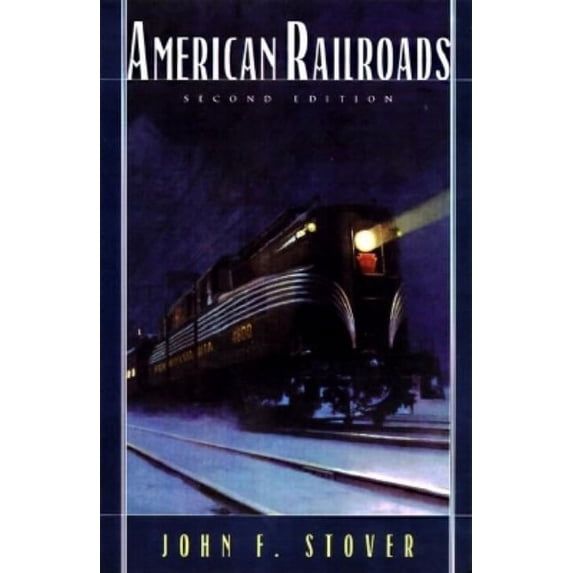
Hero image 0 of The Chicago History of American Civilization: American Railroads (Edition 2) (Paperback), 0 of 1
The Chicago History of American Civilization: American Railroads (Edition 2) (Paperback)
(No ratings yet)
Key item features
Few scenes capture the American experience so eloquently as that of a lonely train chugging across the vastness of the Great Plains, or snaking through tortuous high mountain passes. Although this vision was eclipsed for a time by the rise of air travel and trucking, railroads have enjoyed a rebirth in recent years as profitable freight carriers.
A fascinating account of the rise, decline, and rebirth of railroads in the United States, John F. Stover's American Railroads traces their history from the first lines that helped eastern seaports capture western markets to today's newly revitalized industry. Stover describes the growth of the railroads' monopoly, with the consequent need for state and federal regulations; relates the vital part played by the railroads during the Civil War and the two World Wars; and charts the railroads' decline due to the advent of air travel and trucking during the 1950s.
In two new chapters, Stover recounts the remarkable recovery of the railroads, along with other pivotal events of the industry's recent history. During the 1960s declining passenger traffic and excessive federal regulation led to the federally-financed creation of Amtrak to revive passenger service and Conrail to provide freight service on bankrupt northeastern railroads. The real savior for the railroads, though, proved to be the Staggers Rail Act of 1980, which brought prosperity to rail freight carriers by substantially deregulating the industry. By 1995, renewed railroad freight traffic had reached nearly twice its former peak in 1944.
Bringing both a seasoned eye and new insights to bear on one of the most American of industries, Stover has produced the definitive history of railroads in the United States.
A fascinating account of the rise, decline, and rebirth of railroads in the United States, John F. Stover's American Railroads traces their history from the first lines that helped eastern seaports capture western markets to today's newly revitalized industry. Stover describes the growth of the railroads' monopoly, with the consequent need for state and federal regulations; relates the vital part played by the railroads during the Civil War and the two World Wars; and charts the railroads' decline due to the advent of air travel and trucking during the 1950s.
In two new chapters, Stover recounts the remarkable recovery of the railroads, along with other pivotal events of the industry's recent history. During the 1960s declining passenger traffic and excessive federal regulation led to the federally-financed creation of Amtrak to revive passenger service and Conrail to provide freight service on bankrupt northeastern railroads. The real savior for the railroads, though, proved to be the Staggers Rail Act of 1980, which brought prosperity to rail freight carriers by substantially deregulating the industry. By 1995, renewed railroad freight traffic had reached nearly twice its former peak in 1944.
Bringing both a seasoned eye and new insights to bear on one of the most American of industries, Stover has produced the definitive history of railroads in the United States.
Specs
- Book formatPaperback
- Fiction/nonfictionNon-Fiction
- GenreTravel & Nature
- Publication dateDecember, 1997
- Pages324
- Number in series2
Current price is USD$26.43
Price when purchased online
Out of stock
How do you want your item?
Out of stock
About this item
Product details
Few scenes capture the American experience so eloquently as that of a lonely train chugging across the vastness of the Great Plains, or snaking through tortuous high mountain passes. Although this vision was eclipsed for a time by the rise of air travel and trucking, railroads have enjoyed a rebirth in recent years as profitable freight carriers. A fascinating account of the rise, decline, and rebirth of railroads in the United States, John F. Stover's American Railroads traces their history from the first lines that helped eastern seaports capture western markets to today's newly revitalized industry. Stover describes the growth of the railroads' monopoly, with the consequent need for state and federal regulations; relates the vital part played by the railroads during the Civil War and the two World Wars; and charts the railroads' decline due to the advent of air travel and trucking during the 1950s. In two new chapters, Stover recounts the remarkable recovery of the railroads, along with other pivotal events of the industry's recent history. During the 1960s declining passenger traffic and excessive federal regulation led to the federally-financed creation of Amtrak to revive passenger service and Conrail to provide freight service on bankrupt northeastern railroads. The real savior for the railroads, though, proved to be the Staggers Rail Act of 1980, which brought prosperity to rail freight carriers by substantially deregulating the industry. By 1995, renewed railroad freight traffic had reached nearly twice its former peak in 1944. Bringing both a seasoned eye and new insights to bear on one of the most American of industries, Stover has produced the definitive history of railroads in the United States.
Few scenes capture the American experience so eloquently as that of a lonely train chugging across the vastness of the Great Plains, or snaking through tortuous high mountain passes. Although this vision was eclipsed for a time by the rise of air travel and trucking, railroads have enjoyed a rebirth in recent years as profitable freight carriers.
A fascinating account of the rise, decline, and rebirth of railroads in the United States, John F. Stover's American Railroads traces their history from the first lines that helped eastern seaports capture western markets to today's newly revitalized industry. Stover describes the growth of the railroads' monopoly, with the consequent need for state and federal regulations; relates the vital part played by the railroads during the Civil War and the two World Wars; and charts the railroads' decline due to the advent of air travel and trucking during the 1950s.
In two new chapters, Stover recounts the remarkable recovery of the railroads, along with other pivotal events of the industry's recent history. During the 1960s declining passenger traffic and excessive federal regulation led to the federally-financed creation of Amtrak to revive passenger service and Conrail to provide freight service on bankrupt northeastern railroads. The real savior for the railroads, though, proved to be the Staggers Rail Act of 1980, which brought prosperity to rail freight carriers by substantially deregulating the industry. By 1995, renewed railroad freight traffic had reached nearly twice its former peak in 1944.
Bringing both a seasoned eye and new insights to bear on one of the most American of industries, Stover has produced the definitive history of railroads in the United States.
A fascinating account of the rise, decline, and rebirth of railroads in the United States, John F. Stover's American Railroads traces their history from the first lines that helped eastern seaports capture western markets to today's newly revitalized industry. Stover describes the growth of the railroads' monopoly, with the consequent need for state and federal regulations; relates the vital part played by the railroads during the Civil War and the two World Wars; and charts the railroads' decline due to the advent of air travel and trucking during the 1950s.
In two new chapters, Stover recounts the remarkable recovery of the railroads, along with other pivotal events of the industry's recent history. During the 1960s declining passenger traffic and excessive federal regulation led to the federally-financed creation of Amtrak to revive passenger service and Conrail to provide freight service on bankrupt northeastern railroads. The real savior for the railroads, though, proved to be the Staggers Rail Act of 1980, which brought prosperity to rail freight carriers by substantially deregulating the industry. By 1995, renewed railroad freight traffic had reached nearly twice its former peak in 1944.
Bringing both a seasoned eye and new insights to bear on one of the most American of industries, Stover has produced the definitive history of railroads in the United States.
info:
We aim to show you accurate product information. Manufacturers, suppliers and others provide what you see here, and we have not verified it.
Specifications
Book format
Paperback
Fiction/nonfiction
Non-Fiction
Genre
Travel & Nature
Publication date
December, 1997
Warranty
Warranty information
Please be aware that the warranty terms on items offered for sale by third party Marketplace sellers may differ from those displayed in this section (if any). To confirm warranty terms on an item offered for sale by a third party Marketplace seller, please use the 'Contact seller' feature on the third party Marketplace seller's information page and request the item's warranty terms prior to purchase.
Warnings
State Chemical Disclosure
None
Customer ratings & reviews
0 ratings|0 reviews
This item does not have any reviews yet

Related pages
- Airport Codes Houston
- Diamond Building Chicago
- Airports International
- Airport Chicago
- Best Sellers In History Of Railroads
- Chicago Popular Mechanics Magazine
- Expeditions & Discoveries History Books
- Polar Regions History Books
- Canada Military History Books
- Vehicles Military History Books
- Pictorial Military History Books
- Southwest State & Local United States History Books