

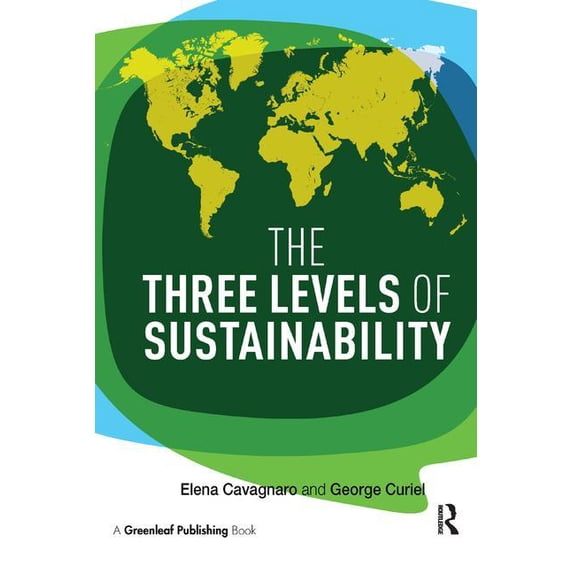
Three Levels of Sustainability
(No ratings yet)
Key item features
The Three Levels of Sustainability approaches the topic from a slightly different angle than the now familiar areas of the economy, society and the environment by focusing on society, organisations and leadership. By covering a wide range of angles combined with its interdisciplinary approach it thereby places the challenge in a context that also stretches beyond the familiar culprits of highly developed countries and their governments. According to Drucker, our time is the era of organisations and ''social problems can only be solved if they are treated as profitable opportunities'' (1984: 54-59). Achieving sustainability is therefore considered an opportunity for organisations due to their dominant position in the Common Era and both organisations and leadership for sustainability are the primary focus of this publication. The book is likely to appeal to those working in managerial positions and those aspiring towards leadership such as business students, but its generally accessible bibliography also implies that it might appeal to a wider public, particularly to those who might not show much general interest in the often business-unfriendly literature surrounding sustainability. The fact that climate change plays a minor role, or rather a role among many concerns within each of the three levels, also points towards a less politically laden or ideological approach to sustainability. The book is structured in a familiar manner, with each of the three main parts covering the three levels of sustainability. Each of these parts is subdivided into individual chapters, which in turn have several subsections and at the end of each individual chapter a conclusion that captures the key points. The referenced literature covers several well known scholars, including many economists, environmentalists (in its broadest sense) and psychologists, but also other thought provoking publications that are more widely in the public domain. The book also strikes a good balance between text/narrative and separate explanatory boxes. This proves very useful for novices as well as for experts who could do with refreshing their knowledge without the need to look up key terms or case studies. Within the context of sustainability and organisations, Cavagnaro and Curial differentiate between ''greening'' organisations and aligning activities with principles. The latter is assumed to require strong leadership with the social and emotional intelligence to ''care for you and me'' and the spiritual intelligence to ''care for all'' (p. 242). Leadership needs to be flexible enough to allow measurements of sustainability to adapt as knowledge changes regarding what is considered sustainable or desirable. Leadership, according to Lawrence (2010: 4), is the primary means of adapting to changing circumstances. Several thought-provoking and sometimes controversial quotes lay the foundation for an interesting debate surrounding the role of organisations and their leaders in a resource constrained world. The primary focus on these generally under-researched players in the global economy in relation to sustainability provides a fresh approach to the dilemma of shrinking capacities and the responsibilities of nation states to deal with environmental and social concerns. Social responsibility hereby encapsulates both organisations and individuals, as both need to be convinced of the requirement to become more sustainable. However, it does not point towards corporations as barriers to sustainability but rather highlights the reasons underlying highly varied corporate approaches to environmental, social and economic wellbeing. By contrasting business models based on diverse intellectual backgrounds ranging from Keynes to Friedman, this book also takes a more objective stance on profit and the pursuit thereof than would normally be expected from a book with this title. Unsurprisingly within this context, however, the book assumes that organisations are already looking beyond profit. The authors play with the idea that in some cases a new paradigm has already been entered where organisations do not exist for the sole purpose of maximising profits. By avoiding the discussion surrounding greenhouse gas emissions as well as resource extraction and resource intense industries, the authors also conveniently bypass the biggest dilemmas and shortfalls associated with sustainability and sustainable development. On the other hand, they manage to marry somewhat tricky subject areas such as the concern for social development and environmentally sustainable development by including controversial authors such as Lovelock and Lomborg. The general balance of views, ranging from techno-centrism through techno-optimism to techno-scepticism along with analyses of environment and growth dilemmas using long-established researchers in the field, including Nobel laureates in economics, is, however, sadly missing in the last chapter on leadership. Some critical views on leadership and the pitfalls of our increasing dependence on non-democratically elected leaders in powerful positions would have enlivened the argument in the last part. The other parts of the book have historic accounts to show how and why now-familiar trends were set and how concepts such as sustainable development evolved from concerns regarding the Third World debt crisis and the need to integrate environmental considerations in poverty alleviation strategies. The use of the Dutch East India Company as an example of an early corporation and one with the sole intent to maximise profits also helps to place modern-day corporations into perspective. The last section takes a rather different turn by providing a rather uncritical psychological approach to leadership combining various relevant aspects such as social psychology and environmental psychology. The book is intended to challenge the inherently weak and fragmented contemporary approach to the debate surrounding sustainability by making use of familiar but revisited concepts of corporate social responsibility, sustainable development and personal leadership. These three levels of sustainability are intended to embed sustainability through compassion and decreasing egocentrism, making each person a potential leader. Despite my points of criticism, The Three Levels of Sustainability is nevertheless a compelling read. As a student text-book, it provides a great overview of various discussions and trends that are difficult to find in such a compact yet well researched format. Overall, Cavagnaro and Curiel provide a solid contribution to the discussion surrounding organisations by making a strong argument for the economisation of sustainability and vice versa. References Drucker, P.F. 1984. ''The new meaning of corporate social responsibility'', California Management Review 26(2): 53-63. Lawrence, P.R. 2010. Driven to Lead: Good, Bad and Misguided Leadership. San Francisco: Jossey Bass.
Specs
- Book formatPaperback
- Fiction/nonfictionNon-Fiction
- GenreNonfiction
- Publication dateJanuary, 2012
- Pages328
- Edition1st Edition
Current price is USD$27.93
Price when purchased online
- Free shipping
 Free 30-day returns
How do you want your item?
Ships to
Arrives between Jul 2 - Jul 7
|
Sold and shipped by Alibris Books
4.570057581573896 stars out of 5, based on 11983 seller reviews(4.6)11983 seller reviews

Free 30-day returns
More seller options (1)
Starting from $38.13
About this item
Product details
Three Levels of Sustainability
The Three Levels of Sustainability approaches the topic from a slightly different angle than the now familiar areas of the economy, society and the environment by focusing on society, organisations and leadership. By covering a wide range of angles combined with its interdisciplinary approach it thereby places the challenge in a context that also stretches beyond the familiar culprits of highly developed countries and their governments. According to Drucker, our time is the era of organisations and ''social problems can only be solved if they are treated as profitable opportunities'' (1984: 54-59). Achieving sustainability is therefore considered an opportunity for organisations due to their dominant position in the Common Era and both organisations and leadership for sustainability are the primary focus of this publication. The book is likely to appeal to those working in managerial positions and those aspiring towards leadership such as business students, but its generally accessible bibliography also implies that it might appeal to a wider public, particularly to those who might not show much general interest in the often business-unfriendly literature surrounding sustainability. The fact that climate change plays a minor role, or rather a role among many concerns within each of the three levels, also points towards a less politically laden or ideological approach to sustainability. The book is structured in a familiar manner, with each of the three main parts covering the three levels of sustainability. Each of these parts is subdivided into individual chapters, which in turn have several subsections and at the end of each individual chapter a conclusion that captures the key points. The referenced literature covers several well known scholars, including many economists, environmentalists (in its broadest sense) and psychologists, but also other thought provoking publications that are more widely in the public domain. The book also strikes a good balance between text/narrative and separate explanatory boxes. This proves very useful for novices as well as for experts who could do with refreshing their knowledge without the need to look up key terms or case studies. Within the context of sustainability and organisations, Cavagnaro and Curial differentiate between ''greening'' organisations and aligning activities with principles. The latter is assumed to require strong leadership with the social and emotional intelligence to ''care for you and me'' and the spiritual intelligence to ''care for all'' (p. 242). Leadership needs to be flexible enough to allow measurements of sustainability to adapt as knowledge changes regarding what is considered sustainable or desirable. Leadership, according to Lawrence (2010: 4), is the primary means of adapting to changing circumstances. Several thought-provoking and sometimes controversial quotes lay the foundation for an interesting debate surrounding the role of organisations and their leaders in a resource constrained world. The primary focus on these generally under-researched players in the global economy in relation to sustainability provides a fresh approach to the dilemma of shrinking capacities and the responsibilities of nation states to deal with environmental and social concerns. Social responsibility hereby encapsulates both organisations and individuals, as both need to be convinced of the requirement to become more sustainable. However, it does not point towards corporations as barriers to sustainability but rather highlights the reasons underlying highly varied corporate approaches to environmental, social and economic wellbeing. By contrasting business models based on diverse intellectual backgrounds ranging from Keynes to Friedman, this book also takes a more objective stance on profit and the pursuit thereof than would normally be expected from a book with this title. Unsurprisingly within this context, however, the book assumes that organisations are already looking beyond profit. The authors play with the idea that in some cases a new paradigm has already been entered where organisations do not exist for the sole purpose of maximising profits. By avoiding the discussion surrounding greenhouse gas emissions as well as resource extraction and resource intense industries, the authors also conveniently bypass the biggest dilemmas and shortfalls associated with sustainability and sustainable development. On the other hand, they manage to marry somewhat tricky subject areas such as the concern for social development and environmentally sustainable development by including controversial authors such as Lovelock and Lomborg. The general balance of views, ranging from techno-centrism through techno-optimism to techno-scepticism along with analyses of environment and growth dilemmas using long-established researchers in the field, including Nobel laureates in economics, is, however, sadly missing in the last chapter on leadership. Some critical views on leadership and the pitfalls of our increasing dependence on non-democratically elected leaders in powerful positions would have enlivened the argument in the last part. The other parts of the book have historic accounts to show how and why now-familiar trends were set and how concepts such as sustainable development evolved from concerns regarding the Third World debt crisis and the need to integrate environmental considerations in poverty alleviation strategies. The use of the Dutch East India Company as an example of an early corporation and one with the sole intent to maximise profits also helps to place modern-day corporations into perspective. The last section takes a rather different turn by providing a rather uncritical psychological approach to leadership combining various relevant aspects such as social psychology and environmental psychology. The book is intended to challenge the inherently weak and fragmented contemporary approach to the debate surrounding sustainability by making use of familiar but revisited concepts of corporate social responsibility, sustainable development and personal leadership. These three levels of sustainability are intended to embed sustainability through compassion and decreasing egocentrism, making each person a potential leader. Despite my points of criticism, The Three Levels of Sustainability is nevertheless a compelling read. As a student text-book, it provides a great overview of various discussions and trends that are difficult to find in such a compact yet well researched format. Overall, Cavagnaro and Curiel provide a solid contribution to the discussion surrounding organisations by making a strong argument for the economisation of sustainability and vice versa. References Drucker, P.F. 1984. ''The new meaning of corporate social responsibility'', California Management Review 26(2): 53-63. Lawrence, P.R. 2010. Driven to Lead: Good, Bad and Misguided Leadership. San Francisco: Jossey Bass.
info:
We aim to show you accurate product information. Manufacturers, suppliers and others provide what you see here, and we have not verified it.
Specifications
Book format
Paperback
Fiction/nonfiction
Non-Fiction
Genre
Nonfiction
Publication date
January, 2012
Warranty
Warranty information
Please be aware that the warranty terms on items offered for sale by third party Marketplace sellers may differ from those displayed in this section (if any). To confirm warranty terms on an item offered for sale by a third party Marketplace seller, please use the 'Contact seller' feature on the third party Marketplace seller's information page and request the item's warranty terms prior to purchase.
Similar items you might like
Based on what customers bought
Catalogue De La Bibliothèque Scientifique, Historique Et Littéraire De Feu M. Michel Chasles...: Dont La Vente Aux Enchè, (Paperback) $24.95
 $2495current price $24.95
Catalogue De La Bibliothèque Scientifique, Historique Et Littéraire De Feu M. Michel Chasles...: Dont La Vente Aux Enchè, (Paperback)
Extreme Democracy (Paperback) $29.45
 $2945current price $29.45
Extreme Democracy (Paperback)
The Hidden Structure of Violence $18.65
 $1865current price $18.65
The Hidden Structure of Violence
Fuchsias : The New Cultivars (Paperback) $21.65 Was $28.18
 $2165current price $21.65, Was $28.18$28.18
Fuchsias : The New Cultivars (Paperback)
Mécanisme Et Ãducation Des Mouvements, (Paperback) $31.91
 $3191current price $31.91
Mécanisme Et Ãducation Des Mouvements, (Paperback)
George Sanders: An Exhausted Life, (Paperback) $18.90
 $1890current price $18.90
George Sanders: An Exhausted Life, (Paperback)
Forest Of Bowland & Ribblesdale, Pendle Hill, Clitheroe & Se $22.78
 $2278current price $22.78
Forest Of Bowland & Ribblesdale, Pendle Hill, Clitheroe & Se
Orculo de los Arcngeles Femeninos $21.57 Was $26.57
 $2157current price $21.57, Was $26.57$26.57
Orculo de los Arcngeles Femeninos
The Ethical Society: A Framework For a Peaceful, Sustainable World $21.53
 $2153current price $21.53
The Ethical Society: A Framework For a Peaceful, Sustainable World
Awakening: A Journey Within (Hardcover) $37.30
 $3730current price $37.30
Awakening: A Journey Within (Hardcover)
-NA- $25.63 Was $34.14
 $2563current price $25.63, Was $34.14$34.14
-NA-
Geoparks and Geotourism: New Approaches to Sustainability for the 21st Century, (Paperback) $26.78
 $2678current price $26.78
Geoparks and Geotourism: New Approaches to Sustainability for the 21st Century, (Paperback)
Factfulness Sustainability: What You Should Know about Ecological Crises and Resource Consumption, (Paperback) $27.32 Was $32.99
 $2732current price $27.32, Was $32.99$32.99
Factfulness Sustainability: What You Should Know about Ecological Crises and Resource Consumption, (Paperback)
Kenyaâs Road to Sustainable Development (1963 - 2050): Looking Back to Look Forward $15.00
 $1500current price $15.00
Kenyaâs Road to Sustainable Development (1963 - 2050): Looking Back to Look Forward
Your Health; It's a Question of Balance $14.95
 $1495current price $14.95
Your Health; It's a Question of Balance
Organizations and the Natural Environmen Selling Sustainability Short?, (Paperback) $52.85
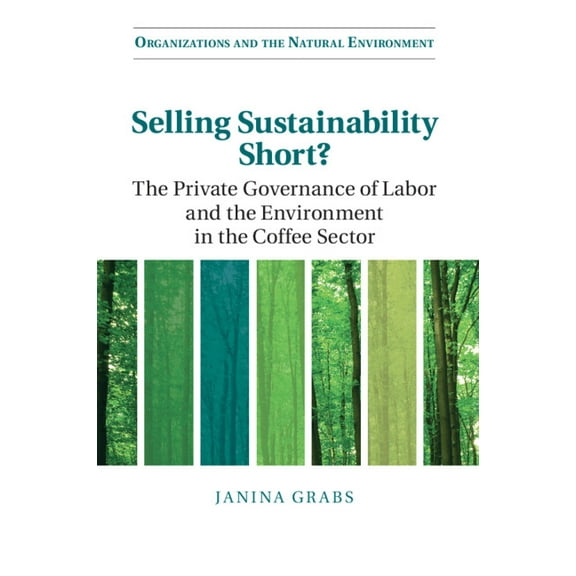 $5285current price $52.85
Organizations and the Natural Environmen Selling Sustainability Short?, (Paperback)
Putting Sustainability into Practice $241.64
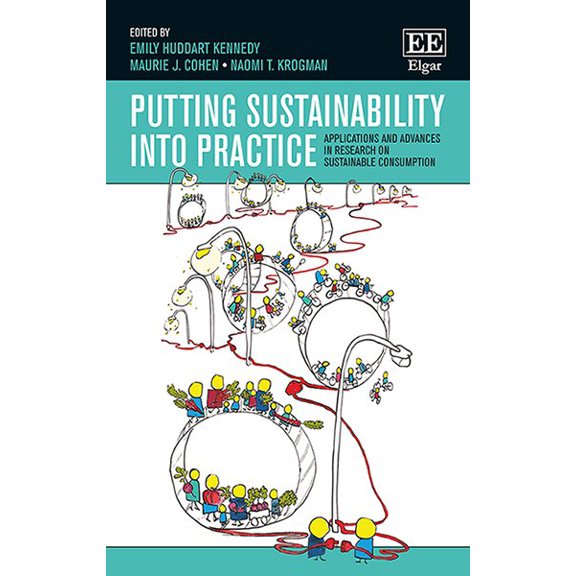 $24164current price $241.64
Putting Sustainability into Practice
Progress and Poverty, (Paperback) $15.99
 $1599current price $15.99
Progress and Poverty, (Paperback)
Leading Holistically and the Impact on Employee Retention, (Paperback) $19.50
 $1950current price $19.50
Leading Holistically and the Impact on Employee Retention, (Paperback)
-NA- $33.95
 $3395current price $33.95
-NA-
Customer ratings & reviews
0 ratings|0 reviews
This item does not have any reviews yet
