


Hero image 0 of Distributive Justice and Disability : Utilitarianism against Egalitarianism (Hardcover), 0 of 1
Distributive Justice and Disability : Utilitarianism against Egalitarianism (Hardcover)
(No ratings yet)
Key item features
Theories of distributive justice are most severely tested in the area of disability. In this book, Mark Stein argues that utilitarianism performs better than egalitarian theories in this area: whereas egalitarian theories help the disabled either too little or too much, utilitarianism achieves the proper balance by placing resources where they will do the most good.
Stein offers what may be the broadest critique of egalitarian theory from a utilitarian perspective. He addresses the work of egalitarian theorists John Rawls, Ronald Dworkin, Amartya Sen, Bruce Ackerman, Martha Nussbaum, Norman Daniels, Philippe Van Parijs, and others. Stein claims that egalitarians are often driven to borrow elements of utilitarianism in order to make their theories at all plausible.
The book concludes with an acknowledgment that both utilitarians and egalitarians face problems in the distribution of life-saving medical resources. Stein advocates a version of utilitarianism that would distribute life-saving resources based on life expectancy, not quality of life. Egalitarian theories, he argues, ignore life expectancy and so are again found wanting.
Distributive Justice and Disability is a powerful and engaging book that helps to reframe the debate between egalitarian and utilitarian thinkers.
Stein offers what may be the broadest critique of egalitarian theory from a utilitarian perspective. He addresses the work of egalitarian theorists John Rawls, Ronald Dworkin, Amartya Sen, Bruce Ackerman, Martha Nussbaum, Norman Daniels, Philippe Van Parijs, and others. Stein claims that egalitarians are often driven to borrow elements of utilitarianism in order to make their theories at all plausible.
The book concludes with an acknowledgment that both utilitarians and egalitarians face problems in the distribution of life-saving medical resources. Stein advocates a version of utilitarianism that would distribute life-saving resources based on life expectancy, not quality of life. Egalitarian theories, he argues, ignore life expectancy and so are again found wanting.
Distributive Justice and Disability is a powerful and engaging book that helps to reframe the debate between egalitarian and utilitarian thinkers.
Specs
- Book formatHardcover
- Fiction/nonfictionNon-Fiction
- Publication dateJuly, 2006
- Pages316
- Edition1
- PublisherYale University Press
Current price is USD$87.77
Price when purchased online
- Free shipping
 Free 30-day returns
How do you want your item?
Ships to
Arrives between May 23 - May 26
|
Sold and shipped by Alibris Books
4.568783771813269 stars out of 5, based on 11289 seller reviews(4.6)11289 seller reviews

Free 30-day returns
Other sellers
$93.89
+Free shippingShipping, arrives by Fri, May 22 to Columbus, 43215
Sold and shipped by thebookpros
Free 30-day returns
About this item
Product details
Theories of distributive justice are most severely tested in the area of disability. In this book, Mark Stein argues that utilitarianism performs better than egalitarian theories in this area: whereas egalitarian theories help the disabled either too little or too much, utilitarianism achieves the proper balance by placing resources where they will do the most good.
Stein offers what may be the broadest critique of egalitarian theory from a utilitarian perspective. He addresses the work of egalitarian theorists John Rawls, Ronald Dworkin, Amartya Sen, Bruce Ackerman, Martha Nussbaum, Norman Daniels, Philippe Van Parijs, and others. Stein claims that egalitarians are often driven to borrow elements of utilitarianism in order to make their theories at all plausible.
The book concludes with an acknowledgment that both utilitarians and egalitarians face problems in the distribution of life-saving medical resources. Stein advocates a version of utilitarianism that would distribute life-saving resources based on life expectancy, not quality of life. Egalitarian theories, he argues, ignore life expectancy and so are again found wanting.
Distributive Justice and Disability is a powerful and engaging book that helps to reframe the debate between egalitarian and utilitarian thinkers.
Stein offers what may be the broadest critique of egalitarian theory from a utilitarian perspective. He addresses the work of egalitarian theorists John Rawls, Ronald Dworkin, Amartya Sen, Bruce Ackerman, Martha Nussbaum, Norman Daniels, Philippe Van Parijs, and others. Stein claims that egalitarians are often driven to borrow elements of utilitarianism in order to make their theories at all plausible.
The book concludes with an acknowledgment that both utilitarians and egalitarians face problems in the distribution of life-saving medical resources. Stein advocates a version of utilitarianism that would distribute life-saving resources based on life expectancy, not quality of life. Egalitarian theories, he argues, ignore life expectancy and so are again found wanting.
Distributive Justice and Disability is a powerful and engaging book that helps to reframe the debate between egalitarian and utilitarian thinkers.
Theories of distributive justice are most severely tested in the area of disability. In this book, Mark Stein argues that utilitarianism performs better than egalitarian theories in this area: whereas egalitarian theories help the disabled either too little or too much, utilitarianism achieves the proper balance by placing resources where they will do the most good.
Stein offers what may be the broadest critique of egalitarian theory from a utilitarian perspective. He addresses the work of egalitarian theorists John Rawls, Ronald Dworkin, Amartya Sen, Bruce Ackerman, Martha Nussbaum, Norman Daniels, Philippe Van Parijs, and others. Stein claims that egalitarians are often driven to borrow elements of utilitarianism in order to make their theories at all plausible.
The book concludes with an acknowledgment that both utilitarians and egalitarians face problems in the distribution of life-saving medical resources. Stein advocates a version of utilitarianism that would distribute life-saving resources based on life expectancy, not quality of life. Egalitarian theories, he argues, ignore life expectancy and so are again found wanting.
Distributive Justice and Disability is a powerful and engaging book that helps to reframe the debate between egalitarian and utilitarian thinkers.
Stein offers what may be the broadest critique of egalitarian theory from a utilitarian perspective. He addresses the work of egalitarian theorists John Rawls, Ronald Dworkin, Amartya Sen, Bruce Ackerman, Martha Nussbaum, Norman Daniels, Philippe Van Parijs, and others. Stein claims that egalitarians are often driven to borrow elements of utilitarianism in order to make their theories at all plausible.
The book concludes with an acknowledgment that both utilitarians and egalitarians face problems in the distribution of life-saving medical resources. Stein advocates a version of utilitarianism that would distribute life-saving resources based on life expectancy, not quality of life. Egalitarian theories, he argues, ignore life expectancy and so are again found wanting.
Distributive Justice and Disability is a powerful and engaging book that helps to reframe the debate between egalitarian and utilitarian thinkers.
info:
We aim to show you accurate product information. Manufacturers, suppliers and others provide what you see here, and we have not verified it.
Specifications
Book format
Hardcover
Fiction/nonfiction
Non-Fiction
Genre
Political & Social Sciences
Publication date
July, 2006
Warranty
Warranty information
Please be aware that the warranty terms on items offered for sale by third party Marketplace sellers may differ from those displayed in this section (if any). To confirm warranty terms on an item offered for sale by a third party Marketplace seller, please use the 'Contact seller' feature on the third party Marketplace seller's information page and request the item's warranty terms prior to purchase.
Warnings
State Chemical Disclosure
None
Similar items you might like
Based on what customers bought
Sterilization of People with Mental Disabilities: Issues, Perspectives, and Cases, (Hardcover) $30.46
 $3046current price $30.46
Sterilization of People with Mental Disabilities: Issues, Perspectives, and Cases, (Hardcover)
Grand Challenges for Social Work and Society, (Hardcover) $54.02
 $5402current price $54.02
Grand Challenges for Social Work and Society, (Hardcover)
Contours of Dignity C, (Hardcover) $59.22
 $5922current price $59.22
Contours of Dignity C, (Hardcover)
Point of View of the Universe: Sidgwick and Contemporary Ethics, (Hardcover) $114.71
 $11471current price $114.71
Point of View of the Universe: Sidgwick and Contemporary Ethics, (Hardcover)
The Heart of Justice: Care Ethics and Political Theory, (Hardcover) $63.27
 $6327current price $63.27
The Heart of Justice: Care Ethics and Political Theory, (Hardcover)
Public Health Perspectives on Disability: Science, Social Justice, Ethics, and Beyond, (Paperback) $86.83
 $8683current price $86.83
Public Health Perspectives on Disability: Science, Social Justice, Ethics, and Beyond, (Paperback)
The Dimensions of Consequentialism: Ethics, Equality and Risk, (Hardcover) $36.99 Was $72.00
 $3699current price $36.99, Was $72.00$72.00
The Dimensions of Consequentialism: Ethics, Equality and Risk, (Hardcover)
Contemporary Philosophy in Focus Hilary Putnam, (Hardcover) $72.60
 $7260current price $72.60
Contemporary Philosophy in Focus Hilary Putnam, (Hardcover)
How to End a War: Essays on Justice, Peace, and Repair, (Hardcover) $73.40
 $7340current price $73.40
How to End a War: Essays on Justice, Peace, and Repair, (Hardcover)
Distributive Justice: Getting What We Deserve from Our Country, (Hardcover) $84.83
 $8483current price $84.83
Distributive Justice: Getting What We Deserve from Our Country, (Hardcover)
Rehabilitation, Crime and Justice, (Paperback) $83.33 Was $101.41
 $8333current price $83.33, Was $101.41$101.41
Rehabilitation, Crime and Justice, (Paperback)
Why Inequality Matters: Luck Egalitarianism, Its Meaning and Value, (Hardcover) $78.65
 $7865current price $78.65
Why Inequality Matters: Luck Egalitarianism, Its Meaning and Value, (Hardcover)
Marxism's Ethical Thinkers, (Hardcover) $64.29
 $6429current price $64.29
Marxism's Ethical Thinkers, (Hardcover)
Public Health Perspectives on Disability: Science, Social Justice, Ethics, and Beyond, (Hardcover) $81.29
 $8129current price $81.29
Public Health Perspectives on Disability: Science, Social Justice, Ethics, and Beyond, (Hardcover)
With Justice for All: A Social History of Disability in America, (Hardcover) $50.05
 $5005current price $50.05
With Justice for All: A Social History of Disability in America, (Hardcover)
Contributions in Political Science The Law and Occupational Injury, Disease, and Death, (Hardcover) $72.46
 $7246current price $72.46
Contributions in Political Science The Law and Occupational Injury, Disease, and Death, (Hardcover)
Health, Society, and Inequality Get It Out: On the Politics of Hysterectomy, (Hardcover) $69.31
 $6931current price $69.31
Health, Society, and Inequality Get It Out: On the Politics of Hysterectomy, (Hardcover)
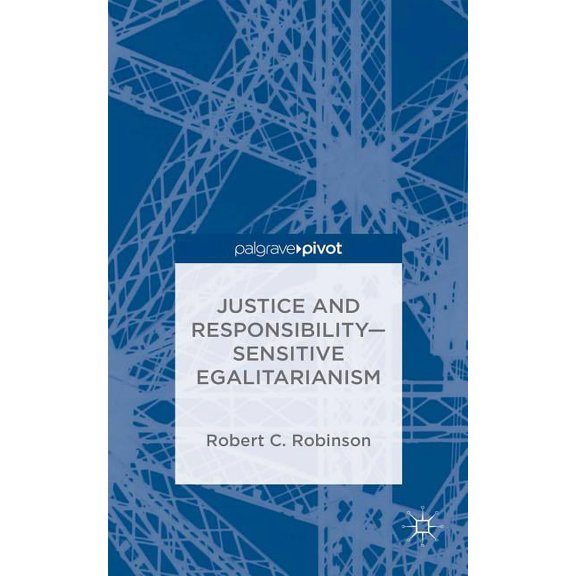
Palgrave Pivot Justice and Responsibility--Sensitive Egalitarianism, (Hardcover) $56.14
 $5614current price $56.14
Palgrave Pivot Justice and Responsibility--Sensitive Egalitarianism, (Hardcover)
Monstrous Ontologies: Politics Ethics Materiality, (Hardcover) $73.66
 $7366current price $73.66
Monstrous Ontologies: Politics Ethics Materiality, (Hardcover)
Customer ratings & reviews
0 ratings|0 reviews
This item does not have any reviews yet
