

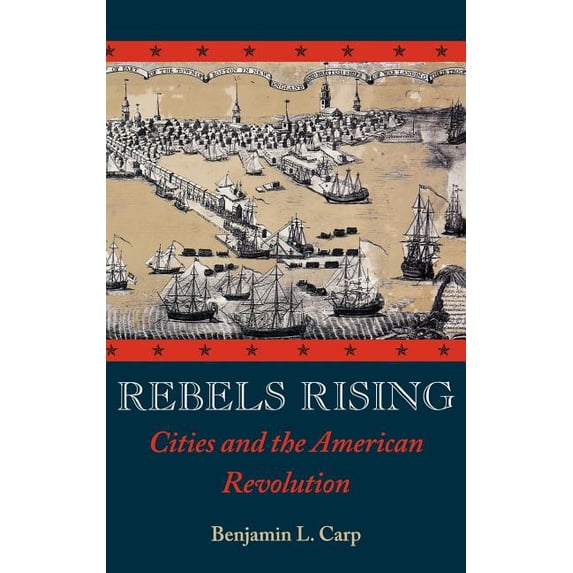
Rebels Rising: Cities and the American Revolution, (Hardcover)
(No ratings yet)
Key item features
Publishers Weekly,The great cities of colonial America-New York, Boston, Newport, Philadelphia and Charleston-were in the forefront of revolutionary agitation before the War of Independence, but once the fighting began, says Carp (an assistant professor of history at Tufts), the politics of liberty moved to the countryside. The British concentrated on occupying the cities, centers of commerce and transport, in order to supply their army; the patriots reluctantly abandoned them so as to avoid being defeated in battle, and shifted their forces inland. It was no coincidence, then, that the most important American victories (Saratoga, Yorktown, Trenton and Cowpens) occurred away from the major population hubs. After the British defeat, some cities, like New York and Boston, went on to marvelous things, while others, such as Newport and Charleston, never quite recovered from their devastating occupation. Carp argues that political power shifted to the rural South as attitudes toward urban irreligion, culture, unrest and ethnic mixing soured. When the site of the new national capital was chosen, it was located on "a remote riverbank" midway between South and North. Carp's account of the forgotten cities that fomented the Revolution is intriguing and will be mainly of interest to readers looking for an alternate explanation of this most remarkable of rebellions. (Sept.) (c) Copyright PWxyz, LLC. All rights reserved,Publishers Weekly,Publishers Weekly,The great cities of colonial America-New York, Boston, Newport, Philadelphia and Charleston-were in the forefront of revolutionary agitation before the War of Independence, but once the fighting began, says Carp (an assistant professor of history at Tufts), the politics of liberty moved to the countryside. The British concentrated on occupying the cities, centers of commerce and transport, in order to supply their army; the patriots reluctantly abandoned them so as to avoid being defeated in battle, and shifted their forces inland. It was no coincidence, then, that the most important American victories (Saratoga, Yorktown, Trenton and Cowpens) occurred away from the major population hubs. After the British defeat, some cities, like New York and Boston, went on to marvelous things, while others, such as Newport and Charleston, never quite recovered from their devastating occupation. Carp argues that political power shifted to the rural South as attitudes toward urban irreligion, culture, unrest and ethnic mixing soured. When the site of the new national capital was chosen, it was located on "a remote riverbank" midway between South and North. Carp's account of the forgotten cities that fomented the Revolution is intriguing and will be mainly of interest to readers looking for an alternate explanation of this most remarkable of rebellions. (Sept.) (c) Copyright PWxyz, LLC. All rights reserved
Specs
- Book formatHardcover
- Fiction/nonfictionNon-Fiction
- GenreHistory
- Pub date2007-07-01
- Pages352
- SubgenreUnited States
Current price is USD$49.53
Price when purchased online
- Free shipping
 Free 90-day returns
How do you want your item?
Try 30 days of Free Shipping with Walmart+! Choose plan at checkout.
Columbus, 43215
Arrives by Sat, Apr 4
.Order within 9 hr 17 min
Sold and shipped by Walmart.com

Free 90-day returns

This item is gift eligible
More seller options (2)
Starting from $102.46

Get free delivery, shipping and more*
*Restrictions apply Try Walmart+ now
About this item
Product details
The cities of eighteenth-century America packed together tens of thousands of colonists, who met each other in back rooms and plotted political tactics, debated the issues of the day in taverns, and mingled together on the wharves or in the streets. In this fascinating work, historian Benjamin L. Carp shows how these various urban meeting places provided the tinder and spark for the American Revolution.
Carp focuses closely on political activity in colonial America's five most populous cities--in particular, he examines Boston's waterfront community, New York tavern-goers, Newport congregations, Charleston's elite patriarchy, and the common people who gathered outside Philadelphia's State House. He shows how--because of their tight concentrations of people and diverse mixture of inhabitants--the largest cities offered fertile ground for political consciousness, political persuasion, and political action. The book traces how everyday interactions in taverns, wharves, and elsewhere slowly developed into more serious political activity. Ultimately, the residents of cities became the first to voice their discontent. Merchants began meeting to discuss the repercussions of new laws, printers fired up provocative pamphlets, and protesters took to the streets. Indeed, the cities became the flashpoints for legislative protests, committee meetings, massive outdoor gatherings, newspaper harangues, boycotts, customs evasion, violence and riots--all of which laid the groundwork for war.
Ranging from 1740 to 1780, this groundbreaking work contributes significantly to our understanding of the American Revolution. By focusing on some of the most pivotal events of the eighteenth century as they unfolded in the most dynamic places in America, this book illuminates how city dwellers joined in various forms of political activity that helped make the Revolution possible.
Carp focuses closely on political activity in colonial America's five most populous cities--in particular, he examines Boston's waterfront community, New York tavern-goers, Newport congregations, Charleston's elite patriarchy, and the common people who gathered outside Philadelphia's State House. He shows how--because of their tight concentrations of people and diverse mixture of inhabitants--the largest cities offered fertile ground for political consciousness, political persuasion, and political action. The book traces how everyday interactions in taverns, wharves, and elsewhere slowly developed into more serious political activity. Ultimately, the residents of cities became the first to voice their discontent. Merchants began meeting to discuss the repercussions of new laws, printers fired up provocative pamphlets, and protesters took to the streets. Indeed, the cities became the flashpoints for legislative protests, committee meetings, massive outdoor gatherings, newspaper harangues, boycotts, customs evasion, violence and riots--all of which laid the groundwork for war.
Ranging from 1740 to 1780, this groundbreaking work contributes significantly to our understanding of the American Revolution. By focusing on some of the most pivotal events of the eighteenth century as they unfolded in the most dynamic places in America, this book illuminates how city dwellers joined in various forms of political activity that helped make the Revolution possible.
Publishers Weekly,The great cities of colonial America-New York, Boston, Newport, Philadelphia and Charleston-were in the forefront of revolutionary agitation before the War of Independence, but once the fighting began, says Carp (an assistant professor of history at Tufts), the politics of liberty moved to the countryside. The British concentrated on occupying the cities, centers of commerce and transport, in order to supply their army; the patriots reluctantly abandoned them so as to avoid being defeated in battle, and shifted their forces inland. It was no coincidence, then, that the most important American victories (Saratoga, Yorktown, Trenton and Cowpens) occurred away from the major population hubs. After the British defeat, some cities, like New York and Boston, went on to marvelous things, while others, such as Newport and Charleston, never quite recovered from their devastating occupation. Carp argues that political power shifted to the rural South as attitudes toward urban irreligion, culture, unrest and ethnic mixing soured. When the site of the new national capital was chosen, it was located on "a remote riverbank" midway between South and North. Carp's account of the forgotten cities that fomented the Revolution is intriguing and will be mainly of interest to readers looking for an alternate explanation of this most remarkable of rebellions. (Sept.) (c) Copyright PWxyz, LLC. All rights reserved,Publishers Weekly,Publishers Weekly,The great cities of colonial America-New York, Boston, Newport, Philadelphia and Charleston-were in the forefront of revolutionary agitation before the War of Independence, but once the fighting began, says Carp (an assistant professor of history at Tufts), the politics of liberty moved to the countryside. The British concentrated on occupying the cities, centers of commerce and transport, in order to supply their army; the patriots reluctantly abandoned them so as to avoid being defeated in battle, and shifted their forces inland. It was no coincidence, then, that the most important American victories (Saratoga, Yorktown, Trenton and Cowpens) occurred away from the major population hubs. After the British defeat, some cities, like New York and Boston, went on to marvelous things, while others, such as Newport and Charleston, never quite recovered from their devastating occupation. Carp argues that political power shifted to the rural South as attitudes toward urban irreligion, culture, unrest and ethnic mixing soured. When the site of the new national capital was chosen, it was located on "a remote riverbank" midway between South and North. Carp's account of the forgotten cities that fomented the Revolution is intriguing and will be mainly of interest to readers looking for an alternate explanation of this most remarkable of rebellions. (Sept.) (c) Copyright PWxyz, LLC. All rights reserved
info:
We aim to show you accurate product information. Manufacturers, suppliers and others provide what you see here, and we have not verified it.
Specifications
Book format
Hardcover
Fiction/nonfiction
Non-Fiction
Genre
History
Pub date
2007-07-01
Warranty
Warranty information
Please be aware that the warranty terms on items offered for sale by third party Marketplace sellers may differ from those displayed in this section (if any). To confirm warranty terms on an item offered for sale by a third party Marketplace seller, please use the 'Contact seller' feature on the third party Marketplace seller's information page and request the item's warranty terms prior to purchase.
Similar items you might like
Based on what customers bought
Battles of the American Revolution, 1775-1781 : Historical and Military Criticism With Topographical Illustration (Hardcover) $46.18
 $4618current price $46.18
Battles of the American Revolution, 1775-1781 : Historical and Military Criticism With Topographical Illustration (Hardcover)
The War of the American Revolution (Paperback) $47.50
 $4750current price $47.50
The War of the American Revolution (Paperback)
Border Wars of the American Revolution, Volume I Hardcover $38.21
 $3821current price $38.21
Border Wars of the American Revolution, Volume I Hardcover
The American Revolution (Hardcover) $36.95
 $3695current price $36.95
The American Revolution (Hardcover)
A Compleat History of the Rebellion, From ... 1745 to ... 1746 (Hardcover) $47.28
 $4728current price $47.28
A Compleat History of the Rebellion, From ... 1745 to ... 1746 (Hardcover)
When America Won Liberty : Patriots and Royalists (Hardcover) $35.57
 $3557current price $35.57
When America Won Liberty : Patriots and Royalists (Hardcover)
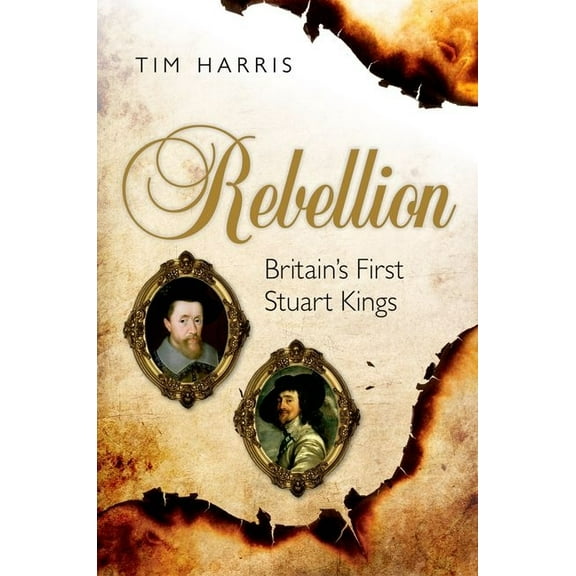
Rebellion: Britains First Stuart Kings C, (Hardcover) $48.73
 $4873current price $48.73
Rebellion: Britains First Stuart Kings C, (Hardcover)
Winning Insurgent War: Back to Basics (Hardcover) $47.39
 $4739current price $47.39
Winning Insurgent War: Back to Basics (Hardcover)
The Lafayette Flying Corps V2 (Hardcover) $49.02
 $4902current price $49.02
The Lafayette Flying Corps V2 (Hardcover)
Peter Kropotkin : From Prince to Rebel (Hardcover) $48.99
 $4899current price $48.99
Peter Kropotkin : From Prince to Rebel (Hardcover)
Correspondence of the American Revolution, (Hardcover) $40.95
 $4095current price $40.95
Correspondence of the American Revolution, (Hardcover)
American Revolution (Hardcover) $43.75
 $4375current price $43.75
American Revolution (Hardcover)
Defiance: A Memoir of Awakening, Rebellion, and Survival in Syria, (Hardcover) $21.85 Was $30.00
 $2185current price $21.85, Was $30.00$30.00
Defiance: A Memoir of Awakening, Rebellion, and Survival in Syria, (Hardcover)
A Histroy of the American Revolution (Hardcover) $33.67
 $3367current price $33.67
A Histroy of the American Revolution (Hardcover)
Cromwell at War: The Lord General and His Military Revolution, (Hardcover) $48.74
 $4874current price $48.74
Cromwell at War: The Lord General and His Military Revolution, (Hardcover)
Through the War and Thrice a Prisoner in Rebel Dungeons, (Paperback) $42.15
 $4215current price $42.15
Through the War and Thrice a Prisoner in Rebel Dungeons, (Paperback)
The American Revolution; vol. 4 (Hardcover) $36.95
 $3695current price $36.95
The American Revolution; vol. 4 (Hardcover)
Lineage Book; 28 (27001-28000) (Hardcover) $38.95
 $3895current price $38.95
Lineage Book; 28 (27001-28000) (Hardcover)
Lineage Book; 44 (43001-44000) (Hardcover) $38.95
 $3895current price $38.95
Lineage Book; 44 (43001-44000) (Hardcover)
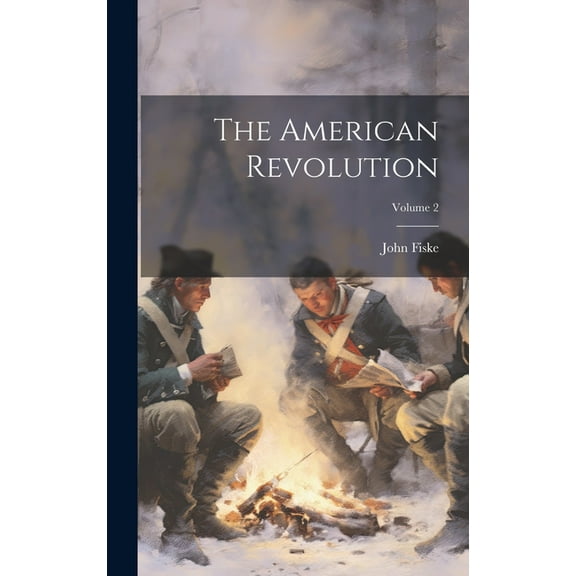
The American Revolution; Volume 2 (Hardcover) $34.95
 $3495current price $34.95
The American Revolution; Volume 2 (Hardcover)
Customer ratings & reviews
0 ratings|0 reviews
This item does not have any reviews yet

Related pages
- Left Ii Tribulation Force
- Steven E; Lee Beard
- The Regime
- The Defeated
- The Battle That Ended The Revolutionary War
- Convergent
- Genocide & War Crimes Political Books
- Terrorism Political Books
- Civilization History Books
- Intelligence & Espionage Political Books
- War & Military Teen & Young Adult Books
- Corruption & Misconduct Political Books