

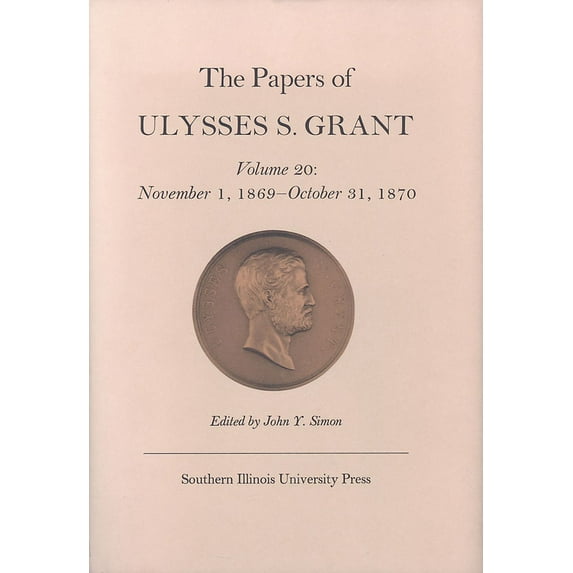
U S Grant Papers: The Papers of Ulysses S. Grant, Volume 20 : November 1, 1869 - October 31, 1870 (Series #20) (Hardcover)
Key item features
Volume 20 is the first in this acclaimed series to cover the months when Ulysses S. Grant held no military commission. As president, however, Grant’s significance grew rather than diminished. His leadership and decisions touched directly or indirectly most people in the United States and many more around the globe.
Grant spoke sincerely when he said that "I have done all I could to advance the best interests of the citizens of our country, without regard to color, and I shall endeavor to do in the future what I have done in the past." He urged adoption of the Fifteenth Amendment and rejoiced in its ratification, expressing his belief that it was "the realization of the Declaration of Independence." Grant acknowledged that government had treated Indians badly in the past. In the short run, he recommitted his administration to the experiment of employing Quakers and humanitarians as Indian advisers and agents, trusting in eventual "great success." In the long run, however, Grant thought placing Indians on large reservations and encouraging them "to take their lands in severalty" and "to set up territorial governments for their own protection" the best course.
In foreign affairs, Grant became fixed on the annexation of Santo Domingo, gave this issue an inordinate degree of attention, and squandered political capital in confrontations with Congress. Senate foreign affairs committee chairman Charles Sumner emerged as the villain preventing Grant from achieving his desire, and Grant displayed his animosity toward the Massachusetts senator in private as well as in the very public removal of Sumner’s friend John L. Motley as minister to England. Developments such as growing tensions among European powers, Spanish-Cuban relations, and the Alabama Claims negotiations received relatively little attention. Grant, in fact, admitted shortly after the outbreak of the Franco-Prussian War, "I had no idea that such an event was even threatening."
Specs
- Book formatHardcover
- Fiction/nonfictionNon-Fiction
- GenreHistory, Biography & Memoirs, Nonfiction
- Pub date19941209
- Pages552
- Series titleU S Grant Papers
How do you want your item?
About this item
Product details
Volume 20 is the first in this acclaimed series to cover the months when Ulysses S. Grant held no military commission. As president, however, Grant's significance grew rather than diminished. His leadership and decisions touched directly or indirectly most people in the United States and many more around the globe.
Grant spoke sincerely when he said that "I have done all I could to advance the best interests of the citizens of our country, without regard to color, and I shall endeavor to do in the future what I have done in the past." He urged adoption of the Fifteenth Amendment and rejoiced in its ratification, expressing his belief that it was "the realization of the Declaration of Independence." Grant acknowledged that government had treated Indians badly in the past. In the short run, he recommitted his administration to the experiment of employing Quakers and humanitarians as Indian advisers and agents, trusting in eventual "great success." In the long run, however, Grant thought placing Indians on large reservations and encouraging them "to take their lands in severalty" and "to set up territorial governments for their own protection" the best course.
In foreign affairs, Grant became fixed on the annexation of Santo Domingo, gave this issue an inordinate degree of attention, and squandered political capital in confrontations with Congress. Senate foreign affairs committee chairman Charles Sumner emerged as the villain preventing Grant from achieving his desire, and Grant displayed his animosity toward the Massachusetts senator in private as well as in the very public removal of Sumner's friend John L. Motley as minister to England. Developments such as growing tensions among European powers, Spanish-Cuban relations, and the Alabama Claims negotiations received relatively little attention. Grant, in fact, admitted shortly after the outbreak of the Franco-Prussian War, "I had no idea that such an event was even threatening."
Volume 20 is the first in this acclaimed series to cover the months when Ulysses S. Grant held no military commission. As president, however, Grant’s significance grew rather than diminished. His leadership and decisions touched directly or indirectly most people in the United States and many more around the globe.
Grant spoke sincerely when he said that "I have done all I could to advance the best interests of the citizens of our country, without regard to color, and I shall endeavor to do in the future what I have done in the past." He urged adoption of the Fifteenth Amendment and rejoiced in its ratification, expressing his belief that it was "the realization of the Declaration of Independence." Grant acknowledged that government had treated Indians badly in the past. In the short run, he recommitted his administration to the experiment of employing Quakers and humanitarians as Indian advisers and agents, trusting in eventual "great success." In the long run, however, Grant thought placing Indians on large reservations and encouraging them "to take their lands in severalty" and "to set up territorial governments for their own protection" the best course.
In foreign affairs, Grant became fixed on the annexation of Santo Domingo, gave this issue an inordinate degree of attention, and squandered political capital in confrontations with Congress. Senate foreign affairs committee chairman Charles Sumner emerged as the villain preventing Grant from achieving his desire, and Grant displayed his animosity toward the Massachusetts senator in private as well as in the very public removal of Sumner’s friend John L. Motley as minister to England. Developments such as growing tensions among European powers, Spanish-Cuban relations, and the Alabama Claims negotiations received relatively little attention. Grant, in fact, admitted shortly after the outbreak of the Franco-Prussian War, "I had no idea that such an event was even threatening."
Specifications
Book format
Fiction/nonfiction
Genre
Pub date
Warranty
Warranty information
Similar items you might like
Based on what customers bought
Beyond Repair: The Decline And Fall Of The Cia, (Hardcover) $21.42
 $2142current price $21.42
Beyond Repair: The Decline And Fall Of The Cia, (Hardcover)
Critical Periods of History: American War and Society: The United States, 1941-1945, (Hardcover) $65.00
 $6500current price $65.00
Critical Periods of History: American War and Society: The United States, 1941-1945, (Hardcover)
The Personal Memoirs of Ulysses S. Grant: The Complete Edition (Collector's Edition) (Laminated Hardback with Jacket), (Hardcover) $59.99
 $5999current price $59.99
The Personal Memoirs of Ulysses S. Grant: The Complete Edition (Collector's Edition) (Laminated Hardback with Jacket), (Hardcover)
The Civil War and the Constitution (Hardcover) $38.54
 $3854current price $38.54
The Civil War and the Constitution (Hardcover)
Meade's Headquarters 1863-1865 (Hardcover) $38.95
 $3895current price $38.95
Meade's Headquarters 1863-1865 (Hardcover)
John P. Slough: The Forgotten Civil War General, (Hardcover) $51.05
 $5105current price $51.05
John P. Slough: The Forgotten Civil War General, (Hardcover)
David Davis, Abraham Lincoln's Favorite Judge, (Hardcover) $48.43 Was $55.22
 $4843current price $48.43, Was $55.22$55.22
David Davis, Abraham Lincoln's Favorite Judge, (Hardcover)
The History of the War, Between the United States and Great Britain, Which Commenced in June, 1812, and Closed in February 1815 [microform] (Hardcover) $38.95
![The History of the War, Between the United States and Great Britain, Which Commenced in June, 1812, and Closed in February 1815 [microform] (Hardcover)](https://i5.walmartimages.com/asr/452014b7-10d5-43b9-8611-ca634a562bac.9fff2ef3c00ac364dd8ea8a6f3d00575.jpeg?odnHeight=576&odnWidth=576&odnBg=FFFFFF) $3895current price $38.95
$3895current price $38.95The History of the War, Between the United States and Great Britain, Which Commenced in June, 1812, and Closed in February 1815 [microform] (Hardcover)
A Constitutional View Of The Late War Between The States (Hardcover) $43.35
 $4335current price $43.35
A Constitutional View Of The Late War Between The States (Hardcover)
Running the Blockade (Hardcover) $34.95
 $3495current price $34.95
Running the Blockade (Hardcover)
Abraham Lincoln : A History; Volume 8 (Hardcover) $51.13
 $5113current price $51.13
Abraham Lincoln : A History; Volume 8 (Hardcover)
General Edwin Vose Sumner, USA: A Civil War Biography (Paperback) $28.45
 $2845current price $28.45
General Edwin Vose Sumner, USA: A Civil War Biography (Paperback)
John Brown (Hardcover) $38.62
 $3862current price $38.62
John Brown (Hardcover)
Grant (Paperback) $14.18
 $1418current price $14.18
Grant (Paperback)
44.8 out of 5 Stars. 4 reviewsJohn P. Slough: The Forgotten Civil War General, (Paperback) $20.65
 $2065current price $20.65
John P. Slough: The Forgotten Civil War General, (Paperback)
Mystery & History in Georgia (Volume I), (Hardcover) $36.33
 $3633current price $36.33
Mystery & History in Georgia (Volume I), (Hardcover)
Sixteenth President-in-Waiting : Abraham Lincoln and the Springfield Dispatches of Henry Villard, 1860–1861 (Hardcover) $39.73
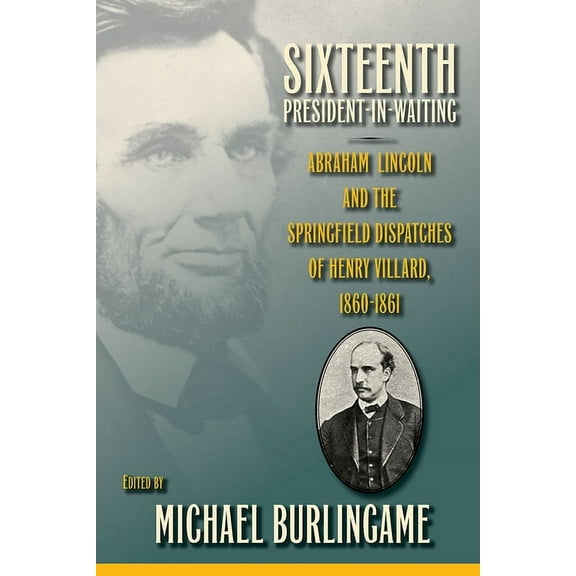 $3973current price $39.73
Sixteenth President-in-Waiting : Abraham Lincoln and the Springfield Dispatches of Henry Villard, 1860–1861 (Hardcover)
Guerrilla Warfare in Civil War Missouri, Volume III, January-August 1864, (Paperback) $48.45
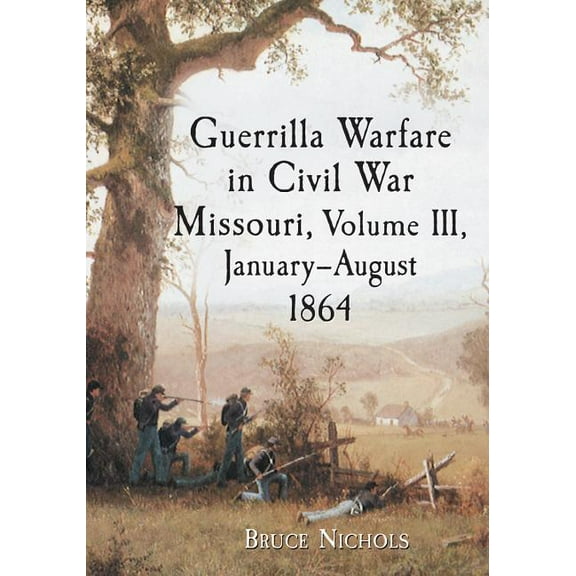 $4845current price $48.45
Guerrilla Warfare in Civil War Missouri, Volume III, January-August 1864, (Paperback)
Address Delivered by Brevet Brigadier General J. William Hofmann (Hardcover) $26.95
 $2695current price $26.95
Address Delivered by Brevet Brigadier General J. William Hofmann (Hardcover)
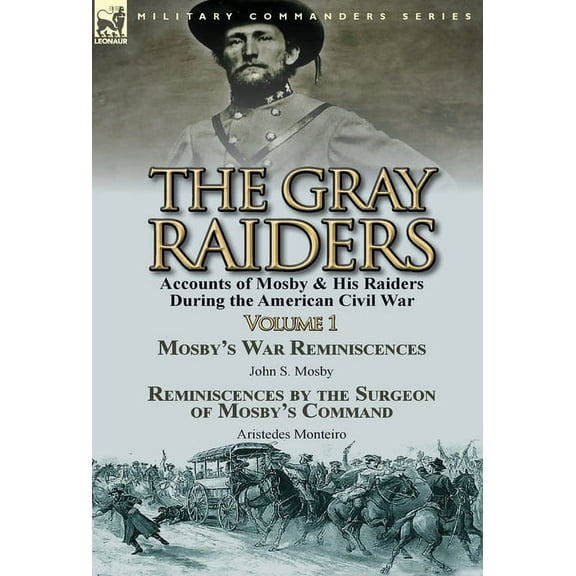
Customer ratings & reviews

Related pages
- Senate History
- Civil War Letters For Sale
- History Channel Civil War Nation Divided
- General United States History Books
- 21st Century United States History Books
- Revolutionary Period United States History Books
- A B Marx
- 20th Century United States History Books
- Colonial United States History Books
- 19th Century United States History Books
- History Think Tanks
- Parliament Great Britain