

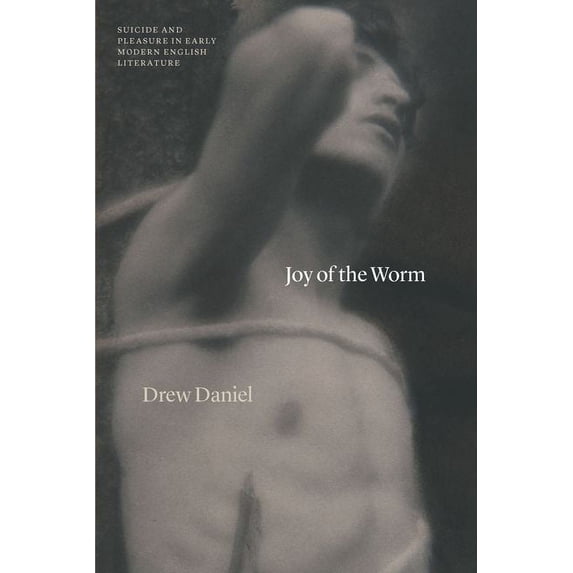
Hero image 0 of Thinking Literature: Joy of the Worm : Suicide and Pleasure in Early Modern English Literature (Edition 1) (Hardcover), 0 of 1
Thinking Literature: Joy of the Worm : Suicide and Pleasure in Early Modern English Literature (Edition 1) (Hardcover)
(No ratings yet)
Key item features
Consulting an extensive archive of early modern literature, Joy of the Worm asserts that voluntary death in literature is not always a matter of tragedy.
In this study, Drew Daniel identifies a surprisingly common aesthetic attitude that he calls “joy of the worm,” after Cleopatra’s embrace of the deadly asp in Shakespeare’s play—a pattern where voluntary death is imagined as an occasion for humor, mirth, ecstatic pleasure, even joy and celebration.
Daniel draws both a historical and a conceptual distinction between “self-killing” and “suicide.” Standard intellectual histories of suicide in the early modern period have understandably emphasized attitudes of abhorrence, scorn, and severity toward voluntary death. Daniel reads an archive of literary scenes and passages, dating from 1534 to 1713, that complicate this picture. In their own distinct responses to the surrounding attitude of censure, writers including Shakespeare, Donne, Milton, and Addison imagine death not as sin or sickness, but instead as a heroic gift, sexual release, elemental return, amorous fusion, or political self-rescue. “Joy of the worm” emerges here as an aesthetic mode that shades into schadenfreude, sadistic cruelty, and deliberate “trolling,” but can also underwrite powerful feelings of belonging, devotion, and love.
In this study, Drew Daniel identifies a surprisingly common aesthetic attitude that he calls “joy of the worm,” after Cleopatra’s embrace of the deadly asp in Shakespeare’s play—a pattern where voluntary death is imagined as an occasion for humor, mirth, ecstatic pleasure, even joy and celebration.
Daniel draws both a historical and a conceptual distinction between “self-killing” and “suicide.” Standard intellectual histories of suicide in the early modern period have understandably emphasized attitudes of abhorrence, scorn, and severity toward voluntary death. Daniel reads an archive of literary scenes and passages, dating from 1534 to 1713, that complicate this picture. In their own distinct responses to the surrounding attitude of censure, writers including Shakespeare, Donne, Milton, and Addison imagine death not as sin or sickness, but instead as a heroic gift, sexual release, elemental return, amorous fusion, or political self-rescue. “Joy of the worm” emerges here as an aesthetic mode that shades into schadenfreude, sadistic cruelty, and deliberate “trolling,” but can also underwrite powerful feelings of belonging, devotion, and love.
Specs
- Book formatHardcover
- Fiction/nonfictionNon-Fiction
- GenreLiterature & Fiction
- Publication dateJune, 2022
- Pages288
- SubgenreRenaissance
Current price is USD$64.35
Price when purchased online
- Free shipping
 Free 90-day returns
How do you want your item?
Plus, get 50% off an annual plan at checkout!
Ships to
Arrives by Thu, Jul 2
Sold and shipped by Walmart.com

Free 90-day returns

This item is gift eligible
More seller options (3)
Starting from $57.34

Get 50% off a year of Walmart+
Exclusions, T&C apply. Claim offer
About this item
Product details
Consulting an extensive archive of early modern literature, Joy of the Worm asserts that voluntary death in literature is not always a matter of tragedy. In this study, Drew Daniel identifies a surprisingly common aesthetic attitude that he calls "joy of the worm," after Cleopatra's embrace of the deadly asp in Shakespeare's play--a pattern where voluntary death is imagined as an occasion for humor, mirth, ecstatic pleasure, even joy and celebration. Daniel draws both a historical and a conceptual distinction between "self-killing" and "suicide." Standard intellectual histories of suicide in the early modern period have understandably emphasized attitudes of abhorrence, scorn, and severity toward voluntary death. Daniel reads an archive of literary scenes and passages, dating from 1534 to 1713, that complicate this picture. In their own distinct responses to the surrounding attitude of censure, writers including Shakespeare, Donne, Milton, and Addison imagine death not as sin or sickness, but instead as a heroic gift, sexual release, elemental return, amorous fusion, or political self-rescue. "Joy of the worm" emerges here as an aesthetic mode that shades into schadenfreude, sadistic cruelty, and deliberate "trolling," but can also underwrite powerful feelings of belonging, devotion, and love.
Consulting an extensive archive of early modern literature, Joy of the Worm asserts that voluntary death in literature is not always a matter of tragedy.
In this study, Drew Daniel identifies a surprisingly common aesthetic attitude that he calls “joy of the worm,” after Cleopatra’s embrace of the deadly asp in Shakespeare’s play—a pattern where voluntary death is imagined as an occasion for humor, mirth, ecstatic pleasure, even joy and celebration.
Daniel draws both a historical and a conceptual distinction between “self-killing” and “suicide.” Standard intellectual histories of suicide in the early modern period have understandably emphasized attitudes of abhorrence, scorn, and severity toward voluntary death. Daniel reads an archive of literary scenes and passages, dating from 1534 to 1713, that complicate this picture. In their own distinct responses to the surrounding attitude of censure, writers including Shakespeare, Donne, Milton, and Addison imagine death not as sin or sickness, but instead as a heroic gift, sexual release, elemental return, amorous fusion, or political self-rescue. “Joy of the worm” emerges here as an aesthetic mode that shades into schadenfreude, sadistic cruelty, and deliberate “trolling,” but can also underwrite powerful feelings of belonging, devotion, and love.
In this study, Drew Daniel identifies a surprisingly common aesthetic attitude that he calls “joy of the worm,” after Cleopatra’s embrace of the deadly asp in Shakespeare’s play—a pattern where voluntary death is imagined as an occasion for humor, mirth, ecstatic pleasure, even joy and celebration.
Daniel draws both a historical and a conceptual distinction between “self-killing” and “suicide.” Standard intellectual histories of suicide in the early modern period have understandably emphasized attitudes of abhorrence, scorn, and severity toward voluntary death. Daniel reads an archive of literary scenes and passages, dating from 1534 to 1713, that complicate this picture. In their own distinct responses to the surrounding attitude of censure, writers including Shakespeare, Donne, Milton, and Addison imagine death not as sin or sickness, but instead as a heroic gift, sexual release, elemental return, amorous fusion, or political self-rescue. “Joy of the worm” emerges here as an aesthetic mode that shades into schadenfreude, sadistic cruelty, and deliberate “trolling,” but can also underwrite powerful feelings of belonging, devotion, and love.
info:
We aim to show you accurate product information. Manufacturers, suppliers and others provide what you see here, and we have not verified it.
Specifications
Book format
Hardcover
Fiction/nonfiction
Non-Fiction
Genre
Literature & Fiction
Publication date
June, 2022
Warranty
Warranty information
Please be aware that the warranty terms on items offered for sale by third party Marketplace sellers may differ from those displayed in this section (if any). To confirm warranty terms on an item offered for sale by a third party Marketplace seller, please use the 'Contact seller' feature on the third party Marketplace seller's information page and request the item's warranty terms prior to purchase.
Similar items you might like
Based on what customers bought
Cambridge Studies in Medieval Literature Ethics and Enjoyment in Late Medieval Poetry, Book 85, (Hardcover) $55.11
 $5511current price $55.11
Cambridge Studies in Medieval Literature Ethics and Enjoyment in Late Medieval Poetry, Book 85, (Hardcover)
On Shakespeare and Early Modern Literature: Essays, (Paperback) $68.00
 $6800current price $68.00
On Shakespeare and Early Modern Literature: Essays, (Paperback)
The Last Titan : A Life of Theodore Dreiser (Edition 1) (Hardcover) $50.26
 $5026current price $50.26
The Last Titan : A Life of Theodore Dreiser (Edition 1) (Hardcover)
Best seller Nobody's Girl: A Memoir of Surviving Abuse and Fighting for Justice (Hardcover) $17.49
Best seller $1749current price $17.49
Nobody's Girl: A Memoir of Surviving Abuse and Fighting for Justice (Hardcover)
2434.7 out of 5 Stars. 243 reviewsLiterary Lives Mary Shelley: A Literary Life, (Hardcover) $66.35
 $6635current price $66.35
Literary Lives Mary Shelley: A Literary Life, (Hardcover)
Death's Following: Mediocrity, Dirtiness, Adulthood, Literature, (Hardcover) $88.04
 $8804current price $88.04
Death's Following: Mediocrity, Dirtiness, Adulthood, Literature, (Hardcover)
Best seller The Widow: A Novel (Hardcover) $12.09 Was $14.90
Best seller $1209current price $12.09, Was $14.90$14.90
The Widow: A Novel (Hardcover)
3444.7 out of 5 Stars. 344 reviewsThe Seeds of Things: Theorizing Sexuality and Materiality in Renaissance Representations, (Paperback) $35.78
 $3578current price $35.78
The Seeds of Things: Theorizing Sexuality and Materiality in Renaissance Representations, (Paperback)
Untying Things Together : Philosophy, Literature, and a Life in Theory (Hardcover) $75.00
 $7500current price $75.00
Untying Things Together : Philosophy, Literature, and a Life in Theory (Hardcover)
Haunted Selves, Haunting Places in English Literature and Culture: 1800-Present, (Hardcover) $71.06
 $7106current price $71.06
Haunted Selves, Haunting Places in English Literature and Culture: 1800-Present, (Hardcover)
The Waltzing Body in Victorian Literature: Narratives of Sexuality and Power, (Hardcover) $96.02
 $9602current price $96.02
The Waltzing Body in Victorian Literature: Narratives of Sexuality and Power, (Hardcover)
Cambridge Studies in Renaissance Literat Materializing Gender in Early Modern English Literature and Culture, Book 52, (Hardcover) $121.07
 $12107current price $121.07
Cambridge Studies in Renaissance Literat Materializing Gender in Early Modern English Literature and Culture, Book 52, (Hardcover)
Cambridge Studies in Medieval Literature Language and the Declining World in Chaucer, Dante, and Jean de Meun, Book 63, (Hardcover) $125.82
 $12582current price $125.82
Cambridge Studies in Medieval Literature Language and the Declining World in Chaucer, Dante, and Jean de Meun, Book 63, (Hardcover)
Literature and Contemporary Thought Literature and Emotion, (Paperback) $43.99
 $4399current price $43.99
Literature and Contemporary Thought Literature and Emotion, (Paperback)
Early Modern Literature in History Tragedy and Scepticism in Shakespeare's England, (Hardcover) $56.14
 $5614current price $56.14
Early Modern Literature in History Tragedy and Scepticism in Shakespeare's England, (Hardcover)
Theology and Agency in Early Modern Literature, (Hardcover) $123.48
 $12348current price $123.48
Theology and Agency in Early Modern Literature, (Hardcover)
Paper and the Making of Early Modern Literature, (Hardcover) $65.34
 $6534current price $65.34
Paper and the Making of Early Modern Literature, (Hardcover)
Studies in Literature in English: Of What is Past, or Passing, or to Come: Travelling in Time and Space in Literature in English (Hardcover) $73.85
 $7385current price $73.85
Studies in Literature in English: Of What is Past, or Passing, or to Come: Travelling in Time and Space in Literature in English (Hardcover)
The Handbook to Gothic Literature, (Paperback) $63.04
 $6304current price $63.04
The Handbook to Gothic Literature, (Paperback)
Cambridge Studies in Renaissance Literat Materializing Gender in Early Modern English Literature and Culture, Book 52, (Paperback) $45.00
 $4500current price $45.00
Cambridge Studies in Renaissance Literat Materializing Gender in Early Modern English Literature and Culture, Book 52, (Paperback)
Customer ratings & reviews
0 ratings|0 reviews
This item does not have any reviews yet
