

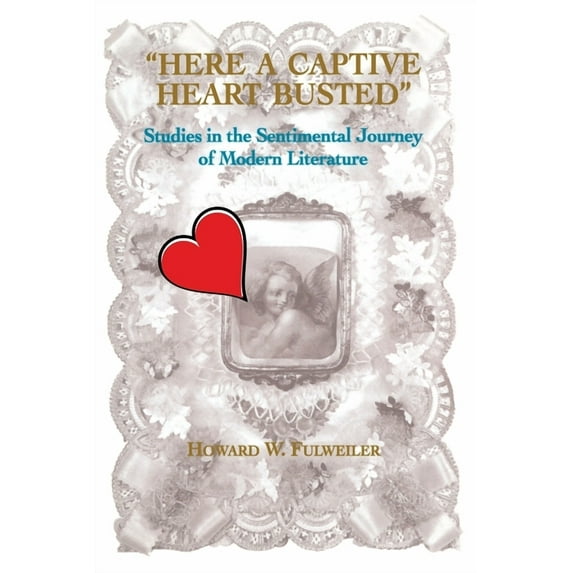
Hero image 0 of Here a Captive Heart Busted: Studies in the Sentimental Journey of Modern Literature (Paperback) by Howard Fulweiler, 0 of 1
Here a Captive Heart Busted: Studies in the Sentimental Journey of Modern Literature (Paperback) by Howard Fulweiler
(No ratings yet)
Key item features
- ISBN: 9780823214969
- Condition: New
- Trade paperback
- Language: English
- Pages: 207
- Trade paperback (US). Glued binding. 207 p.
- Contemporary readers who look at late-eigteenth-century or nineteenth-century imaginative literature must be struch by a phenomenon that is nearly universal in the period: the powerful presence of sentimentality. An often overlooked fact is that "Sentimentality" not only is a critical term, but is limited to a historical period, from roughly 1700 to the present. Fulweiler's hypothesis is that setimentality in writing has played a crucial part in shaping Western consciousness. As a study of evolution of consciousness-rather than the history of ideas- the argument grows out of the work of philosophers such as Ernst Cassirer and Susanne Langer, historical philosophers including R.G. Collingwood, Thomas Kuhn, and Michel Foucault, historically oriented literary critics such as Erich Auerbach, and finally the eclectic writing of Owen Barfield. Fulweiler's hypothesis is that the general consciousness of Western society has undergone severe shocks as a result of the loss-and sometimes repression- of an older human awareness of what anthropologists have called "participation," a term that may be defined as a non-sensory link between human beings and nature. This loss of participation has become gradually apparant with the erosiion of its visible emblems: The Church (with its supporting Law); the extended family, as visualized in feudal, hierarchical theories of society; and finally the nineteeth-century ideal, the nuclear family, with its sacred location, the home, and its glorified Proprietress, the Woman. Sentimentality emerges, then, as a desperate, if often illegitimate, attempt to regain what has been lost, so that imaginative literature of the nineteenth century, even very good literature, is overwhelmed by domestic sentimentality. In the twentieth century it has been heavily, although covertly, affected by a sexual sentimentality of the previous era. This sentimental journey is traced by focusing on six major writers: Tennyson and Dickens as the giants of Victorian domestic sentimentality, Hopkins and Hardy as transitional figures in whom the sentimental tropes of the ninteenth century are moving toward the sexual sentimentality of the twentieth, Lawrence and Eliot as representatives, in different ways, of that era. This multi-faceted study will be of considerable interest to specialists across a number of fields including literature, history, psychology, philosophy, and religious studies.
Specs
- Book formatPaperback
- Fiction/nonfictionNon-Fiction
- GenreLiterature & Fiction
- Pub date1993-01-01
- Pages207
- Number in series1
Current price is USD$36.70
Price when purchased online
- Free shipping
 Free 30-day returns
How do you want your item?
Columbus, 43215
Arrives between Apr 7 - Apr 10
|
Sold and shipped by Alibris Books
4.564536043308956 stars out of 5, based on 10529 seller reviews(4.6)10529 seller reviews

Free 30-day returns
Other sellers
$47.52
+Free shippingShipping, arrives by Thu, Apr 9 to Columbus, 43215
Sold and shipped by RAREWAVES-USA
Free 30-day returns
About this item
Product details
9780823214969. New condition. Trade paperback. Language: English. Pages: 207. Trade paperback (US). Glued binding. 207 p. Contemporary readers who look at late-eigteenth-century or nineteenth-century imaginative literature must be struch by a phenomenon that is nearly universal in the period: the powerful presence of sentimentality. An often overlooked fact is that "Sentimentality" not only is a critical term, but is limited to a historical period, from roughly 1700 to the present. Fulweiler's hypothesis is that setimentality in writing has played a crucial part in shaping Western consciousness. As a study of evolution of consciousness-rather than the history of ideas- the argument grows out of the work of philosophers such as Ernst Cassirer and Susanne Langer, historical philosophers including R.G. Collingwood, Thomas Kuhn, and Michel Foucault, historically oriented literary critics such as Erich Auerbach, and finally the eclectic writing of Owen Barfield. Fulweiler's hypothesis is that the general consciousness of Western society has undergone severe shocks as a result of the loss-and sometimes repression- of an older human awareness of what anthropologists have called "participation," a term that may be defined as a non-sensory link between human beings and nature. This loss of participation has become gradually apparant with the erosiion of its visible emblems: The Church (with its supporting Law); the extended family, as visualized in feudal, hierarchical theories of society; and finally the nineteeth-century ideal, the nuclear family, with its sacred location, the home, and its glorified Proprietress, the Woman. Sentimentality emerges, then, as a desperate, if often illegitimate, attempt to regain what has been lost, so that imaginative literature of the nineteenth century, even very good literature, is overwhelmed by domestic sentimentality. In the twentieth century it has been heavily, although covertly, affected by a sexual sentimentality of the previous era. This sentimental journey is traced by focusing on six major writers: Tennyson and Dickens as the giants of Victorian domestic sentimentality, Hopkins and Hardy as transitional figures in whom the sentimental tropes of the ninteenth century are moving toward the sexual sentimentality of the twentieth, Lawrence and Eliot as representatives, in different ways, of that era. This multi-faceted study will be of considerable interest to specialists across a number of fields including literature, history, psychology, philosophy, and religious studies.
- ISBN: 9780823214969
- Condition: New
- Trade paperback
- Language: English
- Pages: 207
- Trade paperback (US). Glued binding. 207 p.
- Contemporary readers who look at late-eigteenth-century or nineteenth-century imaginative literature must be struch by a phenomenon that is nearly universal in the period: the powerful presence of sentimentality. An often overlooked fact is that "Sentimentality" not only is a critical term, but is limited to a historical period, from roughly 1700 to the present. Fulweiler's hypothesis is that setimentality in writing has played a crucial part in shaping Western consciousness. As a study of evolution of consciousness-rather than the history of ideas- the argument grows out of the work of philosophers such as Ernst Cassirer and Susanne Langer, historical philosophers including R.G. Collingwood, Thomas Kuhn, and Michel Foucault, historically oriented literary critics such as Erich Auerbach, and finally the eclectic writing of Owen Barfield. Fulweiler's hypothesis is that the general consciousness of Western society has undergone severe shocks as a result of the loss-and sometimes repression- of an older human awareness of what anthropologists have called "participation," a term that may be defined as a non-sensory link between human beings and nature. This loss of participation has become gradually apparant with the erosiion of its visible emblems: The Church (with its supporting Law); the extended family, as visualized in feudal, hierarchical theories of society; and finally the nineteeth-century ideal, the nuclear family, with its sacred location, the home, and its glorified Proprietress, the Woman. Sentimentality emerges, then, as a desperate, if often illegitimate, attempt to regain what has been lost, so that imaginative literature of the nineteenth century, even very good literature, is overwhelmed by domestic sentimentality. In the twentieth century it has been heavily, although covertly, affected by a sexual sentimentality of the previous era. This sentimental journey is traced by focusing on six major writers: Tennyson and Dickens as the giants of Victorian domestic sentimentality, Hopkins and Hardy as transitional figures in whom the sentimental tropes of the ninteenth century are moving toward the sexual sentimentality of the twentieth, Lawrence and Eliot as representatives, in different ways, of that era. This multi-faceted study will be of considerable interest to specialists across a number of fields including literature, history, psychology, philosophy, and religious studies.
info:
We aim to show you accurate product information. Manufacturers, suppliers and others provide what you see here, and we have not verified it.
Specifications
Book format
Paperback
Fiction/nonfiction
Non-Fiction
Genre
Literature & Fiction
Pub date
1993-01-01
Warranty
Warranty information
Please be aware that the warranty terms on items offered for sale by third party Marketplace sellers may differ from those displayed in this section (if any). To confirm warranty terms on an item offered for sale by a third party Marketplace seller, please use the 'Contact seller' feature on the third party Marketplace seller's information page and request the item's warranty terms prior to purchase.
Similar items you might like
Based on what customers bought
People of the Dark, (Paperback) $14.33
 $1433current price $14.33
People of the Dark, (Paperback)
General Ironfist, (Paperback) $14.33
 $1433current price $14.33
General Ironfist, (Paperback)
The Selected Poems of Howard Nemerov, (Paperback) $19.95
 $1995current price $19.95
The Selected Poems of Howard Nemerov, (Paperback)
People of the Dark : (Annotated Edition) (Paperback) $22.00
 $2200current price $22.00
People of the Dark : (Annotated Edition) (Paperback)
Belchamber (Paperback) $26.58
 $2658current price $26.58
Belchamber (Paperback)
Howard Kanovitz: Visible Difference, (Paperback) $16.28
 $1628current price $16.28
Howard Kanovitz: Visible Difference, (Paperback)
A Mind Unleashed, (Paperback) $20.00
 $2000current price $20.00
A Mind Unleashed, (Paperback)
Coming Home Paperback Howard Kirkpatrick $14.95
 $1495current price $14.95
Coming Home Paperback Howard Kirkpatrick
One Surviving Story, (Paperback) $14.09 Was $17.36
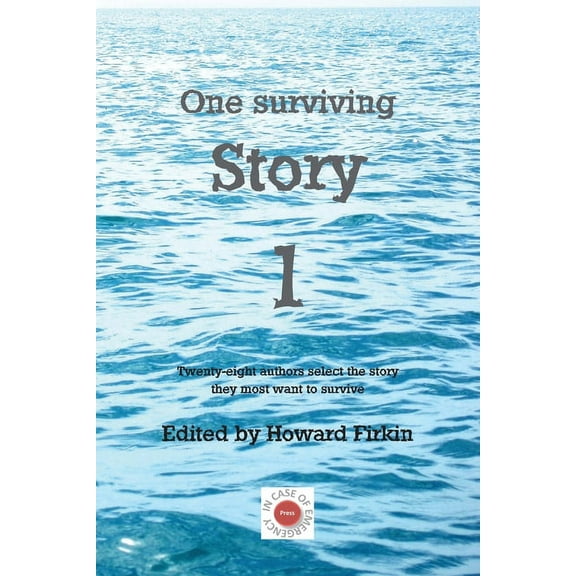 $1409current price $14.09, Was $17.36$17.36
One Surviving Story, (Paperback)
Long After This (Paperback) $45.00
 $4500current price $45.00
Long After This (Paperback)
Good Spirits: A Novel (Paperback) $11.40 Was $13.86
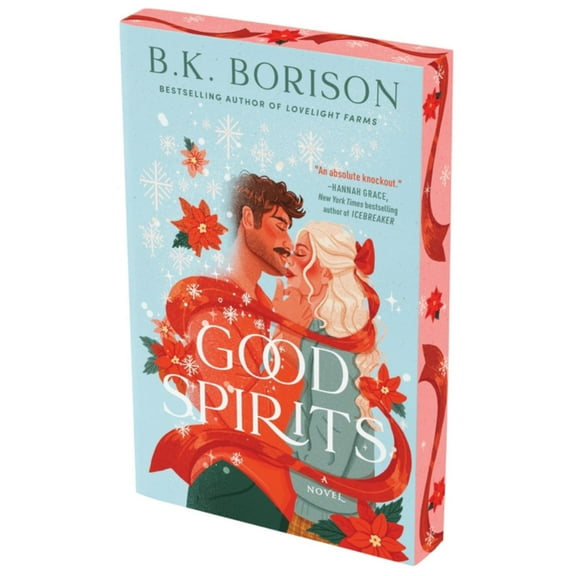 $1140current price $11.40, Was $13.86$13.86
Good Spirits: A Novel (Paperback)
184.7 out of 5 Stars. 18 reviewsDangling by a Thread, (Paperback) $15.99
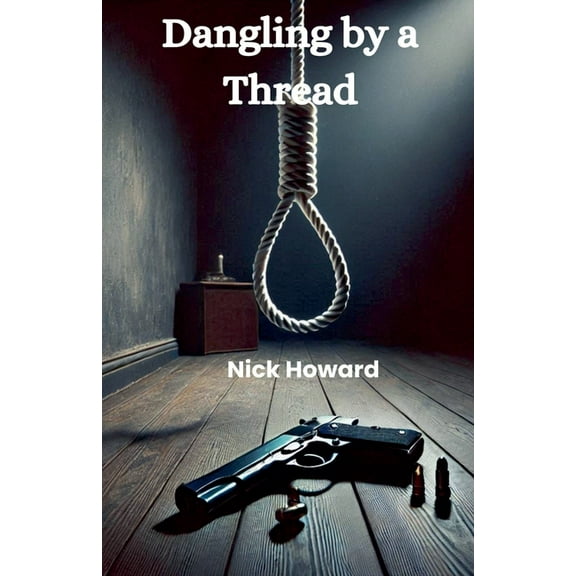 $1599current price $15.99
Dangling by a Thread, (Paperback)
The Shapes of Fancy : Reading for Queer Desire in Early Modern Literature (Paperback) $29.94
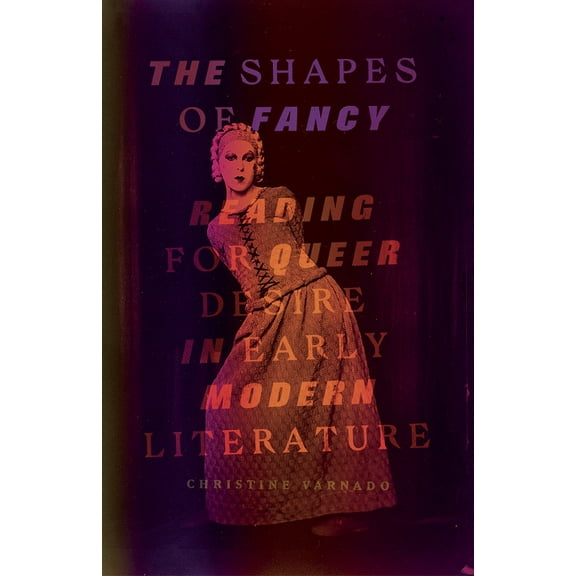 $2994current price $29.94
The Shapes of Fancy : Reading for Queer Desire in Early Modern Literature (Paperback)
The Bricolage of Kotegaeshi, (Paperback) $14.80
 $1480current price $14.80
The Bricolage of Kotegaeshi, (Paperback)
Melissa, (Paperback) $17.32
 $1732current price $17.32
Melissa, (Paperback)
Howard Hughes was Bob Hope in Make-up, (Paperback) $15.96 Was $19.99
 $1596current price $15.96, Was $19.99$19.99
Howard Hughes was Bob Hope in Make-up, (Paperback)
Dark Shanghai, (Paperback) $18.96
 $1896current price $18.96
Dark Shanghai, (Paperback)
Anguish Languish, (Paperback) $18.19
 $1819current price $18.19
Anguish Languish, (Paperback)
Sword Keeper, (Paperback) $11.74
 $1174current price $11.74
Sword Keeper, (Paperback)
Customer ratings & reviews
0 ratings|0 reviews
This item does not have any reviews yet
