


A Country of Strangers : Blacks and Whites in America (Paperback)
(No ratings yet)
Key item features
A Country of Strangers is a magnificent exploration of the psychological landscape where blacks and whites meet. To tell the story in human rather than abstract terms, the Pulitzer Prize-winning writer David K. Shipler bypasses both extremists and celebrities and takes us among ordinary Americans as they encounter one another across racial lines.
We learn how blacks and whites see each other, how they interpret each other's behavior, and how certain damaging images and assumptions seep into the actions of even the most unbiased. We penetrate into dimensions of stereotyping and discrimination that are usually invisible, and discover the unseen prejudices and privileges of white Americans, and what black Americans make of them.
We explore the competing impulses of integration and separation: the reference points by which the races navigate as they venture out and then withdraw; the biculturalism that many blacks perfect as they move back and forth between the white and black worlds, and the homesickness some blacks feel for the comfort of all-black separateness. There are portrayals of interracial families and their multiracial children--expert guides through the clashes created by racial blending in America. We see how whites and blacks each carry the burden of our history.
Black-white stereotypes are dissected: the physical bodies that we see, the mental qualities we imagine, the moral character we attribute to others and to ourselves, the violence we fear, the power we seek or are loath to relinquish.
The book makes clear that we have the ability to shape our racial landscape--to reconstruct, even if not perfectly, the texture of our relationships. There is an assessment of the complexity confronting blacks and whites alike as they struggle to recognize and define the racial motivations that may or may not be present in a thought, a word, a deed. The book does not prescribe, but it documents the silences that prevail, the listening that doesn't happen, the conversations that don't take place. It looks at relations between minorities, including blacks and Jews, and blacks and Koreans. It explores the human dimensions of affirmative action, the intricate contacts and misunderstandings across racial lines among coworkers and neighbors. It is unstinting in its criticism of our society's failure to come to grips with bigotry; but it is also, happily, crowded with black people and white people who struggle in their daily lives to do just that.
A remarkable book that will stimulate each of us to reexamine and better understand our own deepest attitudes in regard to race in America.
We learn how blacks and whites see each other, how they interpret each other's behavior, and how certain damaging images and assumptions seep into the actions of even the most unbiased. We penetrate into dimensions of stereotyping and discrimination that are usually invisible, and discover the unseen prejudices and privileges of white Americans, and what black Americans make of them.
We explore the competing impulses of integration and separation: the reference points by which the races navigate as they venture out and then withdraw; the biculturalism that many blacks perfect as they move back and forth between the white and black worlds, and the homesickness some blacks feel for the comfort of all-black separateness. There are portrayals of interracial families and their multiracial children--expert guides through the clashes created by racial blending in America. We see how whites and blacks each carry the burden of our history.
Black-white stereotypes are dissected: the physical bodies that we see, the mental qualities we imagine, the moral character we attribute to others and to ourselves, the violence we fear, the power we seek or are loath to relinquish.
The book makes clear that we have the ability to shape our racial landscape--to reconstruct, even if not perfectly, the texture of our relationships. There is an assessment of the complexity confronting blacks and whites alike as they struggle to recognize and define the racial motivations that may or may not be present in a thought, a word, a deed. The book does not prescribe, but it documents the silences that prevail, the listening that doesn't happen, the conversations that don't take place. It looks at relations between minorities, including blacks and Jews, and blacks and Koreans. It explores the human dimensions of affirmative action, the intricate contacts and misunderstandings across racial lines among coworkers and neighbors. It is unstinting in its criticism of our society's failure to come to grips with bigotry; but it is also, happily, crowded with black people and white people who struggle in their daily lives to do just that.
A remarkable book that will stimulate each of us to reexamine and better understand our own deepest attitudes in regard to race in America.
Specs
- Book formatPaperback
- Fiction/nonfictionNon-Fiction
- GenreNonfiction
- Pub date1998-09-01
- Pages624
- Reading levelGeneral Adult
Current price is USD$16.87
Price when purchased online
Out of stock
How do you want your item?
Out of stock
About this item
Product details
Drawing on ten years of research and interviews with hundreds of ordinary Americans, both black and white, Pulitzer Prize-winning author David Shipler conducts readers on an unprecedented tour of the invisible line that divides the races in this country. A Country of Strangers is a magnificent exploration of the psychological landscape where blacks and whites meet. To tell the story in human rather than abstract terms, the Pulitzer Prize-winning writer David K. Shipler bypasses both extremists and celebrities and takes us among ordinary Americans as they encounter one another across racial lines. We learn how blacks and whites see each other, how they interpret each other's behavior, and how certain damaging images and assumptions seep into the actions of even the most unbiased. We penetrate into dimensions of stereotyping and discrimination that are usually invisible, and discover the unseen prejudices and privileges of white Americans, and what black Americans make of them. We explore the competing impulses of integration and separation: the reference points by which the races navigate as they venture out and then withdraw; the biculturalism that many blacks perfect as they move back and forth between the white and black worlds, and the homesickness some blacks feel for the comfort of all-black separateness. There are portrayals of interracial families and their multiracial children--expert guides through the clashes created by racial blending in America. We see how whites and blacks each carry the burden of our history. Black-white stereotypes are dissected: the physical bodies that we see, the mental qualities we imagine, the moral character we attribute to others and to ourselves, the violence we fear, the power we seek or are loath to relinquish. The book makes clear that we have the ability to shape our racial landscape--to reconstruct, even if not perfectly, the texture of our relationships. There is an assessment of the complexity confronting blacks and whites alike as they struggle to recognize and define the racial motivations that may or may not be present in a thought, a word, a deed. The book does not prescribe, but it documents the silences that prevail, the listening that doesn't happen, the conversations that don't take place. It looks at relations between minorities, including blacks and Jews, and blacks and Koreans. It explores the human dimensions of affirmative action, the intricate contacts and misunderstandings across racial lines among coworkers and neighbors. It is unstinting in its criticism of our society's failure to come to grips with bigotry; but it is also, happily, crowded with black people and white people who struggle in their daily lives to do just that. A remarkable book that will stimulate each of us to reexamine and better understand our own deepest attitudes in regard to race in America.
A Country of Strangers is a magnificent exploration of the psychological landscape where blacks and whites meet. To tell the story in human rather than abstract terms, the Pulitzer Prize-winning writer David K. Shipler bypasses both extremists and celebrities and takes us among ordinary Americans as they encounter one another across racial lines.
We learn how blacks and whites see each other, how they interpret each other's behavior, and how certain damaging images and assumptions seep into the actions of even the most unbiased. We penetrate into dimensions of stereotyping and discrimination that are usually invisible, and discover the unseen prejudices and privileges of white Americans, and what black Americans make of them.
We explore the competing impulses of integration and separation: the reference points by which the races navigate as they venture out and then withdraw; the biculturalism that many blacks perfect as they move back and forth between the white and black worlds, and the homesickness some blacks feel for the comfort of all-black separateness. There are portrayals of interracial families and their multiracial children--expert guides through the clashes created by racial blending in America. We see how whites and blacks each carry the burden of our history.
Black-white stereotypes are dissected: the physical bodies that we see, the mental qualities we imagine, the moral character we attribute to others and to ourselves, the violence we fear, the power we seek or are loath to relinquish.
The book makes clear that we have the ability to shape our racial landscape--to reconstruct, even if not perfectly, the texture of our relationships. There is an assessment of the complexity confronting blacks and whites alike as they struggle to recognize and define the racial motivations that may or may not be present in a thought, a word, a deed. The book does not prescribe, but it documents the silences that prevail, the listening that doesn't happen, the conversations that don't take place. It looks at relations between minorities, including blacks and Jews, and blacks and Koreans. It explores the human dimensions of affirmative action, the intricate contacts and misunderstandings across racial lines among coworkers and neighbors. It is unstinting in its criticism of our society's failure to come to grips with bigotry; but it is also, happily, crowded with black people and white people who struggle in their daily lives to do just that.
A remarkable book that will stimulate each of us to reexamine and better understand our own deepest attitudes in regard to race in America.
We learn how blacks and whites see each other, how they interpret each other's behavior, and how certain damaging images and assumptions seep into the actions of even the most unbiased. We penetrate into dimensions of stereotyping and discrimination that are usually invisible, and discover the unseen prejudices and privileges of white Americans, and what black Americans make of them.
We explore the competing impulses of integration and separation: the reference points by which the races navigate as they venture out and then withdraw; the biculturalism that many blacks perfect as they move back and forth between the white and black worlds, and the homesickness some blacks feel for the comfort of all-black separateness. There are portrayals of interracial families and their multiracial children--expert guides through the clashes created by racial blending in America. We see how whites and blacks each carry the burden of our history.
Black-white stereotypes are dissected: the physical bodies that we see, the mental qualities we imagine, the moral character we attribute to others and to ourselves, the violence we fear, the power we seek or are loath to relinquish.
The book makes clear that we have the ability to shape our racial landscape--to reconstruct, even if not perfectly, the texture of our relationships. There is an assessment of the complexity confronting blacks and whites alike as they struggle to recognize and define the racial motivations that may or may not be present in a thought, a word, a deed. The book does not prescribe, but it documents the silences that prevail, the listening that doesn't happen, the conversations that don't take place. It looks at relations between minorities, including blacks and Jews, and blacks and Koreans. It explores the human dimensions of affirmative action, the intricate contacts and misunderstandings across racial lines among coworkers and neighbors. It is unstinting in its criticism of our society's failure to come to grips with bigotry; but it is also, happily, crowded with black people and white people who struggle in their daily lives to do just that.
A remarkable book that will stimulate each of us to reexamine and better understand our own deepest attitudes in regard to race in America.
info:
We aim to show you accurate product information. Manufacturers, suppliers and others provide what you see here, and we have not verified it.
Specifications
Book format
Paperback
Fiction/nonfiction
Non-Fiction
Genre
Nonfiction
Pub date
1998-09-01
Warranty
Warranty information
Please be aware that the warranty terms on items offered for sale by third party Marketplace sellers may differ from those displayed in this section (if any). To confirm warranty terms on an item offered for sale by a third party Marketplace seller, please use the 'Contact seller' feature on the third party Marketplace seller's information page and request the item's warranty terms prior to purchase.
Similar items you might like
Based on what customers bought
The African American Soldier : A Two-Hundred Year History of African Americans in the U.S. Military (Paperback) $15.19
 $1519current price $15.19
The African American Soldier : A Two-Hundred Year History of African Americans in the U.S. Military (Paperback)
In the Name of Blackness: The Untold History of Black Name-Identity and Nameism in American Culture, (Paperback) $17.99
 $1799current price $17.99
In the Name of Blackness: The Untold History of Black Name-Identity and Nameism in American Culture, (Paperback)
Best seller Black AF History: The un-Whitewashed Story of America (Hardcover) $20.99
Best seller $2099current price $20.99
Black AF History: The un-Whitewashed Story of America (Hardcover)
1364.7 out of 5 Stars. 136 reviewsAfrican Americans of Orangeburg County (Hardcover) $16.90
 $1690current price $16.90
African Americans of Orangeburg County (Hardcover)
Poor, Black, and Conservative: Ikyn (Paperback) $18.61
 $1861current price $18.61
Poor, Black, and Conservative: Ikyn (Paperback)
Transcending the Color Line: The Sociology of Black Experience in America, (Paperback) $16.58
 $1658current price $16.58
Transcending the Color Line: The Sociology of Black Experience in America, (Paperback)
The Working Poor : Invisible in America (Paperback) $17.28
 $1728current price $17.28
The Working Poor : Invisible in America (Paperback)
American Reality: White People . . . LOL, (Paperback) $22.00
 $2200current price $22.00
American Reality: White People . . . LOL, (Paperback)
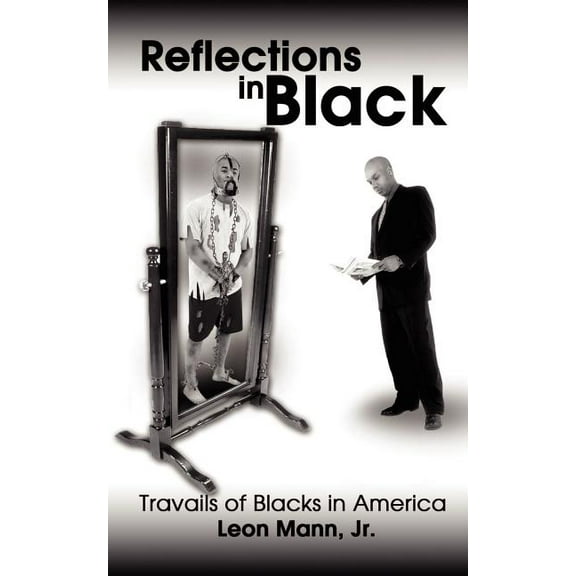
Reflections in Black: Travails of Blacks in America, (Paperback) $19.85
 $1985current price $19.85
Reflections in Black: Travails of Blacks in America, (Paperback)
Magic, White And Black, (Paperback) $22.95
 $2295current price $22.95
Magic, White And Black, (Paperback)
In Defense of Barbarism: Non-Whites Against the Empire, (Paperback) $16.07
 $1607current price $16.07
In Defense of Barbarism: Non-Whites Against the Empire, (Paperback)
Between the World and Me (Paperback) $9.53
 $953current price $9.53
Between the World and Me (Paperback)
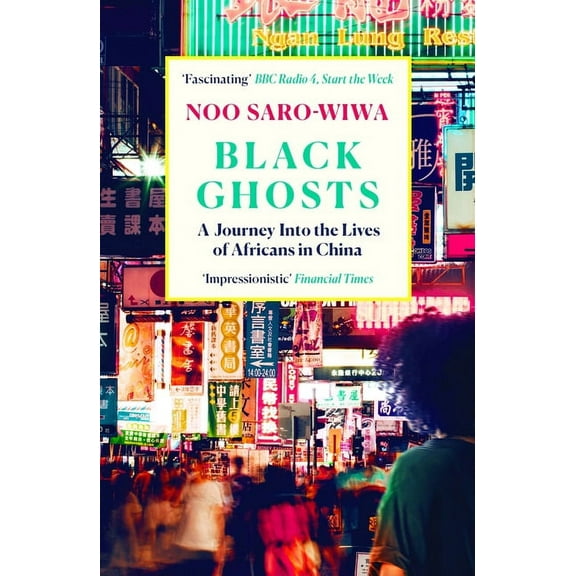
Black Ghosts: A Journey Into the Lives of Africans in China (Paperback) $18.98
 $1898current price $18.98
Black Ghosts: A Journey Into the Lives of Africans in China (Paperback)
The Black Trump Supporter: The Re-Awakening of a Nation, (Paperback) $20.99
 $2099current price $20.99
The Black Trump Supporter: The Re-Awakening of a Nation, (Paperback)
Soundings over Cultural Shoals, (Paperback) $17.23
 $1723current price $17.23
Soundings over Cultural Shoals, (Paperback)
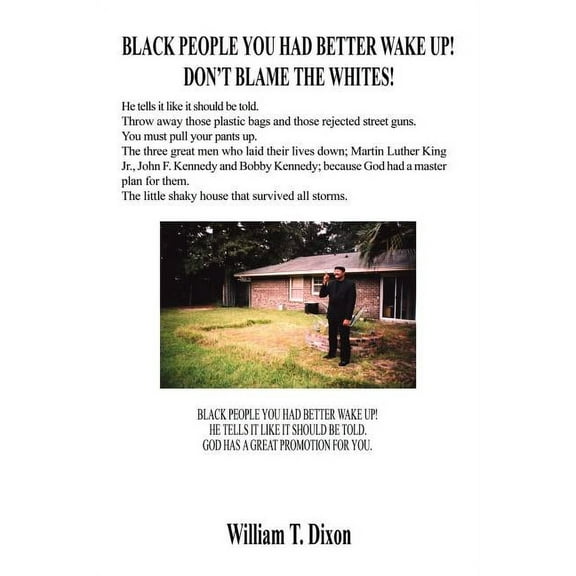
Black People You Had Better Wake Up! (Paperback) $14.47
 $1447current price $14.47
Black People You Had Better Wake Up! (Paperback)
In Search of the Racial Frontier: African Americans in the American West 1528-1990, (Paperback) $14.47
 $1447current price $14.47
In Search of the Racial Frontier: African Americans in the American West 1528-1990, (Paperback)
Harvest Book Africans in America: America's Journey Through Slavery, (Paperback) $14.85
 $1485current price $14.85
Harvest Book Africans in America: America's Journey Through Slavery, (Paperback)
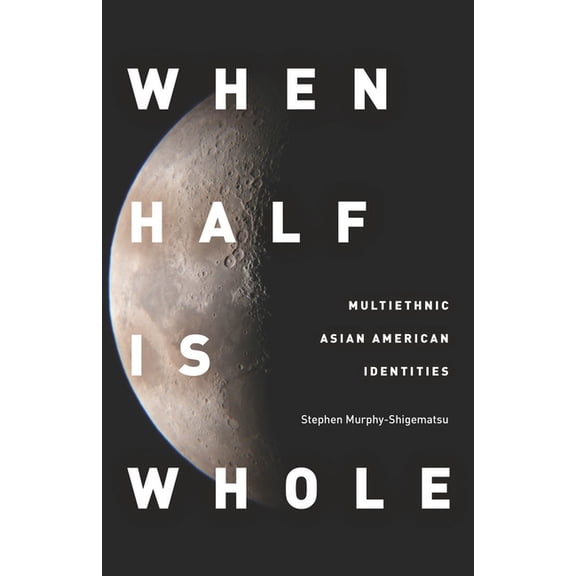
Asian America When Half Is Whole: Multiethnic Asian American Identities, (Paperback) $21.02
 $2102current price $21.02
Asian America When Half Is Whole: Multiethnic Asian American Identities, (Paperback)
Customer ratings & reviews
0 ratings|0 reviews
This item does not have any reviews yet
