


A History of the Byzantine State and Society (Paperback)
(No ratings yet)
Key item features
This is the first comprehensive and up-to-date history of Byzantium to appear in almost sixty years, and the first ever to cover both the Byzantine state and Byzantine society. It begins in A.D. 285, when the emperor Diocletian separated what became Byzantium from the western Roman Empire, and ends in 1461, when the last Byzantine outposts fell to the Ottoman Turks.
Spanning twelve centuries and three continents, the Byzantine Empire linked the ancient and modern worlds, shaping and transmitting Greek, Roman, and Christian traditions—including the Greek classics, Roman law, and Christian theology—that remain vigorous today, not only in Eastern Europe and the Middle East but throughout Western civilization. Though in its politics Byzantium often resembled a third-world dictatorship, it has never yet been matched in maintaining a single state for so long, over a wide area inhabited by heterogeneous peoples.
Drawing on a wealth of original sources and modern works, the author treats political and social developments as a single vivid story, told partly in detailed narrative and partly in essays that clarify long-term changes. He avoids stereotypes and rejects such old and new historical orthodoxies as the persistent weakness of the Byzantine economy and the pervasive importance of holy men in Late Antiquity.
Without neglecting underlying social, cultural, and economic trends, the author shows the often crucial impact of nearly a hundred Byzantine emperors and empresses. What the emperor or empress did, or did not do, could rapidly confront ordinary Byzantines with economic ruin, new religious doctrines, or conquest by a foreign power. Much attention is paid to the complex life of the court and bureaucracy that has given us the adjective "byzantine." The major personalities include such famous names as Constantine, Justinian, Theodora, and Heraclius, along with lesser-known figures like Constans II, Irene, Basil II the Bulgar-Slayer, and Michael VIII Palaeologus.
Byzantine civilization emerges as durable, creative, and realistic, overcoming repeated setbacks to remain prosperous almost to the end. With 221 illustrations and 18 maps that complement the text, A History of the Byzantine State and Society should long remain the standard history of Byzantium not just for students and scholars but for all readers.
Spanning twelve centuries and three continents, the Byzantine Empire linked the ancient and modern worlds, shaping and transmitting Greek, Roman, and Christian traditions—including the Greek classics, Roman law, and Christian theology—that remain vigorous today, not only in Eastern Europe and the Middle East but throughout Western civilization. Though in its politics Byzantium often resembled a third-world dictatorship, it has never yet been matched in maintaining a single state for so long, over a wide area inhabited by heterogeneous peoples.
Drawing on a wealth of original sources and modern works, the author treats political and social developments as a single vivid story, told partly in detailed narrative and partly in essays that clarify long-term changes. He avoids stereotypes and rejects such old and new historical orthodoxies as the persistent weakness of the Byzantine economy and the pervasive importance of holy men in Late Antiquity.
Without neglecting underlying social, cultural, and economic trends, the author shows the often crucial impact of nearly a hundred Byzantine emperors and empresses. What the emperor or empress did, or did not do, could rapidly confront ordinary Byzantines with economic ruin, new religious doctrines, or conquest by a foreign power. Much attention is paid to the complex life of the court and bureaucracy that has given us the adjective "byzantine." The major personalities include such famous names as Constantine, Justinian, Theodora, and Heraclius, along with lesser-known figures like Constans II, Irene, Basil II the Bulgar-Slayer, and Michael VIII Palaeologus.
Byzantine civilization emerges as durable, creative, and realistic, overcoming repeated setbacks to remain prosperous almost to the end. With 221 illustrations and 18 maps that complement the text, A History of the Byzantine State and Society should long remain the standard history of Byzantium not just for students and scholars but for all readers.
Specs
- Book formatPaperback
- Fiction/nonfictionNon-Fiction
- GenreHistory
- Publication dateOctober, 1997
- Pages1044
- Reading levelUndergraduate
Current price is USD$52.47
Price when purchased online
- Free shipping
 Free 30-day returns
How do you want your item?
Ships to
Arrives between May 20 - May 23
|
Sold and shipped by Alibris Books
4.5687372256287215 stars out of 5, based on 11253 seller reviews(4.6)11253 seller reviews

Free 30-day returns
Other sellers
$56.25
+Free shippingShipping, arrives by Wed, May 20 to Columbus, 43215
Sold and shipped by thebookpros
Free 30-day returns
About this item
Product details
The first comprehensive and up-to-date history of Byzantium to appear in almost sixty years, and the first ever to cover both the Byzantine state and Byzantine society. Includes 208 illustrations, 21 maps, 18 tables. 1048 pages.
This is the first comprehensive and up-to-date history of Byzantium to appear in almost sixty years, and the first ever to cover both the Byzantine state and Byzantine society. It begins in A.D. 285, when the emperor Diocletian separated what became Byzantium from the western Roman Empire, and ends in 1461, when the last Byzantine outposts fell to the Ottoman Turks.
Spanning twelve centuries and three continents, the Byzantine Empire linked the ancient and modern worlds, shaping and transmitting Greek, Roman, and Christian traditions—including the Greek classics, Roman law, and Christian theology—that remain vigorous today, not only in Eastern Europe and the Middle East but throughout Western civilization. Though in its politics Byzantium often resembled a third-world dictatorship, it has never yet been matched in maintaining a single state for so long, over a wide area inhabited by heterogeneous peoples.
Drawing on a wealth of original sources and modern works, the author treats political and social developments as a single vivid story, told partly in detailed narrative and partly in essays that clarify long-term changes. He avoids stereotypes and rejects such old and new historical orthodoxies as the persistent weakness of the Byzantine economy and the pervasive importance of holy men in Late Antiquity.
Without neglecting underlying social, cultural, and economic trends, the author shows the often crucial impact of nearly a hundred Byzantine emperors and empresses. What the emperor or empress did, or did not do, could rapidly confront ordinary Byzantines with economic ruin, new religious doctrines, or conquest by a foreign power. Much attention is paid to the complex life of the court and bureaucracy that has given us the adjective "byzantine." The major personalities include such famous names as Constantine, Justinian, Theodora, and Heraclius, along with lesser-known figures like Constans II, Irene, Basil II the Bulgar-Slayer, and Michael VIII Palaeologus.
Byzantine civilization emerges as durable, creative, and realistic, overcoming repeated setbacks to remain prosperous almost to the end. With 221 illustrations and 18 maps that complement the text, A History of the Byzantine State and Society should long remain the standard history of Byzantium not just for students and scholars but for all readers.
Spanning twelve centuries and three continents, the Byzantine Empire linked the ancient and modern worlds, shaping and transmitting Greek, Roman, and Christian traditions—including the Greek classics, Roman law, and Christian theology—that remain vigorous today, not only in Eastern Europe and the Middle East but throughout Western civilization. Though in its politics Byzantium often resembled a third-world dictatorship, it has never yet been matched in maintaining a single state for so long, over a wide area inhabited by heterogeneous peoples.
Drawing on a wealth of original sources and modern works, the author treats political and social developments as a single vivid story, told partly in detailed narrative and partly in essays that clarify long-term changes. He avoids stereotypes and rejects such old and new historical orthodoxies as the persistent weakness of the Byzantine economy and the pervasive importance of holy men in Late Antiquity.
Without neglecting underlying social, cultural, and economic trends, the author shows the often crucial impact of nearly a hundred Byzantine emperors and empresses. What the emperor or empress did, or did not do, could rapidly confront ordinary Byzantines with economic ruin, new religious doctrines, or conquest by a foreign power. Much attention is paid to the complex life of the court and bureaucracy that has given us the adjective "byzantine." The major personalities include such famous names as Constantine, Justinian, Theodora, and Heraclius, along with lesser-known figures like Constans II, Irene, Basil II the Bulgar-Slayer, and Michael VIII Palaeologus.
Byzantine civilization emerges as durable, creative, and realistic, overcoming repeated setbacks to remain prosperous almost to the end. With 221 illustrations and 18 maps that complement the text, A History of the Byzantine State and Society should long remain the standard history of Byzantium not just for students and scholars but for all readers.
info:
We aim to show you accurate product information. Manufacturers, suppliers and others provide what you see here, and we have not verified it.
Specifications
Book format
Paperback
Fiction/nonfiction
Non-Fiction
Genre
History
Publication date
October, 1997
Warranty
Warranty information
Please be aware that the warranty terms on items offered for sale by third party Marketplace sellers may differ from those displayed in this section (if any). To confirm warranty terms on an item offered for sale by a third party Marketplace seller, please use the 'Contact seller' feature on the third party Marketplace seller's information page and request the item's warranty terms prior to purchase.
Similar items you might like
Based on what customers bought
The History of Herodotus; Volume 1, (Paperback) $24.95
 $2495current price $24.95
The History of Herodotus; Volume 1, (Paperback)
The Enchiridion by Epictetus, (Paperback) $9.99
 $999current price $9.99
The Enchiridion by Epictetus, (Paperback)
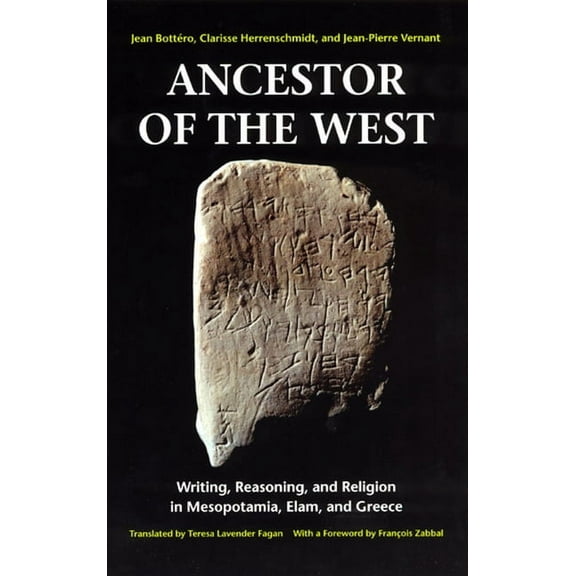
Ancestor of the West : Writing, Reasoning, and Religion in Mesopotamia, Elam, and Greece (Paperback) $36.43
 $3643current price $36.43
Ancestor of the West : Writing, Reasoning, and Religion in Mesopotamia, Elam, and Greece (Paperback)
History of the Aghuans: Book 1, (Paperback) $21.67
 $2167current price $21.67
History of the Aghuans: Book 1, (Paperback)
The History of England, (Paperback) $26.95
 $2695current price $26.95
The History of England, (Paperback)
Ancient Mediterranean Incarceration, (Paperback) $34.95
 $3495current price $34.95
Ancient Mediterranean Incarceration, (Paperback)
Bibliotheca Historica, (Paperback) $31.93
 $3193current price $31.93
Bibliotheca Historica, (Paperback)
History of the Armenians: Volume 1, (Paperback) $25.00
 $2500current price $25.00
History of the Armenians: Volume 1, (Paperback)
Phoenicia: History of a Civilization, (Paperback) $44.28
 $4428current price $44.28
Phoenicia: History of a Civilization, (Paperback)
The History of Rome; Volume 4 (Paperback) $32.79
 $3279current price $32.79
The History of Rome; Volume 4 (Paperback)
Agricola, (Paperback) $30.95 Was $34.77
 $3095current price $30.95, Was $34.77$34.77
Agricola, (Paperback)
Gutniska Urkunder, (Paperback) $17.95
 $1795current price $17.95
Gutniska Urkunder, (Paperback)
African Civilizations through Ages, (Paperback) $9.99
 $999current price $9.99
African Civilizations through Ages, (Paperback)
Histoire Universelle De Diodore De Sicile. Tome 2 $32.88
 $3288current price $32.88
Histoire Universelle De Diodore De Sicile. Tome 2
History for Peace Looking Back Through Our Identities: Itihasa Purana, (Hardcover) $12.00
 $1200current price $12.00
History for Peace Looking Back Through Our Identities: Itihasa Purana, (Hardcover)
Chronographia; Volume 1 (Paperback) $34.95
 $3495current price $34.95
Chronographia; Volume 1 (Paperback)
The History of Greece (Paperback) $28.55 Was $32.99
 $2855current price $28.55, Was $32.99$32.99
The History of Greece (Paperback)
History of the Armenians: Volume 2, (Paperback) $25.00
 $2500current price $25.00
History of the Armenians: Volume 2, (Paperback)
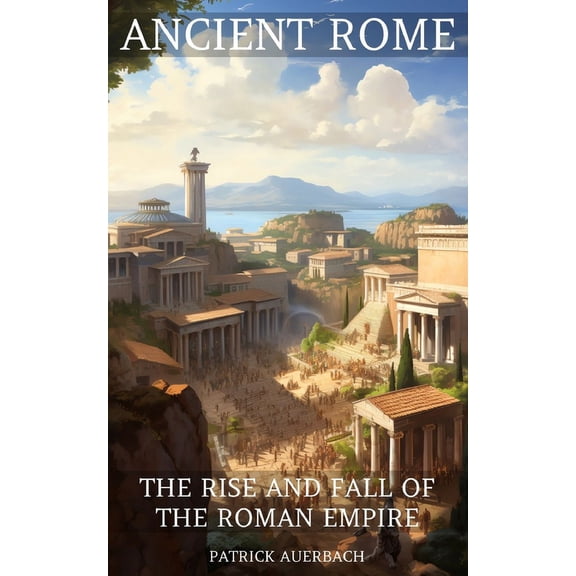
Ancient Rome: The Rise And Fall Of The Roman Empire (Paperback) $12.53
 $1253current price $12.53
Ancient Rome: The Rise And Fall Of The Roman Empire (Paperback)
History of Atlantis (Paperback) $25.11
 $2511current price $25.11
History of Atlantis (Paperback)
Customer ratings & reviews
0 ratings|0 reviews
This item does not have any reviews yet

Related pages
- Comparative Politics Books
- Civics & Citizenship Political Books
- Propaganda In Newspapers
- History Supreme
- Geopolitics Books
- General History Books
- Josiah Dwight Whitney; Geological Survey Of California
- Colonialism & Post-Colonialism Political Books
- United Nations Palestine
- European Political Books
- Survey Of Palestine
- Defend Republic