

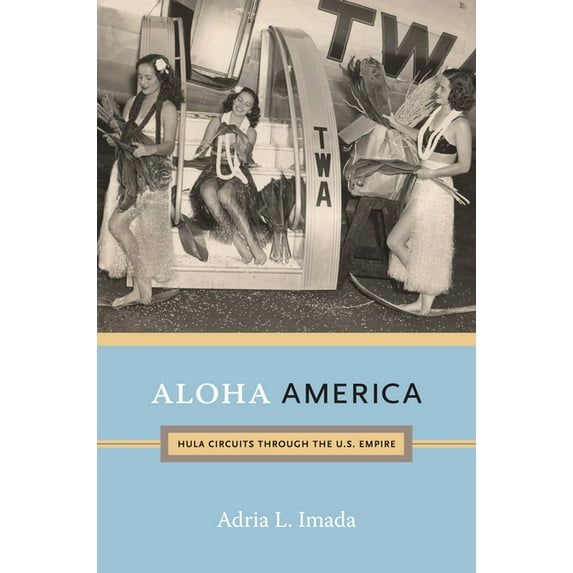
Aloha America: Hula Circuits through the U.S. Empire, (Paperback)
Key item features
Specs
- Book formatPaperback
- Fiction/nonfictionNon-Fiction
- Publication dateJuly, 2012
- Pages392
- SubgenreMusical Instruments
- Series titleNo Series
- Free shipping
 Free 30-day returns
How do you want your item?


About this item
Product details
At vaudeville theaters, international expositions, commercial nightclubs, and military bases, Hawaiian women acted as ambassadors of aloha, enabling Americans to imagine Hawai'i as feminine and benign, and the relation between colonizer and colonized as mutually desired. By the 1930s, Hawaiian culture, particularly its music and hula, had enormous promotional value. In the 1940s, thousands of U.S. soldiers and military personnel in Hawai'i were entertained by hula performances, many of which were filmed by military photographers. Yet, as Adria L. Imada shows, Hawaiians also used hula as a means of cultural survival and countercolonial political praxis. In Aloha America, Imada focuses on the years between the 1890s and the 1960s, examining little-known performances and films before turning to the present-day reappropriation of hula by the Hawaiian self-determination movement.
Specifications
Book format
Fiction/nonfiction
Genre
Publication date
Warranty
Warranty information
Similar items you might like
Based on what customers bought
The Last Place on Earth, (Paperback) $13.92
 $1392current price $13.92
The Last Place on Earth, (Paperback)
Post*45 Cartographies of Empire: The Road Novel and American Hegemony, (Paperback) $30.00
 $3000current price $30.00
Post*45 Cartographies of Empire: The Road Novel and American Hegemony, (Paperback)
Please, Adopt Me, America, (Paperback) $11.60
 $1160current price $11.60
Please, Adopt Me, America, (Paperback)
Moon Country From Being to Being, (Paperback) $6.34 Was $15.41
 $634current price $6.34, Was $15.41$15.41
Moon Country From Being to Being, (Paperback)
A Short Literary History of the United States, (Paperback) $38.99
 $3899current price $38.99
A Short Literary History of the United States, (Paperback)
Le Reveil de La Nation Arabe (1905) Paperback $29.95
 $2995current price $29.95
Le Reveil de La Nation Arabe (1905) Paperback
Best seller A Court of Mist and Fury (Paperback) $9.39
Best seller $939current price $9.39
A Court of Mist and Fury (Paperback)
3934.9 out of 5 Stars. 393 reviewsJourney: Worlds Apart, (Paperback) $29.00 Was $34.20
 $2900current price $29.00, Was $34.20$34.20
Journey: Worlds Apart, (Paperback)
The Moroccan Empire Series, (Paperback) $29.39
 $2939current price $29.39
The Moroccan Empire Series, (Paperback)
Nobody Walks in America: A Trek Across The USA, (Paperback) $30.00
 $3000current price $30.00
Nobody Walks in America: A Trek Across The USA, (Paperback)
Our Nation iN THE Bulding (Paperback) $29.95
 $2995current price $29.95
Our Nation iN THE Bulding (Paperback)
Your Tiny Empire, (Paperback) $14.99
 $1499current price $14.99
Your Tiny Empire, (Paperback)
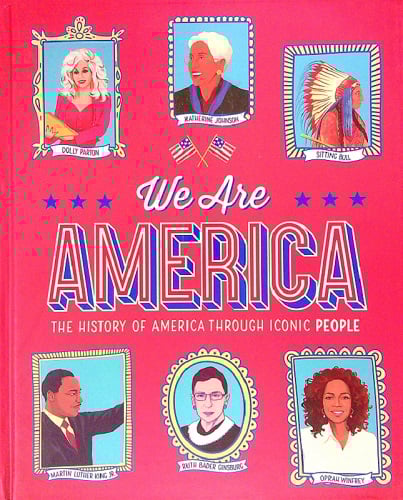
We Are America: The History of America Through Iconic People $15.99
 $1599current price $15.99
We Are America: The History of America Through Iconic People
Dr. Ride's American Beach House, (Paperback) $15.95
 $1595current price $15.95
Dr. Ride's American Beach House, (Paperback)
2026 Spirit of Place: America's Treasured Lands Wall Calendar, (Paperback) $17.99
 $1799current price $17.99
2026 Spirit of Place: America's Treasured Lands Wall Calendar, (Paperback)
Being America: Liberty, Commerce, and Violence in an American World, (Paperback) $20.73
 $2073current price $20.73
Being America: Liberty, Commerce, and Violence in an American World, (Paperback)
Reestablishing America's Global Power, (Paperback) $18.66
 $1866current price $18.66
Reestablishing America's Global Power, (Paperback)
Sun, Sea, and Sex $17.03
 $1703current price $17.03
Sun, Sea, and Sex
America Town : Building the Outposts of Empire (Paperback) $24.92
 $2492current price $24.92
America Town : Building the Outposts of Empire (Paperback)

