


Hero image 0 of Transgressions: Cultural Studies and Education: Jacques Lacan and Education: A Critical Introduction (Paperback), 0 of 1
Transgressions: Cultural Studies and Education: Jacques Lacan and Education: A Critical Introduction (Paperback)
(No ratings yet)
Key item features
This is an introductory level text with emphasis on Lacan's theoretical relationship to education and which uses Lacan's theories as a springboard for a different educational discourse, one that forces us to assess inward rather than outward. To move beyond the linear nature of schools, a context exacerbated by developmental psychologists like Piaget and Erikson who theorized that we can understand children's development in stages, the author argues that Lacan's theories allow us to holistically educate--to teach cognizant of the relationship between interior and exterior spaces, between the unspoken and the heard. The text serves four purposes: 1) to translate Lacan's primary ideas into language appropriate for introductory level college students, 2) to examine identity in ways that are relevant across disciplines, 3) to re-frame Lacan's work with post-structuralist and postmodern theories and, in so doing, create a distinctive analysis of the self predefined yet reinvented, and 4) to juxtapose Lacan's work with post-formal thinking and theorize about his relevance to public education.
This book is purposefully organized with specific emphasis on Lacan's work as a teacher and the ways in which his theories complicate current accountability standards in the United States which insist that "good" teaching and learning is quantifiable. The author foregrounds Lacan's concepts of identity and language and analyzes those in parallel to the discourses of democratic education. Lacan's theories do provide some indelible possibilities for public education in the twenty-first century. Considering his relevance to post-structuralism, post-formalism, post colonialism, and postmodernism, a Lacanian perspective of public education would defy the current standardization of curriculum in the wake of No Child Left Behind (NCLB) mandates. Using Lacan, the author re-envisions public education as a process which encourages the distinctiveness of students, challenges normative assumptions about what a "good" student is, and demands that teachers facilitate student understanding of multiple truths but that teachers also engage in an honest reconstruction of history--one that acknowledges the brutality of conquest, the arrogance of imperialism, and the illusiveness/elusiveness of peace.
Using the South African Truth and Reconciliation process as a framework, the author ends by constructing a model for public education which is grounded in "truth-telling" in public spaces, "witnessing" as a political practice, and educating as purposeful work. A Lacanian, post-formal curriculum, at its core, thus requires that we seek and identify truths, we work to become integrated beings by hearing the unconscious (that which we do not want to or cannot face), and that we educate for goodness and wholeness. This book is ultimately a call to re-envision the current public educational system in the U. S., a call to admit that it has inexcusably failed far too many children, and a call to construct entirely different possibilities.
This book is purposefully organized with specific emphasis on Lacan's work as a teacher and the ways in which his theories complicate current accountability standards in the United States which insist that "good" teaching and learning is quantifiable. The author foregrounds Lacan's concepts of identity and language and analyzes those in parallel to the discourses of democratic education. Lacan's theories do provide some indelible possibilities for public education in the twenty-first century. Considering his relevance to post-structuralism, post-formalism, post colonialism, and postmodernism, a Lacanian perspective of public education would defy the current standardization of curriculum in the wake of No Child Left Behind (NCLB) mandates. Using Lacan, the author re-envisions public education as a process which encourages the distinctiveness of students, challenges normative assumptions about what a "good" student is, and demands that teachers facilitate student understanding of multiple truths but that teachers also engage in an honest reconstruction of history--one that acknowledges the brutality of conquest, the arrogance of imperialism, and the illusiveness/elusiveness of peace.
Using the South African Truth and Reconciliation process as a framework, the author ends by constructing a model for public education which is grounded in "truth-telling" in public spaces, "witnessing" as a political practice, and educating as purposeful work. A Lacanian, post-formal curriculum, at its core, thus requires that we seek and identify truths, we work to become integrated beings by hearing the unconscious (that which we do not want to or cannot face), and that we educate for goodness and wholeness. This book is ultimately a call to re-envision the current public educational system in the U. S., a call to admit that it has inexcusably failed far too many children, and a call to construct entirely different possibilities.
Specs
- Book formatPaperback
- Fiction/nonfictionNon-Fiction
- GenreEducation/General
- Pub date20080101
- Pages112
- Number in series25
Current price is USD$40.88
Price when purchased online
Out of stock
How do you want your item?
Out of stock
About this item
Product details
This is an introductory level text with emphasis on Lacan's theoretical relationship to education and which uses Lacan's theories as a springboard for a different educational discourse, one that forces us to assess inward rather than outward. To move beyond the linear nature of schools, a context exacerbated by developmental psychologists like Piaget and Erikson who theorized that we can understand children's development in stages, the author argues that Lacan's theories allow us to holistically educate--to teach cognizant of the relationship between interior and exterior spaces, between the unspoken and the heard. The text serves four purposes: 1) to translate Lacan's primary ideas into language appropriate for introductory level college students, 2) to examine identity in ways that are relevant across disciplines, 3) to re-frame Lacan's work with post-structuralist and postmodern theories and, in so doing, create a distinctive analysis of the self predefined yet reinvented, and 4) to juxtapose Lacan's work with post-formal thinking and theorize about his relevance to public education.
This book is purposefully organized with specific emphasis on Lacan's work as a teacher and the ways in which his theories complicate current accountability standards in the United States which insist that "good" teaching and learning is quantifiable. The author foregrounds Lacan's concepts of identity and language and analyzes those in parallel to the discourses of democratic education. Lacan's theories do provide some indelible possibilities for public education in the twenty-first century. Considering his relevance to post-structuralism, post-formalism, post colonialism, and postmodernism, a Lacanian perspective of public education would defy the current standardization of curriculum in the wake of No Child Left Behind (NCLB) mandates. Using Lacan, the author re-envisions public education as a process which encourages the distinctiveness of students, challenges normative assumptions about what a "good" student is, and demands that teachers facilitate student understanding of multiple truths but that teachers also engage in an honest reconstruction of history--one that acknowledges the brutality of conquest, the arrogance of imperialism, and the illusiveness/elusiveness of peace.
Using the South African Truth and Reconciliation process as a framework, the author ends by constructing a model for public education which is grounded in "truth-telling" in public spaces, "witnessing" as a political practice, and educating as purposeful work. A Lacanian, post-formal curriculum, at its core, thus requires that we seek and identify truths, we work to become integrated beings by hearing the unconscious (that which we do not want to or cannot face), and that we educate for goodness and wholeness. This book is ultimately a call to re-envision the current public educational system in the U. S., a call to admit that it has inexcusably failed far too many children, and a call to construct entirely different possibilities.
This book is purposefully organized with specific emphasis on Lacan's work as a teacher and the ways in which his theories complicate current accountability standards in the United States which insist that "good" teaching and learning is quantifiable. The author foregrounds Lacan's concepts of identity and language and analyzes those in parallel to the discourses of democratic education. Lacan's theories do provide some indelible possibilities for public education in the twenty-first century. Considering his relevance to post-structuralism, post-formalism, post colonialism, and postmodernism, a Lacanian perspective of public education would defy the current standardization of curriculum in the wake of No Child Left Behind (NCLB) mandates. Using Lacan, the author re-envisions public education as a process which encourages the distinctiveness of students, challenges normative assumptions about what a "good" student is, and demands that teachers facilitate student understanding of multiple truths but that teachers also engage in an honest reconstruction of history--one that acknowledges the brutality of conquest, the arrogance of imperialism, and the illusiveness/elusiveness of peace.
Using the South African Truth and Reconciliation process as a framework, the author ends by constructing a model for public education which is grounded in "truth-telling" in public spaces, "witnessing" as a political practice, and educating as purposeful work. A Lacanian, post-formal curriculum, at its core, thus requires that we seek and identify truths, we work to become integrated beings by hearing the unconscious (that which we do not want to or cannot face), and that we educate for goodness and wholeness. This book is ultimately a call to re-envision the current public educational system in the U. S., a call to admit that it has inexcusably failed far too many children, and a call to construct entirely different possibilities.
info:
We aim to show you accurate product information. Manufacturers, suppliers and others provide what you see here, and we have not verified it.
Specifications
Book format
Paperback
Fiction/nonfiction
Non-Fiction
Genre
Education/General
Pub date
20080101
Warranty
Warranty information
Please be aware that the warranty terms on items offered for sale by third party Marketplace sellers may differ from those displayed in this section (if any). To confirm warranty terms on an item offered for sale by a third party Marketplace seller, please use the 'Contact seller' feature on the third party Marketplace seller's information page and request the item's warranty terms prior to purchase.
Similar items you might like
Based on what customers bought
Introduction to the Internationalization of Higher Education: Essential Topics, (Paperback) $40.99
 $4099current price $40.99
Introduction to the Internationalization of Higher Education: Essential Topics, (Paperback)
Studying Education: An introduction to the study and exploration of education, (Paperback) $41.00
 $4100current price $41.00
Studying Education: An introduction to the study and exploration of education, (Paperback)
Critical Introductions in Education A Critical Introduction to Mathematics Education: Human Diversity and Equitable Instruction, (Paperback) $56.14
 $5614current price $56.14
Critical Introductions in Education A Critical Introduction to Mathematics Education: Human Diversity and Equitable Instruction, (Paperback)
Studies in the Social and Cultural Histo Feeding the Mind, (Paperback) $39.99
 $3999current price $39.99
Studies in the Social and Cultural Histo Feeding the Mind, (Paperback)
Postcolonial Studies in Education Culture, Education, and Community: Expressions of the Postcolonial Imagination, (Paperback) $42.01
 $4201current price $42.01
Postcolonial Studies in Education Culture, Education, and Community: Expressions of the Postcolonial Imagination, (Paperback)
Foundations of Education Studies Placements and Work-based Learning in Education Studies: An introduction for students, (Paperback) $54.99
 $5499current price $54.99
Foundations of Education Studies Placements and Work-based Learning in Education Studies: An introduction for students, (Paperback)
Critical Pedagogy, (Paperback) $43.09
 $4309current price $43.09
Critical Pedagogy, (Paperback)
Landscapes of Investigation: Contributions to Critical Mathematics Education, (Paperback) $42.24
 $4224current price $42.24
Landscapes of Investigation: Contributions to Critical Mathematics Education, (Paperback)
Counternarratives: Cultural Studies and Critical Pedagogies in Postmodern Spaces, (Paperback) $56.14
 $5614current price $56.14
Counternarratives: Cultural Studies and Critical Pedagogies in Postmodern Spaces, (Paperback)
Cambridge Edition of the Works of Immanu Anthropology, History, and Education, (Paperback) $43.40
 $4340current price $43.40
Cambridge Edition of the Works of Immanu Anthropology, History, and Education, (Paperback)
Sociology of Education, (Paperback) $44.26
 $4426current price $44.26
Sociology of Education, (Paperback)
Collected Works of Jacques Maritain Degrees of Knowledge, Book 7, (Paperback) $47.43
 $4743current price $47.43
Collected Works of Jacques Maritain Degrees of Knowledge, Book 7, (Paperback)
Critical Introductions in Education English Language Arts: A Critical Introduction, (Paperback) $43.99
 $4399current price $43.99
Critical Introductions in Education English Language Arts: A Critical Introduction, (Paperback)
Critical Communication Pedagogy Communication and Identity in the Classroom: Intersectional Perspectives of Critical Pedagogy, (Paperback) $42.95
 $4295current price $42.95
Critical Communication Pedagogy Communication and Identity in the Classroom: Intersectional Perspectives of Critical Pedagogy, (Paperback)
Lacan and Education Policy: The Other Side of Education, (Paperback) $52.75
 $5275current price $52.75
Lacan and Education Policy: The Other Side of Education, (Paperback)
Postcolonial Studies in Education Actionable Postcolonial Theory in Education, (Paperback) $68.78
 $6878current price $68.78
Postcolonial Studies in Education Actionable Postcolonial Theory in Education, (Paperback)
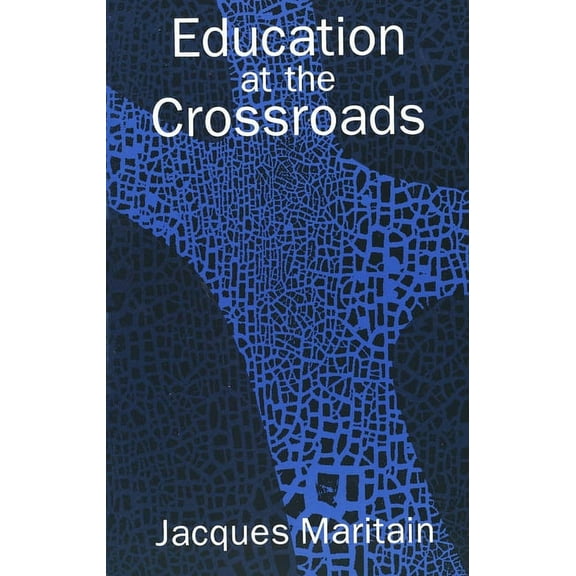
Education at the Crossroads, (Paperback) $21.62
 $2162current price $21.62
Education at the Crossroads, (Paperback)
Critical Internationalization in Higher Education, (Paperback) $25.59
 $2559current price $25.59
Critical Internationalization in Higher Education, (Paperback)
Postcolonial Studies in Education Decolonizing Indigenous Education: An Amazigh/Berber Ethnographic Journey, (Paperback) $41.44
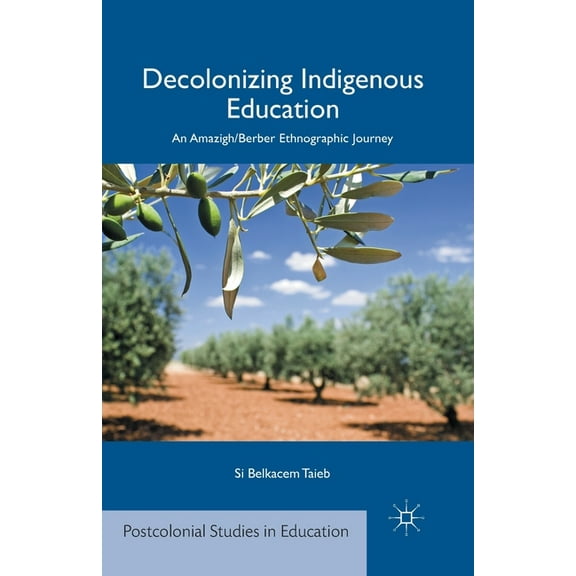 $4144current price $41.44
Postcolonial Studies in Education Decolonizing Indigenous Education: An Amazigh/Berber Ethnographic Journey, (Paperback)
Customer ratings & reviews
0 ratings|0 reviews
This item does not have any reviews yet

Related pages
- Viktor Von Knobelsdorff
- Charles Chao Rong Phua
- Persians Language
- Philipp Friedrich Keerl
- Dictionar Roman-englez
- Friedrich Karl Von Erlach
- Philosophy Reference Books
- Eastern European Literary Criticism Books
- 19th Century Literary Criticism Books
- Russian Literary Criticism Books
- 16th Century Literary Criticism Books
- Criticism Philosophy Books