Fortress: Fortress Monasteries of the Himalayas : Tibet, Ladakh, Nepal and Bhutan (Series #104) (Paperback)
Key item features
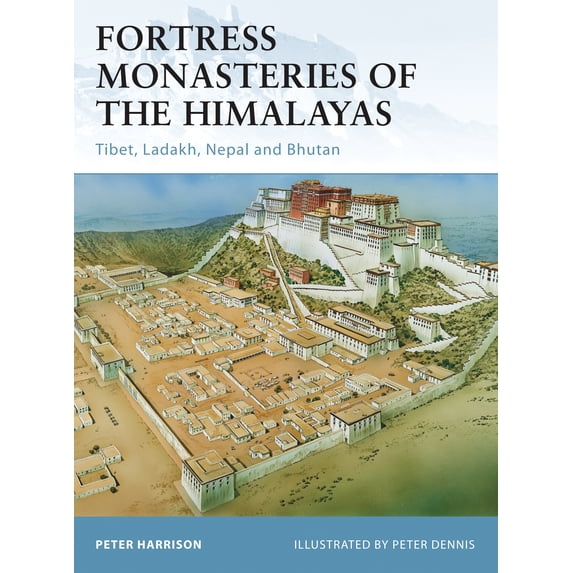
Buddhism has been influential in the mountain kingdoms of the Himalayas since the 7th century AD, most notably in the kingdom of Tibet where it permeated all aspects and levels of society until the 20th century. From the 9th-century AD onwards, the secular rulers of Tibet sought to extend their influence, and that of Buddhism, throughout the region. To this end, huge stone and mud-brick fortifications, known as dzongs, were constructed to dominate the secular landscape, while massive Buddhist monasteries dominated the religious - both following a very specific style of Tibetan architecture. It has been estimated that as many as 3,000 monasteries were built along with 200 dzongs.
Mongol invasions from the 12th century onwards provided another influence, while internecine fighting in the 17th century led to increased fortification of the monasteries and the rise of the Dalai Lama as the head of a theocracy in Tibet, centred on the Potala Palace in Lhasa - a true fusion between secular dzong and religious monastery.
Elsewhere in the Tibetan-influenced Himlayas the Buddhist Indian Kashmiri kingdom of Ladakh withstood assaults by both Muslims and Sikhs and developed a style of fortress monastery located on rocky peaks for defence, these often became combined with the fortified palaces of the rulers of Ladakh. With the foundation of Bhutan in the 17th century, further fortified monasteries were created in an effort to protect the new state's independence form the Dalai Lama.
These fortifications have survived largely intact through today, as Chinese control over the Tibetan Autonomous Region has led to the destruction of the vast majority of the fortified monasteries and dzongs of that particular area.
This title recreates the dramatic and colorful fortifications created in these mountain kingdoms, and recounts their operational history through the foreign incursions, religious conflicts and civil wars that litter their history, right through to the Tibetan uprising and flight of the Dalai Lama form the Potala Palace in 1959
Specs
- Book formatPaperback
- Fiction/nonfictionNon-Fiction
- GenreHistory
- Publication dateMay, 2011
- Pages64
- Series titleFortress
- Free shipping
 Free 30-day returns
How do you want your item?


More seller options (1)
About this item
Product details
Buddhism has been influential in the mountain kingdoms of the Himalayas since the 7th century AD, most notably in the kingdom of Tibet where it permeated all aspects and levels of society until the 20th century. From the 9th-century AD onwards, the secular rulers of Tibet sought to extend their influence, and that of Buddhism, throughout the region. To this end, huge stone and mud-brick fortifications, known as dzongs, were constructed to dominate the secular landscape, while massive Buddhist monasteries dominated the religious - both following a very specific style of Tibetan architecture. It has been estimated that as many as 3,000 monasteries were built along with 200 dzongs.
Mongol invasions from the 12th century onwards provided another influence, while internecine fighting in the 17th century led to increased fortification of the monasteries and the rise of the Dalai Lama as the head of a theocracy in Tibet, centred on the Potala Palace in Lhasa - a true fusion between secular dzong and religious monastery.Elsewhere in the Tibetan-influenced Himlayas the Buddhist Indian Kashmiri kingdom of Ladakh withstood assaults by both Muslims and Sikhs and developed a style of fortress monastery located on rocky peaks for defence, these often became combined with the fortified palaces of the rulers of Ladakh. With the foundation of Bhutan in the 17th century, further fortified monasteries were created in an effort to protect the new state's independence form the Dalai Lama. These fortifications have survived largely intact through today, as Chinese control over the Tibetan Autonomous Region has led to the destruction of the vast majority of the fortified monasteries and dzongs of that particular area. This title recreates the dramatic and colorful fortifications created in these mountain kingdoms, and recounts their operational history through the foreign incursions, religious conflicts and civil wars that litter their history, right through to the Tibetan uprising and flight of the Dalai Lama form the Potala Palace in 1959
Buddhism has been influential in the mountain kingdoms of the Himalayas since the 7th century AD, most notably in the kingdom of Tibet where it permeated all aspects and levels of society until the 20th century. From the 9th-century AD onwards, the secular rulers of Tibet sought to extend their influence, and that of Buddhism, throughout the region. To this end, huge stone and mud-brick fortifications, known as dzongs, were constructed to dominate the secular landscape, while massive Buddhist monasteries dominated the religious - both following a very specific style of Tibetan architecture. It has been estimated that as many as 3,000 monasteries were built along with 200 dzongs.
Mongol invasions from the 12th century onwards provided another influence, while internecine fighting in the 17th century led to increased fortification of the monasteries and the rise of the Dalai Lama as the head of a theocracy in Tibet, centred on the Potala Palace in Lhasa - a true fusion between secular dzong and religious monastery.
Elsewhere in the Tibetan-influenced Himlayas the Buddhist Indian Kashmiri kingdom of Ladakh withstood assaults by both Muslims and Sikhs and developed a style of fortress monastery located on rocky peaks for defence, these often became combined with the fortified palaces of the rulers of Ladakh. With the foundation of Bhutan in the 17th century, further fortified monasteries were created in an effort to protect the new state's independence form the Dalai Lama.
These fortifications have survived largely intact through today, as Chinese control over the Tibetan Autonomous Region has led to the destruction of the vast majority of the fortified monasteries and dzongs of that particular area.
This title recreates the dramatic and colorful fortifications created in these mountain kingdoms, and recounts their operational history through the foreign incursions, religious conflicts and civil wars that litter their history, right through to the Tibetan uprising and flight of the Dalai Lama form the Potala Palace in 1959
Specifications
Book format
Fiction/nonfiction
Genre
Publication date
Warranty
Warranty information
Similar items you might like
Fortress: Fortresses of the Peninsular War 1808–14 (Series #12) (Paperback) $18.50
 $1850current price $18.50
Fortress: Fortresses of the Peninsular War 1808–14 (Series #12) (Paperback)
Fortress: Strongholds of the Picts : The fortifications of Dark Age Scotland (Paperback) $18.50
 $1850current price $18.50
Fortress: Strongholds of the Picts : The fortifications of Dark Age Scotland (Paperback)
Elite: Heroines of the Soviet Union 1941–45 (Series #90) (Paperback) $13.58 Was $21.00
 $1358current price $13.58, Was $21.00$21.00
Elite: Heroines of the Soviet Union 1941–45 (Series #90) (Paperback)
Warrior: Desert Rat 1940–43 : British and Commonwealth troops in North Africa (Series #160) (Paperback) $18.50
 $1850current price $18.50
Warrior: Desert Rat 1940–43 : British and Commonwealth troops in North Africa (Series #160) (Paperback)
Fortress: Chinese Walled Cities 221 BC– AD 1644 (Series #84) (Paperback) $18.50
 $1850current price $18.50
Fortress: Chinese Walled Cities 221 BC– AD 1644 (Series #84) (Paperback)
Fortress: Forts of the War of 1812 (Paperback) $18.50
 $1850current price $18.50
Fortress: Forts of the War of 1812 (Paperback)
Fortress: Hittite Fortifications c.1650-700 BC (Series #73) (Paperback) $18.50
 $1850current price $18.50
Fortress: Hittite Fortifications c.1650-700 BC (Series #73) (Paperback)
Fortress: The Lines of Torres Vedras 1809–11 (Series #7) (Paperback) $18.50
 $1850current price $18.50
Fortress: The Lines of Torres Vedras 1809–11 (Series #7) (Paperback)
Fortress: American Civil War Fortifications (2) : Land and Field Fortifications (Series #38) (Paperback) $18.50
 $1850current price $18.50
Fortress: American Civil War Fortifications (2) : Land and Field Fortifications (Series #38) (Paperback)
Elite: Mounted Archers of the Steppe 600 BC–AD 1300 (Paperback) $18.50
 $1850current price $18.50
Elite: Mounted Archers of the Steppe 600 BC–AD 1300 (Paperback)
Fortress: Ancient Greek Fortifications 500–300 BC (Series #40) (Paperback) $18.50
 $1850current price $18.50
Fortress: Ancient Greek Fortifications 500–300 BC (Series #40) (Paperback)
Fortress: English Civil War Fortifications 1642–51 (Series #9) (Paperback) $20.97
 $2097current price $20.97
Fortress: English Civil War Fortifications 1642–51 (Series #9) (Paperback)
Warrior: Macedonian Warrior : Alexander's elite infantryman (Series #103) (Paperback) $18.50
 $1850current price $18.50
Warrior: Macedonian Warrior : Alexander's elite infantryman (Series #103) (Paperback)
Warrior: Soldier of the Pharaoh : Middle Kingdom Egypt 2055–1650 BC (Series #121) (Paperback) $18.50
 $1850current price $18.50
Warrior: Soldier of the Pharaoh : Middle Kingdom Egypt 2055–1650 BC (Series #121) (Paperback)
Warrior: Hungarian Hussar 1756–1815 (Series #81) (Paperback) $18.50
 $1850current price $18.50
Warrior: Hungarian Hussar 1756–1815 (Series #81) (Paperback)
Elite: The SAS 1983–2014 (Series #211) (Paperback) $17.77
 $1777current price $17.77
Elite: The SAS 1983–2014 (Series #211) (Paperback)
Fortress: The Hindenburg Line (Series #111) (Paperback) $18.50
 $1850current price $18.50
Fortress: The Hindenburg Line (Series #111) (Paperback)
Pre-Owned The Anatomy of the Zulu Army: From Shaka to Cetshwayo, 1818-1879 (Hardcover) 1853672130 9781853672132 $6.79 Was $19.74
 $679current price $6.79, Was $19.74$19.74
Pre-Owned The Anatomy of the Zulu Army: From Shaka to Cetshwayo, 1818-1879 (Hardcover) 1853672130 9781853672132